 Bellingham Roofing
 Why Siding Fails Faster in the Puget Area
Homes in the Puget area of Bellingham sit close enough to the water that salt-laden air is a constant, low-grade stress on exterior materials. Add Whatcom County's long wet season — months of driving rain pushed sideways by wind off the Sound — and a moss season that can run from fall through spring, and you have a climate that punishes any siding product with a weak point. Salt air accelerates corrosion on fasteners and trim metal. Driving rain finds gaps that would stay dry in a calmer climate. And moss doesn't just sit on a roof — it colonizes damp, shaded siding too, holding moisture against the wall and feeding rot from the outside in.
None of this means Puget homes need exotic materials. It means they need siding installed correctly, with the right product, by a crew that understands what this specific stretch of coastline does to a house year after year. That's the whole job of this page: what a correct siding replacement looks like here, and why the details matter more in Puget than they would somewhere drier.
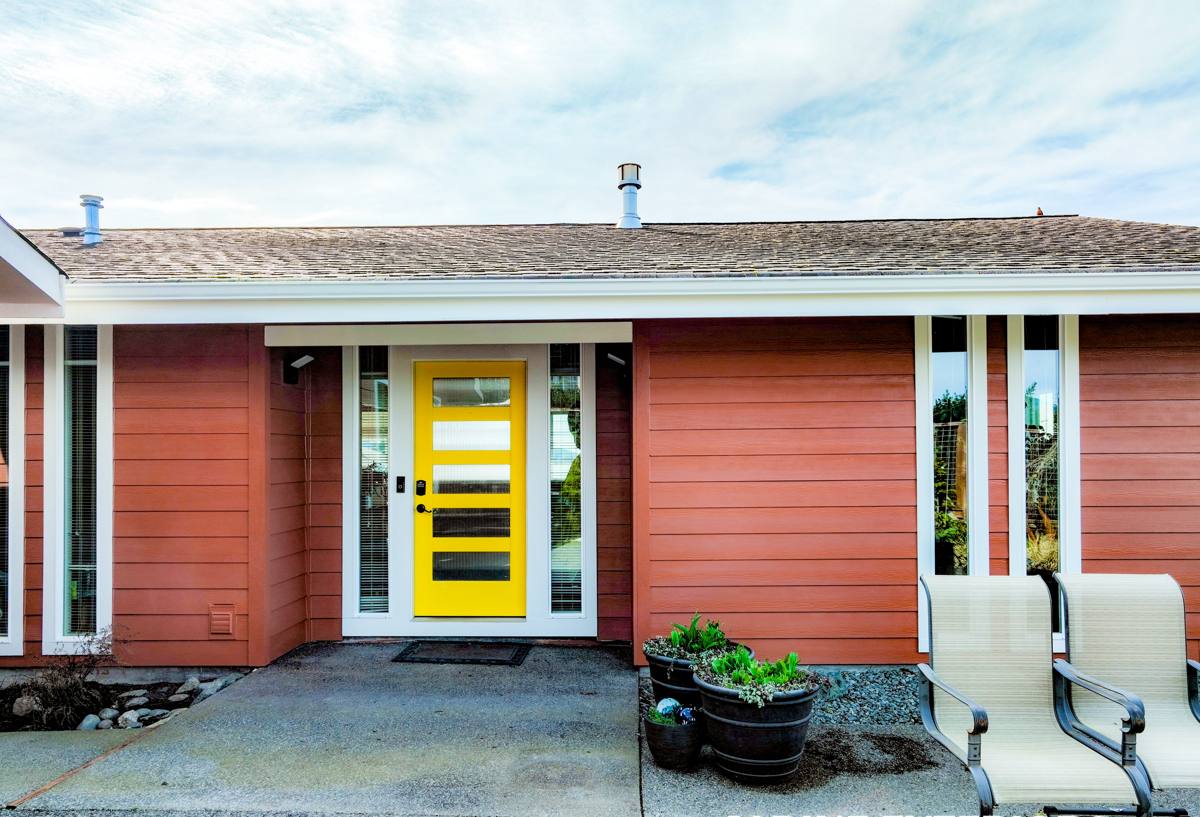
What a Correct Siding Replacement Actually Involves
Siding replacement isn't just pulling off old boards and nailing up new ones. In a marine climate, the work that happens underneath the siding matters as much as the siding itself.
Tear-Off and Inspection
Once the old siding comes off, we inspect the sheathing underneath for rot, soft spots, or prior water damage — especially around window and door openings, which are the most common places for moisture to have worked its way in over the years. Any compromised sheathing gets replaced before anything new goes up. Installing new siding over damaged sheathing just hides a problem that will keep growing.
Weather-Resistive Barrier
A properly lapped weather-resistive barrier (house wrap) goes over the sheathing, with all seams and penetrations sealed. This is the layer that actually keeps wind-driven rain out of the wall assembly if any moisture gets past the siding — and in a climate with as much sideways rain as Bellingham sees, it's not optional.
Flashing at Every Penetration
Windows, doors, hose bibs, light fixtures, vents — every place something interrupts the siding is a place water can get behind it. Correct flashing at each of these penetrations, installed in the right shingle-lap order so water always sheds outward and downward, is one of the most common places we see shortcuts taken on older installations, and it's one of the most common causes of hidden rot we find during tear-off.
Rainscreen Gap
Behind the new siding, we maintain a ventilated gap between the siding and the weather barrier. This gap lets any moisture that does get past the siding drain and dry out instead of sitting trapped against the wall — which matters a great deal in a climate where the siding rarely gets a long enough dry stretch to fully release moisture on its own.
Signs a Puget Home Needs Siding Replacement Soon
Some warning signs are obvious. Others are easy to write off as cosmetic until they've been doing damage for years. Here's what we look for, and what homeowners can check themselves before calling anyone:
- Soft or spongy spots when you press on the siding, especially near the bottom courses and around windows
- Paint that's bubbling, peeling, or won't hold no matter how often it's redone
- Persistent moss or algae growth on siding (not just the roof) that comes back within a season of cleaning
- Visible gaps, warping, or cupping in individual boards
- Rising energy bills with no other explanation, which can point to a compromised weather barrier
- Rust streaks below nail heads or trim fasteners
- A musty smell in rooms along exterior walls
Any one of these is worth a look. Several together usually mean the siding has been letting moisture in for a while, and the sheathing underneath deserves an honest inspection before deciding on repair versus full replacement.
Why We Only Install James Hardie Fiber Cement
We install James Hardie fiber cement siding exclusively — we don't install vinyl, LP SmartSide, cedar, or primed wood siding, even when a customer asks for it. That's not a marketing position, it's a standard we've held to because of what we've seen play out on homes in exactly this kind of climate.
Vinyl can work fine in a lot of the country, but it's a plastic product that expands, contracts, and can warp with temperature swings, and its seams give wind-driven rain more chances to get behind it than a properly lapped fiber cement installation. Cedar and primed wood are genuinely attractive materials, but they need real maintenance — recoating, caulking, and vigilance against rot — to survive a climate with this much sustained moisture, and moss season doesn't do wood any favors. LP SmartSide is an engineered wood product with real strengths, but it's still wood-based at its core, which means it's more sensitive to sustained moisture exposure than a cement-based product.
James Hardie fiber cement is non-combustible, engineered specifically for wet coastal climates in its HZ5 product line, and finished at the factory with ColorPlus technology — a baked-on finish that resists fading and chipping far better than field-applied paint, which matters when the finish is fighting salt air and UV for years without a repaint. It comes backed by a strong transferable warranty, and when it's installed to Hardie's specifications — the flashing, the rainscreen gap, the fastening pattern — it holds up to the Puget climate better than any alternative we've worked with. That's why it's the only siding we put on homes.
Our Siding Replacement Process
| Step | What Happens |
|---|---|
| 1. Assessment | On-site inspection of existing siding, trim, and visible sheathing condition; discuss goals and budget |
| 2. Proposal | Written scope covering Hardie product line, color, trim details, and a clear cost breakdown |
| 3. Tear-off | Old siding removed; sheathing inspected and any damaged sections replaced |
| 4. Weather barrier | House wrap installed and sealed; flashing set at every window, door, and penetration |
| 5. Rainscreen and install | Ventilated gap set, then Hardie siding installed per manufacturer spec |
| 6. Trim and paint touch-up | Trim, corners, and caulking finished; any field-painted elements completed |
| 7. Final walkthrough | Owner walkthrough to confirm the work before we call it done |
Choosing Color and Style for the Local Climate
James Hardie's ColorPlus finishes come in a wide range of tones, and the factory-applied finish is part of what makes the product hold up in this climate — it's more resistant to fading and moisture-related discoloration than a job-site paint job. Darker colors show less moss staining between cleanings but absorb more heat; lighter colors show dirt and moss growth more visibly but tend to run cooler. Neither is wrong — it comes down to how much upkeep a homeowner wants to do and the look they're after.
Board profile matters too. Lap siding is the most common choice in this area, but Hardie's panel and shingle profiles both hold up equally well when installed correctly — the profile is an aesthetic choice, not a durability trade-off, as long as the installation details underneath are right.
What Drives the Cost of a Siding Replacement
| Factor | Why It Matters |
|---|---|
| Home size and complexity | More wall area, corners, and roof lines means more material and labor |
| Sheathing condition | Rot discovered during tear-off adds repair work before new siding can go up |
| Siding profile and trim detail | Board width, trim style, and corner treatments affect material and labor cost |
| Number of penetrations | Windows, doors, and fixtures each require careful flashing, which adds labor |
| Color and finish | Factory ColorPlus finishes vs. field painting affect both cost and long-term maintenance |
We give a written, itemized proposal after the initial assessment so there are no surprises once the work starts — and we flag any sheathing repair as a separate, clearly explained item rather than folding it into a vague allowance.
Why a Local Crew That Works Puget Homes Matters
Siding installation manuals are written for a general climate. Getting it right in Puget means understanding how this specific stretch of Bellingham behaves — where wind-driven rain tends to hit hardest, how much moss pressure a shaded north wall carries compared to a sun-exposed south wall, and how salt air affects fastener choices over the long run. A crew that works this area regularly makes those judgment calls correctly the first time, instead of learning them on your house.
It also means we're accountable locally. If a question comes up two years after installation, we're not a name from an out-of-town crew that's moved on to the next region — we're still working in Bellingham and Whatcom County, and we stand behind the work we did on your street.
If your siding is showing wear, or you're just planning ahead for a home in the Puget area, we're happy to take a look and give you a straight, no-pressure estimate — no obligation, no pressure to decide on the spot. Use the form below to get started.