 Bellingham Roofing
 Why Puget Decks Take More Punishment Than Most
Bellingham sits where the marine air off the water meets a long, wet Pacific Northwest winter, and homes in the Puget area feel that combination directly. Salt-laden air corrodes fasteners and hardware faster than it does further inland, driving rain finds its way into any gap in flashing or ledger boards, and the moss season — often running from fall through spring in Whatcom County — turns any shaded or north-facing deck surface into a slip hazard and a moisture trap. A deck that would last two or three decades in a drier climate can start failing structurally in half that time here if it wasn't built with these conditions in mind.
That's the starting point for any honest conversation about deck replacement in this neighborhood: it isn't just about picking new boards. It's about correcting whatever let the old deck fail in the first place, so the replacement doesn't follow the same path.
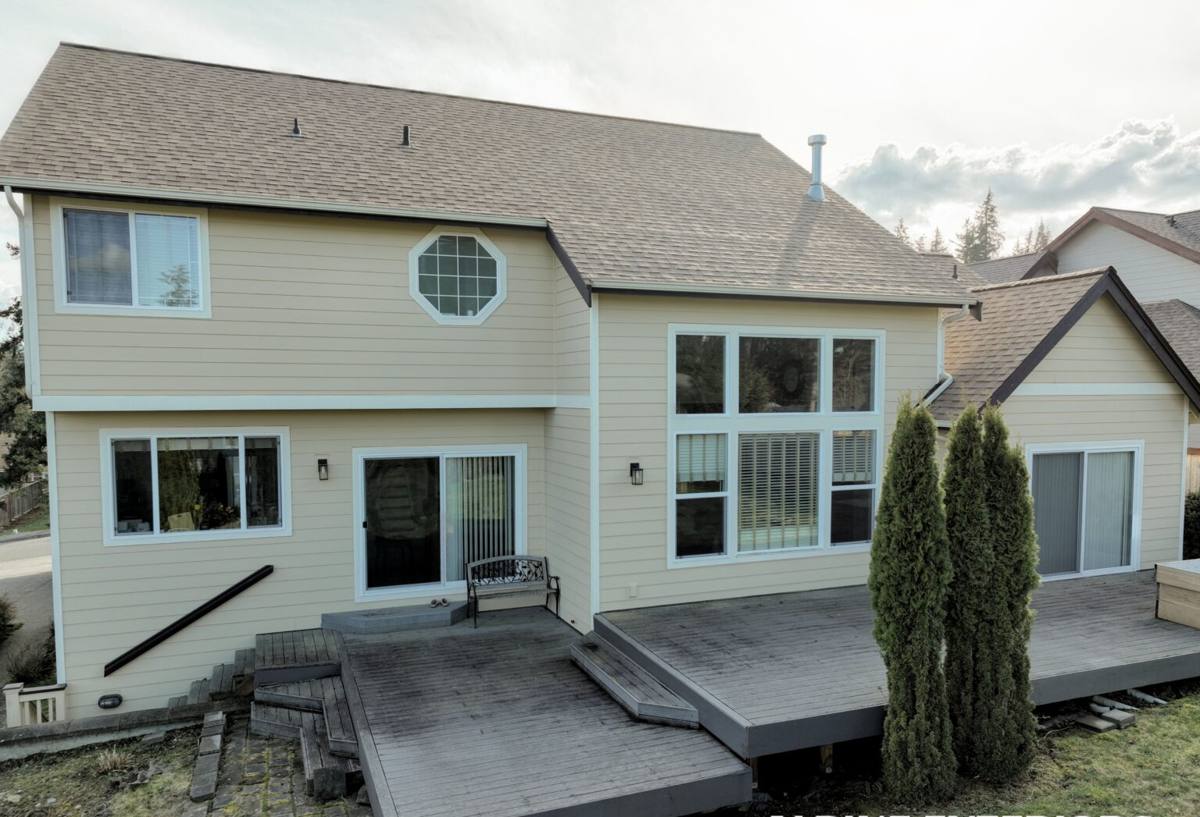
What Actually Wears Out First
The Ledger Board and House Connection
Most deck failures we see don't start with the decking itself — they start where the deck attaches to the house. If flashing was skipped or installed incorrectly at the original build, water works its way behind the siding and into the rim joist year after year. By the time it's visible, there's often rot behind it that isn't obvious from a casual look at the deck surface.
Fasteners and Hardware
Coastal air accelerates corrosion in standard fasteners, joist hangers, and structural screws. Galvanized hardware that would hold up fine in a dry inland climate can rust and weaken within a handful of years near the water. This is one of the most common reasons a deck that "looks fine" fails a close structural inspection.
Ground-Contact Posts and Footings
Constant damp soil and freeze-thaw swings put stress on posts and footings. Undersized or poorly set footings shift over time, which shows up as a deck that feels slightly springy or uneven long before anything looks visibly wrong.
What a Correct Deck Replacement Involves
A proper replacement isn't just removing old boards and screwing down new ones. Here's what we treat as non-negotiable on every deck replacement in this area:
- Full removal down to framing, with every joist, post, and ledger inspected — not just the boards you can see from above
- Correct ledger flashing and house-side waterproofing, tied properly into the existing siding or wrap
- Corrosion-resistant fasteners and structural hardware rated for coastal exposure, not standard galvanized
- Footings sized and set to current code, especially on decks attached to daylight basements or sloped lots common around here
- Proper drainage and airflow underneath the deck so moisture doesn't sit and breed rot or moss
- Guardrails, stair stringers, and connections that meet current Whatcom County building code, not just the standard the original deck was built to
Choosing Decking Material for This Climate
There's no single "right" material for every homeowner — it depends on budget, how much upkeep you want to take on, and how much shade and moss exposure your particular lot gets. Here's how the common options actually compare once you factor in Puget's climate, not just national averages.
| Material | Moisture & Moss Behavior | Maintenance | Typical Lifespan Here |
|---|---|---|---|
| Pressure-treated wood | Absorbs moisture; needs sealing to resist moss and rot in shaded spots | Annual cleaning and re-sealing recommended | 10–15 years with upkeep |
| Cedar | Naturally rot-resistant but still needs care in constant damp; can gray and get slick if untreated | Periodic cleaning and finish renewal | 15–20 years with upkeep |
| Composite decking | Doesn't absorb water like wood, but can still grow moss/algae film on the surface in deep shade | Low — periodic washing, no sealing | 20–30 years, varies by brand and warranty |
| PVC/capped polymer | Fully sealed surface, best resistance to moisture and staining | Lowest — occasional washing | 25+ years, typically the strongest warranty structure |
Composite and capped polymer products cost more up front, but for a deck that sits in shade for part of the day or backs up to trees — common on lots throughout this area — the lower maintenance burden and better moss resistance often make up the difference over time. Wood is still a reasonable choice for homeowners who want that traditional look and are willing to stay on top of sealing and cleaning. We'll walk you through the honest trade-offs for your specific lot rather than push whatever has the best margin.
A Note on Fasteners and Hidden Hardware
Whatever decking material you choose, we treat the fastener and hardware spec as seriously as the boards themselves. Standard hardware that isn't rated for coastal or high-moisture exposure is one of the quiet ways a deck replacement fails early — the boards look fine while the connections underneath are already corroding. We spec hardware to the exposure the deck actually sees, not just the manufacturer's minimum.
Our Deck Replacement Process
We keep the process straightforward and communicate at each stage, because deck replacement affects how you use your yard for a stretch of time and we don't want that to be a mystery.
- On-site assessment — we inspect the existing deck's framing, ledger connection, footings, and any signs of rot or moisture intrusion, not just the surface
- Honest scope and estimate — you get a clear picture of what's structural (non-negotiable) versus what's a material or design choice
- Permitting — we handle the Whatcom County or City of Bellingham permit process where required, so the finished deck is code-compliant and won't cause problems at resale
- Demolition and disposal — full removal of the old structure, with attention to what's behind the ledger board once siding is exposed
- Framing and structural correction — posts, footings, joists, and ledger flashing rebuilt or corrected to current standards
- Decking, railing, and stairs installed — to the material and layout you chose, with attention to drainage and airflow underneath
- Final walkthrough — we go over the finished deck with you, including what maintenance it will and won't need
Living With Moss Season
No deck in this climate is entirely moss-proof, but a correctly built one manages it instead of fighting it. Proper spacing between boards, slight slope for drainage, adequate airflow underneath, and material choice all reduce how much moss and algae take hold during the wet months. For shaded decks especially, we'll talk through realistic maintenance expectations up front — a quick seasonal wash goes a long way, and knowing what to expect is better than being surprised by it every fall.
If your current deck turns slick and green every winter no matter how often you clean it, that's often a sign of a drainage or airflow problem in the original build, not just a maintenance gap. That's worth diagnosing before a replacement repeats the same issue.
Permits and Code in Whatcom County
Deck replacements involving structural changes, new footings, or guardrail height typically require a permit locally, and inspection standards have tightened over the years — a deck built to code twenty years ago may not meet current guardrail spacing, stair, or footing requirements. Replacing a deck is a natural point to bring the whole structure up to current code rather than rebuilding around an outdated design. We handle the permitting and inspection process as part of the job, so you're not left navigating it yourself.
Signs Your Deck Needs Replacement, Not Repair
Not every aging deck needs a full replacement — sometimes targeted repair is the honest answer. Here's how we tell the difference:
- Soft or spongy spots in the decking that go beyond a single damaged board
- Rust staining or visible corrosion around fasteners and hardware
- A ledger board area that feels damp, discolored, or separated from the house
- Noticeable movement, bounce, or sway when the deck is in use
- Posts or footings that have shifted, cracked, or show signs of settling
- Persistent moss or mildew that returns within weeks of cleaning, suggesting a drainage issue rather than a surface problem
- A deck built more than 15–20 years ago that hasn't been inspected for current code compliance
If you're only seeing one or two isolated issues, repair is often the right call and we'll say so. Replacement makes sense once the framing, ledger, or footings are compromised — patching decking on top of failing structure just delays the real fix.
Why Local Experience With Puget Homes Matters
A deck built for a dry inland climate and one built for a home exposed to Bellingham's marine air and rain patterns shouldn't be built the same way, even if they look identical from the street. Crews who haven't worked this specific combination of salt air, moisture, and moss exposure regularly can miss the details that determine whether a deck lasts ten years or thirty — flashing details, fastener spec, drainage slope, and footing depth all need to account for what this climate actually does to a structure over time. We work on homes throughout this area and see the same failure patterns often enough to build around them from the start, rather than learning the hard way on your project.
If your deck is showing its age or you're planning ahead rather than waiting for a problem, we're happy to take a look and give you a straightforward assessment. Reach out for a free, no-pressure estimate using the form below — we'll tell you honestly what your deck needs, whether that's a full replacement or something less.