 Bellingham Roofing
 Why Puget's Location Puts Extra Demand on Windows
Homes in the Puget area sit close enough to the water that windows here work harder than windows almost anywhere else in Whatcom County. Salt-laden air off Puget Sound settles on glass, frames, and hardware year-round, and it doesn't take a vacation home on the beach to feel it — even a few blocks inland, that air moves through on the wind. Add Bellingham's wind-driven rain, which comes in sideways often enough that a window's weather-resistance rating actually matters, and you've got a climate that tests every seam, sealant, and drainage path a window has.
Then there's moss season. Whatcom County's wet, mild fall and winter stretch is long, and moss doesn't stay on the roof — it finds its way into window tracks, weep holes, and sill corners where moisture sits and organic growth takes hold. A window that's merely "good enough" somewhere drier will show its weaknesses here within a few winters: fogged glass, soft trim, sticking sashes, and frames that never quite dry out between storms.
None of this means Puget homes need exotic products. It means the ordinary decisions — material, flashing detail, sealant choice, and installation care — carry more consequence here than they would in a drier, calmer part of the state.
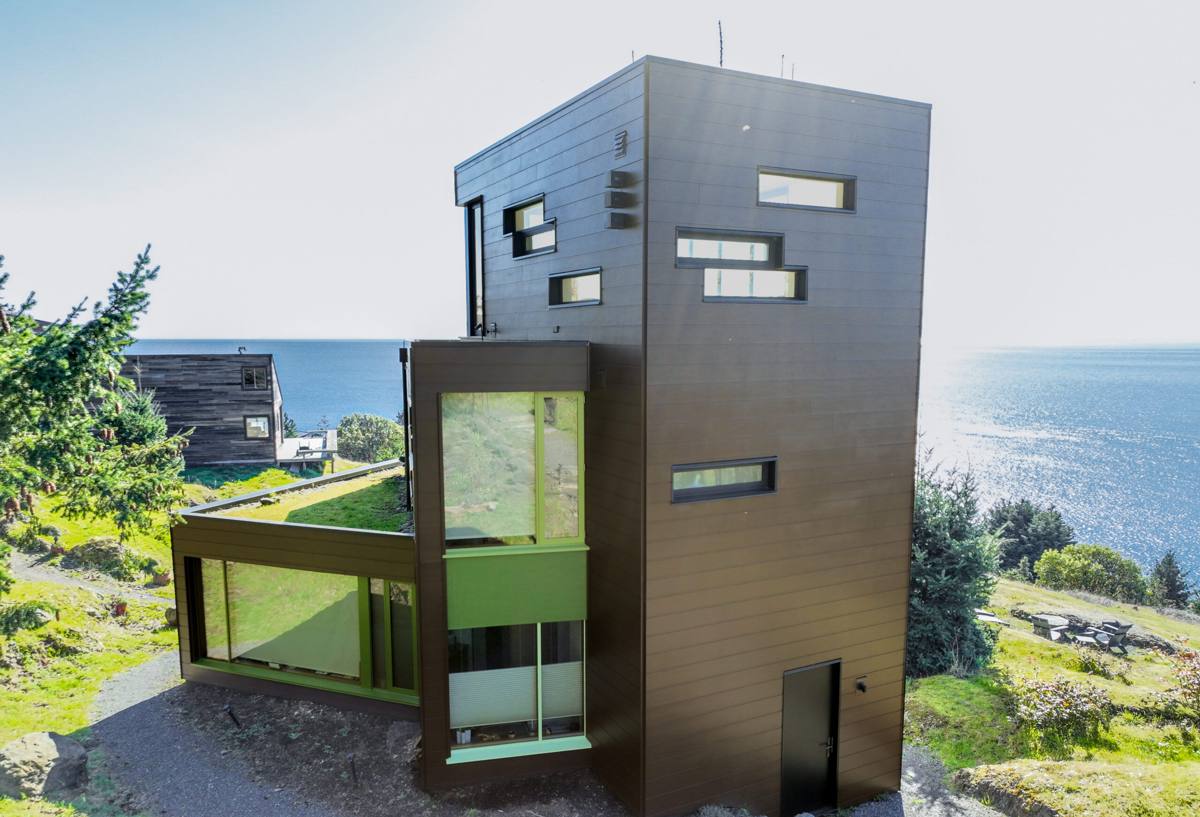
What "Custom" Actually Means for a Puget Home
"Custom" gets used loosely in this industry. For us, it means the window is built and installed to fit the actual opening and the actual house — not the other way around.
Non-Standard Openings
Older homes and homes with additions in this area rarely have perfectly standard rough openings. Settling, past remodels, and additions built to fit the lot rather than a catalog size all mean openings are often slightly out of square or off from stock dimensions. Custom sizing avoids the shims, gaps, and improvised trim that come with forcing a stock window into an opening it wasn't made for.
Matching an Existing Home
Many Puget homes have character worth preserving — divided-light patterns, deeper sills, or trim profiles that don't match what's on a big-box shelf. Custom work lets us match sightlines and proportions so new windows look like they belong, not like an obvious retrofit.
New Construction and Additions
For additions or full rebuilds, custom sizing also means we can plan window placement around wind exposure and rain direction from the start, rather than working around whatever opening already exists.
Frame Materials That Actually Hold Up Near Salt Air
Every frame material has trade-offs, and near the water those trade-offs shift. Here's how the common options compare for a Puget-area install.
| Material | Salt Air / Moisture Behavior | Maintenance | Typical Trade-Off |
|---|---|---|---|
| Vinyl | Won't corrode or rot; handles humidity well | Low — occasional cleaning | Fewer custom color/finish options at the value tier |
| Fiberglass | Very stable in wet/dry cycling, minimal expansion or contraction | Low | Higher upfront cost |
| Wood-clad | Good if the cladding and flashing are done right; interior wood still needs protection | Moderate | Sensitive to installation quality; a poor seal invites rot |
| Aluminum | Prone to corrosion and condensation in salt air without upgraded coatings | Moderate to high | We steer most Puget clients away from bare aluminum for this reason |
We don't push one material on every job. What matters is matching the material to how exposed the specific wall is, what the home already has, and what the homeowner wants to maintain over the next 15-20 years. On more exposed, water-facing walls, we lean toward vinyl or fiberglass for the lower long-term maintenance; on protected elevations, wood-clad can make sense if the details are handled correctly.
The Part Most Installers Get Wrong: Flashing and Moisture Management
The window itself rarely fails first — the flashing and integration with the wall does. In a climate with this much wind-driven rain, water doesn't just fall on a window, it gets pushed sideways into any gap that will take it. A correct install accounts for that from the start:
- Continuous flashing tape that integrates with the home's existing weather-resistive barrier, not just caulk around the edges
- A sloped sill pan so any water that gets behind the window drains back out rather than pooling against the framing
- Proper head flashing that sheds water over the window, not into the top of the frame
- Sealant compatible with both the window material and the existing siding — the wrong sealant can fail within a season near salt air
- Backer rod and joint sizing that allows for expansion and contraction instead of cracking
This is the work nobody sees once the trim goes back on, which is exactly why it's where corners get cut. It's also the work that determines whether a window lasts 25 years or starts letting in moisture within five.
Our Process, Start to Finish
The process is the same whether it's one window or a whole house, just scaled up:
- On-site assessment. We look at existing openings, current window condition, exposure to wind and rain on each elevation, and any signs of past water intrusion.
- Measurement and material selection. Openings are measured precisely; we talk through material and style options based on that wall's actual exposure, not a one-size answer.
- Custom order. Windows are built to the measured openings rather than adjusted to fit a stock size.
- Removal and prep. Old windows come out, and we inspect the framing and sheathing underneath for hidden moisture damage before anything new goes in.
- Installation with full flashing detail. Sill pan, flashing integration, and sealant are done to the standard above, not skipped for speed.
- Interior and exterior finish. Trim, caulking, and touch-up work to match the home.
- Final walkthrough. We check operation, seals, and appearance with the homeowner before calling the job done.
Signs Your Current Windows Are Already Losing the Battle
Because Puget's climate accelerates window wear, it's worth checking your own windows for early warning signs rather than waiting for an obvious failure:
- Fogging or a milky look between double-pane glass (a failed seal)
- Sashes that stick, drag, or won't stay open on their own
- Soft, discolored, or crumbling trim and sills
- Visible moss or dark green growth in tracks or corners
- A draft you can feel by hand along the frame edge on a windy day
- Condensation forming on the interior glass regularly in cooler months
Any one of these on its own might just need a repair. Several at once, especially on a wall that faces the water or prevailing wind, usually means the window's ability to manage moisture has already broken down.
What Drives Cost on a Puget Job
Costs vary window to window, but the same handful of factors move the number up or down on almost every job:
| Factor | Why It Matters |
|---|---|
| Frame material | Vinyl is typically the lower-cost option; fiberglass and wood-clad cost more upfront but can lower long-term maintenance |
| Opening condition | Hidden rot or framing damage found during removal adds repair work before the new window goes in |
| Custom vs. stock sizing | True custom sizing costs more than stock but avoids the compromises of forcing a wrong-size window into place |
| Number of openings | Per-window cost typically drops as more windows are done in the same visit |
| Elevation and exposure | Water-facing walls may warrant upgraded flashing details or materials, which adds labor and material cost |
| Access and site conditions | Second-story or hard-to-reach openings take more time and equipment |
We always walk a homeowner through which of these apply to their specific home before giving a number — broad averages don't mean much when hidden framing condition or exposure can swing the estimate.
Living With Custom Windows Through Moss Season
Even a well-installed window benefits from a little seasonal attention in this climate. Before the wet months set in, it's worth clearing tracks and weep holes of debris and any early moss growth so water has a clear path to drain. Wiping down sills after long rain stretches keeps organic buildup from taking hold in corners. Checking exterior caulking once a year for cracking or gaps — especially after a hard windstorm — catches small issues before they become moisture problems. None of this is heavy maintenance; it's the kind of upkeep that keeps a correctly installed window performing the way it was designed to for its full lifespan.
Why Hiring a Crew That Already Works Puget Matters
A contractor who mostly works drier, more sheltered parts of Whatcom County can still do a technically fine install and have it underperform here, simply because they're not used to designing for this level of wind-driven rain and salt exposure. Knowing which elevations in this specific area take the worst weather, which materials actually hold up long-term near the water, and how moss season behaves in these conditions isn't generic knowledge — it's local pattern recognition built from doing this work in this area, repeatedly, through multiple wet seasons.
That's the difference between a window that looks right on install day and one that's still sealing out weather a decade later.
If you're weighing a window project for a Puget-area home, we're glad to take a look and give you an honest, no-pressure estimate — just fill out the form below.