 Bellingham Roofing
 Why Edgemoor Roofs Wear Differently
Edgemoor sits close to Bellingham Bay, and that proximity changes what a roof has to deal with year after year. Salt-laden air moves off the water and settles on every exposed surface, including fasteners, flashing, and metal components. Add Whatcom County's long wet season, frequent driving rain off the water, and heavy tree cover in parts of the neighborhood, and you get a climate that's genuinely tougher on roofing than most homeowners realize until they're dealing with a leak or a moss-choked valley.
None of this means Edgemoor homes need exotic materials. It means the installation details that get skipped on an easier job — fastener selection, flashing sequencing, ventilation balance — can't be skipped here. A roof that would hold up fine twenty miles inland can fail early a few blocks from the bay if it wasn't built with that in mind.
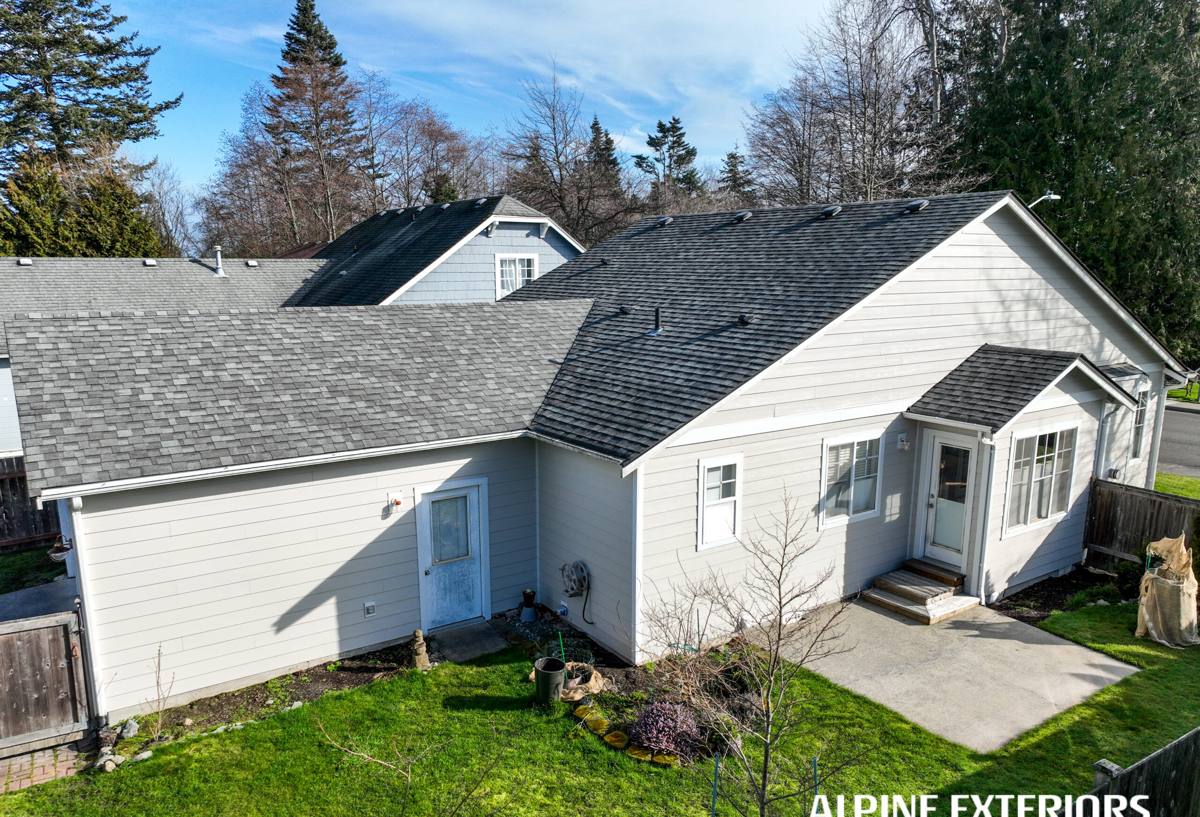
What Salt Air Actually Does to a Roof
Salt air is corrosive to unprotected metal. On a roof, that shows up in a few predictable places:
- Exposed fasteners and nail heads that aren't properly coated or covered can rust and streak shingles years before they should.
- Flashing, valleys, and drip edge made from lower-grade metal can pit and corrode, which is exactly where leaks start.
- Any exposed metal trim, vents, or fixtures near the roofline age faster in a salt-air environment than the same materials would inland.
The fix isn't complicated — it's using corrosion-resistant fasteners and flashing metals suited to a marine-influenced environment, and making sure metal components are properly sealed and covered rather than left exposed. It's a material spec decision made at the start of the job, not a repair made later.
Moss, Shade, and Bellingham's Wet Season
Why Moss Takes Hold So Easily Here
Whatcom County's roofing "moss season" runs long — realistically much of the fall through spring — and Edgemoor's mature tree canopy in places means extended shade and slower drying after every rain. Moss and algae need moisture and shade to establish, and this neighborhood offers plenty of both. Once moss gets a foothold, it holds water against the roof surface, works its way under shingle edges, and gradually lifts them, which is how a moss problem turns into a leak problem.
Building Moss Resistance Into the Installation
A new roof is the best time to get ahead of this. That means selecting shingles with algae-resistant granules where appropriate, planning proper roof-to-tree clearance recommendations for the homeowner, and making sure the roof drains cleanly with no low spots or debris traps built into the design. It also means talking honestly with the homeowner about ongoing gutter and debris maintenance — no roof, however well installed, eliminates the need for that in a shaded, wet climate.
What a Correct New Roof Installation Involves
A roof is a system, not a single layer of shingles. Skipping any part of the system is where premature failures come from.
Tear-Off and Deck Inspection
We remove the old roofing down to the deck rather than layering over it. That's the only way to actually see the condition of the sheathing, check for rot or soft spots (common where past leaks went unnoticed), and confirm the deck is sound enough to fasten a new roof to properly.
Underlayment
Given how much driving rain Edgemoor sees off the bay, underlayment choice matters more here than in drier parts of the county. We use synthetic underlayment as standard and add self-adhered ice-and-water membrane at vulnerable points — eaves, valleys, and roof penetrations — as a second line of defense if wind-driven rain gets past the shingle layer.
Flashing
Flashing around chimneys, walls, skylights, and valleys is where the majority of roof leaks actually originate — not out in the open field of shingles. We install new flashing rather than reusing old pieces, using metal appropriate for a salt-air environment, and sequence it correctly with the underlayment and shingles so water is always directed out, never trapped in.
Ventilation
Balanced intake and exhaust ventilation keeps the attic dry and temperature-regulated, which protects the deck from the underside and helps the shingles perform as designed. In a damp climate like ours, poor ventilation contributes to premature deck rot and can void material warranties — it's not optional.
Fasteners and Field Installation
Correct nail placement, pattern, and count matter for wind resistance, and corrosion-resistant fasteners matter for longevity this close to the water. We follow manufacturer specifications rather than crew shortcuts, because that's what keeps material warranties valid.
Choosing Materials for This Environment
There's no single "best" roofing material for every home — it depends on the house, the budget, and how much maintenance the homeowner wants to take on. Here's how the common options weigh out for an Edgemoor property specifically:
| Material | Salt Air / Moisture Behavior | Moss Resistance | Maintenance |
|---|---|---|---|
| Asphalt composition shingle (algae-resistant) | Performs well with proper flashing and fasteners | Good, especially with AR granules | Periodic debris removal, gutter cleaning |
| Standing seam metal | Excellent when using marine-grade coated panels and fasteners | Very good — sheds moisture fast, little surface for moss to grip | Low; occasional inspection |
| Cedar shake | Sensitive to prolonged moisture without diligent upkeep | Requires active maintenance to resist moss/rot in shaded, wet spots | Higher — regular treatment and inspection |
| Synthetic/composite shingle | Good moisture resistance; consistent performance | Good with proper installation and drainage | Moderate |
We install what fits the home and the budget, but we're honest with Edgemoor homeowners about trade-offs — a beautiful cedar shake roof under heavy tree shade is going to demand more upkeep than a lower-maintenance shingle or metal roof in the same spot. That's not a knock on the material; it's just how moisture and shade interact with any wood product, and it's better to know that going in.
Our Installation Process
- On-site assessment — we walk the roof, check attic ventilation and insulation, and look at tree cover, drainage paths, and any existing moss or algae growth.
- Written estimate — clear scope, material options, and pricing, no pressure to decide on the spot.
- Tear-off and deck inspection — full removal, deck repairs identified and priced separately if found, so there are no surprises buried in a vague allowance.
- System installation — underlayment, ice-and-water membrane at vulnerable areas, flashing, ventilation components, then the roofing material itself, installed to manufacturer spec.
- Final walkthrough — we review the completed roof with the homeowner and go over any maintenance recommendations specific to the property, like tree trimming or gutter schedules.
Why Local Experience in Edgemoor Matters
A crew that regularly works this neighborhood already knows which streets sit closest to the bay and see the most salt exposure, which lots have heavy shade and slower drying, and which drainage and moss issues tend to show up on similar homes nearby. That's not something you get from a general spec sheet — it's pattern recognition built from doing the work here repeatedly. It shows up in small decisions: which flashing metal to spec, where to add extra underlayment protection, how to talk through tree-trimming recommendations that actually make a difference for a specific lot.
It also matters for permitting and inspection — knowing local requirements and building a relationship with area inspectors keeps a project moving instead of stalling on avoidable paperwork issues.
Signs an Edgemoor Home May Need a New Roof
- Granule loss visible in gutters or downspouts, especially after wind or heavy rain
- Curling, cupping, or cracked shingles, particularly on sun- or wind-exposed slopes
- Persistent moss or dark streaking that returns quickly after cleaning
- Rust stains at fastener heads or flashing points
- Daylight visible through the attic roof deck, or staining on attic sheathing
- A roof approaching or past its expected material lifespan with visible wear
Catching these early is worth it — a roof nearing the end of its life in a wet, shaded, salt-air environment tends to develop hidden deck damage faster than the same roof would somewhere drier, and that damage is what turns a straightforward re-roof into a more expensive repair job.
What Influences Cost
Every roof is priced on its own specifics, but the main cost drivers on an Edgemoor project are typically roof size and pitch, the material chosen, how much deck repair is needed once the old roofing comes off, and the complexity of the roofline itself — valleys, chimneys, skylights, and dormers all add labor and material. We provide a written estimate before any work begins so there's no ambiguity about scope or price.
If you're weighing a new roof for your Edgemoor home, we're glad to take a look and talk through what your specific property needs — no pressure, no obligation. Use the form below to request a free estimate.