 Bellingham Roofing
 Why Birchwood Roofs Take a Different Kind of Beating
Homes in Birchwood sit close enough to Bellingham Bay that salt-laden air is a constant factor, not an occasional one. Combine that with the wind-driven rain that rolls in off the water during fall and winter storms, and you've got a roof that's working harder than one further inland. Add the tree cover common to this part of Bellingham — big conifers and deciduous trees that shade roof sections for much of the day — and you get the third piece of the puzzle: a long moss season that can run from early fall well into spring.
None of this means a roof in Birchwood needs to be exotic or over-built. It means the installation details that get overlooked on an easier job — ventilation, underlayment choice, flashing, edge protection — matter more here than they would in a drier, sunnier climate. A new roof done right for this neighborhood is one built around those three stressors: salt air, driving rain, and moss.
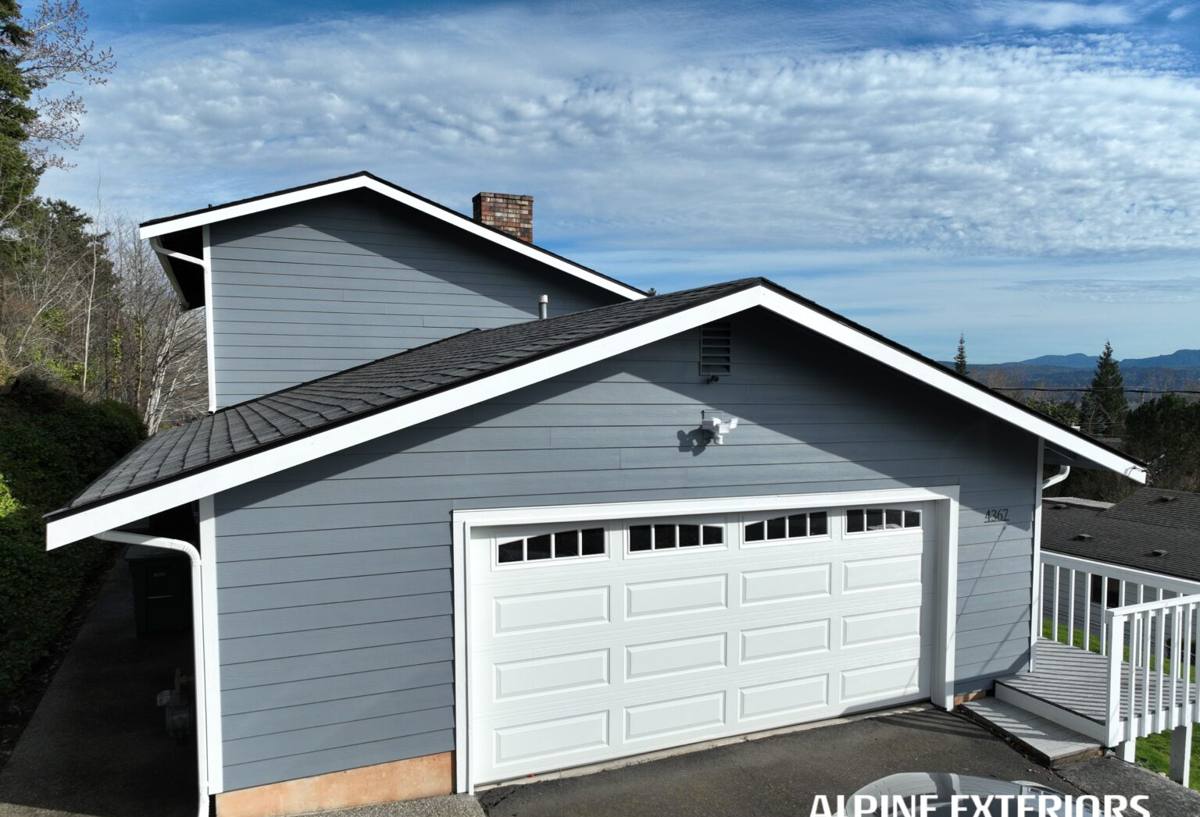
How to Tell a Birchwood Roof Is Due for Full Replacement, Not Another Repair
Not every roof problem means a full tear-off. But in a climate like this one, repairs on an aging roof often turn into a pattern of chasing the same leak into new spots. Part of an honest estimate is telling you plainly when a repair will genuinely hold and when it's just delaying a bigger job.
- Shingles that are cupping, cracking, or losing granules across large sections rather than one isolated area
- Moss or algae established thickly enough that it's lifting shingle edges, not just staining the surface
- Soft spots, sagging, or visible deflection when walking the roof plane
- Daylight visible through the attic roof deck, or damp insulation and staining on rafters
- Flashing around chimneys, skylights, or valleys that's rusted, separated, or was never properly stepped in the first place
- A roof approaching or past the upper end of its material's realistic service life in a wet coastal climate
- Repeated leak calls to the same general area over more than one wet season
If a roof is showing two or three of these at once, full replacement is usually the more honest recommendation, both for your wallet over time and for what's protecting the rest of the house.
What a Correct New Roof Installation Actually Involves
A new roof is more than shingles nailed over the old ones. Every layer underneath does a specific job, and skipping or shortcutting any one of them is exactly how a brand-new roof ends up with a moisture problem inside five years.
Tear-Off and Deck Inspection
We remove the existing roofing down to the deck rather than layering over it. That's the only way to actually see the condition of the plywood or plank sheathing underneath — soft, delaminated, or water-stained decking gets replaced before anything new goes down. Covering over a compromised deck just hides the problem under a new roof.
Underlayment and Ice-and-Water Protection
Underlayment is the roof's backup layer if wind ever drives water under the shingles, which happens more often here than in calmer inland climates. We use a synthetic or self-adhering membrane sized to the exposure of each roof, with reinforced protection at eaves, valleys, and other spots where water concentrates.
Ventilation That Matches the Roof
A roof needs balanced intake and exhaust airflow to manage the moisture that naturally moves up from the living space and to keep the deck at a consistent temperature. Get this wrong and you invite condensation inside the attic — which looks and behaves like a roof leak even though the roofing itself is fine.
Flashing and Edge Details
Chimneys, skylights, sidewalls, and valleys are where most roof leaks actually originate, not in the open field of shingles. Properly stepped and counter-flashed details, along with a continuous drip edge at eaves and rakes, are what keep wind-driven rain from finding its way behind the roofing material.
Choosing a Roofing Material for Whatcom County's Marine Climate
There's no single "best" roofing material — the right choice depends on your roof's exposure, how much shade it gets, your maintenance appetite, and your budget. Here's how the common options generally compare for a coastal, moss-prone, salt-air climate like Birchwood's.
| Material | Moisture & Moss Behavior | Maintenance | Typical Upfront Cost |
|---|---|---|---|
| Architectural asphalt shingle | Good when paired with proper ventilation; needs periodic moss treatment on shaded slopes | Low to moderate | Most affordable option |
| Standing seam metal | Sheds water and moss very well; minimal surface for moss to establish on | Low | Higher upfront investment |
| Cedar shake (natural) | Attractive but absorbs moisture and is more prone to moss and rot in shaded, damp conditions without diligent upkeep | High — regular treatment and inspection needed | Higher, with ongoing maintenance cost |
| Synthetic/composite shake | Mimics cedar's look with much better moisture resistance | Low to moderate | Mid to higher range |
For most Birchwood homes we recommend architectural asphalt shingle as the practical baseline — it performs well in this climate when the underlayment and ventilation are done correctly — with metal as a strong option for homes with heavy tree cover or long-term owners who want to largely forget about moss maintenance. We generally steer homeowners away from natural cedar on heavily shaded lots specifically because of how much upkeep it demands to stay ahead of moisture in a climate this wet; that's a maintenance and moisture-behavior trade-off, not a knock on the material itself.
Our Process, Start to Finish
Every roof is priced and planned individually, but the sequence of a proper installation looks the same on every job:
- On-site inspection of the roof, attic, and current ventilation, with photos and a plain-language explanation of what we find
- A written estimate that spells out materials, scope, and any deck repair contingencies before work starts
- Scheduling that accounts for Bellingham's wetter months, with material staged and covered to protect your property
- Full tear-off, deck inspection and repair as needed, then underlayment, flashing, and roofing installation in that order
- Ventilation checked and balanced as part of the install, not treated as an afterthought
- A final walk-through with you, including yard and gutter cleanup
We'd rather explain a delay caused by weather or a rotten section of decking than rush through it and have you dealing with a callback six months later.
Moss, Trees, and Long-Term Roof Care in Birchwood
Tree cover is part of what makes this area attractive to live in, and we're not going to tell you to cut down healthy trees for the sake of your roof. What we can do is design the installation to handle shade and moisture better — proper ventilation, a material and color that doesn't hold moisture as readily, and metal edge and valley details that keep debris from damming water against the roofing.
After installation, a light annual check — clearing needles and leaves out of valleys and gutters, and addressing any new moss growth before it establishes — goes a long way toward getting the full service life out of a new roof in this climate. We're happy to point out what to watch for during the final walk-through so you're not guessing later.
Permits, Code, and Doing It Right the First Time
Full roof replacements typically require a permit and inspection through the local building department, and we handle that process as part of the job rather than leaving it to the homeowner. Beyond the paperwork, building it to code isn't a formality — proper ventilation ratios, ice-and-water shield placement, and fastening schedules exist because they're what actually holds up under this region's wind and rain. Cutting corners on any of them tends to show up as a problem within a few wet seasons, not immediately.
Why a Crew That Already Works Birchwood Makes a Difference
A crew that regularly works this part of Bellingham has already seen how the local conditions play out over time — which tree-covered lots hold moisture longest, how much of a beating northwest-facing slopes take in a winter storm, and where salt air tends to accelerate wear on metal flashing and fasteners. That experience shapes practical decisions on your job: fastener and flashing material choices, where extra underlayment protection is worth it, and how to schedule around the wetter stretches of the year without compromising the install.
It also means someone local to call if a question comes up after the job is done — not a call center, not a crew that drove in from out of the area for one job and won't be back.
If your roof is showing its age or you're planning ahead, we're glad to come take a look and give you a straightforward, no-pressure estimate for a new roof installation built for what a Birchwood roof actually has to handle. Use the form below to get started.