 Bellingham Roofing
 Why Window Replacement in Lynden Is Its Own Job
Lynden sits inland from Bellingham Bay, but that doesn't mean local homes get a pass on tough weather. Whatcom County's marine air still finds its way east across the flats, carrying moisture that settles into window frames, sits in glazing pockets, and works into any gap a builder-grade window left open. Add long stretches of driving rain off the Pacific, a moss season that runs longer here than in drier parts of the state, and the wide temperature swings between summer afternoons and damp winter mornings, and you have a climate that is patient and thorough about finding weak spots in a window system.
Window replacement done right in this area isn't just a swap of old glass for new. It's a chance to correct whatever let moisture, drafts, or rot get a foothold in the first place. A window that looks fine from the curb can still be failing at the sill, the flashing, or the seal — and in a climate like ours, those hidden failures don't stay hidden for long.
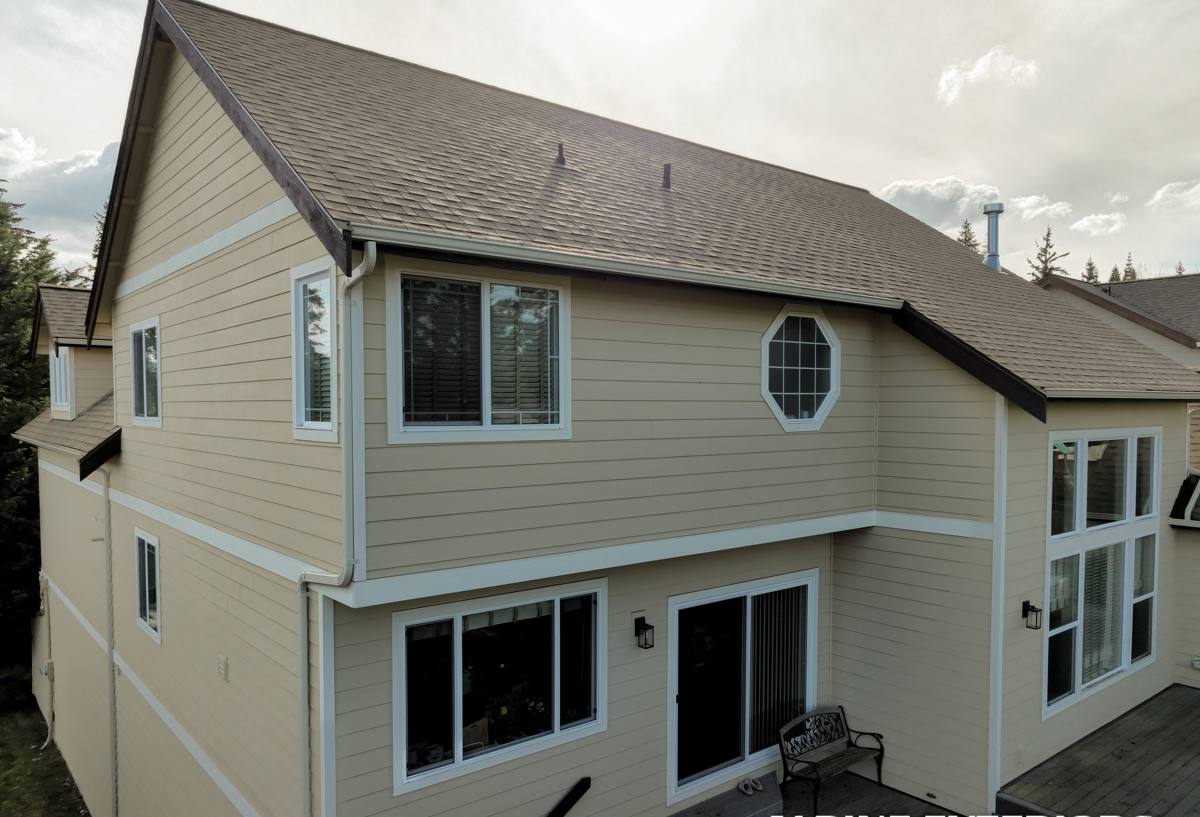
How Whatcom County Weather Wears Down Windows
Wind-Driven Rain
Rain in this region rarely falls straight down. Wind pushes it sideways against west- and south-facing walls, forcing water into any gap around a window frame that isn't properly flashed and sealed. Over years, that repeated pressure finds the path of least resistance — usually at the corners, the bottom sill, or wherever old caulk has shrunk and cracked.
Moss and Sustained Dampness
A long moss season means more than green roofs. The same dampness that feeds moss on shingles keeps wood trim, sills, and frames wet for extended periods. Older wood windows and even some vinyl units with poor drainage paths hold that moisture against the frame instead of shedding it, which is exactly the condition that leads to soft wood, swollen sashes, and eventual rot.
Temperature Swings and Condensation
Cold, damp mornings followed by warmer afternoons create condensation cycles inside older or poorly sealed windows. That condensation doesn't just fog the glass — it drips onto sills and drywall, and repeated cycles can degrade the wood or drywall around the frame long before most homeowners notice a problem.
Signs Your Lynden Home Is Ready for Window Replacement
- Visible fogging or moisture trapped between panes of double-glazed glass
- Soft, discolored, or spongy wood at the sill or lower frame corners
- Windows that are difficult to open, close, or lock — a sign of frame warping
- Noticeable drafts or cold spots near the window even when it's fully closed
- Peeling or bubbling paint on interior trim near the window frame
- Persistent moss or dark staining on exterior trim around the window
- A visible gap between the window frame and the siding or trim
- Rising heating bills without any other clear explanation
Any one of these on its own might just need a repair. Several showing up together, especially on the same wall, usually points to a frame or flashing problem that a new window and a correct installation will solve — and a spot repair won't.
What a Correct Window Replacement Actually Involves
The window itself is only part of the job. In a climate that pushes water sideways and keeps things damp for weeks at a time, the installation details matter as much as the product. A correct replacement includes:
- Removing the old unit and inspecting the framing and sill underneath for hidden rot or moisture damage before anything new goes in
- Repairing or replacing any damaged framing — never installing a new window over a compromised sill
- Installing proper flashing and a drainage path so any water that gets past the exterior trim has somewhere to go besides into your wall
- Using a weather-resistive barrier and sealing tape at the window opening, not just caulk alone
- Setting the window level, square, and properly shimmed so the sash operates smoothly and the seals compress evenly
- Sealing the interior and exterior with the right materials for each surface, then confirming there are no gaps once trim goes back on
Skip any of these steps and the new window can fail in the same way the old one did — just faster, because a poor install traps moisture behind a fresh, tight-looking exterior.
Choosing Materials and Glass for This Climate
There's no single "best" window for every home, but some choices hold up better than others against sustained damp weather and driving rain. We walk homeowners through the trade-offs honestly rather than pushing one option for every job.
| Frame Material | Moisture Performance | Maintenance | Typical Trade-Off |
|---|---|---|---|
| Vinyl | Won't rot; handles sustained damp well | Low — occasional cleaning | Fewer color/finish options than wood or fiberglass |
| Fiberglass | Excellent; very stable in temperature and moisture swings | Low | Higher upfront cost |
| Wood (clad exterior) | Good if cladding and seals stay intact; vulnerable where cladding is breached | Moderate to high on exposed elevations | Best look for period homes, but needs more upkeep here than in drier climates |
| Aluminum | Prone to condensation without a thermal break | Low | Generally not our recommendation for primary living spaces in this climate |
Glass Packages
For this region, we typically recommend double-pane glass with a low-E coating and an argon or krypton gas fill as a baseline. The low-E coating reduces heat loss during our cool, damp months, and a well-sealed insulated glass unit resists the internal fogging that shows up in older, failing windows. On homes with more direct rain exposure, a slightly wider sightline or reinforced weatherstripping can add real durability without changing the look of the window.
Our Window Replacement Process
1. On-Site Assessment
We look at each window opening individually — not just the glass, but the trim, sill, and siding condition around it. Homes in this area often have a mix of window ages and conditions, so a whole-house plan may include different priorities for different walls.
2. Honest Recommendations
We explain what we're seeing, what's driving any damage, and what options fit the home and the budget. If a repair is genuinely a better near-term choice than full replacement, we'll say so.
3. Precise Measurement and Ordering
Every opening gets measured individually. Older homes in particular are rarely perfectly square, and ordering off a single generic measurement is how gaps and leaks happen later.
4. Careful Removal and Installation
We protect interior finishes, remove the old window without damaging surrounding framing, inspect and repair what's underneath, and install with proper flashing, sealing, and shimming as described above.
5. Cleanup and Walkthrough
We clean up the work area, test every new window's operation and locks, and walk through the results with you before we consider the job finished.
What Affects the Cost of Window Replacement in Lynden
Every home is different, so we avoid quoting numbers before we've actually looked at the job. In general, these are the factors that move the price up or down:
| Factor | How It Affects Cost |
|---|---|
| Number of windows and their size | More openings and larger units mean more material and labor |
| Frame material chosen | Vinyl is typically the most budget-friendly; fiberglass and clad-wood cost more upfront |
| Condition of the existing framing | Rot or moisture damage found during removal adds repair work before the new window goes in |
| Glass package and features | Upgraded low-E coatings, gas fills, or impact-resistant glass add cost |
| Access and elevation | Second-story or hard-to-reach windows take more time and equipment |
| Trim and siding work | Matching or repairing exterior trim around the new window can add to the scope |
We put all of this in writing before any work starts, so there are no surprises once the job is underway.
Why It Matters That We Already Work in Lynden
A crew that already works across Whatcom County has seen how homes in this area age under year-round dampness and knows the difference between a cosmetic issue and a structural one at a glance. That experience shows up in small decisions — how much flashing overlap is enough, which sealants actually hold up through a wet winter, when a sill needs to be rebuilt instead of patched — that a crew unfamiliar with this specific climate might get wrong. It also means we're not guessing about how our work will hold up; we're building on what we've already seen perform well on homes with the same weather exposure as yours.
Protecting Your Investment After Installation
New windows still benefit from a little seasonal attention, especially given how long our wet season runs. A few habits go a long way:
- Rinse exterior frames and sills periodically to clear pollen, dust, and early moss growth before it takes hold
- Check weep holes and drainage tracks each fall to make sure they're clear of debris before heavy rain sets in
- Inspect exterior caulking annually and touch up any cracked or shrinking sections
- Wipe down interior sills after heavy condensation events, particularly in colder months
- Operate every window a few times each season so hardware and seals don't stiffen from disuse
None of this is demanding work, but skipping it is how small issues on an otherwise good window turn into bigger ones.
If your windows are showing their age or you're just planning ahead, we're happy to take a look and give you a straight answer about what your home actually needs. Use the form below to request a free, no-pressure estimate for your Lynden home.