 Bellingham Roofing
 Roof Replacement in Lynden: Built for Whatcom County Weather
Lynden sits inland from Bellingham Bay, but it shares the same weather system as the rest of Whatcom County — long stretches of driving rain, heavy cloud cover for much of the year, and the humid, marine-influenced air that moves in off the Pacific and settles over the lowlands. That combination is hard on a roof. It doesn't matter whether a home is a few blocks from downtown Lynden or out on a larger lot surrounded by open farmland — the roof over it is dealing with the same slow, cumulative moisture exposure as everything else in the county.
A roof replacement done right in this climate isn't just about swapping old shingles for new ones. It's about building an assembly — decking, underlayment, flashing, ventilation, and the finish material — that can shed a lot of water quickly, resist moss colonization in shaded and north-facing areas, and keep doing that for the full life of the material. We've built our process around that reality because it's the same reality every roof we touch in this area has to deal with.
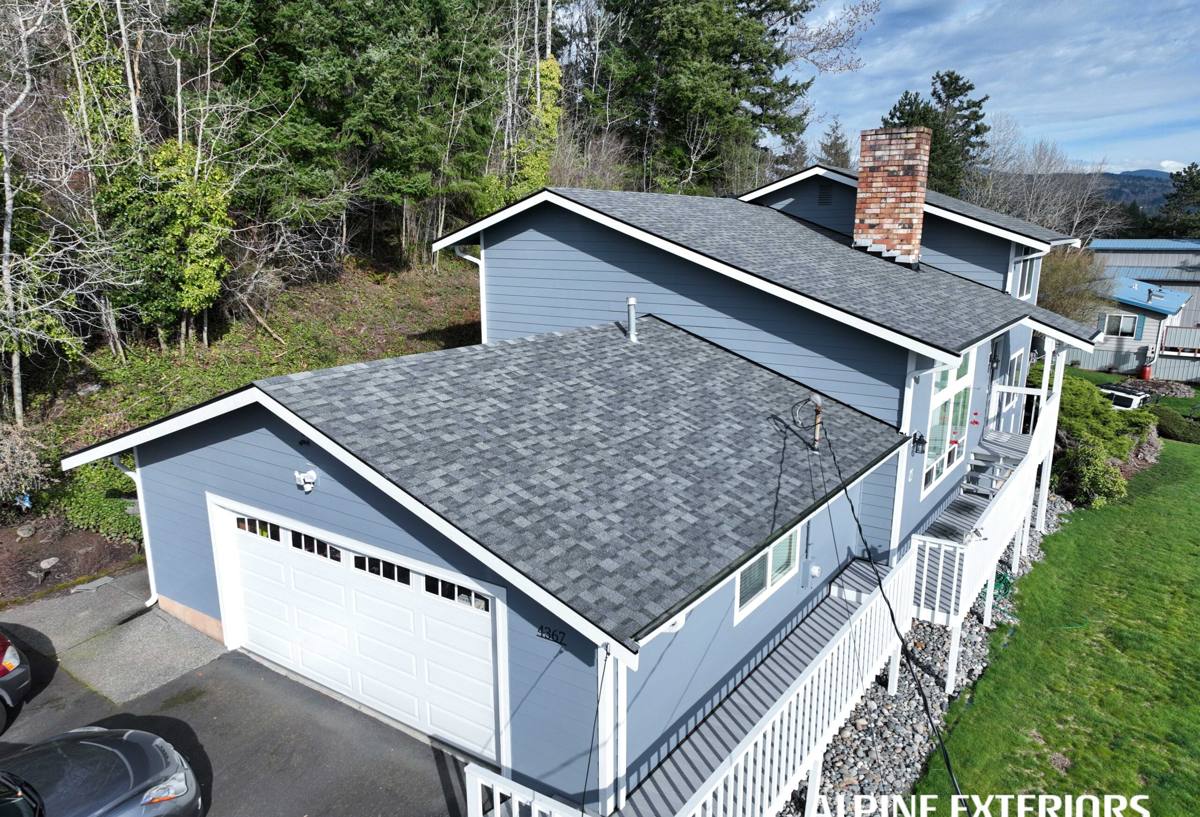
How to Tell a Lynden Roof Is Actually Due for Replacement
Not every roof problem means a full replacement. But there are signs that reliably point toward "repair won't fix this anymore," especially on homes that have gone a full asphalt shingle life cycle (roughly 20–25 years for standard three-tab, longer for architectural/dimensional shingles) under this region's rain load.
Visual and physical signs
- Shingles that are cupping, curling at the edges, or losing significant granule coverage
- Bald patches where granules have washed off, exposing the black asphalt mat underneath
- Persistent moss or algae streaking that comes back within a season or two of cleaning
- Soft spots or slight give underfoot when walking the roof (a sign of decking damage below)
- Daylight visible through the roof deck from inside the attic
- Interior water stains on ceilings or in the attic, especially after a heavy rain event
Age and history signs
If a roof is already past its expected material lifespan and has needed more than one or two repair visits in the last few years, replacement is usually the more honest recommendation — repeated patch repairs on an aging roof tend to cost more over time than one correctly done replacement, and they don't solve the underlying decking or underlayment fatigue.
What a Correct Roof Replacement Actually Involves
A roof replacement is a system, not a single product. Skipping or shortcutting any layer of that system is where most premature failures come from — and it's usually invisible to the homeowner until years later. Here's what we consider non-negotiable on every replacement:
Tear-off and deck inspection
We remove the old roofing down to the deck rather than layering over it. That lets us actually inspect the plywood or board sheathing underneath for rot, delamination, or soft spots — problems that are common on older homes in wet climates and that can't be seen or fixed from above.
Underlayment and water barrier
Synthetic underlayment goes down as the primary water-resistant layer beneath the finish material. In vulnerable areas — eaves, valleys, and around penetrations like vents and chimneys — we add self-adhering ice-and-water shield membrane, which seals around fastener penetrations and gives a second line of defense in the spots where wind-driven rain is most likely to find a way in.
Flashing
Flashing around chimneys, skylights, sidewalls, and roof-to-wall transitions is one of the most common failure points on any roof, and it's frequently done poorly or reused when it shouldn't be. We install new flashing as part of a replacement rather than reusing old, corroded, or improperly seated pieces.
Ventilation
Proper intake and exhaust ventilation keeps the attic space at a consistent temperature and moisture level. Without it, trapped moisture condenses on the underside of the deck, which accelerates rot and can void material warranties. This is one of the most under-addressed parts of a roof replacement — the finish material gets all the attention, but the ventilation underneath it is what protects the structure long-term.
The finish material
Installed to the manufacturer's specified nailing pattern, exposure, and starter-course requirements — not "close enough." Correct installation is what the material warranty is actually contingent on.
Choosing a Roofing Material for a Lynden Home
There's no single "best" material — the right choice depends on the home's roof pitch, budget, how much shade the roof gets, and how the homeowner wants to balance upfront cost against long-term maintenance. Here's how the common options stack up under this region's rain and moss pressure:
| Material | Typical Lifespan | Moss/Moisture Behavior | Maintenance Level |
|---|---|---|---|
| Architectural (dimensional) asphalt shingle | 25–30 years | Good drainage; moss-resistant granule options available for shaded roofs | Low-moderate; periodic moss treatment recommended in shaded areas |
| Standard 3-tab asphalt shingle | 18–22 years | Adequate, but less durable against wind-driven rain over time | Moderate |
| Standing seam metal | 40–50+ years | Excellent — sheds water and moss has little to grip | Low |
| Cedar shake | 20–30 years (with upkeep) | Absorbs moisture; requires active moss/rot management | High |
We install algae- and moss-resistant shingle products on request, and for homes with heavily shaded roof sections — common on lots with mature trees, which describes a fair number of properties around Lynden — that upgrade is usually worth the modest cost difference. We're honest about trade-offs rather than steering every homeowner toward the same product: cedar shake looks great but demands real ongoing maintenance in this climate, and we'll say so plainly rather than oversell it.
Moss and Algae: Prevention Built Into the Replacement
Moss doesn't just sit on top of a roof — its root structure works into shingle granules and seams, holding moisture against the surface and accelerating wear. In a climate with as many overcast, damp days as this one, moss pressure is constant on north-facing slopes and anywhere a roof sits under tree cover.
A new roof gives us the chance to address this at the source: zinc or copper strips installed near the ridge release trace metal ions with every rain, which inhibits moss and algae regrowth across the roof plane below. It's a small addition at install time that meaningfully reduces how often a homeowner needs to have the roof cleaned afterward.
Our Replacement Process, Start to Finish
- On-site inspection. We walk the roof and the attic, not just look from the ground, and check decking condition, ventilation, and flashing points.
- Written estimate. A clear, itemized quote covering material, tear-off, decking repair allowance, and labor — no vague lump-sum guessing.
- Material selection. We walk through the options relevant to the home's pitch, shade exposure, and budget, including moss-resistant upgrades where they make sense.
- Scheduling around the weather. We plan installs for dry weather windows and keep the roof deck covered and protected any time work has to pause.
- Tear-off and deck repair. Old material comes off, damaged decking gets replaced (not covered over), and the deck is inspected before anything new goes down.
- Underlayment, flashing, and ventilation install. The water-management layers go in correctly before the finish material is ever touched.
- Finish material installation. Installed to manufacturer specification so the warranty is valid.
- Cleanup and magnetic sweep. Job site and yard cleared of debris and stray nails.
- Final walkthrough. We go over the finished roof with the homeowner before calling the job done.
Why a Crew That Already Works Lynden Matters
Roofing work in Whatcom County runs on a shorter dry-weather window than a lot of the country gets, and a crew that works this area regularly plans around that instead of getting caught mid-tear-off by an incoming system. Local permitting requirements, typical roof pitches and construction styles seen on homes in and around Lynden, and realistic scheduling around fall and winter rain patterns are all things a crew learns by doing the work here repeatedly — not something that transfers cleanly from a contractor who mostly works a drier climate.
There's also a practical service-life argument: a local crew is close enough to come back for warranty service, a post-storm check, or a maintenance question without it becoming a half-day trip. That matters more with roofing than with almost any other exterior trade, because roof problems that go unaddressed for even a few weeks can turn into interior damage.
What Affects the Cost of a Roof Replacement
| Factor | Why It Matters |
|---|---|
| Roof size and pitch | Steeper pitches take longer to work safely and use more material per square |
| Number of layers to tear off | Homes with existing layered roofing take more labor to strip to bare deck |
| Decking condition | Rot or delamination found at tear-off requires replacement sheathing before install |
| Material choice | Standard asphalt, architectural shingle, and metal carry different material costs |
| Roof complexity | Valleys, dormers, skylights, and chimneys all add flashing and labor time |
| Accessibility | Steep lots or limited equipment access can affect setup and disposal logistics |
We give a specific number after seeing the roof in person — anyone quoting a full replacement price sight-unseen is guessing, and that guess tends to grow once tear-off reveals the actual deck condition.
Before You Get an Estimate
- Note when the current roof was installed, if known, and whether it's had prior repairs
- Check the attic (or note if you can't access it) for any visible daylight, staining, or damp insulation
- Point out any known leak history, even old or "fixed" ones — it helps target the inspection
- Have a rough idea of your timeline, especially if you're trying to get ahead of the wet season
- Ask about warranty coverage on both materials and labor, and get it in writing
If your Lynden home's roof is showing its age or you just want an honest read on how much life it has left, we're glad to come take a look. The estimate is free, there's no pressure to commit on the spot, and you'll get a straight answer about whether you need a full replacement or not.