 Bellingham Roofing
 Roof Repair Built for Lynden's Climate
Lynden sits in one of the wettest, greenest corners of Washington, and that's exactly why roofs here wear out differently than roofs in drier parts of the country. Whatcom County's marine-influenced climate means long stretches of driving rain, humid air that never fully dries out a roof deck between storms, and a moss and algae season that can run nine months out of the year on a shaded, north-facing slope. Add in the salt-laden air that drifts inland off the Salish Sea and settles into fasteners, flashing, and gutter systems, and you have a climate that's genuinely tough on roofing materials, even good ones.
A roof repair in this environment isn't just about patching a leak. It's about understanding why that leak happened in the first place, and whether the surrounding roofing system is still healthy enough to protect the rest of the house. That's the approach we bring to every repair call in Lynden.
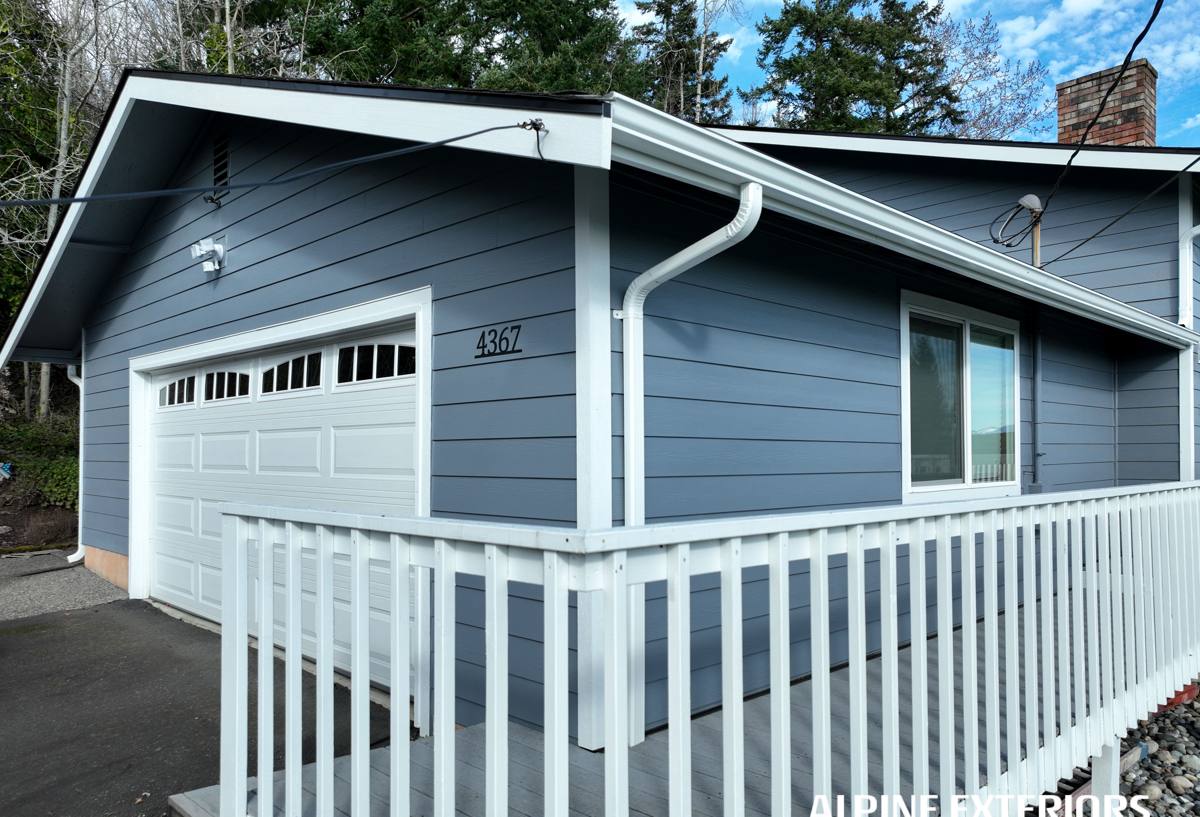
Common Roof Repair Issues We See in Lynden Homes
Most of the repair calls we run in this area fall into a handful of recurring categories. None of them are exotic — they're just the predictable result of a wet, moss-friendly climate working on a roof year after year.
Moss and Algae Damage
Moss doesn't just look bad. It holds moisture directly against the shingle surface, works its way under shingle tabs and along ridge lines, and lifts materials just enough to let water in during the next rain. On roofs with heavy tree cover or a shaded north side, moss buildup is one of the single biggest causes of hidden leaks we find.
Flashing Failures
Flashing around chimneys, skylights, vent pipes, and roof-to-wall transitions is where most leaks actually start, not in the open field of shingles. Sealant breaks down, metal corrodes, or flashing was undersized or installed poorly to begin with. Constant rain exposure accelerates all of it.
Gutter and Drainage Backups
When gutters or valleys can't move water fast enough, it backs up under shingle edges and into fascia and soffit areas. In a climate with frequent heavy rain events, undersized or clogged drainage is a repeat offender.
Wind and Storm Damage
Pacific storm systems moving through Whatcom County can lift shingle tabs, tear ridge caps, or knock branches loose that puncture the roof surface. These are usually straightforward repairs if addressed quickly, and much more expensive if left to leak for a season.
Signs Your Roof Needs Repair Now
Some roof problems announce themselves. Others stay quiet until there's water damage inside the house. Watch for these:
- Water stains or discoloration on ceilings or interior walls
- Visible daylight through the roof deck when viewed from inside the attic
- Shingle granules collecting in gutters or at downspout outlets
- Curling, cracked, or missing shingles
- Thick moss mats, especially along ridges and in shaded valleys
- Soft or spongy spots when the roof is walked
- Rusted, lifted, or gapped flashing around chimneys and vents
- A noticeable increase in heating bills, which can point to attic moisture or insulation damage
If any of these sound familiar, it's worth getting a real inspection rather than guessing. Small, correctly diagnosed repairs are almost always cheaper than the water damage that follows a leak nobody caught in time.
What a Correct Roof Repair Actually Involves
A lot of "roof repair" in this region amounts to caulking over a symptom and hoping it holds through the next storm season. That approach tends to fail, usually within a year or two, because it never addresses why the leak happened. A repair done right involves a few non-negotiable steps:
- Find the actual source. Water often travels along the roof deck or down a rafter before it shows up as a stain, so the visible damage inside isn't always directly below the entry point outside.
- Assess the surrounding material. Underlayment, decking, and adjacent shingles near the failure point need to be checked for hidden rot or saturation, not just the immediate leak area.
- Match materials appropriately. Repairs should use compatible shingle profiles, proper flashing metal, and correct fastening — mismatched or incompatible materials create new failure points.
- Address the cause, not just the hole. If moss caused the lift, moss needs to be dealt with. If drainage caused the backup, drainage needs correcting. Otherwise the same repair fails again.
Repair vs. Replacement: How We Decide
Not every roof problem calls for a full replacement, and not every leak can be reasonably patched. The decision usually comes down to the roof's age, how widespread the damage is, and how much of the underlying structure is still sound.
| Factor | Repair Usually Makes Sense | Replacement Usually Makes Sense |
|---|---|---|
| Roof age | Under 15-20 years, depending on material | Near or past the material's expected service life |
| Extent of damage | Isolated to one section, flashing point, or valley | Spread across multiple slopes or recurring in different spots |
| Decking condition | Solid, dry decking around the damaged area | Soft, rotted, or saturated decking in multiple areas |
| Moss/algae history | Surface growth without shingle lifting | Long-term moss damage that's degraded granule coverage broadly |
| Cost pattern | One-time, targeted fix | History of repeat repair calls on the same roof |
We'll always tell you honestly which category your roof falls into. A roof that only needs a repair doesn't need to be sold a replacement, and we'd rather earn a repeat customer than push a job that isn't necessary yet.
Our Roof Repair Process
When you call us for a repair in Lynden, here's what to expect:
- Inspection. We get on the roof (not just a look from the ground) and check the full system — shingles, flashing, vents, valleys, and gutters — not just the spot you're worried about.
- Honest diagnosis. We explain what's actually causing the problem, in plain language, and what the realistic options are.
- Written estimate. You get a clear scope of work and price before anything happens, no surprise add-ons mid-job.
- The repair. We work efficiently and clean up thoroughly, including a magnetic sweep for stray nails and removal of old material and debris.
- Follow-up. If the repair was tied to a bigger issue — drainage, ventilation, moss — we'll flag it so you can plan for it rather than get surprised by it later.
Moss, Algae, and Long-Term Roof Health
Given how much of Whatcom County's roof damage traces back to moss and algae, it deserves its own attention beyond just removal. Moss removal has to be done carefully — aggressive scraping or pressure washing can strip granules and shorten a roof's remaining life faster than the moss itself would have. We remove growth using methods that don't damage the shingle surface, then address what's letting moss establish itself in the first place, whether that's shade, poor airflow, or debris buildup in valleys.
Zinc or copper control strips near the ridge can help slow regrowth on shaded slopes, and keeping gutters and valleys clear of needles and leaves reduces the organic material moss needs to take hold. None of this eliminates moss permanently in a climate like ours, but it meaningfully extends the time between treatments.
Why a Crew That Already Works in Lynden Matters
Roofing companies based outside the area can do competent work, but there's a real advantage to hiring a crew that's already familiar with this specific stretch of Whatcom County. We know how the rain patterns here affect scheduling and drying time, which matters for getting a repair done correctly instead of rushed between storm systems. We know which roof types and ages are common in this area and what tends to go wrong on them. And because we're local, response time on an active leak isn't a multi-day wait — it's a call to a crew that's already working nearby.
That local familiarity also shows up in smaller, practical ways: knowing which materials hold up best against this region's rain and moss cycle, and being available for a follow-up check without treating it as a special trip.
Materials and Workmanship
For repair work, we match materials to what's already on the roof whenever possible, using quality asphalt composition shingles, proper metal flashing, and correctly rated underlayment for the exposure. We don't cut corners on flashing or fastening just to save time on a repair — a repair done with the wrong materials or shortcuts usually costs more in the long run once it fails again. Our standard is the same on a small repair as it is on a full roof: do it in a way that holds up through another Whatcom County winter.
If you're dealing with a leak, storm damage, or a roof that's been collecting moss for a season too long, we're happy to take a look and give you a straight answer. Reach out for a free, no-pressure estimate using the form below.