 Bellingham Roofing
 Why Siding Takes a Beating in Happy Valley
Happy Valley sits within Bellingham's reach of Bellingham Bay, and like most of Whatcom County, it gets the full package of Pacific Northwest coastal weather: salt-carrying air off the water, long stretches of driving rain that comes in sideways more often than straight down, and a moss and algae season that can run from fall through spring. None of that is unusual for this part of Washington. But it does mean siding here works harder than siding in a drier, inland climate, and it means the choices you make about material and installation matter more than they would somewhere with milder conditions.
Salt-laden air is corrosive to exposed metal fasteners, staples, and unprotected trim, and it can dull or degrade lower-quality finishes over time. Wind-driven rain doesn't just fall on a wall — it gets pushed up under laps, into seams, and around window and door openings if the flashing and water-resistive barrier underneath aren't done correctly. And months of damp, shaded conditions on north- and west-facing walls give moss, algae, and mildew exactly what they need to take hold, which is why so many Bellingham homes show green or black staining on siding that otherwise looks intact. None of these problems show up overnight. They accumulate, year after year, until a homeowner is looking at soft trim, stained sheathing, or a energy bill that keeps creeping up.
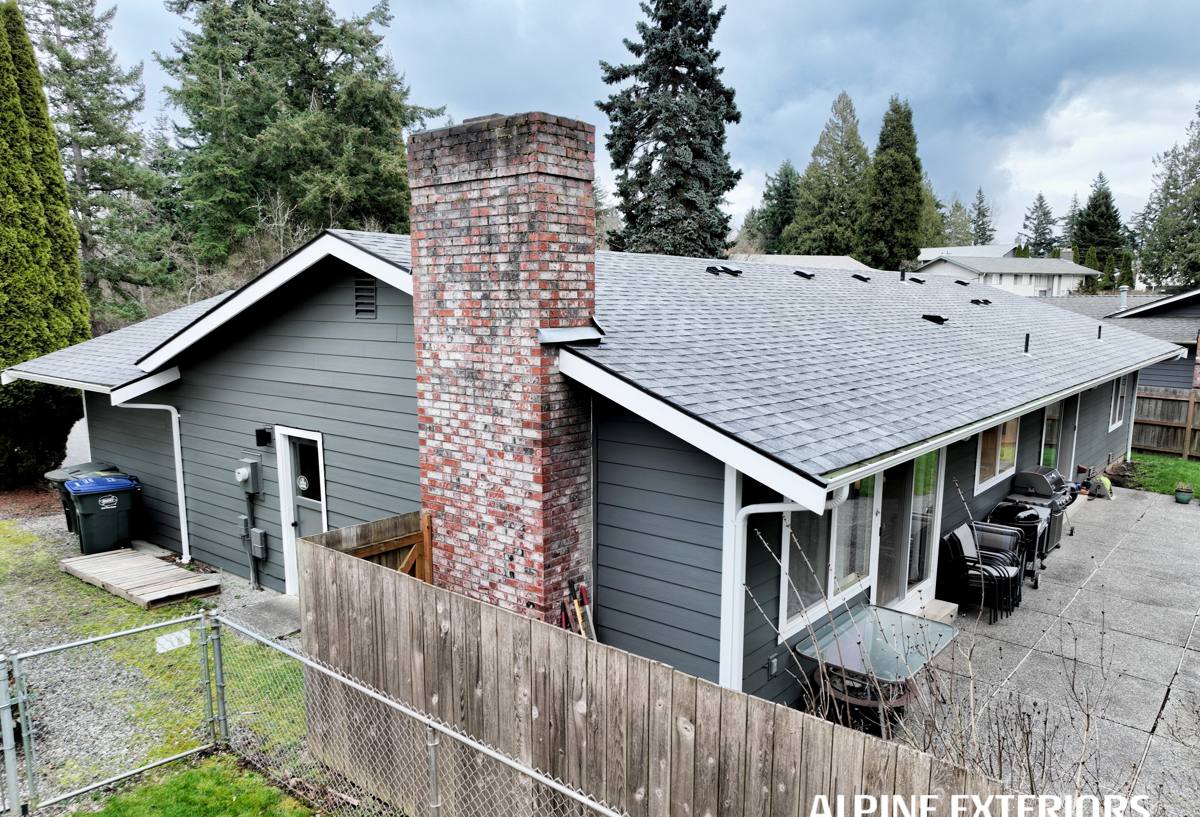
Signs Your Happy Valley Home May Need New Siding
Siding failure is usually gradual, which is why it's easy to miss until it's a bigger repair than it needed to be. Walk your home's exterior and look for the following:
- Soft, spongy, or bubbling areas when you press on the siding, especially near the bottom courses and around windows
- Paint that's peeling, cracking, or blistering repeatedly, even after repainting
- Moss or algae staining that comes back quickly after cleaning
- Warped, cupped, or buckled boards, particularly on the north or west-facing walls
- Visible gaps opening up at seams, corners, or where siding meets trim
- Siding that's approaching or past the manufacturer's expected service life
- Interior signs — water stains, musty smells, or peeling wallpaper on exterior-facing walls
- Noticeably higher heating bills without a clear reason, which can point to a compromised weather barrier
One or two of these on their own might mean a spot repair. Several at once, especially combined with an older siding system, usually means it's time to talk about full replacement before the damage spreads to the sheathing and framing underneath.
What a Correct Siding Replacement Actually Involves
Siding replacement is not just swapping old boards for new ones. The material you choose matters, but so does everything that happens underneath it — and in a climate that pushes rain sideways for months at a time, the underneath is where jobs succeed or fail.
Tear-Off and Sheathing Inspection
Once the old siding comes off, that's the one point in the project where the sheathing, framing, and any hidden moisture damage are fully visible. A correct replacement includes a real inspection at this stage — not a quick glance — and repair or replacement of any rotted or compromised sheathing before anything new goes back on. Covering up existing damage with new siding just hides the problem for a few more years.
Weather-Resistive Barrier and Flashing
This layer is what actually keeps wind-driven rain out of your walls. It includes a properly lapped weather-resistive barrier, correctly integrated flashing at every window, door, and penetration, and careful detailing at roof-to-wall transitions and other spots where water naturally wants to collect. In a climate like Bellingham's, corners cut here are the single biggest reason siding jobs fail early — usually with no visible sign until there's rot inside the wall.
Installation to Manufacturer Specification
Fastener type and spacing, minimum clearance from grade and roof surfaces, proper joint and butt seam treatment, and correct field-cutting and priming of cut edges all affect how well siding performs and whether the manufacturer's warranty actually holds up. This is detail work, and it's where an experienced local crew earns its keep.
Why We Install Only James Hardie Fiber Cement Siding
We made a deliberate decision as a company to install James Hardie fiber cement siding exclusively. We don't install vinyl, LP SmartSide, primed spruce, cedar, or comparable fiber cement alternatives. That's not a marketing position — it's a practical one, based on what holds up in exactly the kind of weather Happy Valley sees.
Fiber cement is non-combustible, which matters both for wildfire-conscious insurance underwriting and everyday fire safety. James Hardie's ColorPlus factory-applied finish is baked on under controlled conditions and backed by its own finish warranty, which means it resists the fading and chipping that field-applied paint is prone to in a wet climate. Hardie also engineers specific product lines (its HZ5 system) for climates like the Pacific Northwest, accounting for moisture exposure rather than treating every region the same. And the product comes with a strong, transferable limited warranty — useful if you ever sell the home. When siding has to survive salt air, sideways rain, and a long moss season, we've found that Hardie, installed correctly, is the material that holds up with the least long-term maintenance burden.
Comparing Siding Materials for Whatcom County Weather
| Material | Moisture Tolerance | Maintenance | Typical Lifespan | Fire Resistance |
|---|---|---|---|---|
| James Hardie fiber cement | Engineered for wet coastal climates (HZ5 line) | Low — factory finish, occasional wash | 30+ years with proper install | Non-combustible |
| Vinyl siding | Sheds water but can trap moisture behind panels; prone to warping in temperature swings | Low, but limited repair options if damaged | 20–30 years, shorter in harsh exposure | Combustible, can melt/deform |
| Cedar or wood siding | Absorbs moisture; needs consistent sealing to resist rot and moss | High — regular painting/staining and sealing | Varies widely with maintenance | Combustible |
| Engineered wood (e.g., LP SmartSide) | Treated to resist moisture, but edges are vulnerable if not sealed and maintained | Moderate — edge sealing and paint upkeep | Typically shorter than fiber cement | Combustible |
This is a general comparison, not a claim that every alternative product fails — plenty of these materials perform reasonably well when installed and maintained correctly. But for a company doing siding replacement across Bellingham's coastal, rainy climate, Hardie's combination of moisture engineering, factory finish, and low ongoing maintenance is why it's the only product we put on homes.
Our Siding Replacement Process in Happy Valley
- On-site assessment. We walk the exterior with you, check current siding condition, sheathing accessibility, and any problem areas you've already noticed.
- Written proposal. You get a clear scope of work, siding profile and color options, and an honest cost estimate before any work starts.
- Tear-off and sheathing repair. Old siding comes off, sheathing is inspected, and any rot or damage is repaired before moving forward.
- Weather barrier and flashing installation. The weather-resistive barrier and flashing details go in first, since this layer does most of the actual water-keeping-out work.
- James Hardie installation. Siding is installed to manufacturer specification, with correct fastening, spacing, and joint treatment.
- Trim, caulking, and finish detail. Trim work, caulking at penetrations, and final finish details are completed and checked.
- Final walkthrough. We review the finished job with you and confirm everything meets spec before calling it done.
What Affects the Cost of a Siding Replacement
| Cost Factor | Why It Matters |
|---|---|
| Home size and wall area | More square footage means more material and labor |
| Condition of existing sheathing | Rot or moisture damage found during tear-off adds repair scope |
| Number of stories and access | Taller walls and tight lot access affect equipment and labor time |
| Trim and architectural detail | Corners, dormers, and detailed trim work take more time than flat, simple walls |
| Siding profile and accessories | Lap width, shingle-style siding, and trim board choices vary in material cost |
| Removal and disposal of old siding | Some materials are more labor-intensive to strip and haul away than others |
We don't publish a flat price because these variables genuinely change the number from house to house. What we do provide is a detailed, itemized estimate so you know exactly what you're paying for and why.
Why Local Experience in Happy Valley Matters
A crew that regularly works Bellingham neighborhoods near the bay understands how this specific climate behaves on a wall — which elevations tend to hold moisture longest, where moss takes hold first, and how wind-driven rain typically finds its way in if flashing isn't detailed correctly. That kind of pattern recognition comes from doing the work here repeatedly, not from a general contractor's checklist. It also means familiarity with City of Bellingham permitting requirements and a crew that isn't learning Whatcom County weather on your home for the first time.
If your Happy Valley home is showing signs of siding wear, or you're just weighing whether repair or full replacement makes more sense, we're happy to take a look and give you a straightforward answer. Reach out for a free, no-pressure estimate — there's a form right below this page to get started.