 Bellingham Roofing
 Siding Repair Built for Happy Valley's Conditions
Happy Valley sits close enough to Bellingham Bay to catch salt-laden air off the water, and its tree cover and hillside lots hold onto moisture longer than more open parts of Whatcom County. That combination — salt air, driving rain off the Sound, and a moss season that can run half the year — is hard on exterior siding no matter what it's made of. A repair that looks fine on the day it's finished but doesn't account for those conditions tends to fail again within a season or two.
This page is about one thing: doing siding repair correctly for homes in this specific neighborhood. Not a general "we fix siding" pitch, but what actually goes wrong here, what a proper repair involves, and why the details matter more in Happy Valley than they might in a drier, more sheltered part of the region.
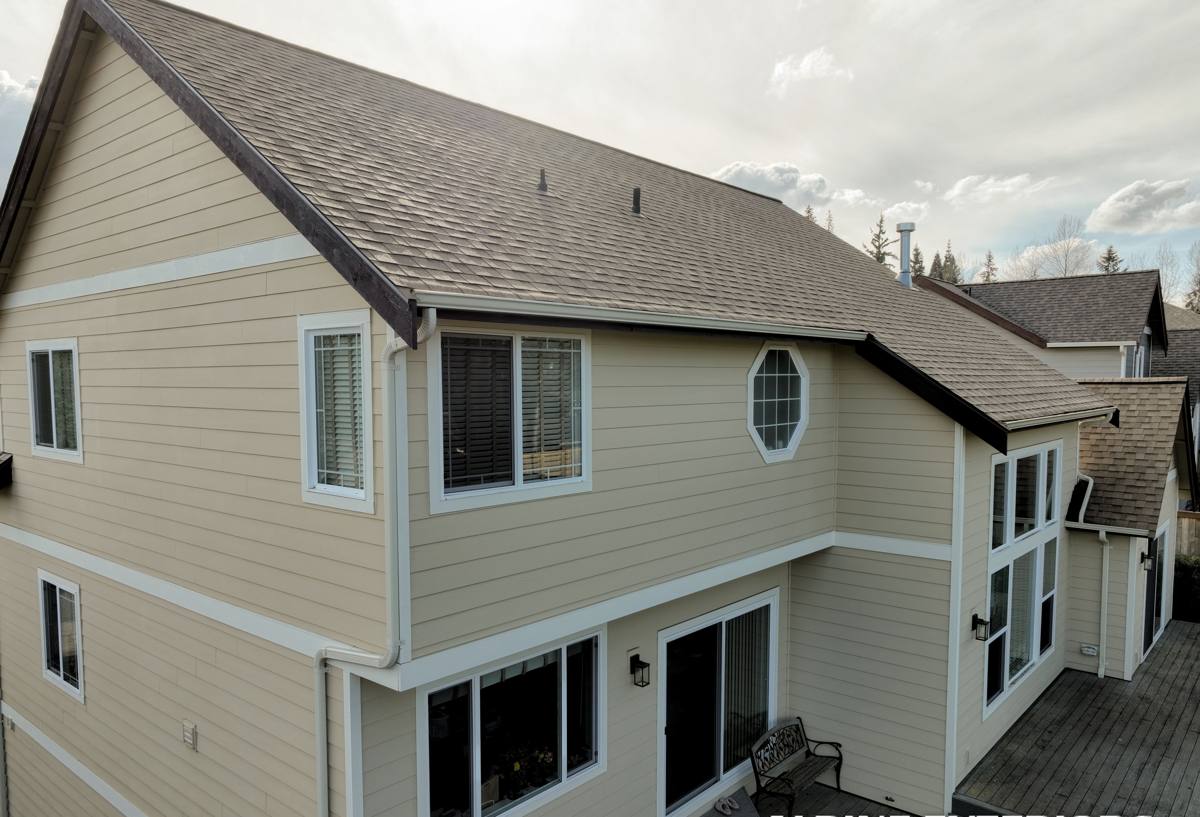
Why Happy Valley Siding Wears the Way It Does
Several factors stack up in this neighborhood that don't always show up together elsewhere in Bellingham:
Salt Air and Moisture Cycling
Proximity to the bay means a steady low-level exposure to salt-laden moisture. On its own, salt air isn't dramatic, but it accelerates the breakdown of caulking, fasteners, and any siding material that isn't dimensionally stable when it takes on and releases moisture repeatedly.
Tree Cover and Shade
Mature trees are part of what makes Happy Valley a nice place to live, but shaded, tree-lined lots dry out slower after rain. Siding on the north and west sides of homes here often stays damp longer than it would on an open lot, which is exactly the condition moss and mildew need to take hold.
Driving Rain Off the Water
Wind-driven rain doesn't just fall straight down — it gets pushed sideways into seams, laps, and trim joints. On siding with degraded caulking or improperly lapped panels, that's how water gets behind the surface instead of running off it, and once it's behind the siding, the damage is happening where you can't see it.
A Long Moss Season
Whatcom County's mild, wet winters and cool springs give moss a long window to establish itself. Moss holds moisture directly against the siding surface and, on wood-based products, can trap enough dampness to start rot before it's visible from the ground.
Signs Your Siding Actually Needs Repair
Not every mark on your siding means a real problem, but these are the signs worth taking seriously in this climate:
- Soft or spongy spots when you press on the siding, especially near the bottom courses or around window trim
- Visible gaps or cracking in caulking at seams, corners, and trim joints
- Bubbling, peeling, or discolored paint in localized patches rather than across the whole wall
- Green or black staining that keeps returning after cleaning, particularly on shaded walls
- Panels that have started to warp, cup, or pull away slightly from the wall
- A musty smell near an exterior wall inside the house, which often points to moisture already behind the siding
- Fastener stains or small rust streaks running down from nail heads
Any one of these on its own might be minor. Several together, or any sign paired with softness under your hand, usually means water has already gotten past the surface.
What a Correct Repair Actually Involves
Siding repair done right is not just cutting out a bad section and nailing up a new piece. In a climate like this one, skipping steps is exactly how a repair fails again within a year or two.
Finding the Real Extent of the Damage
Damaged siding is often a symptom, not the whole problem. Before any new material goes up, we check the sheathing and framing behind the damaged area for rot or moisture intrusion. Replacing siding over wet sheathing just seals the problem back in.
Correcting the Water Path, Not Just the Surface
If water got behind the siding in the first place, something let it in — a gap in flashing, a bad seam, a missing kick-out at a roofline, or caulking that had failed. A repair that doesn't fix the entry point is a temporary patch, even if it looks complete.
Matching Material and Profile
New siding needs to match the existing exposure, profile, and thickness closely enough that it lies flat and sheds water the same way the surrounding panels do. A mismatched patch can create a new lap line where water collects instead of running off.
Proper Fastening and Sealing
Fastener placement, caulking selection, and paint or finish matching all affect how long a repair lasts. In a salt-air environment, corrosion-resistant fasteners aren't optional — standard fasteners can start staining or failing years before they would inland.
Repair or Replace? How We Help You Decide
Not every damaged section needs a full re-side, but sometimes a repair is just delaying a bigger job. Here's how we weigh it:
| Factor | Leans Toward Repair | Leans Toward Replacement |
|---|---|---|
| Extent of damage | Isolated to one or two areas | Recurring in multiple spots across the home |
| Underlying structure | Sheathing and framing are dry and sound | Rot found behind more than one damaged section |
| Age of existing siding | Relatively recent, still performing well elsewhere | Original siding already near or past its expected lifespan |
| Material match | Matching material and color are available | Discontinued product or no reasonable match exists |
| Root cause | A specific, fixable water entry point | A systemic issue like poor original installation or wrong product for the exposure |
We'll always tell you honestly when a repair makes sense versus when you'd be spending money to postpone a replacement you'll need anyway. Our goal is the option that actually lasts, not the one that generates the most work.
Our Siding Repair Process in Happy Valley
- Inspection. We assess the damaged area and check surrounding sections, trim, and flashing for related issues, not just the obvious spot.
- Diagnosis. We identify the actual cause — a caulking failure, a flashing gap, moss holding moisture, or something else — so the fix addresses the source.
- Scope and estimate. You get a clear explanation of what needs to happen, what it involves, and a straightforward cost estimate before we start.
- Repair. We remove damaged material, address any sheathing or framing issues found underneath, correct the water path, and install matched, properly fastened and sealed siding.
- Finish and check. Paint or finish is matched as closely as possible, and we do a final check of surrounding seams and trim before calling the job done.
Why Hiring a Crew That Works This Neighborhood Matters
Happy Valley's mix of shaded lots, hillside drainage patterns, and bay-influenced weather isn't identical to every neighborhood in Bellingham, let alone the rest of Whatcom County. A crew that has actually worked homes here knows which walls tend to hold moss longest, where wind-driven rain tends to find weak seams, and which older siding products in this area are prone to specific failure patterns. That local pattern recognition shortens the diagnosis step and helps avoid repairs that address the symptom but miss the cause.
It also matters for something less obvious: knowing when a "small" repair request is actually pointing at a bigger moisture problem common to homes of a certain age or siding type in this area, and being upfront about that instead of just patching what's visible.
What We Use for Repair and Replacement Sections
When a repair calls for new siding material rather than a caulking and refinishing fix, we install James Hardie fiber cement. We don't install vinyl, LP SmartSide, or cedar as part of our repair or replacement work, and we're upfront about why: those products each carry moisture, maintenance, or dimensional-stability trade-offs that show up faster in a climate with this much sustained dampness and salt exposure. Fiber cement doesn't absorb water the way wood-based products can, doesn't expand and contract the way vinyl does in temperature swings, and holds paint and factory finish longer under damp, shaded conditions like much of Happy Valley sees.
When Repair Material Doesn't Match What's Already There
If your home has an older or discontinued siding product and an exact match isn't available, we'll tell you that directly. In some cases the practical answer is replacing a full wall section or elevation with Hardie rather than chasing a mismatched patch — we'll walk through the options and the honest cost difference before you decide anything.
If you're seeing soft spots, recurring moss, cracked caulking, or storm damage on your Happy Valley home, we'll take a look and give you a straightforward assessment — no pressure, no upsell, just what we'd actually recommend if it were our own house. Request a free estimate using the form below.