 Bellingham Roofing
 Roof Repair Built for Happy Valley's Conditions
Happy Valley sits close enough to the water and the tree cover that its roofs take a different kind of beating than roofs on the other side of Bellingham. Salt-laden air off the bay works on exposed metal fasteners and flashing year-round. Driving rain off Puget Sound doesn't just fall straight down here — wind pushes it sideways under shingle edges and around vents. And the mature trees that make the neighborhood shady and pleasant also mean roofs stay damp longer and grow moss faster than roofs in more open parts of Whatcom County. None of that is a reason to panic about your roof. It's just the reason a repair that works fine in a drier climate can fail here in a season or two if it's not done with these conditions in mind.
This page covers what roof repair actually means for Happy Valley homes — what typically goes wrong, what a repair should include to hold up, and how we approach the job when we're called out to this part of Bellingham.
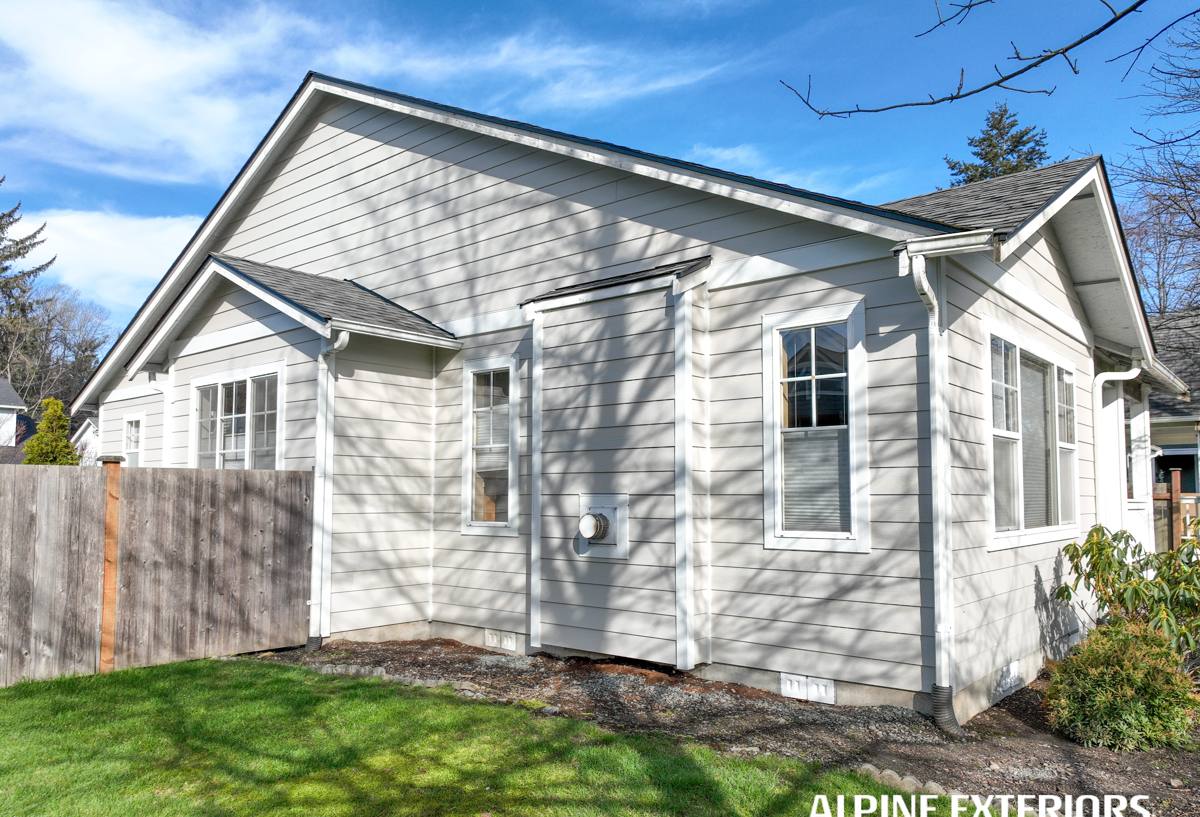
What Actually Fails on Happy Valley Roofs
Most of the repair calls we get from this neighborhood fall into a handful of categories. Knowing which one you're dealing with helps you understand what a fair repair looks like — and helps you spot a contractor who's guessing versus one who's seen this exact combination of problems before.
Moss and Organic Growth
Moss isn't just cosmetic. It holds moisture against the roofing material, and on shingle roofs it works its way under tabs and lifts them, breaking the seal that keeps water out. On roofs with heavy shade, moss can establish itself within a couple of years of a roof being cleaned. Left unaddressed, it accelerates granule loss on asphalt shingles and can rot the wood decking underneath in the worst cases.
Flashing and Fastener Corrosion
Salt air speeds up corrosion on exposed metal — step flashing, valley flashing, nail heads, and vent boots with metal collars. Corroded flashing doesn't fail all at once; it develops pinhole leaks and seam gaps that let water in gradually, often showing up as a stain on an interior ceiling months before anyone sees a problem on the roof itself.
Wind-Driven Rain Intrusion
Because storms here often come with real wind, rain gets pushed under shingle edges, around chimney flashing, and through gaps that would never leak in a calm rain. This is why repairs that only address the visible gap — without checking how wind-driven water actually moves across that section of roof — tend to leak again in the next big storm.
Valley and Low-Slope Wear
Roof valleys collect the most water and the most debris, and on shaded lots they also collect the most moss and needle buildup. Valleys are one of the most common leak points we find on repair calls in this neighborhood.
What a Correct Repair Involves
A roof repair done right isn't just patching the spot where water is showing up inside the house. Water travels — a stain on a bedroom ceiling might trace back to a flashing gap several feet away. Here's what we check on every repair call in Happy Valley:
- Full inspection of the affected roof plane, not just the leak point — including the decking underneath if there's any sign of moisture
- Condition of surrounding shingles, flashing, and fasteners, since salt air corrosion and moss damage rarely stay confined to one small area
- Underlayment condition where accessible, since a failed underlayment means the shingle repair alone won't stop the leak
- Valley and vent boot condition, given how much water and debris concentrate in those spots on tree-covered lots
- Attic or interior signs of moisture that indicate how long the problem has been present and whether there's hidden rot
- Moss and debris removal from the work area so the repair isn't sealed in against organic growth that will just lift it again
Skipping any of these steps is how you end up paying for the same repair twice. A patch over moss, or new shingles nailed next to corroded flashing that wasn't replaced, buys you a dry ceiling for a while — not a fixed roof.
A Straightforward Checklist for Homeowners
- If you see moss on the roof, don't wait for a leak — moss removal and a repair inspection together are cheaper than moss damage and a leak repair separately
- Interior stains after a windy rainstorm (versus a calm one) point toward wind-driven intrusion, worth mentioning when you describe the problem
- Metal streaking or rust-colored runoff near flashing or vents is an early sign of corrosion, not just staining
- Granules collecting in gutters in larger-than-normal amounts can mean shingles are past their reliable life in that section
- A repair estimate should specify what's being replaced (materials, flashing, fasteners) — not just "seal and patch"
Repair vs. Replacement: How We Help You Decide
Not every leak means a new roof, and not every roof with a few bad spots is a good candidate for another patch. The honest answer depends on the roof's age, how widespread the damage is, and whether the underlying decking is still sound. The table below covers the general factors we weigh — every roof is different, so this is a starting point for the conversation, not a formula.
| Factor | Leans Toward Repair | Leans Toward Replacement |
|---|---|---|
| Roofing material age | Under 15 years, one or two isolated problem areas | Nearing or past expected service life, multiple areas failing |
| Moss/organic damage | Surface growth, shingles still intact underneath | Granule loss and shingle lifting across large sections |
| Flashing condition | Isolated corrosion at one valley or penetration | Widespread corrosion at multiple flashing points |
| Decking condition | Dry, solid decking at the repair site | Soft or delaminated decking found during inspection |
| Leak history | First occurrence or a known, single cause | Repeated leaks in different spots over recent years |
We'll always tell you plainly which side of that line your roof falls on, and why — including when a repair is the right call even if a replacement would be more profitable for us. If a repair will genuinely hold up, that's what we recommend.
Our Repair Process
When you call us for a Happy Valley roof repair, here's what to expect:
- Inspection and diagnosis — we walk the roof (weather permitting) or use a lift/drone where access is limited, tracing the leak back to its actual source rather than just the interior symptom
- Written estimate — a clear breakdown of what needs repair, what materials and flashing will be used, and why, so you're not guessing at what "repair the leak" actually covers
- Moss and debris clearing — the work area gets cleared of organic growth and debris before any patching happens, so the repair isn't sealed against moisture-holding material
- The repair itself — replacement of damaged shingles, corroded flashing, and fasteners as needed, with attention to how wind-driven rain moves across that specific roof plane
- Cleanup and walk-through — we clear debris and go over what was done, including anything we noticed that's worth keeping an eye on
Why Local Experience Matters Here
A roofing crew that mostly works drier, more open parts of Whatcom County can still do competent work, but they're often solving the problem they usually see, not the one in front of them. A crew that regularly works Happy Valley and similar Bellingham neighborhoods already knows that a flashing repair needs corrosion-resistant materials because of the salt air, that a shingle patch needs to account for wind-driven rain rather than just vertical rainfall, and that moss will be back within a season or two if it isn't addressed as part of the repair rather than as a separate line item. That's not a marketing point — it changes what materials get specified and how the work gets sequenced.
It also means we're realistic about scheduling. Roof repairs in this area often need a dry window, and dry windows can be tight depending on the season. We plan around that rather than promising a timeline the weather won't cooperate with.
Maintenance That Extends a Repair's Life
A well-done repair still benefits from basic upkeep, especially on a shaded, moisture-prone lot like most of what you'll find in Happy Valley:
- Periodic moss treatment or removal, ideally before it establishes heavily rather than after
- Keeping gutters and valleys clear of needles and leaf litter so water has somewhere to go
- Trimming back branches that keep sections of roof in constant shade and dampness
- A visual check after major windstorms for lifted shingles or displaced flashing
None of this requires a professional visit every time — a lot of it is just paying attention. But if you notice something that looks off, catching it early is almost always cheaper than waiting.
Get a Straight Answer About Your Roof
If you're dealing with a leak, visible moss, or just want a second opinion on a roof's condition, we're happy to take a look and give you an honest read on whether it needs a repair, and what that repair should actually include. There's no pressure and no cost to get our assessment — fill out the form below to set up a free estimate.