 Bellingham Roofing
 Fiber Cement Siding Built for Happy Valley's Marine Climate
Happy Valley sits close enough to Bellingham Bay and the surrounding tree canopy that its homes take a different kind of weather beating than houses further inland. Salt-tinged air off the water, wind-driven rain that comes in sideways during Whatcom County storms, and a shaded, moisture-heavy stretch of the year that lets moss take hold on anything that stays damp too long — all of it adds up to a siding job that either holds up for decades or starts failing within a few years. We install fiber cement siding in this neighborhood because it's one of the few exterior products engineered to actually take that punishment without constant upkeep.
This page covers what Happy Valley homes specifically need from their siding, what a correctly installed fiber cement job looks like, and why the details matter more here than they would in a drier, more sheltered part of the region.
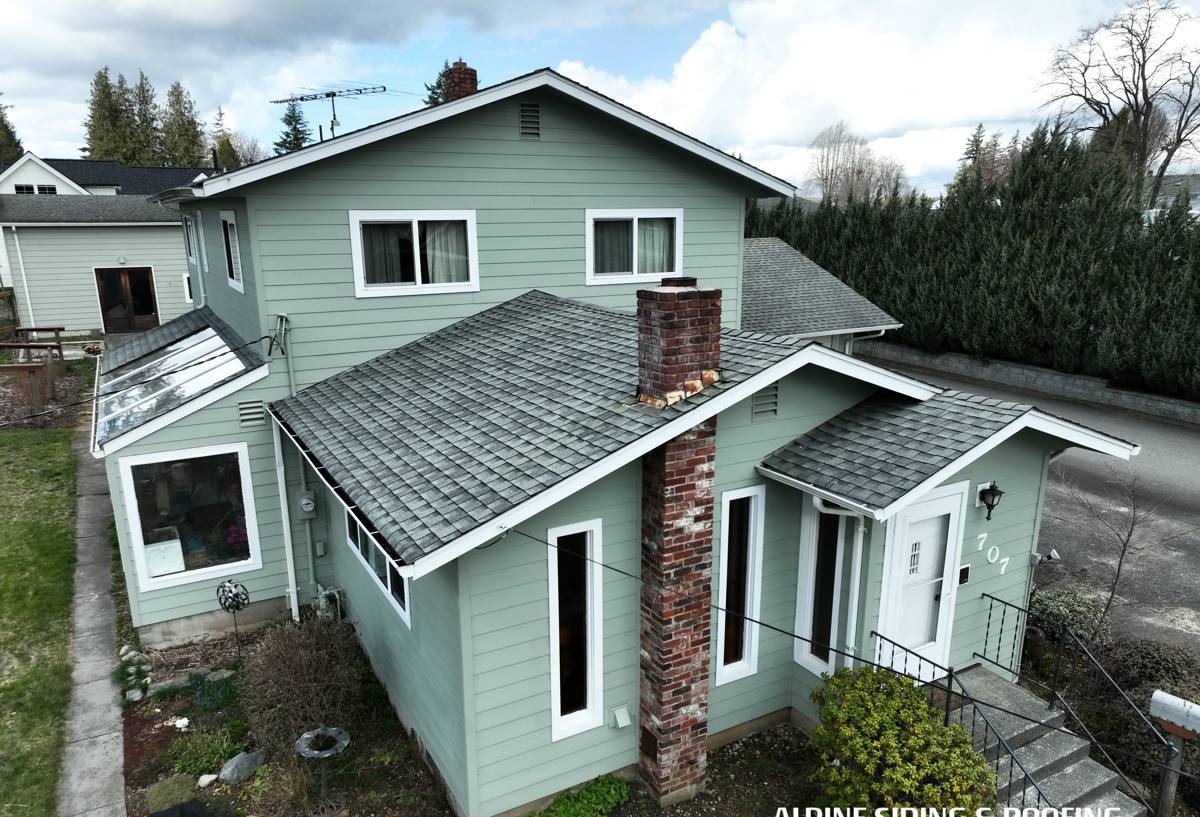
What Salt Air, Driving Rain, and Moss Actually Do to Siding
Salt Air and Coastal Exposure
Homes within a mile or two of Bellingham Bay live with a low but constant level of airborne salt. It doesn't damage fiber cement the way it corrodes bare metal, but it does accelerate wear on fasteners, flashing, and any paint finish that isn't formulated to resist it. Over years, that exposure is part of why factory-applied, baked-on finishes hold up so much better here than field-applied paint.
Wind-Driven Rain
Rain that falls straight down is easy for almost any siding to shed. Rain that's pushed sideways by wind off the water finds every gap, lap, and penetration in a wall assembly. That's a water-management problem more than a material problem — it's solved with correct flashing, house wrap, and lap spacing, not just by picking a good product.
The Long Moss Season
Whatcom County's overcast, damp stretch runs from fall through spring, and shaded lots — common in Happy Valley under mature tree cover — stay wet longer than open lots. Moss and algae need sustained moisture to establish, and once they get a foothold on a siding surface, they hold water against it, which is bad for almost any substrate. Siding that resists moisture absorption and has a dense, factory-cured surface gives moss less to grab onto and makes cleanup far less destructive when it does show up.
Why We Install Only James Hardie Fiber Cement
We don't install LP SmartSide, vinyl, Cemplank, Allura, or primed wood and cedar siding. That's a deliberate standard, not a sales pitch. Fiber cement as a category performs well in this climate, but within that category, James Hardie is the product we've found holds up most consistently when it's installed correctly: it's non-combustible, dimensionally stable in wet-dry cycling, and available in an HZ5 product line specifically engineered for Pacific Northwest conditions rather than a generic national spec. The ColorPlus factory finish is baked on and warrantied against fading and peeling in a way field-applied paint can't match, which matters directly for a salt-air, low-sun-exposure neighborhood like this one. We'd rather install one product well than offer several and cut corners on any of them.
What a Correct Fiber Cement Siding Installation Actually Involves
Sheathing and Weather-Resistive Barrier
Before any siding goes up, the wall sheathing gets inspected for rot or water damage from the old siding system — common on older homes where the original barrier has failed quietly for years. A code-compliant weather-resistive barrier goes on correctly lapped, shingle-style, so water is always directed outward and down, never trapped behind the cladding.
Flashing and Water Management Details
Windows, doors, and any wall penetration need proper flashing integrated with the barrier before siding covers it. This is the step that determines whether driving rain stays out or works its way in over a few winters — it's invisible once the job is done, which is exactly why it's the step that gets skipped by crews trying to save time.
Fastening and Gaps per Manufacturer Spec
James Hardie publishes exact fastener types, spacing, and clearance requirements — gaps at butt joints, clearance from grade, roof lines, and decks. Following that spec is what keeps the manufacturer's warranty valid and what keeps the siding performing as engineered; it's also the part that's easiest to shortcut if a crew doesn't already know the product.
Finish and Touch-Up
Field cuts get sealed with a compatible touch-up product, and joints get caulked with a sealant rated for the application — not just whatever's on the truck. Small details like this are what separate siding that looks good on install day from siding that still looks good in year ten.
Choosing the Right Hardie Line and Profile for a Happy Valley Home
James Hardie's HZ5 formulation is built for climates like ours — freeze-thaw cycling, sustained moisture, and coastal humidity all factor into how it's engineered, compared to the HZ10 line built for hot, dry climates. Beyond the climate zone, the right profile depends on the home itself:
- Lap siding — the most common choice, works on nearly any style of home in the neighborhood, wide range of exposure widths
- Shingle-style panels — suited to craftsman and cottage-style homes common in older Bellingham neighborhoods
- Vertical panel with battens — used for accent walls, gables, or a more modern look
Color is worth thinking through carefully in a shaded, moss-prone lot: darker colors show less streaking between cleanings, while lighter colors show moss growth sooner but also make it easier to spot early. ColorPlus finishes are available across a range of tones designed to hold up under UV and salt exposure without the chalking or fading that field-applied paint eventually shows.
Our Process From Estimate to Final Walkthrough
The process is the same whether it's a full re-side or a targeted replacement:
- On-site assessment of the existing siding, sheathing, and any moisture or rot issues found underneath
- A written proposal covering product line, profile, color, and scope — no surprise add-ons after the fact
- Material order and scheduling once the plan is approved
- Tear-off, sheathing repair where needed, and correct barrier and flashing installation
- Siding installation to James Hardie's published spec, including fastening, gaps, and joint sealing
- Final walkthrough to confirm the finished work matches the proposal
Cost Factors for a Fiber Cement Siding Project
Every home is different, but the factors that actually move the price are consistent. Rather than quote a number that won't mean much without seeing the house, here's what to expect the estimate to weigh:
| Factor | Why It Affects Price |
|---|---|
| Home size and number of stories | More surface area and taller walls mean more material and more time, plus added scaffolding or lift access |
| Condition of existing sheathing | Rot or water damage found during tear-off has to be repaired before new siding can go on |
| Trim and architectural detail | Homes with more corners, gables, and trim work take more labor to fit and finish correctly |
| Profile and color selection | Some profiles and premium ColorPlus tones cost more per square foot than standard options |
| Site access | Tree cover, slope, and tight lot lines common in this neighborhood can add setup and material-handling time |
Maintaining Fiber Cement Siding in a Moss-Prone, Salt-Air Neighborhood
Fiber cement is low-maintenance compared to wood, but "low-maintenance" isn't "no-maintenance," especially in a climate like this one. A short annual routine keeps it performing as it should:
- Rinse the siding down once a year with a garden hose to clear salt residue, pollen, and early moss or algae growth
- Keep tree branches and shrubs trimmed back from the walls so siding gets more light and air, which slows moss growth
- Check caulking at joints and around windows annually — sealant is the first thing to wear and the cheapest thing to fix before it becomes a leak
- Inspect flashing and trim after the first heavy storms of the fall season
- Skip the pressure washer, or keep it at a wide angle and safe distance — high-pressure water forced at close range can drive water behind panels and damage joints
- Keep gutters clear so overflow isn't running down the siding face during heavy rain
Why Hire a Crew That Already Works in Happy Valley
A siding installer who already works in this part of Bellingham has seen how exposure varies block to block here — which lots get more direct salt air off the bay, which stay shaded and damp longer under tree cover, and how older homes in the area were originally built and sided. That local knowledge shows up in the details: knowing what's likely hiding under the old siding before tear-off even starts, sizing up how much moss and moisture exposure a given lot actually gets, and being familiar with the City of Bellingham and Whatcom County permitting process so the job doesn't stall on paperwork. It also means we're not far away if a warranty question or punch-list item comes up after the job is done.
If you're weighing a siding replacement or repair in Happy Valley, we're happy to take a look and give you a straightforward, no-pressure estimate — just fill out the form below.