 Bellingham Roofing
 Board & Batten Siding, Built for Ferndale's Weather
Board and batten is one of the most requested siding profiles in Whatcom County right now, and Ferndale homeowners have good reason to like it. The wide flat panels and narrow vertical battens give a home a clean, modern-farmhouse look, work well as a full siding system or as an accent on gables and entries, and read as substantial from the street in a way flat lap siding sometimes doesn't. But the look is only half the story. Out here, close to the water and open to weather rolling in off the Strait of Georgia and Bellingham Bay, a vertical siding system either sheds water and stands up to salt air or it doesn't. There isn't much middle ground.
This page is specifically about board and batten siding for homes in and around Ferndale. It's not a general siding overview — it's what this profile needs to hold up in this part of Whatcom County, what a correct installation actually involves, and why we install it exclusively in James Hardie fiber cement rather than the vinyl or engineered wood versions of the same look.
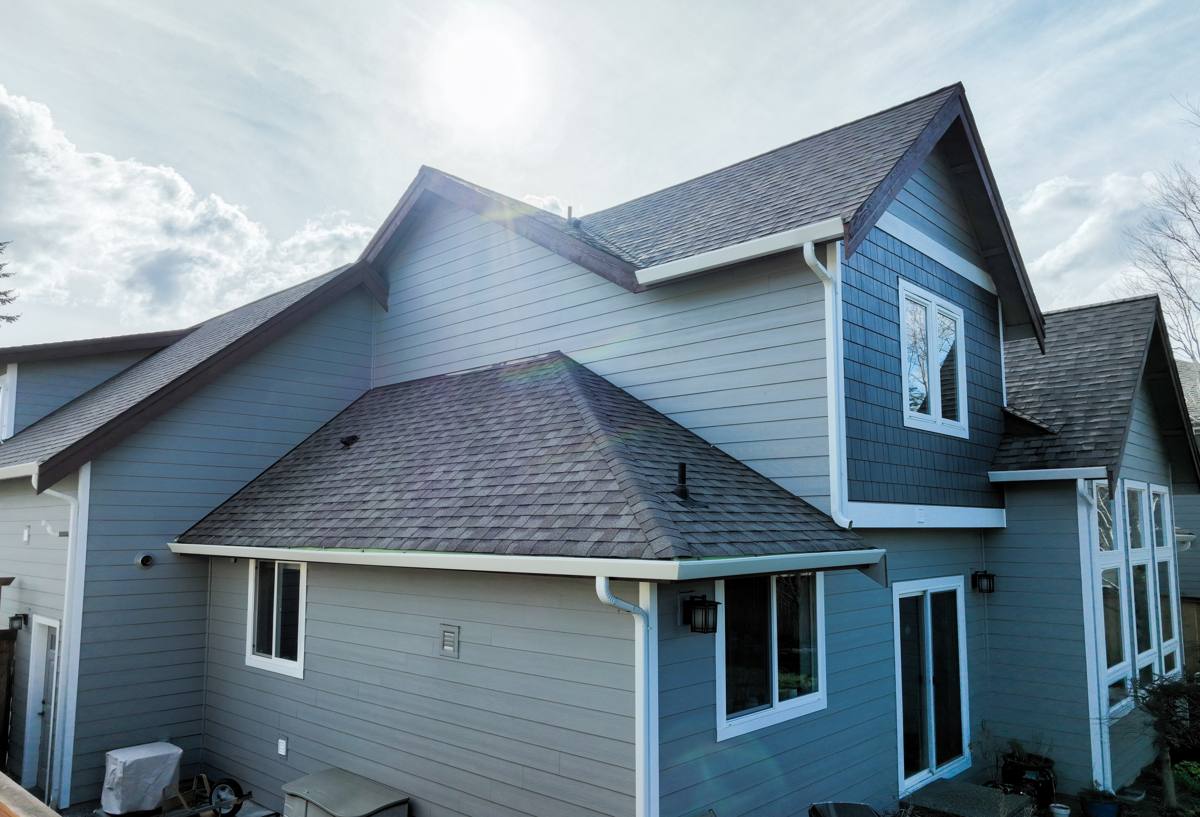
What Ferndale's Climate Does to Vertical Siding
Ferndale sits close enough to the water that salt air is a real factor on exterior materials, and far enough into the Pacific Northwest's wet season that moss, moisture, and driving rain are a fact of life for most of the year. Board and batten siding has more seams and more vertical joints than a standard lap profile, which means more places for water to find a way in if the installation isn't done right.
Salt Air and Fasteners
Homes closer to Bellingham Bay and the surrounding waterways deal with airborne salt that accelerates corrosion on exposed metal — fasteners, flashing, and trim. Board and batten relies on a consistent fastening pattern through both the panel and the battens, so the hardware matters as much as the siding itself. Corrosion-resistant fasteners and properly flashed penetrations aren't optional upgrades here; they're the difference between siding that looks good for a couple of decades and hardware that starts bleeding rust streaks within a few years.
Driving Rain and Wind
Storms moving through Whatcom County often bring wind-driven rain, and vertical siding profiles catch that differently than horizontal lap. Water doesn't just run down the face of a board and batten wall — it can get pushed sideways into seams and battens under pressure. That's a drainage and flashing problem, not a caulk problem, and it needs to be treated that way during installation.
Moss and Shade
Whatcom County's moss season is long, and Ferndale's mix of mature trees, farmland, and shaded lots means plenty of north-facing walls that stay damp for extended stretches. Moss and algae growth on siding isn't just cosmetic — sustained moisture against the wrong material can lead to swelling, soft spots, or paint failure over time. The material has to tolerate that damp exposure without breaking down.
What a Correct Board & Batten Installation Actually Involves
A board and batten job that looks right on install day but wasn't built to manage water will show problems within a few wet seasons — usually starting with staining, soft trim, or paint failure at the seams. Getting it right the first time comes down to a few details that don't show up in a driveway photo.
Rainscreen and Drainage
Vertical siding should be installed over a drainage plane that lets any water that gets behind the panels find its way back out, rather than sitting against the sheathing. This is especially important on a Ferndale exterior, where wind-driven rain increases the odds of moisture reaching behind the cladding at some point over the siding's life.
Fastening and Board Spacing
Panels and battens need consistent, correct fastener spacing and the right gap allowance so the material can expand and contract with temperature and moisture changes without buckling or popping fasteners. Battens that aren't fastened independently of the panel underneath can trap movement stress at exactly the seams that are already the most vulnerable to water intrusion.
Flashing at Every Transition
Windows, doors, roof lines, and the bottom termination of the siding are where board and batten systems fail if they fail at all. Each of these needs proper flashing and a clear path for water to exit rather than pool. This is the part of the job that takes the most time and is also the part that's invisible once the siding is up — which is exactly why it has to be done right the first time.
Why We Install James Hardie for Board & Batten
Board and batten is available in vinyl, engineered wood, and fiber cement, and the profile can look similar across all three from the street. The performance differences show up over years, not on day one — which is exactly why we standardized on James Hardie fiber cement for every siding job we do, board and batten included.
Hardie's vertical siding system pairs HardiePanel with HardieTrim battens, engineered specifically to work together rather than as mismatched parts. The fiber cement composition doesn't absorb water the way engineered wood products can, and it isn't vulnerable to the softening or warping that vinyl and wood-based sidings can show after years of damp Pacific Northwest exposure. It's also non-combustible, which matters to a growing number of homeowners and insurers regardless of region.
For color, we install Hardie's factory-applied ColorPlus finish rather than field-painted panels. It's baked on under controlled conditions, holds color more consistently over time than site-applied paint, and comes with its own finish warranty — which matters on a profile like board and batten where every seam and batten edge would otherwise need careful field painting to avoid an uneven finish.
Board & Batten Material Comparison
| Factor | James Hardie Fiber Cement | Vinyl Board & Batten | Engineered Wood (LP SmartSide) |
|---|---|---|---|
| Moisture behavior | Doesn't absorb water; resists swelling | Won't rot, but can warp or buckle with heat/cold cycling | Wood-based core is vulnerable if moisture reaches the edges |
| Salt air / coastal exposure | Stable; fasteners and flashing are the main concern | Generally stable but can become brittle over time | More sensitive to sustained damp exposure near water |
| Fire resistance | Non-combustible | Combustible | Combustible |
| Finish longevity | Factory ColorPlus finish, long warranty | Color molded in, can fade or chalk | Field-painted or factory-primed; repainting needed over time |
| Typical lifespan when installed to spec | Multiple decades | Decades, but seams and fasteners are the weak point | Shorter than fiber cement if moisture management fails |
We don't install the vinyl or engineered wood versions of this profile. That's a standard, not a knock on every homeowner who has one — it's a decision we made about what we're willing to put our name behind on a Whatcom County exterior.
Our Process for a Ferndale Board & Batten Job
Every board and batten project starts with a walkthrough of the existing exterior, not a generic estimate. We look at what's currently on the walls, how much of it is water damage versus cosmetic wear, where the trouble spots are likely to be based on sun and wind exposure, and what the substrate looks like once old siding comes off.
From there, the sequence is straightforward: remove the old siding and inspect the sheathing for hidden damage, repair or replace anything compromised before anything new goes up, install the water-resistive barrier and drainage plane, then install the Hardie panels and battens with the fastening pattern and flashing details the system requires. Trim, caulking at the appropriate joints only, and the ColorPlus finish come last. We don't caulk over problems that should have been flashed — that's a shortcut that looks fine at closeout and fails in a few winters.
Why a Crew That Already Works Ferndale Matters
Board and batten installation isn't exotic, but doing it correctly on a specific house depends on reading that house's actual exposure — which walls take the worst of the wind-driven rain, which sides stay shaded and damp longest, where salt air is going to be hardest on fasteners and flashing over time. A crew that already works homes throughout Bellingham and greater Whatcom County has already made the calls on dozens of similar exteriors and isn't guessing at what this climate does to a wall over ten or twenty years.
That local experience also shows up in smaller ways: knowing what tends to go wrong on older Ferndale-area homes when siding comes off, recognizing sheathing issues before they become a change order surprise, and building a schedule around the realistic weather windows for this part of the county rather than a generic install timeline.
Maintenance Checklist for Board & Batten in a Coastal, Mossy Climate
- Rinse siding annually to clear salt residue and organic buildup, especially on walls facing prevailing wind and rain
- Check north-facing and shaded walls for moss or algae buildup and clean gently before it spreads
- Inspect caulking at windows, doors, and trim joints yearly and re-caulk any cracked or separated seams
- Keep gutters and downspouts clear so roof runoff isn't dumping extra water onto siding below
- Trim back trees and shrubs that keep any wall shaded and damp for extended periods
- Watch fastener heads and metal flashing for early rust staining, which shows up before deeper corrosion does
Get a Straight Answer for Your Ferndale Home
If you're weighing board and batten for a Ferndale property, the right first step is a walkthrough, not a guess based on square footage. We'll look at your walls, tell you honestly what condition they're in, and lay out what a correct James Hardie installation would involve for your specific exposure. There's no pressure and no obligation — just a straight assessment from a crew that already works this area. Reach out below for a free estimate.