 Bellingham Roofing
 Windows Built for the Puget Climate, Not Just Any Climate
Puget homes sit close enough to the water and the tree cover that windows here work harder than windows in drier, inland parts of Washington. Salt-laden air moves in off the water and settles into hardware and seals. Driving rain, pushed sideways by wind off the Sound, tests every joint and sill. And for a good chunk of the year, shaded north- and west-facing walls stay damp long enough for moss and algae to take hold on frames, sills, and the glass itself. None of this is dramatic on its own, but stacked together over years, it's exactly the kind of slow wear that turns a perfectly good window into a drafty, foggy, hard-to-open one well before its time.
Energy-efficient window replacement in Puget isn't just about lower heating bills, though that's real. It's about choosing glass packages, frame materials, and installation details that are actually suited to a marine climate with salt exposure, sustained rain, and shade-driven moisture — not a generic "energy efficient" spec sheet written for a different part of the country.
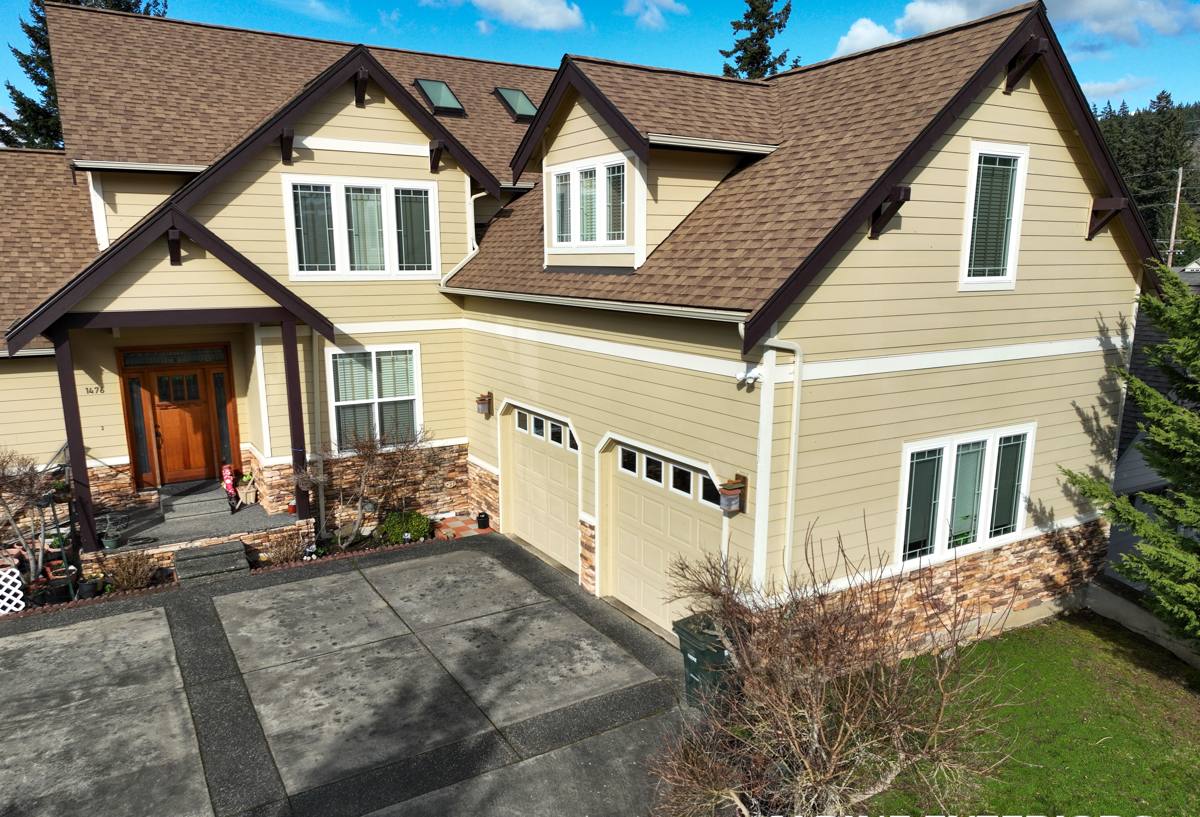
What Salt Air, Rain, and Moss Actually Do to Windows
Salt Air and Hardware
Salt in the air accelerates corrosion on anything metal — hinges, cranks, balance systems, and screws. On lower-grade windows, this shows up first as stiff or squeaky operation, then as hardware that seizes entirely. Once hardware corrodes, the window stops sealing tightly even if the glass and frame are fine, and that's when drafts and energy loss start.
Driving Rain and Seals
Wind-driven rain doesn't just fall on a window, it pushes against it. Weak or aging weatherstripping and poorly flashed installations let water find its way behind trim and into wall cavities over time. This is less about a single storm and more about repeated exposure, season after season, finding the one weak point in a seal or flashing detail.
Moss and Shade
Shaded exteriors and roof overhangs common in this area keep certain wall sections damp longer than sun-exposed ones. Moss and algae growth on frames and sills isn't just cosmetic — sustained moisture against wood components, or trapped behind poorly ventilated cladding, is what leads to rot and frame failure over time. Windows installed without attention to drainage and airflow are the ones that show this wear first.
What "Energy-Efficient" Should Mean Here
A window that's efficient in Eastern Washington's dry heat isn't automatically the right spec for a home near Puget. In this climate, the priorities are moisture management first, then insulation value, then solar performance — because a window that's insulated but leaks water is not actually performing.
- Low U-factor — measures how well the window resists heat transfer; lower numbers mean less heat loss through the glass and frame, important given our long heating season.
- Appropriate solar heat gain coefficient (SHGC) — Puget's cloud cover means you don't need to fight solar gain as hard as a sunnier region, but window orientation still matters for west-facing rooms.
- Warm-edge spacers — the material separating panes of glass affects both insulation and condensation resistance; this matters more in consistently humid, marine air.
- Weatherstripping quality — compression seals that hold up under repeated wetting and drying cycles, not just a single-season fit.
- Corrosion-resistant hardware — stainless or coated components that won't seize up from salt exposure.
Frame Material: What Holds Up Near the Water
Frame material choice matters more here than in a lot of other climates, because it determines how a window handles years of damp, salty air without needing constant upkeep.
| Frame Material | How It Handles This Climate | Maintenance |
|---|---|---|
| Vinyl | Doesn't corrode or rot; performs consistently in salt air and rain | Low — occasional cleaning |
| Fiberglass | Very stable in temperature and moisture swings; strong resistance to warping | Low |
| Wood-clad | Good insulator, but the wood core is vulnerable if cladding seals fail and moisture gets in | Higher — watch seams and joints |
| Aluminum | Durable but conducts heat and cold readily; needs a thermal break to perform well here | Moderate — check for pitting near salt exposure |
We don't push wood-frame windows in this area as a default. It's not that wood-clad windows are bad products — it's that in a climate with this much sustained moisture and salt exposure, they demand more diligence than most homeowners want to sign up for, and a single failed seal at a joint can lead to hidden rot before anyone notices. Vinyl and fiberglass simply carry less risk here, which is why we recommend them for most Puget replacements.
Signs Your Windows Are Losing the Fight
Homeowners in Puget often notice a few consistent warning signs before a window fully fails. Worth checking for:
- Visible fogging or moisture between panes of double-pane glass — a sign the seal has failed
- Frames that feel cold to the touch even when the heat is running
- Sashes that stick, won't latch fully, or rattle in wind
- Moss, algae, or dark staining building up on sills or lower frame edges
- Soft or spongy spots in wood trim around the window
- Noticeable drafts near the frame edges, especially during wind-driven rain
- Rising heating bills without another clear explanation
Our Process for Puget Installations
Assessment
We look at each window opening individually — not every window on a home fails the same way or for the same reason. We check for existing moisture damage, sill condition, and how exposed each opening is to wind-driven rain based on its orientation.
Product Selection
We walk through frame material, glass package, and hardware options based on that specific home's exposure — a west-facing wall catching Sound winds gets a different conversation than a sheltered, tree-covered side.
Removal and Prep
Old windows come out carefully, and we inspect the framing underneath before anything new goes in. If there's hidden rot or water damage behind an old window, that gets addressed before installation — not covered up.
Flashing and Sealing
This is the step that matters most in a climate like ours. Correct flashing directs water away from the opening rather than trusting caulk alone to keep it out. We treat this as the difference between a window that lasts and one that fails early.
Final Fit and Testing
Every new window is checked for square, smooth operation, and a tight seal before we consider the job done.
Why Local Puget Experience Matters
A crew that's worked in and around Puget knows which sides of a home take the worst of the wind-driven rain, how shaded lots hold moisture longer, and what salt exposure does to hardware over a five- or ten-year span — not from a manual, but from having replaced windows on homes with the same exposure. That experience shapes decisions a generic install crew might not think to make: extra attention to flashing on a west-facing wall, hardware upgrades on a home closer to the water, or flagging a moss-covered sill that signals a bigger moisture problem underneath.
It also means realistic expectations. We're not going to tell a homeowner a product performs a certain way in this climate if we haven't seen it hold up here. We'd rather recommend what actually works in Whatcom County's marine conditions than what looks best on a spec sheet.
Keeping New Windows Performing Long-Term
Even a well-installed, high-quality window benefits from basic upkeep in this climate:
- Rinse salt residue and grime off frames and glass periodically, especially on wind-exposed sides
- Clear moss or algae from sills and tracks before it builds up and holds moisture against the frame
- Check weatherstripping yearly for compression loss or gaps
- Keep weep holes (drainage channels along the bottom of the frame) clear of debris so water can escape
- Operate hardware occasionally through the wetter months to keep mechanisms from seizing
What Affects Cost
Every home and opening is different, so we don't quote sight unseen, but a few factors consistently move the price on a Puget-area window job:
| Factor | Why It Matters |
|---|---|
| Frame material | Vinyl is generally the most budget-friendly; fiberglass and wood-clad cost more upfront |
| Glass package | Upgraded low-E coatings and gas fills add cost but improve performance in our climate |
| Existing damage | Rot or water damage found during removal adds repair work before installation can proceed |
| Number and size of openings | Larger or more numerous windows increase material and labor |
| Access and exposure | Upper-story or hard-to-reach openings, especially on wind-exposed walls, can add time |
Broadly, homeowners should expect a range depending on these factors rather than a single flat number — which is exactly why an in-person look at the home gives a far more accurate picture than any online estimate.
If your Puget-area home has windows showing wear from salt air, rain, or shade-driven moss, we're happy to take a look and talk through honest options. Fill out the form below for a free, no-pressure estimate.