 Bellingham Roofing
 Happy Valley is one of Bellingham's older, established residential neighborhoods, with a housing stock that spans decades of construction styles and, just as often, decades of original windows still sitting in their frames. A lot of those windows were fine when they went in. They're not doing their homeowners any favors now — drafty in January, foggy with condensation on cold mornings, and quietly adding to a heating bill that keeps climbing no matter how the thermostat is set. Window performance isn't an abstract spec sheet number in a climate like this one. It shows up directly in comfort and cost, room by room.
We treat energy-efficient window replacement in Happy Valley as its own kind of job, not a one-size scope we run the same way everywhere. Bellingham's marine climate — salt-tinged air moving in off the water, rain that arrives sideways as much as it falls straight down, and a moss and mildew season that can stretch across most of the calendar year on shaded walls — puts real demands on how a window is installed, not just which glass package gets specified. Get the installation wrong and even a good window underperforms. Get it right and the window actually delivers on what it's rated for.
The Climate Happy Valley Windows Have to Perform In
Happy Valley sits inland from the water compared to Bellingham's most exposed shoreline properties, but it's still squarely inside the same marine weather pattern that defines this part of Whatcom County. Moisture-laden air moves through the neighborhood most of the year, storms push rain into wall assemblies and window openings from an angle rather than straight down, and mild, damp conditions support moss and mildew growth on north-facing and shaded walls for much of the calendar year. None of that is unique to Happy Valley specifically — it's the deal with living in coastal Whatcom County — but it does mean windows here work harder than the same product would somewhere drier and calmer.
That climate load matters for energy efficiency specifically. A window that leaks air at the frame doesn't just waste energy — in a wet climate, that same gap is often how bulk water gets into the wall assembly, too. Air sealing and weatherproofing aren't separate problems here; they're the same problem approached from two directions.
Where Old Windows Actually Lose Energy
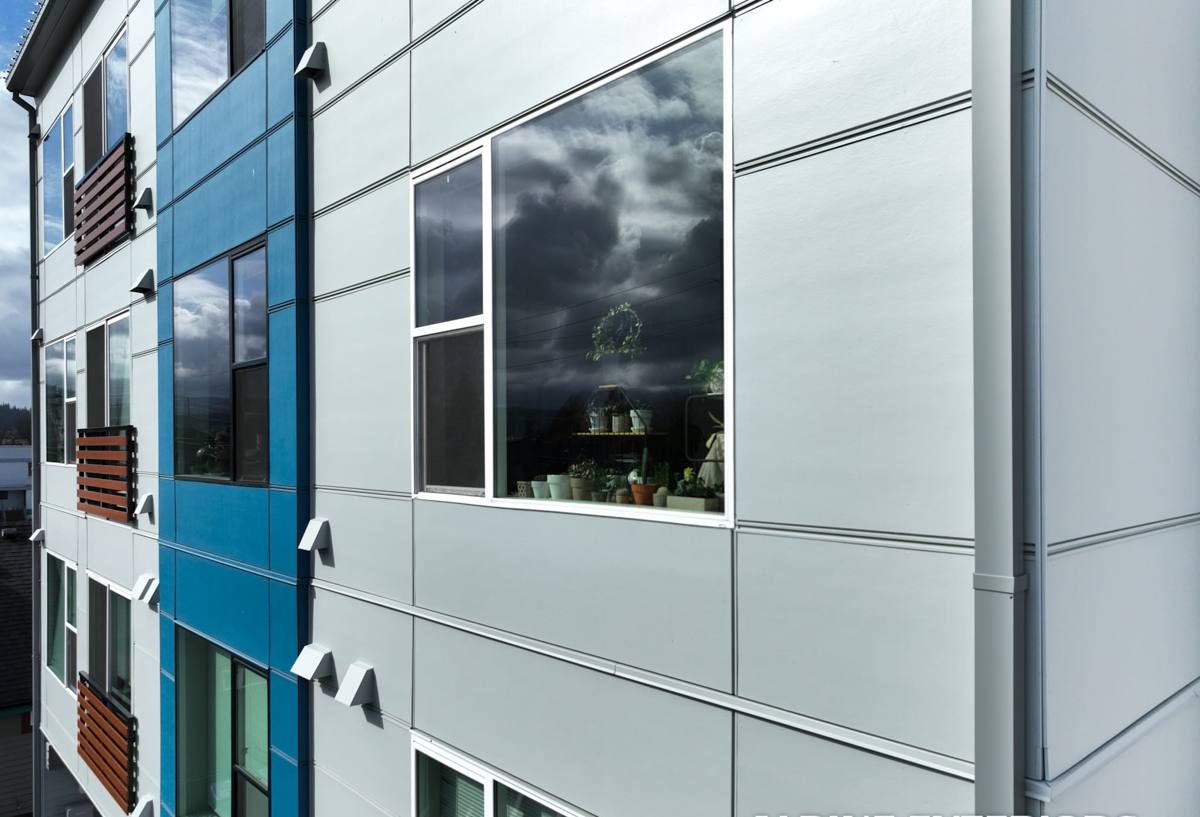
Homeowners tend to assume the glass itself is where an old window falls short, and sometimes it is — single-pane glass and early double-pane units with failed seals perform poorly by any modern standard. But in our experience, a lot of the energy loss on older Happy Valley homes comes from the frame and the installation, not just the glass. Warped or shrunken wood frames, hardened and cracked weatherstripping, gaps between the frame and the rough opening that were never properly insulated, and glazing putty or caulk that's dried out and pulled away all let conditioned air out and cold, damp air in, regardless of how good the glass unit itself might be.
That distinction matters when you're deciding what to do about it. A window with decent glass but a failing frame and poor air sealing can sometimes be improved short of full replacement. A window with failed glass seals — visible fogging or moisture trapped between the panes — generally can't be fixed and needs replacing outright.
What "Energy-Efficient" Actually Means on a Window
Frame Material
Frame material affects both energy performance and how much upkeep the window needs in this climate. Vinyl and fiberglass frames resist moisture intrusion and don't require repainting or refinishing the way an uncoated wood frame does, which is why they show up most often on our replacement work in Happy Valley. Wood-clad options, where a durable exterior material protects a wood interior, can still make sense on a home where the interior wood look matters — the trade-off is worth discussing against your specific windows and budget rather than treating it as an automatic no.
Glazing and Gas Fill
Most energy-efficient replacement windows today use double-pane glass with a low-emissivity (low-E) coating and an inert gas fill, usually argon, sealed between the panes. The low-E coating reflects heat rather than letting it pass freely through the glass, which helps in both directions — it keeps interior heat in during Bellingham's cold, wet stretches and reduces unwanted solar heat gain on the sun-facing side of a home during warmer months. Triple-pane windows add a third layer of glass and gas fill for further insulating performance, at added cost and weight, and tend to make the most sense on north-facing rooms or homes where comfort complaints are more pronounced.
U-Factor and Performance Ratings
Washington's state energy code sets minimum U-factor requirements for replacement windows, and any window package we install is specified to meet or exceed current code. U-factor measures how well a window resists heat transfer — lower is better — and it's listed along with other performance numbers on the National Fenestration Rating Council (NFRC) label that comes with a code-compliant window. We'll walk through what those numbers actually mean for your specific home rather than leaving you to interpret a label on your own.
| Frame Material | Energy Performance | Upkeep in This Climate |
|---|---|---|
| Vinyl | Good insulating value; performs consistently in mild, wet conditions | Low — no painting or refinishing required |
| Fiberglass | Strong dimensional stability holds tight seals through temperature swings | Low — can be painted later if a color change is wanted |
| Wood-clad | Good performance; depends on quality of the interior wood and cladding seal | Moderate — interior wood still needs occasional attention |
| Uncoated wood | Can perform well when new, degrades as seals and finish age | High — regular painting or sealing needed to keep moisture out |
What a Correct Energy-Efficient Installation Involves
Removal and Opening Inspection
We take the old window out carefully and inspect the rough opening before anything new goes in. This is often where hidden problems on an older Happy Valley home turn up — soft framing, old insulation that's compressed or gone missing, or signs that water has been getting into the wall assembly around the window for a while. We'd rather find that now than after a new window is sealed in over it.
Insulation and Air Sealing
The gap between the window frame and the rough opening has to be properly insulated and air-sealed, not just caulked around the trim after the fact. A gap packed too loose leaks air; one packed too tight can bow the frame and affect how the window operates. Getting this right is one of the biggest factors in whether a new, well-rated window actually performs like its label says it will.
Flashing and Weatherproofing
Given how much wind-driven rain this region sees, flashing sequence around a window opening isn't optional detail work — it's the difference between a window that stays dry for decades and one that lets water track into the wall behind the trim. We integrate the window flashing with the house wrap and siding as one continuous system rather than treating the window as an isolated component.
Interior and Exterior Finish
Once the window is set, shimmed, and sealed, trim gets reinstalled or replaced to match the surrounding wall on both the interior and exterior. On an older Happy Valley home, this is also where trim that's already showing wear sometimes gets addressed at the same time, since the wall is already open.
Practical Checklist Before You Replace Windows
- Confirm whether your current windows have failed glass seals (visible fogging) or a failing frame and seals — the fix isn't always the same
- Ask what U-factor and NFRC ratings the proposed windows carry, and confirm they meet current Washington code
- Ask specifically how the gap between frame and rough opening will be insulated and sealed
- Get the flashing plan explained in plain terms, not just "we'll seal it up"
- Confirm what's covered under warranty for the window unit versus the installation labor, since they're often separate
- Ask whether interior and exterior trim replacement is included in the quote or priced separately
Signs Your Current Windows Are Costing You Money
- Noticeable drafts near the frame, even with the window fully latched
- Condensation or fogging between the panes, which usually means a failed glass seal
- Difficulty opening, closing, or locking the window smoothly
- Visible gaps, cracked glazing putty, or hardened weatherstripping around the frame
- Soft or discolored trim or sill, which can point to water getting past the window seal
- Rooms that feel noticeably colder or draftier than the rest of the house in winter
Our Process, Start to Finish
- On-site assessment — we look at each window individually, since a home rarely needs the exact same fix on every opening
- Honest recommendation — full replacement, frame and seal repair, or a mix across the house, explained with the reasoning behind it
- Product selection — frame material, glazing package, and performance ratings matched to your budget and each elevation's actual exposure
- Removal and opening prep — the old window comes out carefully, with any hidden framing or moisture issues addressed before the new unit goes in
- Installation, insulation, and flashing — the new window is set, sealed, insulated, and flashed as part of the wall's overall water management, not as an isolated step
- Trim and finish — interior and exterior trim integrated to match the rest of the home
Costs and Trade-Offs
| Factor | What It Affects | Why It Matters in Happy Valley |
|---|---|---|
| Number of windows replaced | Total material and labor | Older homes often benefit from prioritizing the worst-performing elevations first if budget is a factor |
| Frame material | Upfront cost and long-term upkeep | Low-maintenance frames hold up better against this region's sustained moisture with less ongoing attention |
| Glazing package | Energy performance and comfort | Low-E, argon-filled double-pane covers most homes; triple-pane suits north-facing or comfort-sensitive rooms |
| Opening condition | Repair costs uncovered during removal | Years of moisture exposure can hide framing or sill damage not visible from outside |
| Trim and finish scope | Labor and material cost | Matching existing trim on an older home sometimes takes more care than a straightforward swap |
What actually moves the price on a window job is fairly consistent: how many windows are involved, frame material, glazing package, the condition of each opening once the old window is out, and how much trim work is needed to finish cleanly. We won't quote a number without seeing the windows in person, but we'll walk through which of these factors apply to your home before you commit to anything.
Why a Local Happy Valley Crew Matters
Manufacturer installation guidance is written for average conditions in a moderate climate, and Bellingham's marine air, wind-driven rain, and long moss season don't fit that description particularly well. A crew that has actually installed and repaired windows across Happy Valley and the surrounding Bellingham neighborhoods knows which parts of that generic guidance are worth following to the letter here, and where extra time on flashing or air sealing is worth it even when it isn't strictly required somewhere drier and calmer.
That experience shows up in decisions that don't usually come up in a sales pitch — how much lap a flashing course needs on an older opening, when a sill needs more than caulk to shed water correctly, which elevations on a given lot stay wet the longest and deserve extra attention. Those are the details that decide whether a new window is still performing tightly in fifteen years or drafting and fogging again in five.
What to Ask Before Hiring for Window Replacement
- Ask how they handle air sealing and insulation around the frame, not just the visible caulk line
- Ask what U-factor and NFRC ratings the proposed windows carry and whether they meet current Washington code
- Confirm current Washington contractor licensing and insurance
- Get a written scope of work, including whether trim replacement is included
- Ask how the window unit and the installation labor are each covered under warranty
If your Happy Valley home has windows that feel drafty, foggy, or are just costing more to heat than they should, it's worth having someone take a real look before you start pricing replacements. We offer free, no-pressure estimates for window projects in Happy Valley and the surrounding Bellingham area — use the form below to get a time on the schedule.