 Bellingham Roofing
 Edgemoor's Setting Puts Extra Demands on Siding
Edgemoor sits along the bluffs and shoreline south of downtown Bellingham, where wooded lots meet Bellingham Bay. That combination — mature tree canopy, close proximity to salt water, and exposure to wind coming off the bay — creates a set of conditions that most inland Whatcom County neighborhoods simply don't deal with in the same way. Homes here take on salt-laden air, wind-driven rain that gets pushed sideways into wall assemblies, and long stretches of shade that keep siding damp far longer than a home in a sunnier, more open location.
None of this means Edgemoor homes need to fight the climate — it means they need siding chosen and installed with that climate in mind. A lot of the siding problems we get called out to inspect in this neighborhood aren't failures of the material itself; they're failures of a product or installation approach that was never suited to a wooded, waterfront setting in the first place.
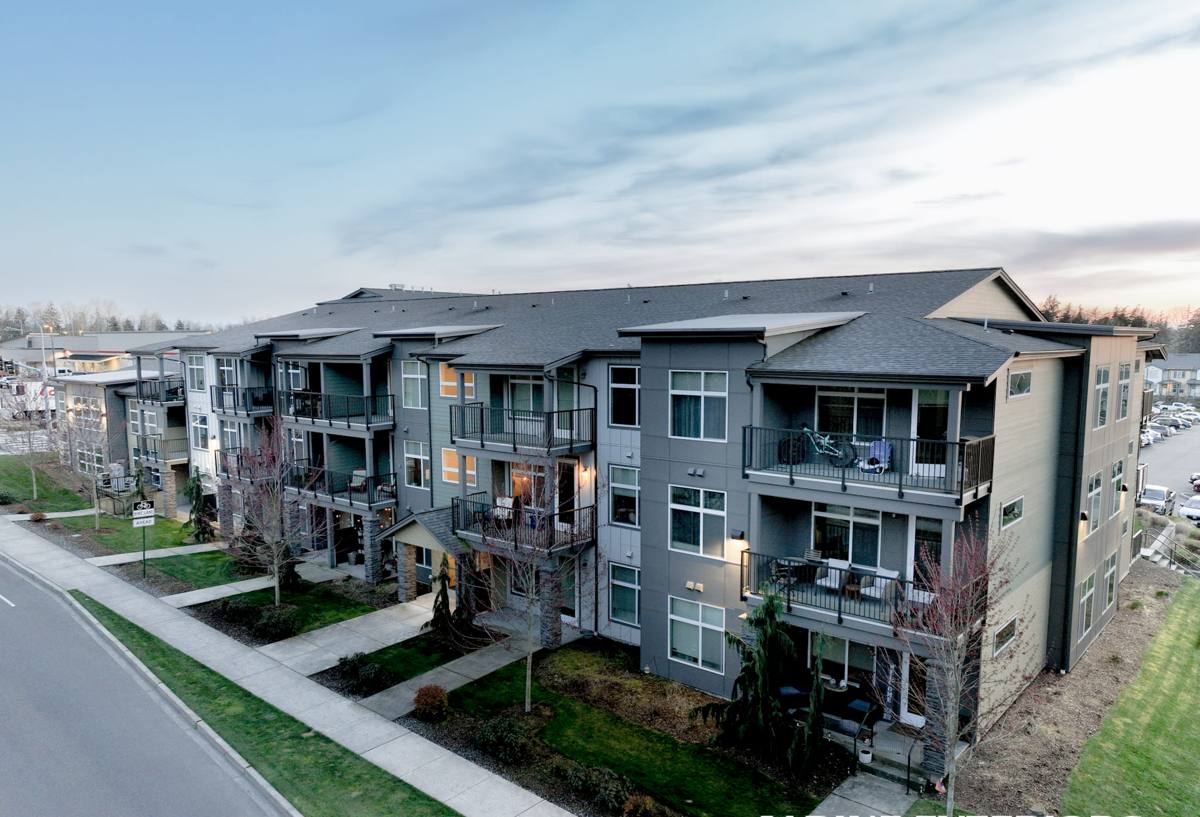
What Salt Air, Driving Rain, and Moss Actually Do to Siding
Salt Air
Airborne salt from the bay settles on exterior surfaces and accelerates corrosion of exposed metal fasteners, trim, and hardware. Over years, that corrosion can telegraph through paint and finish, staining siding and weakening the very connections holding panels to the wall. Materials and fastening systems that aren't rated for coastal exposure age faster here than they would ten or fifteen miles inland.
Driving Rain
Bellingham's weather isn't just wet — a lot of it arrives at an angle, driven by wind off the water. Wind-driven rain finds any gap in flashing, caulking, or panel overlap and pushes moisture behind the siding rather than letting it run off the face. Once water gets behind a wall covering, the siding material matters less than what's happening to the sheathing, house wrap, and framing underneath it.
Moss and Algae
The shade from Edgemoor's tree cover keeps siding surfaces damp for extended periods after rain, which is exactly what moss, algae, and mildew need to establish themselves. On some materials this is a cosmetic nuisance you can pressure-wash away. On others, sustained moisture exposure combined with organic growth can soften the material itself over time, particularly at seams, edges, and cut ends that weren't properly sealed during installation.
Why We Install Only James Hardie Fiber Cement Here
We don't install vinyl, LP SmartSide, Cemplank, Allura, primed spruce, or cedar siding — not because those products don't have their place somewhere, but because we've made a professional decision about what holds up correctly in exactly the conditions Edgemoor sees every winter. Wood-based and engineered-wood sidings depend on an intact factory coating and diligent field-sealing of every cut edge to resist moisture; in a shaded, damp, salt-air environment, that margin for error shrinks fast. Vinyl can hold up structurally but tends to show its age visually — chalking, fading, and warping under sun and temperature swings — and it isn't the fire-resistant, impact-resistant material we want standing between a home and a wet coastal winter.
James Hardie fiber cement is non-combustible, doesn't swell or rot the way wood-based products can, and holds a factory-applied ColorPlus finish that's baked on and warrantied against fading and peeling — which matters in a shaded neighborhood where a wall might not get direct sun for months. Hardie also engineers specific product lines for different climate zones (HZ5 and HZ10), which lets us match the product to Bellingham's specific combination of rain, humidity, and coastal exposure rather than installing a one-size-fits-all product and hoping it holds up.
| Factor | Fiber Cement (James Hardie) | Vinyl / Engineered Wood |
|---|---|---|
| Moisture behavior | Resists swelling, rot, and softening; engineered for wet climates | Vulnerable at unsealed cuts, seams, and edges; performance depends on maintenance |
| Salt air / coastal exposure | Factory finish holds up; material itself doesn't corrode | Fasteners and trim can corrode faster near salt water |
| Fire resistance | Non-combustible | Combustible (wood-based) or heat/impact sensitive (vinyl) |
| Finish longevity in shade | ColorPlus factory finish warrantied against fade/peel | Field-applied or exposed finishes fade and chalk faster without direct sun to cure/dry them |
| Typical lifespan when correctly installed | Multiple decades | Varies; often shorter, especially with deferred maintenance |
What a Correct Installation Actually Involves
Fiber cement performs the way it's supposed to only when it's installed to Hardie's specifications — the material isn't forgiving of shortcuts, especially in a climate that will find every gap. A correct install in Edgemoor includes:
- Proper weather-resistive barrier and flashing detail at every window, door, and penetration, sequenced so water is shed outward at each layer, not trapped behind the cladding
- Correct clearance between the bottom of the siding and grade, decks, patios, or roof lines, so splash-back and standing water don't sit against the material
- Factory or properly sealed field cuts — any cut edge that's left exposed is a moisture entry point, especially under tree cover where surfaces stay damp longer
- Correct fastener type, spacing, and depth — corrosion-resistant fasteners set to Hardie's specified pattern, not overdriven or underdriven
- Proper joint and seam treatment, including the right caulking approach at butt joints and trim, since wind-driven rain concentrates at these transition points
- Rainscreen or drainage plane detailing appropriate to a wooded, high-moisture site, giving any incidental moisture a path to drain and dry rather than sit against the wall
Skipping or rushing any one of these steps doesn't usually show up right away. It shows up in year three or four, as staining, soft spots, or paint failure at the seams — right around the areas that get the least sun and the most sustained dampness.
Our Process, Start to Finish
Assessment
We start by walking the exterior with you, looking at how the home sits relative to shade, wind exposure, and water — a house tucked into tree cover on the bluff side gets a different read than one more open to the bay breeze. We also check the current siding and sheathing for signs of moisture that's already gotten in, since that needs to be addressed before new siding goes up, not covered over.
Product Selection
We talk through Hardie's plank, shingle, and panel options and help you land on a profile and color that fits the home and holds up to the specific exposure it has — including whether an HZ10 assembly makes sense for the more exposed sides of the house.
Installation
Our crew removes the old siding, inspects and repairs sheathing and framing as needed, installs the weather-resistive barrier and flashing system, and hangs the new siding to Hardie's fastening and clearance specifications — the details described above aren't optional extras, they're the baseline for every job we do.
Final Walkthrough
We walk the finished exterior with you, check every seam, joint, and trim line, and go over basic care so you know what to expect from the material in this specific setting.
Living With Fiber Cement in a Shaded, Coastal Neighborhood
Once it's installed correctly, James Hardie siding doesn't ask for much. It won't rot, and it isn't feeding moss the way some materials can once organic growth takes hold in a seam. That said, a few habits go a long way in a neighborhood like Edgemoor:
- Rinse siding periodically, especially on shaded, north-facing walls where moss and algae are most likely to build up
- Keep gutters and downspouts clear so water isn't overflowing and running down the wall face
- Trim back branches and foliage that are keeping specific sections of wall in constant shade and dampness
- Have caulking at trim and joints checked periodically — it's the first line of defense against wind-driven rain and the easiest thing to touch up before it becomes a bigger repair
- Address any staining or soft spots early rather than waiting — moisture problems caught early are simple; moisture problems left alone aren't
Why a Crew That Already Works Edgemoor Matters
A lot of what makes a siding installation hold up here isn't visible on a spec sheet — it's judgment calls about flashing detail on a shaded north wall, how close siding can sit to a retaining wall or slope, or how much clearance a particular roofline needs given how the wind moves off the bay. A crew that's already worked homes in this neighborhood has seen how these houses actually perform through a Whatcom County winter, not just how they're supposed to perform on paper. That experience shows up in fewer callbacks and siding that's still doing its job correctly a decade or two down the road.
If you're thinking about siding work on an Edgemoor home, we're glad to come take a look, walk the exterior with you, and talk through what your home specifically needs — no pressure, no obligation. Reach out using the form below to schedule a free estimate.