 Bellingham Roofing
 Edgemoor's Siding Problem Is Different From the Rest of Bellingham
Edgemoor sits close to the water, with mature tree canopy shading many of its lots for a good part of the day. That combination looks great and feels great to live in, but it's tough on exterior siding. Shade slows drying time after every rain. Proximity to Bellingham Bay means a steady dose of salt-laden air working on paint film, caulk, and fasteners. And Whatcom County's long wet season pushes driving rain sideways into walls for months at a time. Individually, any one of these is manageable. Stacked together, they're exactly the conditions that expose weak siding materials and sloppy installation work faster than almost anywhere else in the area.
We've worked on enough homes in this neighborhood to know the pattern: siding that would hold up fine on a sunny, open lot in another part of town starts showing moss, soft spots, or peeling paint years ahead of schedule here. That's not bad luck. It's the climate doing exactly what it does, and it's why the material choice and installation details matter more in Edgemoor than in less demanding settings.
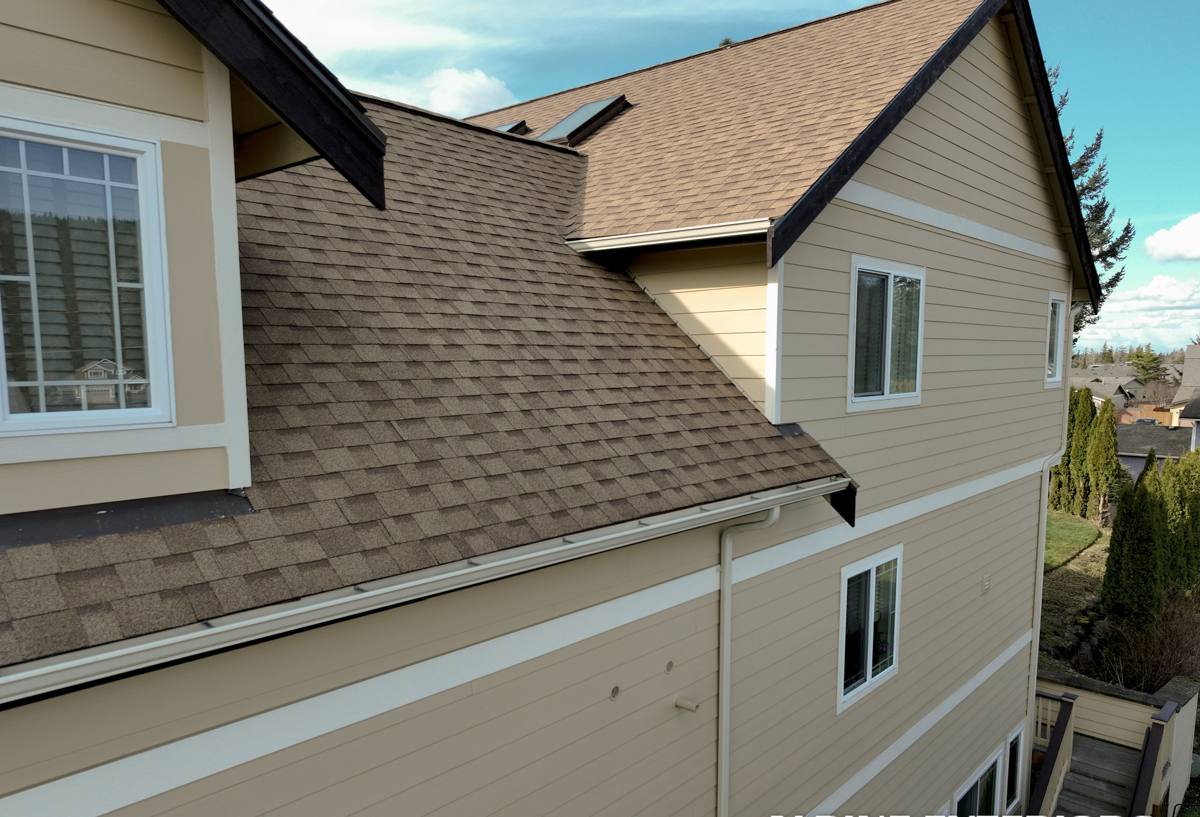
Why We Only Install James Hardie Fiber Cement Here
We don't install vinyl, LP SmartSide, Cemplank, Allura, or unfinished wood siding, in Edgemoor or anywhere else we work. That's a deliberate standard, not a sales pitch, and it's worth explaining honestly rather than just asserting it.
Engineered for wet, coastal-influenced climates
James Hardie makes climate-specific product lines, and the HZ5 formulation is engineered for regions with prolonged moisture exposure like the Pacific Northwest. That matters in a neighborhood where walls stay damp longer because of shade and where windblown rain hits the building envelope directly off the water. Fiber cement itself doesn't rot, swell, or delaminate the way wood-based sidings can when they stay wet for extended stretches.
A factory finish built to outlast field-applied paint
ColorPlus finish is baked on in a controlled factory environment, not brushed or sprayed on site. In a salt-air environment, that matters because factory-cured finishes hold their color and resist chalking and fading noticeably longer than paint applied in the field. Homeowners in Edgemoor are essentially fighting the same fading and finish-breakdown battle as anyone on the coast; starting with a tougher finish is a real advantage, not a marketing detail.
Non-combustible
Fiber cement doesn't burn. That's a straightforward, honest reason to prefer it over any wood-based or vinyl product, independent of climate.
What a Correct Fiber Cement Installation Actually Involves
Fiber cement siding fails early almost exclusively because of installation mistakes, not because the material itself is weak. In a climate like Edgemoor's, those mistakes get punished faster because there's less margin for error. A correct installation includes:
- A continuous weather-resistive barrier installed and lapped correctly behind the siding, with all penetrations properly sealed before a single piece of siding goes up.
- Proper clearances — siding held back from grade, roof lines, decks, and other horizontal surfaces per manufacturer spec, so water has somewhere to go instead of wicking straight into the panel edge.
- Correct fastener pattern and depth — fasteners set flush, not overdriven, and placed exactly where Hardie's installation instructions specify. Overdriven fasteners crack the board's fiber matrix and create a moisture entry point that isn't visible until years later.
- Kick-out flashing at every roof-to-wall intersection — one of the most common things we find missing or wrong on older homes, and one of the most damaging when it's absent, since it directs roof runoff away from the wall instead of behind the siding.
- Correct joint treatment — butt joints and trim junctions detailed per manufacturer guidance rather than just caulked over and hoped for.
None of this is visible once the job is finished and painted. That's exactly why it matters who does the work and how carefully they follow the manufacturer's installation manual rather than a generic "how we've always done it" approach.
How Fiber Cement Compares to the Alternatives in This Climate
| Material | Moisture Behavior | Moss/Algae Resistance | Maintenance | Typical Lifespan |
|---|---|---|---|---|
| James Hardie fiber cement | Does not rot, swell, or absorb water into its structure | Surface growth can occur in shade but doesn't compromise the board | Occasional wash; factory finish holds color | Decades, with strong transferable warranty |
| Vinyl | Won't rot but can warp, crack, or fade; seams can allow water behind panels | Grows moss/algae similarly in shaded, damp conditions | Low, but color fades and can't be refreshed by painting easily | Variable; UV and impact damage shorten it |
| LP SmartSide (engineered wood) | Wood-based; vulnerable to swelling and edge failure if water gets in and stays | Susceptible to surface growth and, if moisture intrudes, rot | Field-applied finish needs more upkeep and repainting | Shorter in sustained wet/shaded exposure |
| Cedar/wood | Absorbs moisture, needs to dry out regularly or it decays | High — natural food source for moss and mildew in shade | Highest — regular sealing, staining, or painting required | Shortest without aggressive, ongoing maintenance |
This isn't a knock on any manufacturer — it's simply what each material does when it sits in shade, salt air, and driving rain for years on end. We chose fiber cement because it holds up best under exactly those conditions, and we stand behind that choice by only installing it.
Our Process, Start to Finish
- On-site inspection — we look at your current siding condition, check for soft spots or trapped moisture behind it, and assess flashing at roof lines, windows, and decks.
- Sheathing and framing repair — any rot or water damage found underneath gets repaired before new siding goes on. Covering up a hidden problem is how good siding fails early.
- Weather barrier installation — a continuous, properly lapped and sealed weather-resistive barrier goes on before siding starts.
- Hardie installation to manufacturer spec — correct clearances, fastener pattern, joint treatment, and flashing details, including kick-out flashing wherever a roof meets a wall.
- Trim and detail work — corners, window and door trim, and transitions finished cleanly and sealed where the manufacturer specifies sealant, and left open where it specifies drainage instead.
- Final walkthrough — we review the finished work with you before calling the job done.
Living With Moss and Salt Air Once Siding Is Installed
No siding material is immune to surface growth if it's shaded and stays damp — that's biology, not a product flaw. What fiber cement gives you is a surface that doesn't feed or absorb that growth the way wood does, and a factory finish that keeps looking right longer under a soft wash than field-applied paint typically does. A few habits keep it looking its best in an Edgemoor setting:
- Keep gutters and downspouts clear so roof runoff doesn't sheet down the wall face.
- Trim back vegetation and low branches near the house to let walls get more air movement and dry out between rains.
- Wash siding gently (a soft brush and hose, or a low-pressure setting) rather than using a pressure washer, which can force water behind panels or damage the finish.
- Address any small caulk failures or trim gaps promptly — small gaps are cheap to fix and expensive to ignore.
Signs Your Current Siding Is Already Failing
Because problems develop behind the surface, by the time siding looks bad it's often been failing for a while. Watch for:
- Soft, spongy, or bouncy spots when you press on the siding
- Paint that's peeling, bubbling, or chalking heavily
- Visible gaps opening up at trim, corners, or butt joints
- Dark streaking or moss that returns quickly after cleaning
- Panels that look warped, buckled, or separated from the wall
- A noticeable rise in heating costs, which can point to a compromised wall assembly behind the siding
Any one of these is worth a look. Several together usually means water has been getting behind the siding for longer than it should have.
Why a Crew That Already Works in Edgemoor Matters
A contractor who regularly works this neighborhood already knows what to expect before they pull up: shaded, tree-covered lots that need extra attention to drainage and airflow, homes with older cedar or wood-panel siding that needs to come off carefully, and the permitting process through the City of Bellingham and Whatcom County. That familiarity shows up in small decisions throughout the job — where kick-out flashing gets added even if the old siding didn't have it, how clearances get handled on a wooded lot, how existing landscaping and access get worked around without unnecessary damage. None of that is exotic knowledge, but it's the difference between a crew executing a manufacturer's spec correctly for this specific setting and a crew installing siding the same way they would on a dry, open lot across town.
If your Edgemoor home's siding is showing its age, or you're planning ahead of a repaint or repair, we're happy to take a look and give you a straightforward, no-pressure estimate using the form below.