 Bellingham Roofing
 Decks in Edgemoor Take a Different Kind of Beating
Edgemoor sits close enough to the water that salt-laden air is a daily fact of life, not an occasional nuisance. Combine that with the driving rain that rolls in off Bellingham Bay most of the year and the deep shade cast by mature trees on many Edgemoor lots, and you get a deck-aging recipe that's tougher than what homeowners deal with further inland. Fasteners corrode faster. Wood stays damp longer between rain events. And moss doesn't just grow on the north side of the roof — it colonizes deck boards, railings, and stair treads wherever sun doesn't reach for more than a few hours a day.
We've repaired decks all over Whatcom County, but Edgemoor's combination of coastal exposure and tree cover means the failure patterns we see here are fairly consistent. Knowing what to expect before we even step onto the deck lets us diagnose faster and quote more accurately.
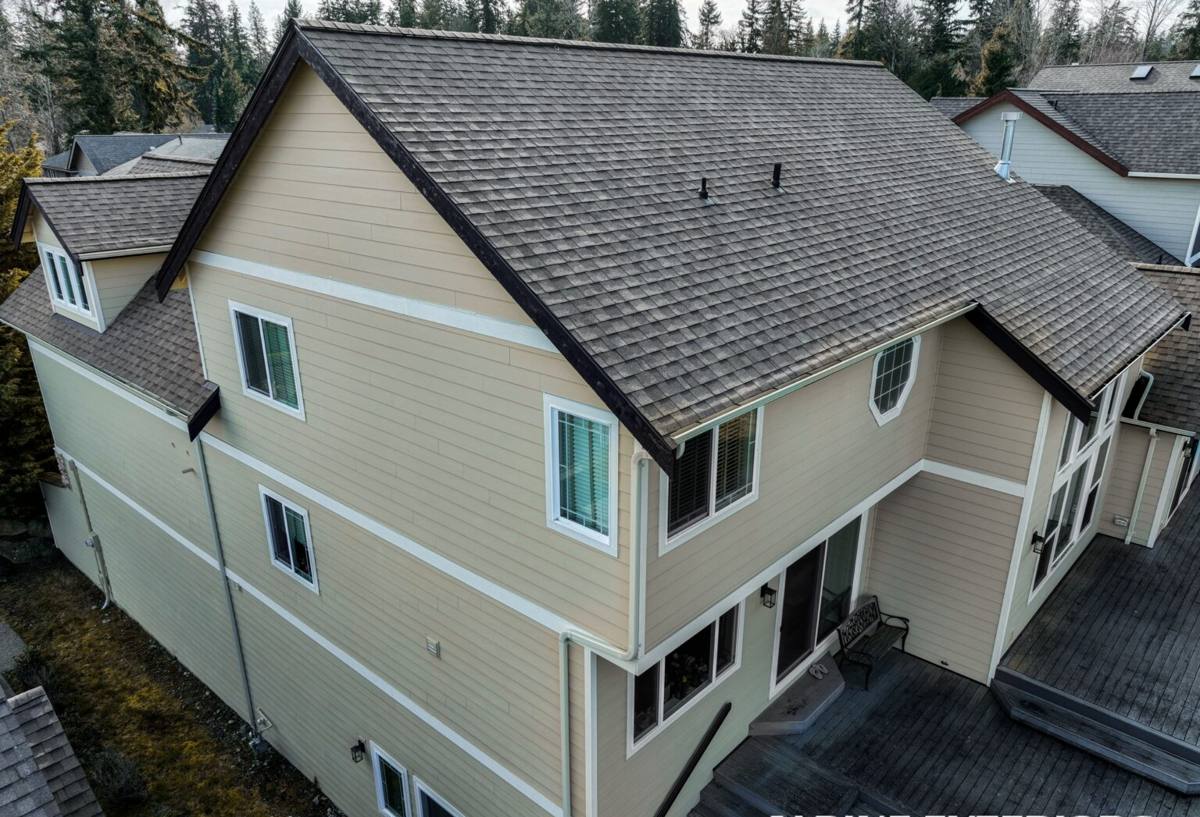
What Actually Fails First on an Edgemoor Deck
Fastener Corrosion
Standard deck screws and nails that aren't rated for coastal exposure start to weep rust stains and lose grip within a few years this close to the water. Once a fastener corrodes, the hole around it enlarges, water gets in, and the surrounding wood softens. This is one of the most common repair calls we get in this neighborhood — boards that look fine from a distance but are barely held down.
Moss and Algae Buildup
Shaded decks in Edgemoor hold moisture far longer than decks in full sun. Moss doesn't just look bad — it holds water directly against the wood surface, which accelerates rot underneath even when the top of the board still looks solid. Moss on stairs and ramps is also a genuine slip hazard, especially after Bellingham's frequent light rain.
Ledger Board and Flashing Problems
The ledger board — where the deck attaches to the house — is the single most important structural connection on most decks, and it's also the part most exposed to water intrusion if flashing was installed poorly or has failed over time. Driving rain pushed sideways by wind off the bay finds gaps that vertical rain never would. We check ledger flashing on every repair call, even when it's not the reason we were called out.
Post Bases and Footings
Wood posts that sit in or near standing water, or in soil that stays saturated from poor drainage, rot from the bottom up. This is often invisible until the deck develops a noticeable bounce or lean.
How We Assess an Edgemoor Deck Repair
Every repair estimate starts with a hands-on inspection, not a drive-by guess. That means:
- Probing suspect boards, posts, and the ledger with an awl or screwdriver to find soft wood, not just looking at the surface
- Checking every visible fastener for corrosion and loose connections
- Inspecting flashing at the ledger board and any spots where the deck meets siding or trim
- Looking underneath the deck where accessible — joists, beams, and post bases hide problems the top surface won't show
- Checking railings and stair connections for looseness, which is a safety issue as much as a repair issue
- Noting drainage patterns and shade exposure that explain why certain areas fail faster than others
We give homeowners a clear, honest picture of what's cosmetic, what's a maintenance issue, and what's a structural safety concern that needs to be fixed regardless of budget. Not every soft board means the whole deck needs replacing, and we'll say so plainly.
Repair vs. Replace: How We Make the Call
This is the question every homeowner actually wants answered, and the honest answer is "it depends on what's underneath." A deck with rotted surface boards but a sound frame is usually a straightforward board replacement. A deck with a compromised ledger connection, rotted framing, or multiple failed posts is a different conversation entirely — patching around structural problems just delays a bigger repair and risks safety in the meantime.
| Condition Found | Typical Approach | Why |
|---|---|---|
| Surface boards worn, gray, or splintering but frame is solid | Board replacement | Framing carries the load; boards are the wear layer |
| Isolated soft spots near a downspout or planter | Localized repair | Problem is contained to a moisture source, not systemic |
| Ledger board shows rot or flashing has failed | Ledger repair/reflash, sometimes before other work | This connection holds the deck to the house — it comes first |
| Multiple posts or joists rotted, deck feels spongy or bouncy | Partial or full rebuild of substructure | Patching framing without addressing the cause invites failure |
| Heavy moss coverage but wood underneath is sound | Cleaning, treatment, and improved drainage/sun exposure where possible | Prevents recurrence rather than just repairing damage after the fact |
Materials: What We Use and Why
For fasteners, we use corrosion-resistant hardware rated for exterior and coastal exposure — standard interior-grade screws don't hold up long here, and we won't put them back in a deck we're repairing, even if that's what was there originally. For replacement boards, the right choice depends on the existing deck: matching pressure-treated lumber for a treated deck, or composite decking where a homeowner wants to reduce future maintenance, particularly in shaded, moss-prone areas where wood needs more upkeep to stay ahead of moisture. We're upfront about the trade-offs of each — composite costs more upfront but needs less seasonal maintenance, while wood is cheaper to repair piecemeal but demands more regular attention, especially in Edgemoor's shade and salt air.
Flashing repairs use materials compatible with the existing siding and structure so we're not creating a new leak path while fixing an old one. We don't cut corners on flashing — it's the cheapest part of a repair to do right and the most expensive to fix later if it's done wrong.
Our Repair Process
- Inspection and estimate — We walk the deck, probe suspect areas, and give you a written scope of work with clear pricing before anything starts.
- Protecting the work area — We section off and secure the deck as needed so it stays safe to use during the repair where possible.
- Removal of damaged material — Rotted boards, corroded fasteners, and failed flashing come out completely; we don't repair over compromised material.
- Structural repair first — Ledger, joists, and posts get addressed before surface boards, since everything else depends on a sound frame.
- Board and railing replacement — New material is installed with corrosion-rated fasteners and proper spacing for drainage and seasonal movement.
- Final check — We verify railings are solid, stairs are secure, and flashing is properly lapped and sealed where applicable.
Seasonal Timing for Deck Repairs in Bellingham
Whatcom County's wet season runs long, and that limits the practical windows for deck repair work that involves opening up framing or ledger connections. We try to schedule structural repairs during drier stretches when possible, though board replacement and moss treatment can often be done in a wider range of conditions. If a deck has a safety issue — a loose railing, a soft stair tread, a sagging section — we don't wait for ideal weather to address that part of the job.
A Simple Maintenance Checklist Between Repairs
- Sweep leaves and debris off the deck regularly, especially in fall and under trees
- Keep an eye on shaded areas for early moss growth and treat it before it spreads
- Check that downspouts and gutters aren't draining directly onto or under the deck
- Look for rust streaks around fasteners, which signal corrosion starting
- Test railings and stair treads periodically by hand for looseness
- Reseal or restain wood decking on the manufacturer's recommended schedule, not just when it looks faded
Why a Crew That Already Works Edgemoor Matters
A contractor who works this neighborhood regularly already knows which failure patterns to look for before the ladder even comes off the truck — the corrosion patterns near the water, the moss patterns under mature tree cover, the drainage quirks of older Edgemoor lots. That local familiarity means a faster, more accurate assessment and fewer surprises once repair work is underway. It also means we're not guessing at what materials hold up here; we've seen what fails and what doesn't over repeated jobs in this exact climate.
We're a Bellingham-based crew, and Edgemoor is part of our regular service area — not a special trip. That matters for scheduling, for follow-up if anything needs a second look, and for straightforward communication throughout the job.
Get a Straight Answer on Your Deck
If you're noticing soft boards, rust stains, loose railings, or moss taking over sections of your deck, it's worth getting an honest assessment before small problems turn into structural ones. We offer free, no-pressure estimates for Edgemoor homeowners — use the form below to get a time on the calendar.