 Bellingham Roofing
 Building Decks That Actually Hold Up in Edgemoor
Edgemoor sits close to the water, tucked into mature tree cover along the Bellingham shoreline, and that combination is exactly what makes deck-building here different from a typical inland job. Homes in this neighborhood deal with salt-laden air coming off Bellingham Bay, long stretches of driving rain through fall and winter, and shaded, damp yards that grow moss faster than almost anywhere else in Whatcom County. A deck built with generic, one-size-fits-all methods will show its age in a handful of years — soft spots in the decking, rusted fasteners bleeding through the boards, slick green film on every horizontal surface. A deck built for these specific conditions can go decades without becoming a maintenance headache.
This page covers what we think about specifically for Edgemoor decks: material choices that tolerate salt exposure, framing and hardware that won't corrode prematurely, drainage details that keep moss and rot from taking hold, and the permitting realities of building in this part of Bellingham.
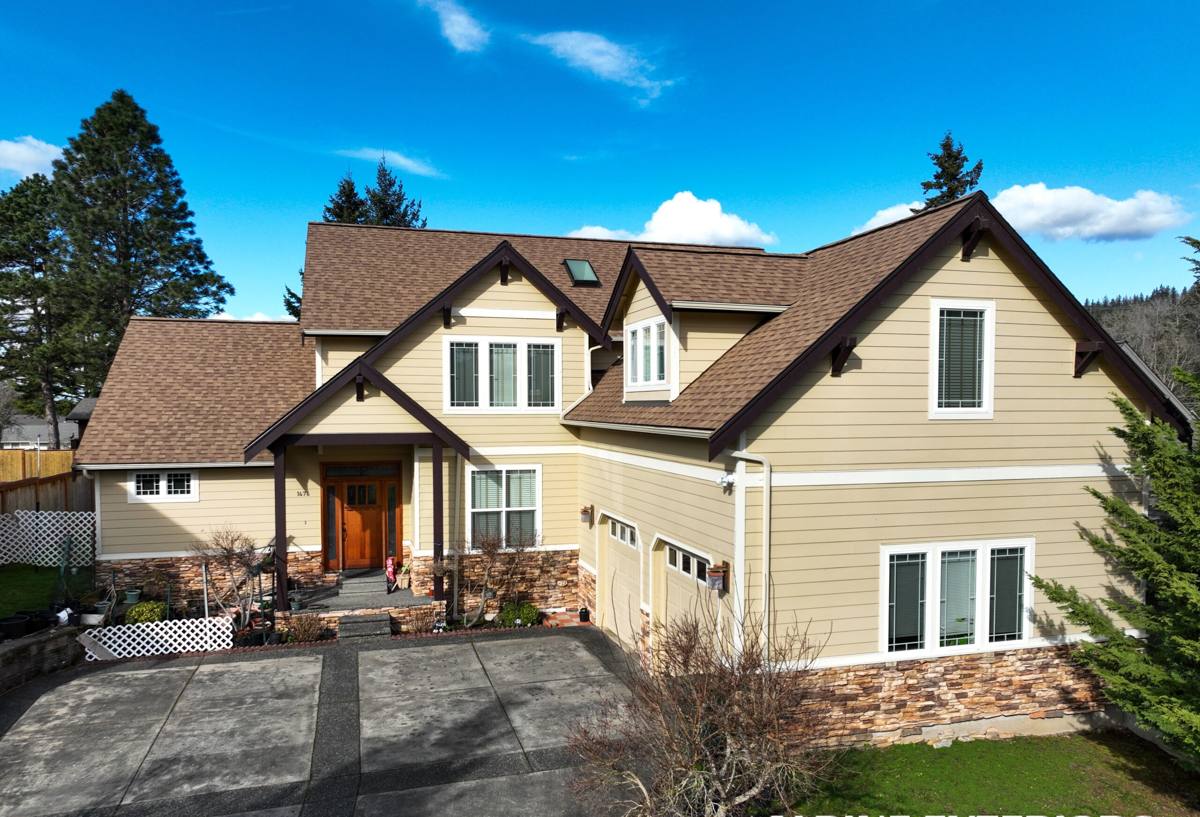
Why Edgemoor's Climate Is Harder on a Deck Than People Expect
Salt Air and Metal Fatigue
Proximity to saltwater accelerates corrosion on anything metal — nails, screws, joist hangers, railing brackets. On an inland deck, a mid-grade fastener might last the life of the structure. Close to the bay, the same fastener can start rusting within a few seasons, and once a fastener fails, the board it's holding starts moving, which speeds up wear on everything around it.
Driving Rain and Standing Water
Bellingham's wet season isn't just steady drizzle — Edgemoor's exposure means wind-driven rain that gets pushed sideways under railings and into ledger connections that a calmer climate wouldn't stress the same way. Water finds every gap in flashing, every unsealed fastener hole, every low spot where a board wasn't pitched to shed water.
Shade, Moisture, and Moss
Mature trees are part of what makes Edgemoor attractive, but they also mean decks here get less direct sun and more standing leaf litter than a deck out in the open. Less sun means slower drying after rain, and slower drying means moss, algae, and mildew get a real foothold — not just on the decking surface, but in the gaps between boards and on the substructure underneath.
What a Correctly Built Deck Involves
Framing and Footings
Everything starts below the decking you actually see. Footings need to be sized and set below frost depth and on undisturbed or properly compacted soil — this matters in Edgemoor's yards where grading is uneven and soil can hold moisture longer under shade. Joists and beams should be rated for the actual span and load, not just "close enough," and any wood framing needs a moisture barrier or approved coating where it contacts concrete.
Ledger Attachment
If the deck attaches to the house, the ledger board connection is the single most safety-critical detail on the whole project. It needs proper flashing to keep water from getting behind the siding, and lag bolts or through-bolts rated for the load — not just nails. This is also one of the most common places we find shortcuts on older decks we're asked to repair or replace.
Fasteners and Hardware
Given the salt exposure in this neighborhood, we treat fastener selection as a real decision, not an afterthought. Stainless steel or heavy hot-dip galvanized hardware costs more up front than standard coated fasteners, but on a deck exposed to bay air, the difference in corrosion resistance is the difference between a deck that stays tight for 20+ years and one with rust-streaked, loosening boards inside five.
Choosing a Decking Material for This Location
There's no single "best" decking material — the right choice depends on how much upkeep you want to do, your budget, and how much shade and moisture your specific yard sees. Here's how the common options actually perform in Edgemoor's conditions:
| Material | Moisture & Moss Behavior | Maintenance | Typical Lifespan Here |
|---|---|---|---|
| Pressure-treated lumber | Absorbs water, needs sealing to resist moss and staining | Annual cleaning, re-sealing every 2-3 years | 15-20 years with upkeep |
| Cedar | Naturally moisture- and insect-resistant, but greys and can host moss without care | Periodic cleaning and oiling to hold color and resist moss | 15-25 years with upkeep |
| Composite decking | Doesn't absorb water like wood, but can still grow surface algae in deep shade | Occasional washing, no sealing or staining required | 25-30+ years |
| PVC/capped polymer | Fully non-absorbent surface, most resistant to moss and staining | Lowest maintenance of the group | 25-30+ years |
In a shaded, damp yard, we'll often steer homeowners toward composite or capped polymer decking specifically because the surface doesn't absorb moisture the way wood does, which cuts down on the moss and algae growth that's so persistent under Edgemoor's tree cover. That said, plenty of homeowners want the look and feel of real wood, and a well-built, well-maintained cedar deck can absolutely hold up here — it just asks more of you in upkeep.
Railings, Stairs, and Code Requirements
Any deck more than a modest height off grade needs railings and, in most cases, code-compliant guard heights, baluster spacing, and stair geometry. Bellingham and Whatcom County follow the state building code for these requirements, and inspectors check them closely — guard height, spacing that prevents a small child from passing through, graspable handrails on stairs, and proper stair rise/run consistency. Getting these details right the first time avoids a failed inspection and a delay in getting your deck signed off and usable.
Permits
Most new decks and many substantial rebuilds in Bellingham require a building permit, particularly once the structure reaches a certain height or size, or when it attaches to the house. We handle the permit application and coordinate the required inspections as part of the build, so you're not the one tracking down paperwork or waiting on hold with the city.
Drainage and Moss Prevention Built Into the Design
Deck Board Spacing and Airflow
Correct gapping between boards lets water drain through instead of pooling on the surface, and it lets air move underneath so the structure actually dries out between rain events. Too tight, and you trap moisture; too wide, and you create a tripping and debris problem. We set spacing based on the material and expected board movement, not a generic default.
Under-Deck Drainage
For decks with usable space underneath, or decks low to the ground, directing water away from the substructure matters more in Edgemoor than in a drier, sunnier part of the county. Grading the ground below the deck, keeping vegetation from crowding the underside, and in some cases installing an under-deck drainage system all help keep that space from turning into a permanent damp, mossy pocket.
Keeping Leaf Litter From Becoming a Problem
Tree cover means leaf and needle buildup in the gaps between boards and against the house. Left alone, that debris holds moisture against the decking and accelerates both wood rot and moss growth. Good design — like keeping the deck edge slightly clear of dense plantings — makes ongoing cleanup easier for you.
How Our Process Works
- On-site assessment. We look at your yard's sun exposure, drainage patterns, existing structure (if any), and how the deck will actually be used before recommending materials or layout.
- Design and material selection. We walk through the real tradeoffs — wood versus composite, railing styles, footprint — based on your budget and how much maintenance you want to take on.
- Permitting. We prepare and submit what's needed for your project and schedule the required inspections.
- Construction. Footings, framing, ledger connection (if attached), decking, railings, and stairs, built with fasteners and hardware appropriate for this climate.
- Final walkthrough. We go over the finished deck with you, including what maintenance it does and doesn't need going forward.
Maintaining a Deck in a Marine, Shaded Climate
Even the best-built deck needs some seasonal attention in a climate like this. A short annual routine keeps small issues from becoming expensive ones:
- Sweep leaves and debris out of board gaps before fall rains set in
- Rinse or scrub visible moss and algae buildup before it stains or gets slick
- Check railing posts and stair connections for movement once a year
- Inspect visible fasteners for early rust or loosening, especially near the water-facing side
- Re-seal or re-stain wood decking on the schedule appropriate to that product
- Keep gutters and downspouts clear so runoff isn't dumping extra water onto or near the deck
Why It Matters That We Already Work in Edgemoor
A crew that only occasionally works this close to the water can miss the details that matter here — under-specifying fasteners, skipping extra drainage consideration, or picking a decking material that looks fine on a sunny showroom sample but struggles in a shaded, damp yard. We build decks throughout Bellingham and Whatcom County, and the Edgemoor jobs get evaluated with this specific climate in mind from the first site visit: how much sun that particular yard actually gets, how exposed it is to bay-driven wind and rain, and what that means for material and hardware choices.
If you're planning a new deck or replacing one that's showing its age, we're happy to come take a look and put together a straightforward, no-pressure estimate — just fill out the form below.