 Bellingham Roofing
 Building Decks for Edgemoor's Waterside Climate
Edgemoor sits close enough to the water that salt-laden air is a real design factor, not a footnote. Add Bellingham's driving winter rain and the deep tree canopy that shades much of this neighborhood, and you get a combination that's hard on outdoor structures: metal corrodes faster near the bay, wood stays damp longer under mature trees, and moss finds a foothold anywhere sunlight and airflow are limited. A deck built to a generic spec sheet will show its age here in a few seasons. A deck built for these specific conditions holds its finish, its footing, and its structure for decades instead.
We've framed and finished decks throughout this part of Bellingham long enough to know which details matter on a shaded, bay-adjacent lot and which ones are just upsells. This page walks through what that actually means for material choice, framing, and long-term care — not marketing language, just what a correctly built deck for Edgemoor requires.
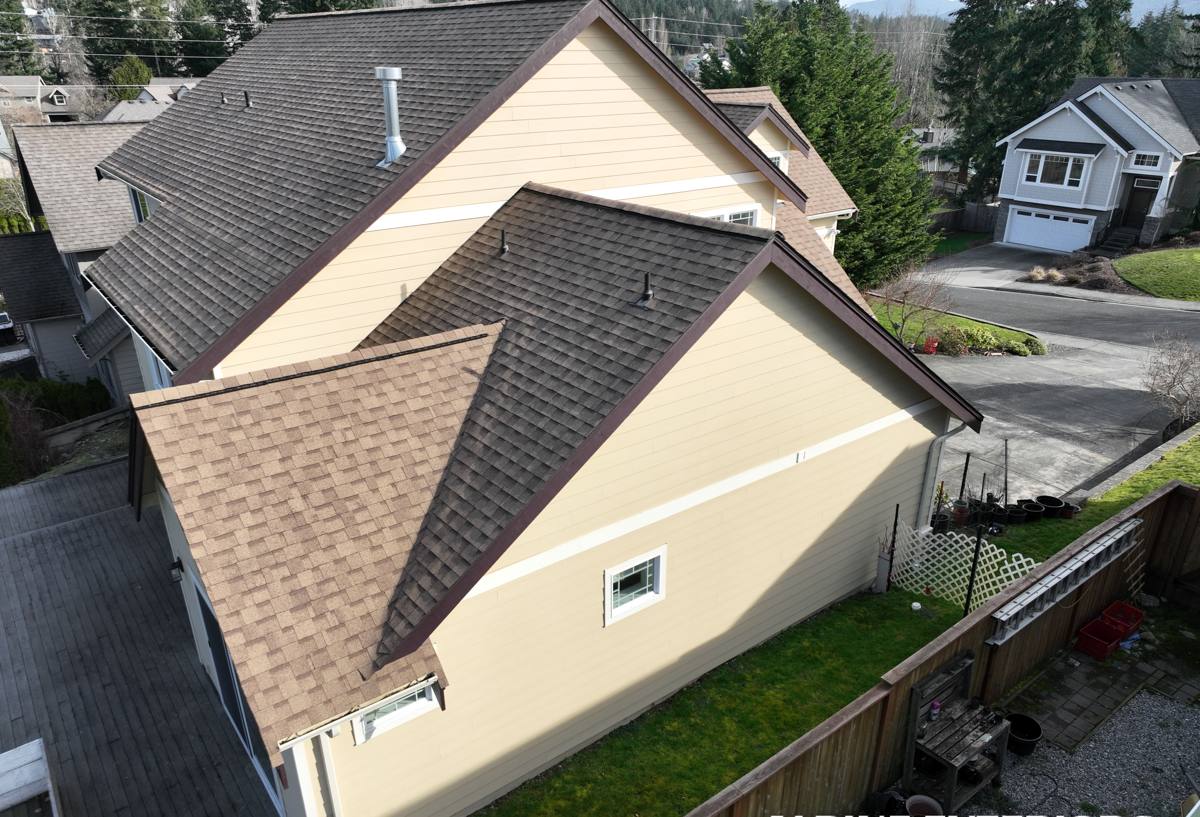
What Edgemoor Homes Actually Need From a Deck
Salt Air and Corrosion
Proximity to Bellingham Bay means airborne salt settles on exposed metal — fasteners, flashing, railing hardware — and accelerates rust in ways homeowners further inland don't deal with. Standard galvanized screws or brackets can start showing surface corrosion within a couple of years on a bay-facing deck. That corrosion isn't just cosmetic; a rusted structural fastener is a weaker fastener, and it's exactly the kind of failure point that doesn't announce itself until it's a problem.
Shade, Moisture, and Moss
Many Edgemoor lots carry mature tree cover, which is part of the neighborhood's character but also means less direct sun reaching deck surfaces, longer drying times after rain, and organic debris — needles, leaves, seed pods — collecting in board gaps and against ledger boards. That combination is a moss and algae incubator. On wood decking it also means the boards themselves stay wet longer, which shortens the life of the finish and, over years, the wood.
Driving Rain and Wind-Driven Moisture
Whatcom County's winter storms don't just fall straight down — wind pushes rain sideways into ledger connections, under railings, and into any gap in flashing that wasn't detailed correctly. A deck attached to the house is only as weatherproof as its ledger flashing, and that's one of the most commonly under-built details we see when we inspect older or DIY decks in this area.
Choosing the Right Decking Material for This Neighborhood
There's no single "best" decking material — the right choice depends on how much sun the site gets, how much upkeep the homeowner wants to do, and the look they're after. Here's how the common options actually perform under Edgemoor's specific conditions.
| Material | Performance in Shade/Moss Conditions | Salt Air Considerations | Maintenance Level |
|---|---|---|---|
| Pressure-treated wood | Absorbs moisture readily; needs regular cleaning and sealing to resist moss and rot | Requires stainless or coated fasteners to avoid streaking and corrosion | High — annual cleaning, periodic re-sealing |
| Cedar or other natural wood | Naturally rot-resistant but still needs airflow and cleaning in shaded spots | Same fastener considerations as PT wood | High — finish maintenance every 1-2 years |
| Composite decking | Won't rot, but can still grow surface moss/algae in deep shade — needs occasional washing | Composite itself is inert; hardware still needs to be corrosion-rated | Low — periodic washing, no sealing |
| PVC/capped polymer decking | Most resistant to moisture staining and organic growth adhesion | Inert surface; hardware still the weak point | Low — occasional washing |
On heavily shaded Edgemoor lots, we often steer homeowners toward composite or capped polymer boards for the walking surface, paired with real or engineered wood framing underneath — that's usually the best balance of appearance, longevity, and the amount of upkeep someone actually wants to do. Wood is still a good choice for owners who like the look and are willing to keep up with cleaning and sealing on a real schedule; we're honest with clients about that time commitment before they commit to it.
What a Correctly Built Deck Involves Structurally
The decking material is the part everyone sees. The parts that determine whether the deck is still solid in fifteen years are underneath it, and they matter more on a site like this.
Ledger Attachment and Flashing
Where the deck meets the house is the single most important weatherproofing detail on the whole structure. Correct practice is a properly flashed ledger board with the flashing lapped under the house's water-resistive barrier or siding — never just caulked and hoped for. Given how much wind-driven rain this area gets in the winter, we don't cut corners here.
Joist Protection
Joist tape or a comparable moisture barrier over the top of every joist keeps water from wicking into end grain and fastener holes, which is where rot typically starts on an otherwise sound deck. On a shaded lot where boards stay damp longer, this detail buys real years of structural life.
Hardware and Fasteners
We spec stainless steel or high-grade coated fasteners and structural connectors for bay-adjacent builds specifically because standard galvanized hardware corrodes faster in salt air. It costs a little more up front and saves a rebuild down the line.
Footings and Frost Considerations
Footings need to be sized and set to local frost depth and soil conditions, which can vary across Edgemoor's terrain — some lots have straightforward soil, others have more clay or slope that affects drainage around footings. We don't guess; footing depth and placement get confirmed for the specific site, not copied from the last job.
Ventilation Beneath the Deck
Low-clearance decks over shaded ground are especially prone to trapping moisture underneath, which feeds rot and moss both. Where clearance allows, we build in airflow rather than closing the underside off completely.
Our Process, Start to Finish
- Site walk and assessment — we look at sun exposure, tree cover, existing drainage, and the house's siding/flashing condition at the attachment point before recommending anything.
- Material and layout discussion — we walk through the tradeoffs above in plain terms so the homeowner picks a material based on how they'll actually use and maintain the space.
- Permitting — we handle the permit application and coordinate any required inspections with the local jurisdiction.
- Framing and structural work — footings, ledger flashing, joists, and joist protection go in first, and this stage gets inspected before decking goes down.
- Decking, railing, and finish work — boards, railings, and any stairs or fascia are installed to the agreed layout.
- Final walkthrough — we go over the finished deck with the homeowner, including what maintenance to expect and on what schedule.
Permits, Setbacks, and Local Code
Most new decks and significant deck rebuilds in Bellingham and unincorporated Whatcom County require a building permit, and setback rules can affect how close a deck can sit to a property line, especially on the kind of larger, treed lots common in Edgemoor. Railing height, guard spacing, and stair requirements are also governed by code and get checked at inspection. We manage this process as part of the build rather than leaving it to the homeowner to sort out — it's one less thing to worry about, and it protects the homeowner from having unpermitted work come up later during a home sale or insurance claim.
Maintenance Reality: Staying Ahead of Moss and Salt Air
Every deck needs some upkeep. The goal is matching the maintenance plan to the material and site conditions so it's manageable rather than a constant chore.
- Sweep leaves, needles, and other debris out of board gaps regularly, especially in fall — trapped organic matter is what feeds moss growth.
- Rinse or wash the deck surface a couple of times a year in shaded areas, more often if moss is already visible.
- Inspect railing hardware and structural connectors annually for early signs of corrosion, particularly on bay-facing decks.
- Re-seal or re-stain wood decking on the schedule the product calls for — deferring this shortens the wood's life significantly in a wet climate.
- Check the ledger flashing and the gap between the deck and siding periodically for any sign of water intrusion.
- Keep nearby vegetation trimmed back where practical to improve airflow and sun exposure across the deck surface.
What Affects the Cost of a Custom Deck
Every project is different, but the same handful of factors drive most of the cost variation we see on Edgemoor jobs.
| Factor | Why It Matters Here |
|---|---|
| Decking material | Composite and PVC cost more upfront than wood but require far less long-term maintenance |
| Site access and slope | Sloped or wooded lots can complicate footing work and material staging |
| Height and railing requirements | Taller decks and code-required guard railing add structural and material cost |
| Hardware specification | Corrosion-rated fasteners and connectors for bay-adjacent sites cost more than standard galvanized |
| Roof or cover integration | A covered or partially covered deck adds framing and flashing complexity but reduces future weather exposure |
We give homeowners a real, itemized number after the site walk rather than a rough guess over the phone — the variables above genuinely change the price enough that a ballpark isn't useful.
Why It Matters That We Already Work in Edgemoor
A crew that hasn't worked this specific stretch of Bellingham will often build to a generic spec and let the homeowner discover the local problems — moss, corroding hardware, a ledger that leaks in the first hard winter storm — after the fact. We've already made the material and hardware decisions that hold up here, so those lessons are built into the plan from day one rather than learned on someone's deck. That's the difference between a deck that needs real attention in year three and one that's still solid, with normal upkeep, well past year fifteen.
If you're planning a new deck or replacing an aging one in Edgemoor, we're happy to walk the site with you and put together a straightforward, no-pressure estimate — just fill out the form below to get started.