 Bellingham Roofing
 Board & Batten Siding in Edgemoor: A Style That Has to Earn Its Keep
Edgemoor sits on the wooded bluffs above Bellingham Bay, and that setting is exactly why board and batten siding has become such a popular choice here. The vertical lines suit the craftsman and modern farmhouse homes common in the neighborhood, and the style reads clean against the tree cover and water views that define the area. But Edgemoor's location is also what makes board and batten a harder siding style to get right than it looks. Homes here sit close enough to Bellingham Bay to pick up salt-laden air, exposed enough on bluff lots to take wind-driven rain straight into their walls, and shaded enough by mature trees to grow moss and algae for a good part of the year. A board and batten job that isn't detailed for that combination will show problems in the joints and battens long before the rest of the wall shows any wear.
This page is about that one service, in this one neighborhood: what Edgemoor's climate demands from a board and batten installation, what we actually do differently because of it, and why we install only James Hardie fiber cement for this style of siding.
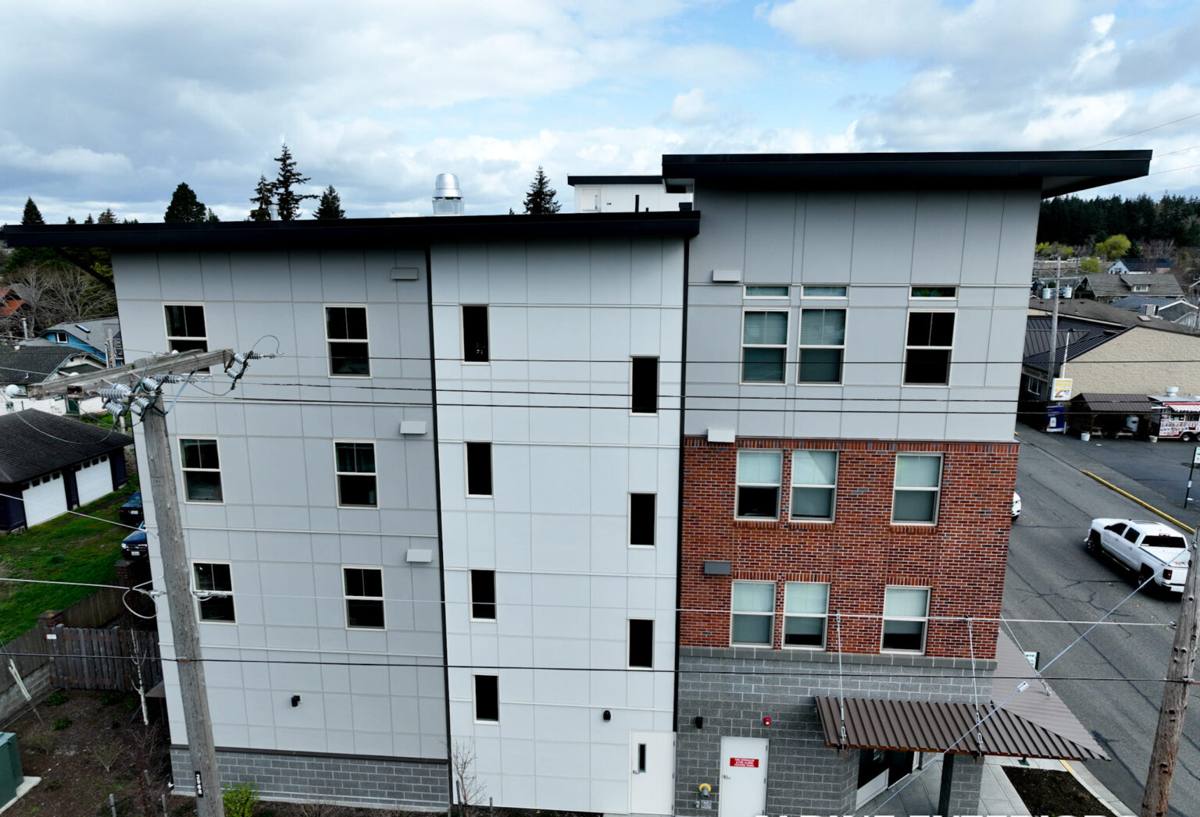
What Edgemoor's Climate Does to a Vertical Siding System
Salt Air and Corrosion
Proximity to Bellingham Bay means airborne salt is a real factor for Edgemoor homes, even on lots set back from the water. Salt-laden moisture accelerates corrosion on fasteners, flashing, and trim hardware. On a board and batten wall, the battens are fastened directly through the field boards into the sheathing and framing below, which means there are more fastener penetrations per square foot than on a standard lap siding job. Every one of those fasteners is a potential weak point if it's the wrong metal for a marine-influenced environment.
Wind-Driven Rain and Vertical Joints
Board and batten relies on vertical joints and butt seams that run with gravity instead of shedding water in overlapping horizontal courses the way lap siding does. That's fine in calm weather, but Edgemoor's exposure to wind off the bay means rain doesn't always fall straight down — it gets driven sideways into wall assemblies. Vertical siding styles need correctly detailed battens, laps, and a drainage plane behind the cladding to handle that kind of wind-driven moisture without pushing water past the field boards.
Moss, Algae, and Shade
The tree canopy that makes Edgemoor desirable also keeps many walls shaded and damp for long stretches of the year, especially on north-facing elevations. Moss and algae growth is a near-constant maintenance issue for exterior surfaces in this kind of setting. A siding material that absorbs moisture gives that growth something to root into; a material that doesn't gives it far less to work with.
Why Board & Batten Still Makes Sense Here — If It's Built Right
None of this means board and batten is a poor choice for Edgemoor — it's actually well suited to the neighborhood's architecture and setting, as long as the installation accounts for the exposure. The vertical reveal pattern works well on the two-story homes and steep rooflines common on bluff lots, and it pairs cleanly with the timber, stone, and glass detailing found on many Edgemoor exteriors. The issue has never been the style itself. It's that board and batten depends on more joints, more fasteners, and more precise flashing than a simple lap profile, and in a marine, high-rain, high-shade environment, every one of those details either works for the life of the siding or fails early.
What a Correct Board & Batten Installation Involves
Drainage Plane First
Board and batten should never go up directly against the weather-resistive barrier without an airgap. We install a rainscreen or vertical furring system behind the siding so that any moisture that gets past the battens has somewhere to drain and dry, rather than sitting against the sheathing. On a bluff lot exposed to bay wind, this drainage gap is not optional — it's the difference between a wall that dries out after a storm and one that stays damp for days.
Fastening and Hardware
Fasteners and any exposed hardware need to be corrosion-resistant metals rated for coastal or marine exposure, not standard interior-grade fasteners. This matters more on board and batten than on most other siding styles because of the sheer number of penetrations through the battens.
Flashing at Every Transition
Windows, doors, roof-to-wall intersections, and the base of the wall all need properly lapped flashing that directs water out and away from the sheathing. Board and batten's vertical joints make careful flashing at horizontal transitions especially important, since there's no overlapping course above to help redirect water at those points.
Batten Spacing and Board Movement
Field boards need consistent gaps under the battens to allow for expansion and contraction without buckling the panel or opening gaps at the seams. Getting this spacing right is a big part of why board and batten takes more layout time than lap siding.
James Hardie Board & Batten Options
We install James Hardie fiber cement exclusively, and Hardie offers a couple of distinct ways to achieve the board and batten look, depending on the home's style and budget.
| Product | Look | Typical Use |
|---|---|---|
| HardiePanel Vertical Siding + Battens | Smooth or stucco-textured panel with separate batten strips for the classic board and batten reveal | Most common choice for craftsman and farmhouse-style Edgemoor homes; flexible batten spacing |
| Hardie Artisan Board & Batten | Thicker, more dimensional panel with a refined factory profile and deeper shadow lines | Higher-end homes where a more substantial, custom-milled appearance is the goal |
Both are non-combustible fiber cement, engineered in Hardie's HZ5 product line for the Pacific Northwest's wet climate, and finished with the factory ColorPlus finish rather than a job-site paint job. That factory finish matters directly for Edgemoor: it's baked on for better resistance to the fading, checking, and mildew growth that field-applied paint struggles with under constant shade and moisture.
Why We Don't Install Vinyl or Engineered Wood Board & Batten
Board and batten is also sold in vinyl and engineered wood (LP SmartSide-type) versions, and we understand why homeowners consider them — they're often less expensive up front. But we've standardized on James Hardie fiber cement for this style because of what Edgemoor's environment does to the alternatives over time. Vinyl board and batten can warp or distort under sun and temperature swings, and its seams and battens are more prone to visible gapping over the years. Engineered wood products use wood fiber with a resin coating; if that coating is compromised at a cut edge or fastener hole, moisture can wick into the substrate — a real concern given how much wetter and shadier many Edgemoor lots are compared to more open parts of Bellingham. Fiber cement doesn't have an organic core to swell or rot, and it holds paint and color far longer under the salt air and moss conditions this neighborhood deals with. That reliability is why it's the only board and batten system we put our name behind.
Our Process for Edgemoor Board & Batten Projects
Working in a wooded, bluff-adjacent neighborhood like Edgemoor comes with practical considerations that shape how we approach every job here:
- On-site walkthrough to assess sun/shade exposure, existing moss or algae staining, and wind exposure on each elevation
- Inspection of existing sheathing and framing for moisture damage before any new siding goes up
- Installation of a proper drainage plane behind the board and batten system, sized to the wall's exposure
- Corrosion-resistant fastening and flashing detailing at every window, door, and roofline transition
- Careful batten layout and spacing planning before the first panel goes up, so reveals stay consistent across the whole elevation
- Final walkthrough covering care and maintenance specific to a shaded, marine-influenced lot
Cost Factors for Board & Batten Siding in Edgemoor
Board and batten typically costs more per square foot than standard lap siding because of the extra materials and labor involved in the battens and layout. The factors below tend to move the price the most on Edgemoor projects specifically:
| Factor | Why It Matters Here |
|---|---|
| Existing sheathing condition | Bluff and shaded lots are more prone to hidden moisture damage that must be repaired before siding goes on |
| Wall height and access | Many Edgemoor homes have two-story elevations or steep site grades that affect scaffolding and staging |
| Drainage plane installation | Wind exposure near the bay makes a proper rainscreen worth the added labor, not an optional upgrade |
| Trim and flashing detail | Homes with more windows, dormers, or roof intersections require more flashing work per square foot |
| Product line selected | Standard HardiePanel-and-batten costs less than the Artisan collection's deeper, more custom profile |
Maintenance in a Marine, Shaded Climate
Even a correctly installed board and batten system benefits from a little seasonal attention in a neighborhood like Edgemoor. A simple annual routine goes a long way:
- Rinse shaded, north-facing walls periodically to slow moss and algae buildup
- Keep gutters clear so overflow doesn't run down the face of the siding
- Trim back vegetation and tree limbs that keep wall sections damp and shaded
- Inspect caulking around windows and trim yearly, and recaulk where it's cracked or pulled away
- Have flashing and fastener points checked periodically for any early corrosion signs, given the salt air exposure
Why Hire a Crew That Already Works in Edgemoor
Board and batten is unforgiving of shortcuts, and Edgemoor's combination of salt air, driving rain, and heavy shade makes those shortcuts show up faster than they would on a more sheltered lot elsewhere in Whatcom County. A crew that already understands this neighborhood's exposure — which elevations take the worst wind-driven rain, which lots hold moisture longest under the canopy, what corrosion-resistant hardware actually holds up near the bay — builds that knowledge into the job before the first panel goes up, instead of learning it the hard way after a callback. That's the difference between board and batten siding that looks right for a season and board and batten siding that performs right for decades.
If you're considering board and batten siding for a home in Edgemoor, we're happy to walk the property, look at your specific exposure, and put together a free, no-pressure estimate — just fill out the form below.