 Bellingham Roofing
 Bellingham's Marine Climate Is Hard on Decks
A deck in Whatcom County lives a harder life than the same deck would a few hundred miles inland. Salt-tinged air moving in off Bellingham Bay accelerates corrosion on fasteners and metal connectors. Long stretches of driving rain push moisture into every joint, seam, and end-grain cut. And because so many Silver Beach lots sit under mature evergreens, decks here spend a good chunk of the year shaded and damp — which is exactly what moss and algae need to take hold. None of that means a deck is doomed. It means a deck built or repaired without those conditions in mind will fail faster than it should, usually in ways that aren't obvious until the damage is well established.
We work on decks throughout Bellingham and Whatcom County, and Silver Beach shows up in our schedule regularly enough that we've got a good read on how homes in this area age. That local pattern recognition is a big part of what makes a repair actually correct, rather than a patch that looks fine for a season and fails again.
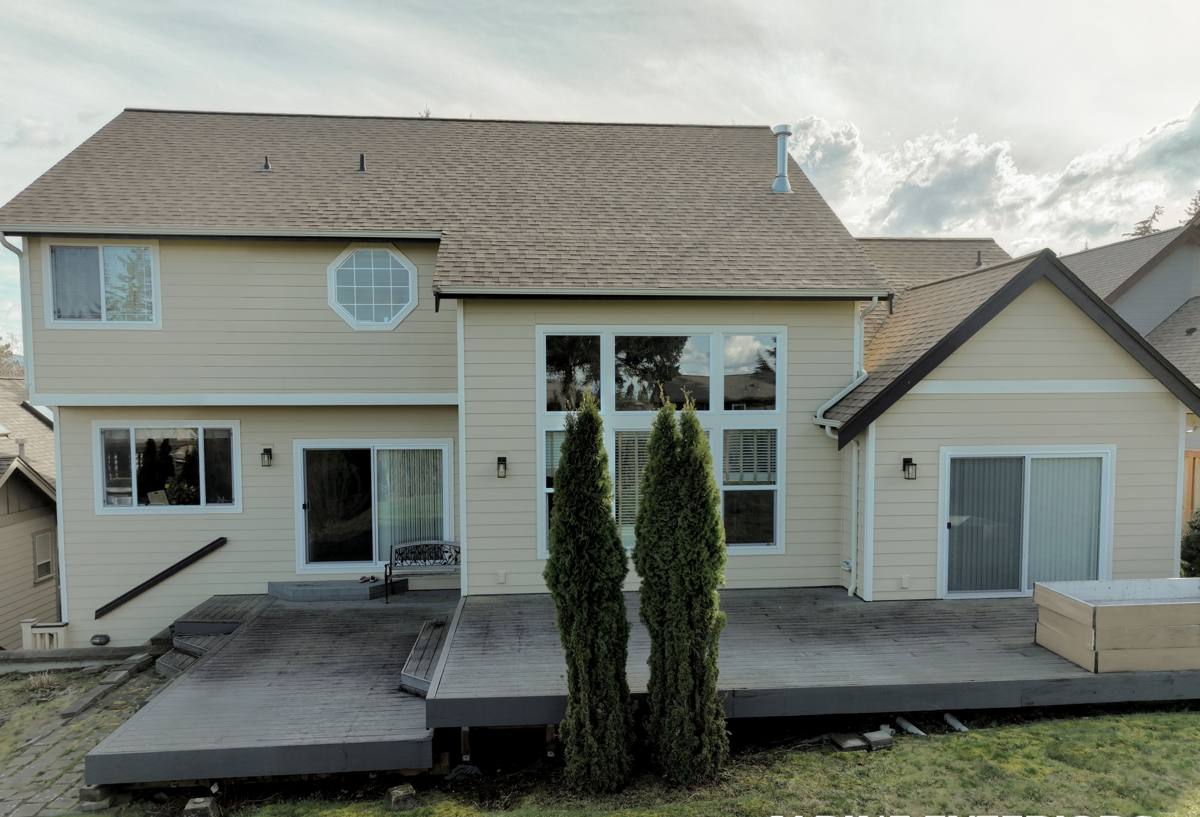
Warning Signs a Deck Needs Repair
Deck problems rarely announce themselves. Most start small and stay hidden under a rug, a planter, or the shadow of a railing post. Homeowners typically call us after noticing one or more of the following:
- Boards that feel spongy, bounce, or flex more than they used to underfoot
- Green, black, or slick buildup on boards that doesn't scrub off with a deck cleaner
- Rust streaking down from screws, nails, or metal brackets
- A railing that wiggles or a post that feels loose at the base
- Gaps opening up where the deck meets the house, or daylight visible at the ledger board
- Wood that's gone gray and splintery, or that a screwdriver sinks into easily
- Standing water that takes more than a day to dry after a normal rain
Any one of these on its own might be minor. Several together, especially near the ledger (the board that bolts the deck to the house) or around support posts, usually means water has been getting into the structure for a while.
What a Correct Deck Repair Actually Involves
Structural Repairs
The framing underneath the decking — joists, beams, posts, and the ledger board — is the part that actually holds people up. A repair that only replaces surface boards while ignoring soft or rotted framing underneath is a repair that will need to be redone. We check joists and beams for soft spots, check post bases for rot where they meet concrete or the ground, and confirm the ledger connection is still sound, since that's the single most common source of deck failures nationally and one of the easiest things to miss from a quick visual look.
Fasteners and Flashing
Given the salt air and rain load in this area, fastener choice matters more here than it would in a drier inland climate. Standard zinc-coated screws and nails corrode faster near the coast, which is why we favor hot-dip galvanized or stainless hardware rated for the exposure. Flashing — the metal or membrane barrier that keeps water from tracking behind the ledger and into the house rim joist — gets checked and replaced as part of any real repair, not skipped because it's hidden.
Decking and Railing
Once the structure and connections are solid, we address what's visible: split or cupped boards, damaged railing components, and any spots where moss or algae have etched into the wood surface. This is also where we talk through whether it makes sense to match your existing decking or use the repair as a chance to upgrade a section to a lower-maintenance material.
Common Problems We Find on Silver Beach Decks
The mix of tree cover, moisture, and older housing stock in this neighborhood produces a fairly consistent pattern of deck issues:
| Issue | Typical Cause | Why It Matters |
|---|---|---|
| Rotted ledger board | Missing or failed flashing where deck meets house | Can allow water into the house framing, not just the deck |
| Corroded fasteners | Standard hardware not rated for coastal/marine exposure | Loosens board attachment and stains the wood |
| Moss and algae film | Shade from mature trees plus prolonged dampness | Makes surfaces slick and traps moisture against the wood |
| Soft or spongy joists | Slow water intrusion through end grain or old fastener holes | Compromises the structural capacity of the deck |
| Wobbly railing posts | Rot at the post base or undersized original connections | A safety issue, not just a cosmetic one |
Repair or Replace? What Actually Decides It
Most decks don't need a full rebuild — but some do, and it's worth being upfront about how we tell the difference. The honest answer usually comes down to how much of the framing is still sound versus how much has already been compromised.
| Factor | Leans Toward Repair | Leans Toward Replacement |
|---|---|---|
| Framing condition | Joists and ledger are solid, damage is localized | Rot has spread through multiple structural members |
| Age of the deck | Newer deck, isolated failure point | Original construction predates current code and flashing practices |
| Extent of damage | A few boards, one post, or a section of railing | Damage is present across most of the deck's surface |
| Original build quality | Sound original construction, just aging | Undersized framing or missing flashing from the start |
| Your plans for the deck | Happy with current size and layout | Wanting a different footprint, material, or added features |
We'll give you a straight answer on which side of that line your deck falls on, and we won't recommend a full rebuild when a targeted repair will genuinely hold up.
Our Deck Repair Process
- On-site assessment. We inspect the decking surface, framing, ledger connection, fasteners, and post bases — probing suspect areas rather than just looking at them.
- Written scope and estimate. You get a clear breakdown of what needs to be repaired, what's optional, and what it costs before any work starts.
- Removal of damaged material. We pull failed boards, hardware, and any rotted framing back to solid wood — no covering up soft spots.
- Structural and flashing repair. Joists, beams, posts, and ledger flashing get rebuilt to current best practice, with fasteners rated for this climate.
- Decking, railing, and finish work. New boards and railing components are installed and matched to your existing deck as closely as practical.
- Final walkthrough. We check the repair with you and flag anything worth monitoring going forward.
Materials We Choose and Why
For structural framing, pressure-treated lumber rated for ground contact where applicable remains the standard — it's proven, code-compliant, and cost-effective. For fasteners and connectors, we specify hardware rated for coastal exposure rather than the standard-duty coatings that are fine in drier climates but corrode noticeably faster this close to the water. For decking surfaces, we'll talk through both wood and composite honestly: wood costs less upfront but needs regular cleaning and refinishing to shed moisture and resist moss, while composite costs more upfront but handles this area's damp, shaded conditions with less maintenance. Neither is wrong — it depends on how much upkeep you want to take on, and we'll lay out the real trade-offs rather than push one option.
Protecting Your Deck After the Repair
A repair holds up longer with a little seasonal attention. A short maintenance routine goes a long way in this climate:
- Sweep debris off the deck regularly, especially fallen leaves and needles that trap moisture
- Rinse or gently scrub moss and algae off before it etches into the wood surface
- Check for standing water after heavy rain and confirm gaps between boards aren't clogged
- Look at fasteners and railing connections once or twice a year for early rust or looseness
- Reapply sealant or stain on wood decking on the schedule the product calls for, not just when it looks faded
- Trim back overhanging branches that keep sections of the deck shaded and damp
Why a Crew That Already Works Silver Beach Matters
A contractor who's worked in Silver Beach and the surrounding Bellingham neighborhoods already knows the housing stock, the typical original construction quality, and where water tends to find its way into a deck around here. That means less time spent diagnosing and more time spent fixing the actual problem — and it means the repair is built with this area's rain, humidity, and moss season in mind from the start, not treated like a generic job that happens to be in Whatcom County. It also means we're not disappearing after the invoice; if a question comes up six months later, we're still working in your neighborhood.
If your deck has any of the warning signs above, or you just want an honest read on its condition, we're happy to take a look. Reach out for a free, no-pressure estimate using the form below — we'll tell you straight what we find and what it would take to fix it right.