 Bellingham Roofing
 Why Lynden Decks Wear Out Faster Than You'd Expect
A deck in Lynden lives a harder life than most homeowners realize. Whatcom County's long, wet winters keep wood and composite surfaces damp for weeks at a stretch, salt-laden air off the Salish Sea works its way inland and accelerates corrosion on fasteners and hardware, and driving rain finds every gap in flashing and joinery that a drier climate would never expose. Add in a moss season that can run from October well into April, and you've got a structure that's under near-constant assault from moisture, organic growth, and temperature swings.
None of that means a deck is doomed — it means a deck needs to be built and repaired with this climate in mind, not treated like it's going up in Spokane or Arizona. Most of the deck failures we see in this area trace back to the same handful of causes: water trapped where it shouldn't be, fasteners that were never rated for wet coastal conditions, or a repair that patched the visible problem without addressing what was happening underneath.
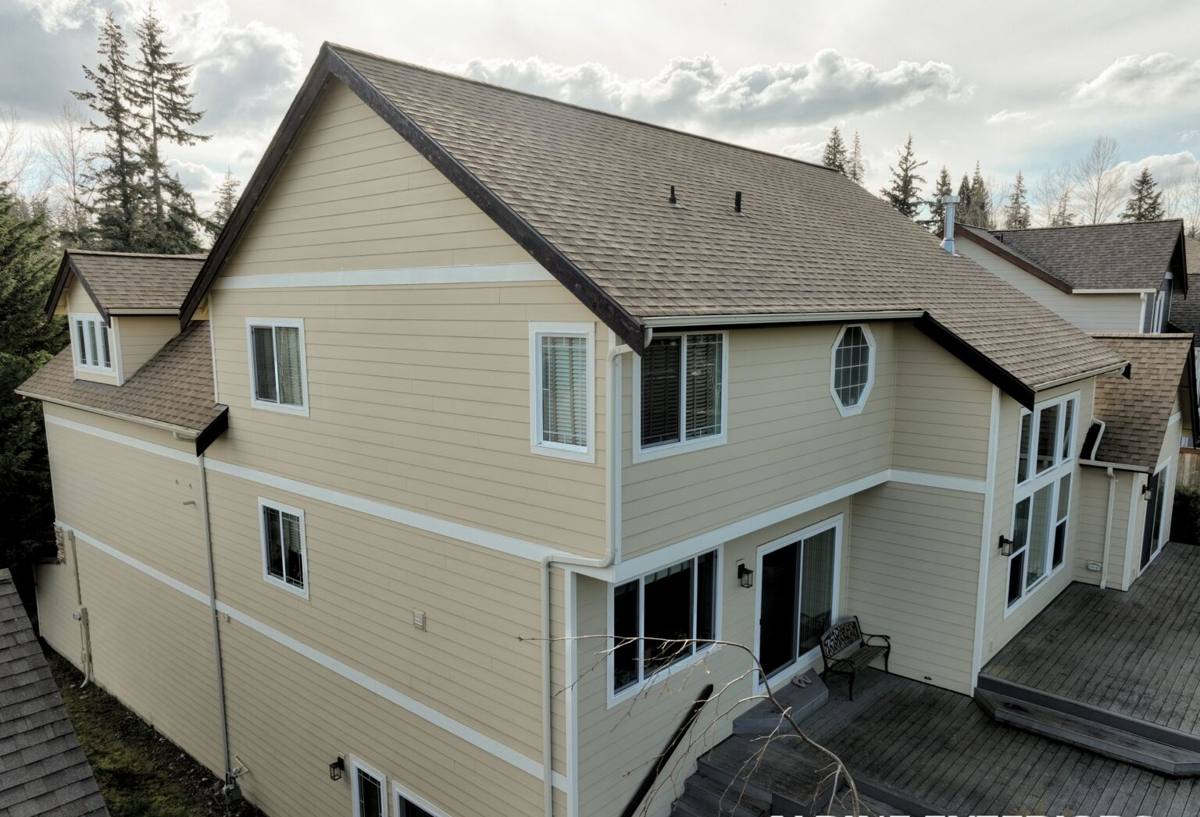
Signs Your Lynden Deck Needs Repair
Catching problems early is almost always cheaper than waiting. Walk your deck a couple of times a year — spring and fall are good windows — and look for these warning signs:
- Soft, spongy, or springy spots in the decking boards, especially near the house or in shaded corners
- Gaps or separation where the deck ledger board meets the house siding
- Rust streaks around screws, bolts, or joist hangers
- Green or black growth (moss, algae, mildew) that keeps coming back within weeks of cleaning
- Railings or posts that wiggle more than they used to
- Stairs that feel less solid underfoot, or visible gaps between stringers and treads
- Standing water that doesn't drain within an hour or two after rain stops
- Wood that sounds hollow or "punky" when tapped with a screwdriver handle
Any one of these on its own might be minor. Several together, especially near the ledger connection to the house, usually means it's time to have someone look underneath before it becomes a safety issue.
The Ledger Board Deserves Extra Attention
The ledger — the board that bolts your deck to the house — is the single most common failure point on decks in wet climates, and it's also the hardest one for a homeowner to inspect without pulling boards. Water that gets behind an under-flashed or poorly sealed ledger can rot the rim joist and even the house framing behind it long before anything looks wrong from the deck surface. If your deck was built or last repaired more than 10-15 years ago and you're not sure whether proper flashing was installed, that's worth having checked.
What a Correct Deck Repair Actually Involves
Structural Framework First
A repair that only replaces surface boards but ignores rotten or undersized framing underneath isn't a repair — it's a delay. Before we touch decking, we check joists, beams, posts, and footings for rot, checking, insect damage, and undersizing relative to current code spans. In a region with this much rainfall, joists that were adequate when the deck was built can still fail early if they were never properly protected from ground moisture or splash-back.
Ledger Flashing and Waterproofing
Where the deck meets the house, correct flashing — not just caulk — is what keeps water out of the wall assembly. This is one of the areas where cutting corners doesn't show up as a problem for years, and by then the damage is inside the wall, not just in the deck. Any ledger repair we do includes proper flashing detail, not a bead of sealant and a hope.
Fasteners and Hardware
Standard zinc-coated screws and hangers corrode faster in salt-influenced, high-moisture air than most homeowners expect. Hardware rated for coastal or treated-lumber contact (hot-dip galvanized or stainless, depending on the application) costs more up front and saves you from a repeat repair in five years.
Decking, Railings, and Stairs
Individual board replacement, railing tightening or rebuilding, and stair repair round out most jobs. We match spacing and fastening patterns to shed water rather than trap it, since gapping and slope matter as much as the material itself in a climate that gets this much rain.
Repair or Replace? What Actually Drives That Decision
Not every deck problem calls for a full rebuild, and not every deck is worth patching indefinitely. The honest answer usually comes down to where the damage is and how much of the structure it's touching.
| Factor | Leans Toward Repair | Leans Toward Replacement |
|---|---|---|
| Framing condition | Joists and beams sound, isolated soft spots | Widespread rot in joists, beams, or posts |
| Ledger connection | Flashing intact, minor gaps | Water damage into rim joist or house framing |
| Age of structure | Under 15-20 years, built to reasonable standards | Original construction is older or undersized for current use |
| Decking surface | Scattered board failures | Most boards showing rot, cupping, or splitting |
| Footings/posts | Stable, properly set | Settling, heaving, or undersized footings |
We'll always tell you plainly which category your deck falls into. A deck with sound bones and a few failed boards doesn't need to come down — but we won't recommend patching a structure whose framing is genuinely compromised, because that's a safety call, not a cosmetic one.
Materials That Hold Up in Whatcom County
There's no single "right" decking material for every homeowner — it's a trade-off between upfront cost, maintenance tolerance, and how the material behaves in sustained wet weather.
Pressure-Treated Wood
Still the most common decking and framing material in this area, and for good reason — it's affordable and repairable board by board. The trade-off is that it needs regular cleaning and periodic sealing to keep moss and mildew from taking hold, especially on north-facing or shaded sections that don't get much sun to dry out between rains.
Cedar
Naturally resistant to rot and insects and a good look for this region, but it's softer than treated lumber and more sensitive to how well it's finished and maintained. Left unsealed, cedar decking will gray and can start checking faster in a climate with this much rain-to-sun ratio.
Composite Decking
Composite boards resist rot and don't need staining, which appeals to homeowners who want to spend less time maintaining a deck. Our professional standard is to be upfront about the trade-offs: composite can still grow moss and algae on its surface in a shaded, damp climate like ours, it doesn't get repaired board-by-board as forgivingly as wood in some framing situations, and warranty coverage varies significantly by manufacturer and installation method. We'll walk you through what a given composite product actually requires to stay under warranty before you commit to it.
Fasteners and Connectors
Whatever the decking material, we spec hardware rated for the exposure — galvanized or stainless connectors, and fasteners compatible with the specific treated lumber chemical formulation being used, since mismatched metals accelerate corrosion in wet conditions.
Our Deck Repair Process for Lynden Homes
- On-site assessment. We inspect the full structure — framing, ledger, posts, footings, decking, and railings — not just the spot you called about, since problems in this climate rarely stay isolated.
- Honest scope and estimate. You get a clear breakdown of what's failing, what's still sound, and what your repair or replacement options actually cost, in writing.
- Repair or rebuild. We address structural issues first, then flashing and waterproofing, then surface and railing work — in that order, so nothing gets covered up before it's fixed properly.
- Final walkthrough. Before we call the job done, we walk the deck with you and point out what was repaired and what to watch going forward.
After the Repair: Keeping Moss and Rot from Coming Back
A good repair buys you years, but Whatcom County's climate doesn't stop working on your deck once we leave. A short seasonal routine goes a long way:
- Sweep leaves and debris off the deck surface regularly through fall — trapped organic matter is what feeds moss growth
- Rinse or lightly scrub visible moss and algae before it gets a chance to establish, rather than after
- Check that gaps between boards stay clear so water can drain instead of pooling
- Reseal or restain wood decking on the manufacturer's recommended schedule, not just when it looks faded
- Look at the ledger connection once a year for any new gapping or staining
Why It Matters to Hire a Crew That Already Works in Lynden
Deck repair isn't identical everywhere in Washington. A crew that mostly works drier inland climates may not think twice about flashing details or fastener corrosion resistance that matter a great deal here. Working regularly in Lynden and the surrounding Whatcom County communities means we already know how local moss growth patterns, prolonged wet seasons, and salt-influenced air affect decking and hardware choices — we're not guessing or applying a generic checklist built for a different climate.
It also means practical things for you as a homeowner: a crew that's already in the area for other jobs can typically get to your estimate and repair faster, is familiar with the permitting expectations for structural deck work in this area, and has a track record you can ask about locally rather than just online reviews from out of the region.
A Few Questions Worth Asking Before You Hire
Whoever you have look at your deck, these are reasonable things to ask:
- Will you inspect the framing and ledger, or just replace visible boards?
- What hardware and fasteners do you use, and why?
- Is the ledger flashing being repaired or just resealed?
- What's your assessment of repair versus full replacement, and why?
- Do you carry insurance, and can I see it?
A contractor who's confident in their work will answer all of these plainly, without hesitation.
If your deck is showing soft spots, moss that won't quit, or you're just not sure whether it's a repair or a rebuild, we're glad to take a look. Fill out the form below for a free, no-pressure estimate — we'll tell you honestly what your deck needs and what it doesn't.