 Bellingham Roofing
 Decks in Happy Valley Face a Tough Climate
Happy Valley sits close enough to Bellingham Bay and the surrounding wetlands that homes here deal with a specific combination of stressors most inland neighborhoods don't: salt-tinged air drifting off the water, long stretches of driving rain through the fall and winter, and a moss season that can run from October well into spring. None of that is unusual for Whatcom County, but it adds up fast on an exterior deck, where wood, fasteners, and finishes sit exposed to the weather twelve months a year.
A deck built or repaired without that reality in mind will show problems early — soft boards, rust streaks around fastener heads, slick green growth on shaded sections, and gaps opening up where ledger boards meet the house. We've repaired enough decks in this part of Bellingham to know which spots fail first and why, and that's the difference between a repair that lasts one season and one that lasts fifteen years.
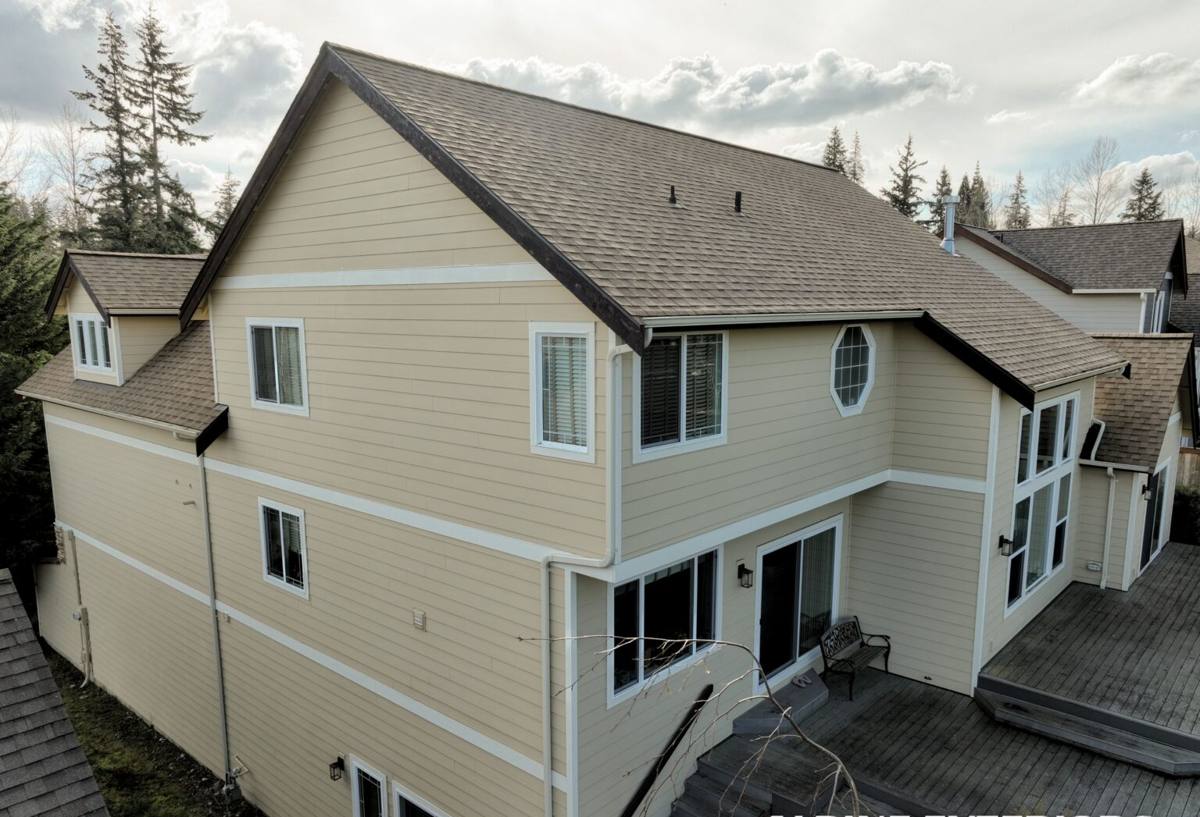
Signs Your Deck Needs Repair, Not Just a Cleaning
A power wash and a fresh coat of stain can make a tired deck look better for a summer, but it won't fix what's happening underneath. Here's what actually signals a structural or moisture problem:
- Boards that feel spongy, bounce, or flex more than they used to
- Dark staining or a sour, damp smell near the ledger board where the deck meets the house
- Rust bleeding from screw or nail heads, or fasteners that have backed themselves out
- Visible gaps, cracks, or splitting concentrated on the shaded or north-facing side
- Wobbly railings or posts that shift when you lean on them
- Persistent moss or algae film that returns within weeks of cleaning
- Stair stringers or the bottom few inches of support posts that look discolored or crumbly
Any one of these on its own might be minor. Several together, especially near the ledger board or post bases, usually means moisture has been getting into the structure for a while — and that's worth having looked at before it becomes a safety issue.
What a Correct Deck Repair Actually Involves
It Starts With the Framing, Not the Surface Boards
A lot of deck "repairs" only address what's visible — swap a few gray boards, sand and reseal, call it done. That approach misses the parts of the deck doing the real work: the ledger board bolted to the house, the joists and rim joists underneath, the post bases anchored to footings, and the flashing that's supposed to keep water out of all of it. In our climate, those are exactly the components most likely to be quietly failing while the surface still looks presentable.
A correct repair means pulling back decking where needed to actually inspect the framing, checking ledger board attachment and flashing, testing joists and posts with an awl or screwdriver for soft spots, and confirming that hardware — joist hangers, post bases, structural screws — hasn't corroded past the point of doing its job.
Fastener Corrosion Is Its Own Problem Here
Salt-influenced air speeds up corrosion on standard fasteners and lower-grade hardware. We see decks where the wood itself is still sound but the nails or screws holding it together are rusted and weak — which means the repair isn't about the lumber, it's about re-fastening with hardware rated for exterior, coastal-adjacent exposure. Skipping this step is one of the most common reasons a "repaired" deck fails again within a couple of years.
The Problem Areas We See Most in Happy Valley
| Area | What Goes Wrong | Why It Happens Here |
|---|---|---|
| Ledger board | Rot behind the board, poor flashing | Driving rain drives water sideways into the house/deck joint |
| Post bases & footings | Wood contact with wet soil or standing water | Heavy seasonal rainfall keeps ground moisture elevated |
| Shaded/north-facing boards | Persistent moss, slick surfaces, faster wood breakdown | Long wet season plus reduced sun exposure delays drying |
| Fasteners & hardware | Rust, corrosion, backing out | Salt-influenced coastal air accelerates metal corrosion |
| Stair stringers | Cracking and rot at ground contact points | Constant splashback and slow drying at grade level |
Repair vs. Replacement: How We Help You Decide
Not every deck with problems needs to be torn out. We look at the extent and location of the damage before recommending either path.
| Factor | Favors Repair | Favors Replacement |
|---|---|---|
| Framing condition | Joists and ledger are structurally sound | Rot has spread through multiple structural members |
| Damage location | Isolated to a few boards or one section | Widespread across the deck, not just one area |
| Age of the deck | Newer deck with a localized issue | Older deck already near the end of its service life |
| Post/footing integrity | Footings and posts test solid | Multiple posts show soft wood or footing movement |
| Budget goals | Targeted fix extends life affordably | Full rebuild is more cost-effective long-term |
We'll always give you a straight answer on which side of that table your deck falls on, along with the reasoning behind it — not just a quote.
Our Deck Repair Process
1. On-Site Inspection
We walk the full deck, check the ledger board and flashing, test boards and framing for soft spots, and inspect posts, footings, and hardware. This is where we find out whether we're dealing with a surface issue or something structural.
2. A Clear, Written Plan
Before any work starts, you get a plan that spells out what's being repaired, what materials and fasteners will be used, and what it will cost. No guessing, no scope that grows once we start pulling boards.
3. The Repair Itself
Damaged boards, joists, or posts are removed and replaced. Ledger flashing is corrected if it's contributing to the problem. Fasteners and hardware are upgraded to exterior-rated material where the existing hardware is compromised. We don't reuse corroded hardware just to save a step.
4. Finish and Protection
Once the structural work is done, we address the surface — cleaning, sanding, and sealing or staining as needed so the repaired sections hold up alongside the rest of the deck rather than weathering at a different rate.
Materials: Why We Choose What We Choose
For framing and structural repairs, pressure-treated lumber remains the standard because it's designed to resist the moisture and ground contact that cause rot in the first place. For decking surfaces, both quality pressure-treated wood and composite boards can perform well here — the right choice depends on your budget, how much upkeep you want to do, and how the deck is used.
On fasteners and hardware, we hold a firm standard: exterior-rated, corrosion-resistant material for every repair, even when it costs a little more than standard hardware. Given the coastal air and long wet season this area sees, using anything less just means paying for the same repair again sooner. It's a maintenance and longevity trade-off we're not willing to make on your behalf to save a few dollars up front.
Homeowner Maintenance Checklist Between Repairs
- Sweep debris and standing leaves off the deck regularly, especially in fall
- Clean moss and algae from shaded areas before it gets slick and established
- Check for soft spots or spongy boards once or twice a year, especially near the house
- Look at fastener heads for early rust staining
- Keep gutters and downspouts clear so runoff isn't draining onto or under the deck
- Reseal or restain on the manufacturer's recommended schedule, not just when it looks faded
Why Hiring a Crew That Already Works Happy Valley Matters
Deck problems in this neighborhood tend to follow patterns — ledger board moisture, shaded-side moss buildup, hardware corrosion — that a crew unfamiliar with this specific stretch of Bellingham and Whatcom County might not immediately recognize. Working here regularly means we know which areas of a deck to check first, which materials actually hold up against the local combination of salt air and sustained rain, and how to sequence repairs so they don't get delayed or damaged by the next wet spell rolling through. That local pattern recognition saves time on the inspection and helps us avoid surprises once repair work is underway.
Get a Straight Answer on Your Deck
If your deck in Happy Valley is showing soft boards, rust stains, stubborn moss, or just doesn't feel as solid as it used to, it's worth having someone take a real look before the next wet season sets in. We offer free, no-pressure estimates — you'll get an honest read on whether you're looking at a targeted repair or something bigger, with a clear plan either way. Use the form below to get started.