 Bellingham Roofing
 Why Columbia Decks Wear Out Faster Than You'd Expect
Decks in the Columbia neighborhood take on a different kind of punishment than decks further inland. Proximity to Bellingham Bay means a steady dose of salt-laden air working on fasteners, flashing, and any exposed metal hardware. Add in the long stretch of driving rain that defines a typical Whatcom County fall and winter, and you've got a combination that finds every weak point in a deck's construction — usually years before the wood itself would have given out on its own.
Most of the deck repair calls we get in this part of Bellingham aren't dramatic structural failures. They're the slow accumulation of small problems: a ledger board that's held moisture against the house siding for one too many wet seasons, joist hangers rusting from the inside out, or a railing post that's gone soft at the base because water kept pooling instead of draining. None of these show up overnight, and none of them fix themselves.
The Moss Problem Nobody Budgets For
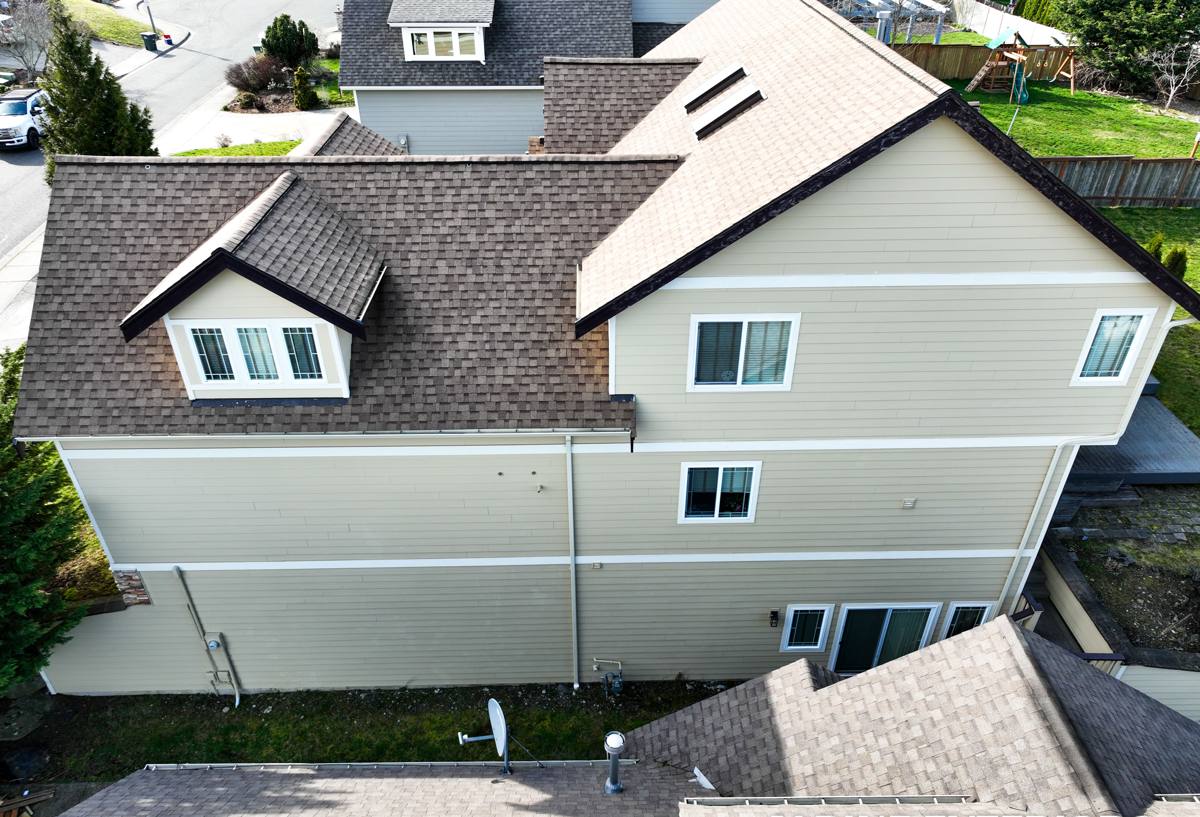
Moss gets treated as a cosmetic nuisance, but on a deck it's doing real damage. Moss and algae hold moisture against decking boards long after a storm has passed, which is exactly the condition wood rot needs to take hold. On shaded sections of a deck — under overhangs, along fence lines, or wherever a home's own footprint blocks afternoon sun — moss can establish itself for most of the year in this climate. By the time it's visibly green and slick, the boards underneath have usually been sitting damp for weeks at a stretch.
A repair that only pressure-washes the moss away and stops there is a repair that will need to be redone. Real deck repair in this area has to account for why the moss grew back there in the first place — usually a drainage, airflow, or sun-exposure issue — not just what it looks like on the surface today.
Signs a Deck Needs Repair, Not a Full Rebuild
Homeowners often assume any deck problem means starting over. In our experience, most Columbia-area decks we look at can be repaired rather than replaced, as long as the underlying frame is sound. Here's what we check before recommending either path:
- Soft or spongy spots when you press on decking boards, especially near the house or in shaded corners
- Railings or posts that flex or wobble when pushed — a safety issue, not just an annoyance
- Rust streaks running down from screws, nails, or metal joist hangers
- Gaps or separation where the deck ledger board meets the house
- Persistent moss, algae, or black staining that returns within weeks of cleaning
- Stair stringers that feel less solid than they used to, particularly at the base
- Visible daylight or water staining underneath the deck where boards meet
If the framing, posts, and footings underneath are still structurally sound, targeted repair — replacing specific boards, hardware, or connection points — is almost always the more sensible route, both in cost and in how long the fix actually lasts.
What a Correct Repair Actually Involves
Starting Underneath, Not on Top
A repair that only addresses what's visible from the top of the deck is treating a symptom. We start by getting underneath — checking joists, beams, and the ledger connection to the house — because that's where moisture damage does its real work, out of sight, long before it shows up in the decking boards themselves.
Matching Hardware to the Environment
Given the salt air common to this part of Bellingham, hardware choice matters more here than it would further inland. Fasteners and connectors rated for coastal or marine exposure cost a bit more up front but resist the corrosion that's often the actual root cause of a "mystery" deck failure. Reusing standard-grade hardware in a repair here is a shortcut that tends to bring the same customer back in a few years.
Fixing Drainage, Not Just Boards
Where we find rot or persistent moss, we look at why water was sitting there in the first place. That might mean adjusting board spacing, correcting a flashing detail at the ledger, or improving airflow underneath a low-clearance section. Replacing damaged wood without correcting the drainage issue that caused it just resets the clock on the same problem.
Common Deck Materials and How They Repair
What a deck is built from changes how it fails and how it should be fixed. Here's how the materials we most often see in this neighborhood tend to hold up and repair:
| Material | Typical Failure Pattern Here | Repair Approach |
|---|---|---|
| Pressure-treated lumber | Surface checking, rot at ground contact and fastener points | Board and joist replacement; upgrade hardware to corrosion-resistant grade |
| Cedar | Graying, splintering, softening in shaded/damp zones | Selective board replacement, re-sealing, moss and drainage correction |
| Composite decking | Fastener pull-through, discoloration, edge swelling at cut ends | Board replacement with proper end-capping and fastener spacing |
| Older or original decking (unknown species) | Inconsistent wear, hidden rot under old paint or stain | Full inspection first — repair scope depends on what's found underneath |
Composite and PVC decking have become more common in newer construction, and they hold up well against moisture in general. Where they still fail here is at the connection points — fastener pull-through and swelling at field-cut edges that weren't properly sealed during the original install. That's an installation-quality issue more than a material flaw, and it's exactly the kind of detail we check first on a composite repair.
Repair vs. Replacement: What Actually Drives the Decision
We don't push replacement when a repair will genuinely hold up, and we don't recommend patching something that's past the point of being worth it. The honest answer usually comes down to a few factors:
| Factor | Leans Toward Repair | Leans Toward Replacement |
|---|---|---|
| Framing condition | Solid, dry, no rot at structural members | Rot or soft spots in multiple joists or beams |
| Footings and posts | Stable, plumb, properly anchored | Settling, shifting, or undersized for current code |
| Extent of damage | Isolated boards, one section, or hardware only | Damage spread across most of the deck surface |
| Deck age | Under 15-20 years with good bones | Original construction decades old, outdated connections |
Broad ranges are all we'll give without seeing the deck in person, since every job depends on square footage, framing condition, and material — but most targeted repairs in this area run from a few hundred dollars for isolated board and hardware work up to a few thousand for larger sections involving framing repair. A full rebuild is a different conversation entirely, and we'll always tell you plainly which category your deck falls into before any work starts.
Our Process for a Columbia Deck Repair
- Inspection first. We check the deck top to bottom — surface, framing, ledger connection, posts, and footings — before recommending anything.
- Honest scope. You get a clear explanation of what's actually wrong, what's optional, and what's a genuine safety issue that shouldn't wait.
- Matched materials. Repairs use lumber, fasteners, and hardware suited to this climate, not whatever's cheapest at the moment.
- Drainage and airflow correction. Where moisture caused the original damage, we fix the cause, not just the symptom.
- Final walkthrough. We show you what was done and what to watch for going forward, in plain language.
Keeping a Repaired Deck From Needing Repair Again
A repair holds up longer when it's paired with a bit of seasonal upkeep, especially given how long the wet season runs here. A yearly rinse-down before moss gets a foothold, keeping gutters and downspouts clear of anything that dumps extra water onto the deck, and re-sealing wood surfaces on the schedule the product calls for all go a long way. None of that requires a contractor — it just requires doing it before the next long stretch of Pacific Northwest rain sets in, not after.
Why a Crew That Already Works in Columbia Matters
Deck problems in this neighborhood tend to share a common thread — the same salt exposure, the same wet-season moss pattern, the same style of older framing in a lot of the homes. A crew that's already repaired decks nearby isn't guessing at what's causing the damage; they've usually already seen the same failure a few streets over. That familiarity shows up in faster, more accurate diagnosis and repairs built for conditions this specific stretch of Bellingham actually deals with, not generic advice pulled from a drier climate.
If you've got a deck in Columbia that's showing soft spots, wobbly railings, or moss that keeps coming back no matter how often you clean it, we're happy to take a look. The estimate is free, there's no pressure attached to it, and you'll walk away knowing exactly what your deck needs — whether that's a small fix or something bigger.