 Bellingham Roofing
 Building a Deck That Actually Holds Up in Puget
A deck in the Puget area near Bellingham has to survive a different set of conditions than a deck built inland. Between the salt-laden air off the water, the long stretch of driving rain that Whatcom County gets from fall through spring, and a moss season that seems to start earlier every year, an ordinary build can start showing problems within a couple of seasons. We build decks specifically for this environment, not a generic set of national blueprints. That means different fastener choices, different framing details, and a different maintenance conversation before you ever sign off on a design.
This page is about one thing: building or replacing a deck for a home in the Puget neighborhood, and what that specifically requires given the climate here.
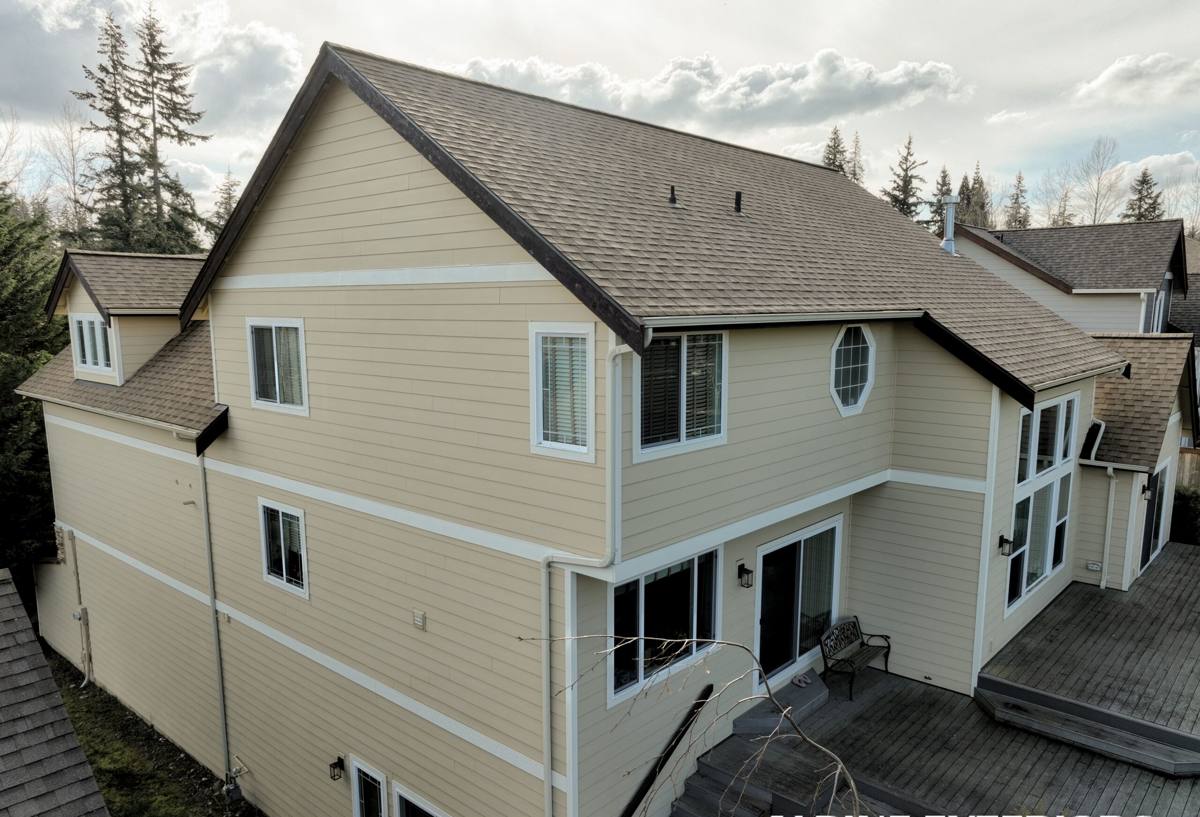
What Salt Air, Rain, and Moss Actually Do to a Deck
None of these three factors are dramatic on their own. Together, and over years, they're what separates a deck that's still solid at fifteen years from one that needs major repair at seven.
Salt Air
Homes closer to the water deal with airborne salt that settles on metal fasteners, hardware, and connectors. Standard galvanized coatings can break down faster in this kind of exposure, especially where two pieces of metal meet or where a fastener head is exposed to the weather. Once corrosion starts on a structural fastener, it's happening somewhere you can't see it — inside the wood, not on the surface.
Driving Rain
Whatcom County doesn't just get rain, it gets rain that comes in sideways during a lot of winter storms. That matters for a deck because it pushes water into places a vertical-only rain never would: under railing base plates, behind ledger boards, into the end grain of boards that butt up against the house. A deck built assuming rain only falls straight down will leak and trap moisture in exactly those spots.
Moss and Organic Growth
Shaded, damp decking grows moss and algae faster here than almost anywhere else in the country. Moss holds moisture against the board surface, which accelerates rot in wood decking and can make composite or sealed surfaces dangerously slippery. A deck design that ignores drainage and airflow underneath is signing up for a moss problem no amount of surface cleaning will permanently solve.
Choosing the Right Decking Material for This Neighborhood
There's no single "best" decking material — there's a best material for your budget, your maintenance tolerance, and how exposed your specific spot in Puget is to wind-driven rain and salt air. Here's how the common options actually compare for this climate.
| Material | Moisture & Moss Resistance | Maintenance | Typical Lifespan Here |
|---|---|---|---|
| Pressure-treated fir/hem-fir | Good if sealed regularly; end grain is the weak point | Re-seal every 1-2 years | 15-20 years with upkeep |
| Cedar | Naturally rot-resistant, still needs sealing against constant rain | Re-seal or re-stain every 1-2 years | 20-25 years with upkeep |
| Composite (capped) | Excellent for rot; can still grow surface algae if shaded and damp | Periodic cleaning, no sealing | 25-30+ years |
| Tropical hardwood (ipe and similar) | Very high natural resistance | Oiling for color retention (optional structurally) | 30+ years |
For homes right along the water in Puget, we lean homeowners toward capped composite or a naturally resistant hardwood for the decking surface, simply because it removes one of the maintenance tasks (sealing) that's easy to fall behind on when the weather makes outdoor work unpleasant for half the year. That said, plenty of cedar decks in this area look great for decades — it comes down to whether you'll keep up with the sealing schedule.
A Note on Product Choices
We install what fits the site and the budget honestly, and we'll tell you when a product isn't a good match for your situation rather than pushing whatever has the best margin. Some composite lines handle standing moisture and mold exposure better than others; some hardwoods are harder to source consistently. We'll walk through the actual trade-offs for your project rather than a sales pitch.
Framing and Fasteners: Where Most Deck Failures Start
The decking surface is what you see, but the framing underneath is what decides whether the deck is safe in ten years. In a marine climate, this is where we spend the most attention.
- Stainless or coated fasteners: We use fasteners and structural hardware rated for the exposure level of the specific deck — coastal-grade coatings or stainless steel where corrosion risk is higher, not a one-size-fits-all fastener across every job.
- Joist protection: Joist tape or a comparable moisture barrier on top of every joist, so fasteners aren't sitting in a pocket of trapped water every time it rains.
- Proper spacing: Board gaps sized for airflow and drainage, not just appearance — tight-fit decking traps debris and moisture between boards, which is a direct contributor to moss and rot.
- Post bases off the ground: Metal post bases that keep wood posts from sitting in standing water, rather than posts set directly in or against concrete where moisture wicks upward.
Footings, Ledger Attachment, and Drainage
Two details cause more deck failures — and more insurance claims — than anything else: a poorly flashed ledger board, and footings that weren't sized or set correctly for the soil and frost conditions.
Ledger Board Flashing
Where the deck attaches to the house is the single most common failure point on any deck, and it's a bigger risk here because of how much wind-driven rain this area gets. Proper flashing — installed so water sheds outward and down, not into the house's wall assembly — is not optional. This is also the connection point most likely to have been done wrong on an older deck, so if you're having a deck rebuilt, this is one of the first things we check.
Footings
Footing depth and sizing need to match both the load of the structure and local frost and soil conditions. We don't reuse old footings without checking them — a deck that's been sound for years can still have footings that were undersized or poured shallow, and that's not something you find out until there's a problem.
Drainage Under the Deck
For low decks or decks over patios, grading and drainage underneath matter as much as anything on the surface. Water that has nowhere to go sits, and standing water under a deck is a long-term source of both rot and moss.
Permits and Local Code Considerations
Most new decks and many deck rebuilds in and around Bellingham require a permit through the local jurisdiction, and requirements can include setbacks, guardrail height, stair geometry, and footing inspections depending on the size and height of the structure. Requirements can also vary depending on whether the property is inside Bellingham city limits or unincorporated Whatcom County. We handle the permit process as part of the job rather than leaving it for the homeowner to sort out, and we build to pass inspection the first time — not just to get by.
How We Approach a Deck Project in Puget
- On-site assessment: We look at sun/shade exposure, wind exposure, existing drainage, and the condition of anything being replaced or built onto.
- Material and design conversation: An honest rundown of what fits your budget and how much maintenance you're signing up for with each option.
- Permitting: We pull the necessary permits and schedule required inspections.
- Demo (if applicable): Removal of the old structure, with a check of ledger, footings, and framing condition before anything new goes up.
- Framing: Built with the fastener and moisture-barrier standards described above, not generic lumberyard defaults.
- Decking, railing, and finish work: Installed with proper spacing and drainage in mind, then finished or sealed as the material requires.
- Final walkthrough: We go over the maintenance schedule specific to the material you chose, so there are no surprises in year two or three.
Maintenance Checklist for Puget Deck Owners
A well-built deck still needs some seasonal attention in this climate. This is the short version of what we tell every homeowner after a build:
- Clear leaves and debris from between boards and off ledger flashing before the fall rains set in
- Check and clear gutters and downspouts near the deck so runoff isn't draining onto it
- Look for early moss or algae growth on shaded sections and treat it before it spreads
- Re-seal or re-stain wood decking on the schedule for your specific material — don't wait until it visibly needs it
- Check fastener heads and hardware for early corrosion once a year, especially on decks closer to the water
- Confirm drainage under low decks isn't pooling after heavy rain events
Why It Matters That We Already Work in Puget
A crew that builds decks all over the country will build to a national baseline. A crew that works this specific area knows which corners of a property catch the worst wind-driven rain, how fast moss actually establishes on a shaded north-facing deck here versus a sun-exposed one, and which fastener and flashing details matter enough to never skip — because we've seen what happens when they are skipped. That local knowledge doesn't show up in a spec sheet, but it shows up in how long the deck lasts.
If you're planning a new deck or need to replace one that's showing its age, we're happy to come take a look and give you a straightforward, no-pressure estimate. Use the form below to get in touch.