 Bellingham Roofing
 Building a Deck in Ferndale Isn't the Same Job as Building One Inland
Ferndale sits close enough to the water and open farmland that decks here take a different kind of weather beating than a deck built twenty miles inland in Whatcom County. Salt-laden air off the Strait, wind that carries moisture instead of drying it out, and a wet season that can stretch from October well into May all work against a deck's structure, hardware, and surface at the same time. A deck that would hold up fine in a drier, more sheltered part of the county can start showing corrosion streaks, soft spots, or slick green growth within a couple of seasons out here if it wasn't built with that exposure in mind.
This page is about one thing: custom deck construction for Ferndale homes, and what actually needs to happen — in the design, the materials, and the build — to get a deck that holds up to local conditions instead of fighting them.
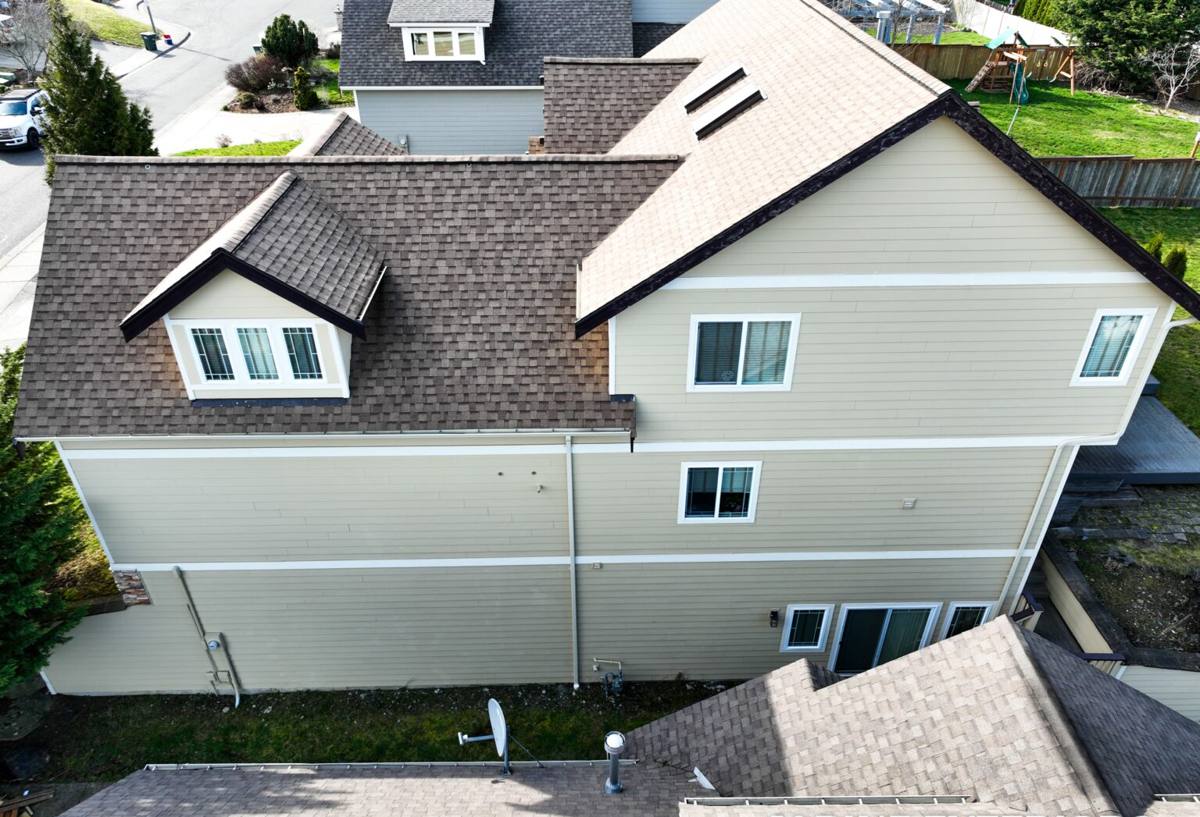
What the Local Climate Actually Does to a Deck
Salt Air and Hardware Corrosion
Airborne salt doesn't need direct ocean spray to cause problems — it travels on wind and settles on any exposed metal. On a deck, that means joist hangers, structural screws, post bases, and railing hardware are all under slow attack. Standard zinc-coated fasteners that are perfectly fine in a lot of the country will start rusting years ahead of schedule this close to the water. The fix isn't complicated, but it has to be specified correctly at the framing stage — trying to retrofit better hardware after the fact means tearing into finished decking.
Driving Rain and Water Intrusion
Whatcom County rain doesn't always fall straight down. Wind-driven rain gets pushed sideways into ledger boards, under railing posts, and into any gap where flashing was skipped or done halfway. Where a deck attaches to the house is the single most common source of long-term rot, because that's the one place where a poorly flashed deck can send water directly into the home's rim joist and wall framing — not just the deck itself.
The Long Moss Season
Whatcom County's wet stretch is long enough that any deck surface holding moisture — shaded boards, low-airflow areas under railings, spots near overhanging trees — will grow moss and algae if it isn't built to drain and dry. Beyond looking bad, wet moss on decking is a real slip hazard, and moss root structures can hold moisture against wood fibers long after a surface looks dry.
Decking Material Options for a Coastal Whatcom County Deck
There's no single "best" decking material — there's a best material for your budget, how much upkeep you want to do, and how close your lot sits to open wind and salt exposure. Here's how the common options actually perform in this climate, honestly, including the trade-offs.
| Material | Upfront Cost | Maintenance in This Climate | Moss/Mildew Resistance | Realistic Lifespan |
|---|---|---|---|---|
| Pressure-treated fir/hem-fir | Lowest | Annual cleaning and re-sealing recommended | Fair — needs regular cleaning | 15-20 years with upkeep |
| Western red cedar | Moderate | Periodic oiling/sealing to hold color and resist checking | Good natural resistance, still needs cleaning | 20-25 years with upkeep |
| Capped composite | Higher | Occasional washing, no sealing/staining | Very good — non-porous cap resists moss growth | 25-30+ years |
| Tropical hardwood (ipe and similar) | Highest | Oiling if you want to hold original color, otherwise low | Excellent — very dense, slow to hold moisture | 30+ years |
Composite has gotten a lot better over the last decade — capped boards resist moisture and moss far better than the early uncapped composites that gave the category a bad name. Wood species like cedar are still a legitimate choice for homeowners who want a natural look and are willing to keep up with oiling; the trade-off is honest maintenance time, not a defect in the product.
The Framing and Hardware Decisions That Matter More Than the Decking
Homeowners naturally focus on the decking surface because that's what you see and walk on, but the framing underneath is what determines whether the deck is still safe in fifteen years. In a marine climate, we treat hardware selection as a structural decision, not an afterthought.
| Hardware Type | Corrosion Resistance in Salt Air | Where We Use It |
|---|---|---|
| Standard zinc-coated (electro-galvanized) | Poor near the coast | We avoid this for exposed structural connections here |
| Hot-dip galvanized | Good | Standard for most framing connectors on inland Whatcom builds |
| Stainless steel (305/316) | Excellent, 316 best for direct salt exposure | Fasteners and hardware on decks with more direct wind/salt exposure |
We also pay close attention to ledger board flashing — the metal and membrane detailing where the deck attaches to the house — because that connection point handles more water abuse than any other part of the structure. Proper flashing means water is directed away from the house framing, not trapped behind the ledger where it can't be seen until damage is already done.
Designing the Deck for How Your Ferndale Lot Actually Sits
A custom deck should respond to your specific property — sun exposure, wind direction, tree cover, and how close you are to open exposure. A few design factors we walk through with every Ferndale homeowner:
- Board spacing and gapping wide enough to let airflow dry the structure, without being so wide it feels unfinished underfoot
- Railing and post placement that doesn't create dead-air pockets where moss and mildew take hold
- Roof or partial cover options if the deck sits in a spot that gets heavy driving rain off prevailing winds
- Stair and landing placement that accounts for slick conditions during the wet months, not just dry-season use
- Footing depth and placement suited to your specific soil and drainage, not a one-size template
Our Process for a Ferndale Deck Project
1. On-Site Assessment
We walk the property, look at sun and wind exposure, check drainage around the proposed footprint, and talk through how you actually want to use the space — entertaining, grilling, a quiet spot off a bedroom, whatever it is.
2. Design and Material Selection
We lay out a design and go through material options honestly, including cost, maintenance expectations, and how each option holds up to this specific climate — not just a catalog pitch.
3. Permitting
Deck projects in Whatcom County typically require a building permit depending on size and height above grade. We handle the permit submission and make sure the design meets current guardrail, stair, and footing requirements before work starts.
4. Framing and Structural Work
This is where the corrosion-resistant hardware, proper ledger flashing, and correctly sized footings go in — the part of the job that isn't visible once the decking goes down, and the part that matters most over time.
5. Decking, Railing, and Finish Work
Surface material goes down with attention to drainage and spacing, followed by railings, stairs, and any final trim or finish work.
6. Final Walkthrough
We walk the finished deck with you, cover basic care for whatever material you chose, and make sure everything meets what was discussed at the start.
Permits and Code Basics for Ferndale Deck Projects
Most raised decks in Whatcom County need a permit, and the requirements typically cover guardrail height, baluster spacing, stair rise and run, and footing depth suited to local soil conditions. Ground-level or very low decks sometimes fall under different rules, but it's worth confirming rather than assuming. Skipping the permit process on a deck that legally needs one can create real problems later — at resale, with insurance, or if the structure needs work down the road and there's no permit history to reference. We handle this as a normal part of the project rather than something the homeowner has to chase down separately.
Maintenance: What Actually Keeps a Coastal Deck Looking Good
Every decking material needs some upkeep in this climate — the difference is how much and how often. A basic seasonal checklist that applies to most Ferndale decks:
- Sweep off debris and standing leaves regularly, especially in fall — trapped organic matter holds moisture against the surface and feeds moss
- Wash the deck surface at least once or twice a year to clear early moss and algae growth before it takes hold
- Check and re-seal or re-oil wood decking on the schedule appropriate to that species — cedar and pressure-treated wood both need this to hold up
- Inspect railing posts and hardware annually for any early rust staining, which can signal a fastener that needs replacing before it fails
- Keep an eye on the ledger board area where the deck meets the house — this is the first place to check if you ever notice soft wood or discoloration
- Clear gutters and downspouts near the deck so roof runoff isn't dumping extra water directly onto or under the structure
Why a Crew That Already Works Ferndale Makes a Real Difference
A contractor who builds decks across a wide range of climates will default to generic specs — standard hardware, standard flashing details, whatever's easiest to source. A crew that works Ferndale and the surrounding Bellingham area regularly knows which corners of a property tend to hold moisture, which fastener grades actually hold up this close to the water, and how the permit process runs locally without a learning curve on your project. That familiarity shows up years later, not on install day — it's the difference between a deck that needs hardware replaced at year eight and one that doesn't.
If you're planning a new deck or replacing one that's showing its age, we're happy to walk the property with you and talk through honest options for your budget and how you'll use the space. Reach out for a free, no-pressure estimate using the form below.