 Bellingham Roofing
 Building a Deck That Actually Holds Up in Barkley
Barkley sits close enough to Bellingham Bay and the surrounding wetlands that its homes deal with a specific combination of weather most inland neighborhoods don't: salt-tinged air moving off the water, long stretches of driving rain through fall and winter, and a moss season that can run eight months or more. A deck built with generic, one-size-fits-all methods will show its age here faster than it should — soft boards, rusted fasteners, slick green surfaces, and railings that loosen at the post base. A deck built correctly for this specific climate will still look and perform like new a decade in. The difference isn't luck. It's material selection, drainage detailing, and fastener choices made with Barkley's actual weather in mind, not a national average.
This page covers what we look at when we design and build a custom deck for a Barkley property: what the climate does to decks over time, what a correctly built one requires, how our process works from first call to final walk-through, and why working with a crew that already builds in this neighborhood — not just "the Bellingham area" in general — makes a measurable difference in how the finished deck ages.
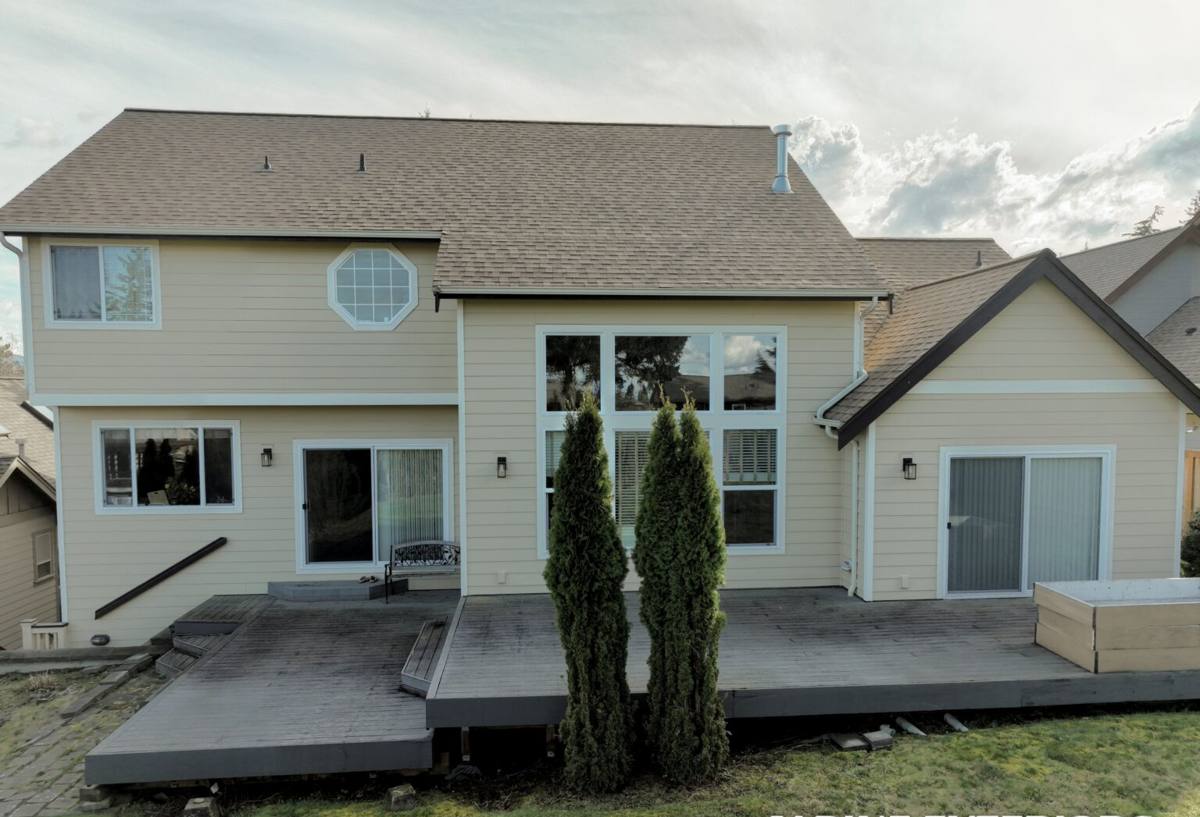
What Bellingham's Climate Does to an Ordinary Deck
Whatcom County's marine climate is mild, which is part of why people love living here — but mild and dry are not the same thing. A deck near the bay is exposed to three compounding stresses:
- Moisture load: Long, low-intensity rain events soak wood decking and framing repeatedly through fall, winter, and spring, with short drying windows in between.
- Salt air: Airborne salt from the bay accelerates corrosion on any fastener, bracket, or hardware that isn't rated for it, even a few miles inland.
- Shade and moss: Mature landscaping and overcast skies keep deck surfaces damp longer than in sunnier climates, which is exactly what moss and algae need to establish.
None of these individually is unusual for the Pacific Northwest. Together, on a deck that wasn't detailed for them, they show up as the same handful of failures over and over: decking that cups or checks, joist hangers and screws that streak with rust and eventually weaken, and a walking surface that turns slick and green well before the wood itself has failed. Almost all of that is preventable with the right build decisions up front.
What a Correctly Built Deck Requires Here
Fasteners and Hardware
In a salt-air environment, the hardware is often the first thing to fail, not the wood. We use stainless or heavy hot-dip galvanized fasteners and connectors rated for coastal exposure, and we match every fastener to the framing material it's driven into — mismatched metals in damp conditions cause galvanic corrosion that can eat through a bracket from the inside while the surface still looks fine.
Ledger Board and Flashing
The ledger board — where the deck attaches to the house — is the single most common point of hidden rot on any deck in this region, because it's the hardest spot for water to drain away from and the easiest to flash poorly. We install proper flashing that sheds water away from the house band joist, with a drainage gap behind the ledger so moisture doesn't sit trapped against the siding. This is invisible once the deck is finished, but it's the detail that determines whether the structural connection to your house is sound in fifteen years or hiding rot in five.
Footings and Frost Depth
Whatcom County's frost depth and Bellingham's permit requirements dictate how deep footings need to go and how they need to be sized for the soil conditions on a given lot. Barkley's mix of newer graded lots and older established parcels means soil conditions vary block to block — we don't reuse a generic footing spec, we size footings for the specific ground your deck will sit on.
Choosing the Right Decking Material for a Barkley Home
There's no single "best" decking material — there's the right material for your home's exposure, your maintenance appetite, and your budget. Here's how the common options actually perform in this climate:
| Material | Moisture Behavior Here | Maintenance | Typical Lifespan |
|---|---|---|---|
| Pressure-treated fir/hem-fir | Absorbs and releases moisture readily; needs a functioning finish to stay protected | Re-stain/seal every 1-2 years | 10-15 years with upkeep |
| Western red cedar | Naturally moisture- and rot-resistant, but surface greys and can host moss without upkeep | Clean and treat annually in this climate | 15-20+ years with upkeep |
| Composite decking | Doesn't absorb water or rot, but surface texture and drainage gaps matter for moss resistance | Periodic washing, no staining/sealing | 25-30 year warranty ranges |
| Tropical hardwoods (e.g. ipe) | Extremely dense and rot-resistant, but installation and fastening are unforgiving of mistakes | Oil periodically for color retention | 25+ years |
We don't push one product across every job. A shaded, tree-covered Barkley lot with heavy moss pressure is a different recommendation than a sunnier, more open one, even if the two houses are a few blocks apart. Part of the estimate conversation is walking your specific site with you and being straightforward about which material fits your yard, your budget, and how much upkeep you actually want to do.
Design Considerations for Barkley's Homes and Lots
Multi-Level and Sloped Lots
Barkley includes a mix of newer planned-community construction and more established homes on varied grading, which often means decks here deal with elevation change — walkouts, split levels, or a deck that needs to step down to meet a yard. Multi-level decks add framing complexity and more places for water to collect at transitions, so those transition points get the same drainage attention as the ledger connection.
Railings and Guards
Any deck surface more than 30 inches above grade needs a code-compliant guard, and railing hardware is just as exposed to salt air and moisture as the deck framing underneath it. We spec railing systems and post connections the same way we spec the deck itself — for corrosion resistance, not just appearance — since a loose or corroded post base is a safety issue, not just a cosmetic one.
Covered vs. Open Decks
Given how much of the year sees rain here, a lot of Barkley homeowners ask about partial roof coverage over some or all of the deck. Covering a deck reduces direct rain exposure and extends how many months a year it actually gets used, but it also changes drainage and framing loads, and it changes how much natural drying the deck surface gets between wet weather — which matters for moss. We work through that tradeoff with you rather than defaulting to one answer.
Our Custom Deck Process, Start to Finish
- On-site walk-through: We look at your existing structure or yard, sun and shade exposure, grade, and how the deck connects to the house.
- Design and material selection: We talk through layout, decking material, railing style, and any covered-area options, with honest pros and cons for your specific lot.
- Permitting: We handle the permit application and plan submission through the City of Bellingham or Whatcom County, whichever applies to your address.
- Framing and structural work: Footings, posts, beams, and joists go in first, with flashing and fastener choices matched to this climate, not a generic spec.
- Decking, railing, and finish work: Surface material and railings are installed, with attention to drainage gaps and fastener placement that resists moss and corrosion.
- Final inspection and walk-through: We confirm the deck passes local inspection and walk the finished project with you before calling the job done.
Moss, Mold, and Long-Term Deck Maintenance
Even a well-built deck needs some seasonal attention in a climate like this — the goal of good building practice is to reduce how much maintenance you need, not eliminate it entirely. A simple, realistic maintenance routine for a Barkley deck looks like this:
- Sweep debris and standing leaves off the deck surface regularly through fall, when moss and mold get their best foothold.
- Rinse or lightly scrub the surface once or twice a year to interrupt moss and algae growth before it takes hold.
- Check and re-seal wood decking on the schedule appropriate to that material — don't let a finish fail silently.
- Keep gutters and downspouts near the deck clear so roof runoff isn't adding extra water load onto or under the structure.
- Have fastener and railing connections checked periodically, since corrosion in salt-air exposure can start before it's visible on the surface.
Permits and Codes in Bellingham and Whatcom County
Most custom decks in Bellingham — including in Barkley — require a building permit, with specifics depending on deck height, size, and whether it's attached to the house. Requirements can differ slightly depending on whether your address falls under City of Bellingham or unincorporated Whatcom County jurisdiction, which matters for some Barkley properties near the city boundary. We manage that determination and the permit process as part of the job, so you're not the one figuring out which jurisdiction's rules apply or chasing down inspection scheduling.
What a Barkley-Familiar Crew Brings to the Job
A contractor who has already built decks in this neighborhood knows things a crew coming in cold doesn't — which blocks tend to have heavier tree cover and moss pressure, how grading typically runs on the newer planned-community lots versus the older parcels, and which jurisdiction's permit process applies to a given address near the boundary. None of that shows up in a generic estimate. It shows up in fewer surprises during the build and a deck that's specified correctly for your actual lot from day one, instead of a standard template adjusted after the fact.
If you're weighing options for a new deck or replacing one that's showing its age, we're glad to come take a look and put together a straightforward, no-pressure estimate — just fill out the form below and we'll set up a time to walk the site with you.