 Bellingham Roofing
 Siding That Actually Holds Up in Cordata
Cordata sits in north Bellingham, close enough to Bellingham Bay that marine moisture is part of daily life, and far enough into the tree-covered lots typical of Whatcom County that shade, humidity, and moss are never far away. Homes here don't just get rained on — they get soaked by driving, wind-pushed rain that finds every gap in a siding system, then sit under a marine layer that keeps things damp for days after the rain stops. That combination is hard on exterior materials in a way that drier parts of the country never have to plan for.
We install fiber cement siding on Cordata homes because it's one of the few claddings engineered to take that punishment without warping, rotting, or feeding the moss and mildew that thrive in this climate. This page walks through what that actually means in practice — for the material, the installation, and the ongoing care a Bellingham home needs.
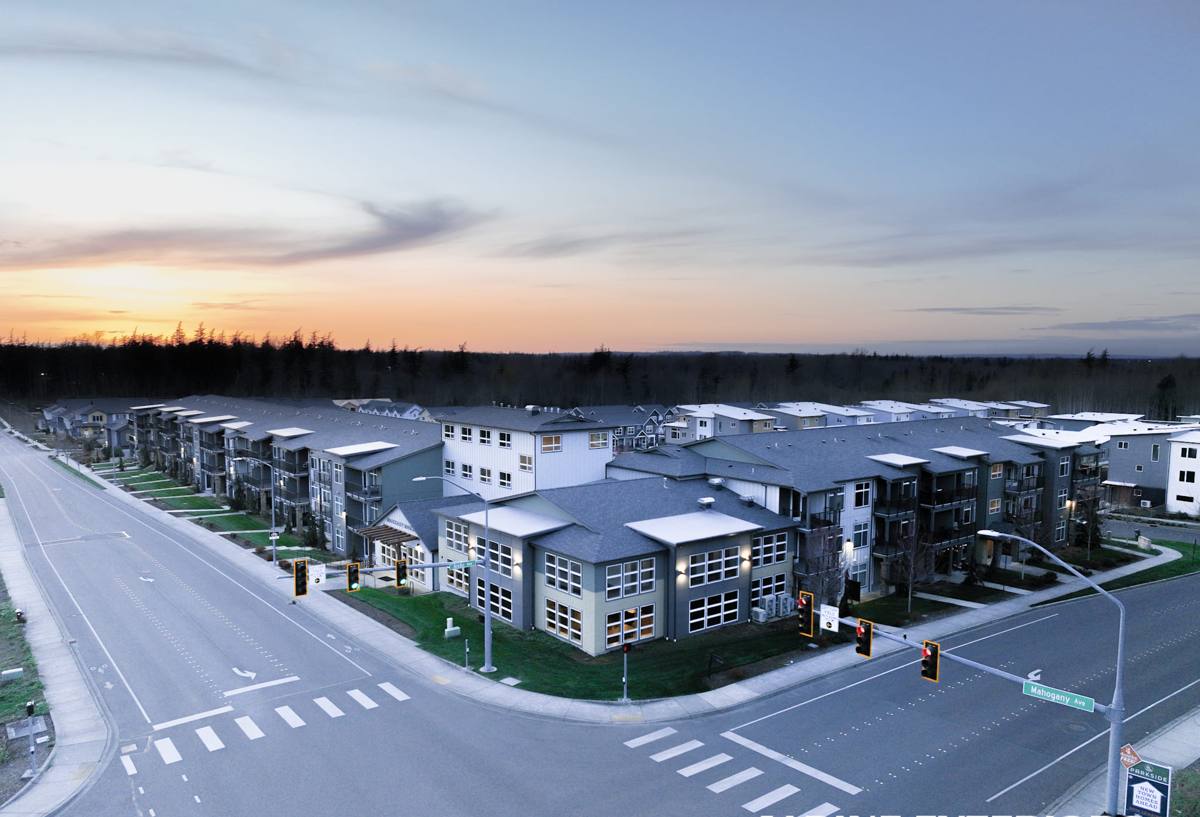
What Bellingham's Climate Does to Siding Over Time
Understanding the damage path matters more than any product brochure. In Cordata, siding failure almost never happens because of one big storm — it happens slowly, from repeated exposure to a few specific conditions.
Driving Rain and Wind-Driven Moisture
Wind off the Sound and the bay pushes rain sideways against west- and south-facing walls far more often than most homeowners realize. Siding that isn't detailed with proper laps, flashing, and clearances lets that water track behind the cladding, where it can sit against sheathing and framing for weeks at a time.
The Long Moss and Algae Season
Whatcom County's wet season stretches long, and shaded, tree-lined lots in Cordata rarely get a full day of direct sun on north- and east-facing walls. That's a perfect environment for moss and algae to colonize any surface that stays damp — and once established, moss holds moisture directly against the siding surface, accelerating whatever decay process is already underway.
Salt Air and Slow Material Fatigue
Even away from the immediate waterfront, Bellingham's marine air carries salt and moisture that slowly breaks down paint films, fasteners, and untreated wood fiber. Over years, this is what turns a small maintenance issue — a hairline paint crack, a loose piece of trim — into a real repair.
Why We Install Only James Hardie Fiber Cement Here
We made a deliberate decision as a company: no vinyl, no LP SmartSide, no Cemplank, no Allura, no primed spruce or cedar. We install James Hardie fiber cement siding exclusively, and in a climate like Cordata's, that's not a brand preference — it's a response to what actually survives here.
Non-Combustible, Moisture-Stable Material
Fiber cement is made from cement, sand, and cellulose fibers, cured into a rigid, dimensionally stable board. It doesn't absorb water the way wood-based products can, it doesn't warp or delaminate in sustained damp conditions, and it won't feed rot the way wood siding eventually will. That stability matters enormously in a climate where "dry season" is a relative term.
ColorPlus Factory Finish
James Hardie's ColorPlus finish is baked on in a controlled factory process, rather than field-painted after installation. That finish holds color and resists the fading and cracking that site-applied paint experiences under years of UV exposure and marine humidity — and it comes backed by its own finish warranty, separate from the substrate warranty.
HZ5 Climate-Engineered Formulation
James Hardie manufactures different product formulations for different climate zones. Homes in our region use the HZ5 line, engineered specifically to perform in cold, wet, humid climates like the Pacific Northwest — as opposed to a generic formulation built for a drier, milder climate elsewhere in the country.
A Warranty That Actually Transfers
James Hardie backs its siding with a long, transferable limited warranty — a meaningful detail if you ever sell the home, since it gives a buyer confidence in the exterior rather than an unknown maintenance liability.
What a Correct Fiber Cement Installation Actually Involves
Fiber cement siding is only as good as its installation. Most of the failures we get called out to inspect on other companies' work trace back to shortcuts taken during install, not a flaw in the material itself. On a Cordata home, we pay particular attention to:
- A continuous, properly lapped water-resistive barrier behind the siding — the home's real first line of defense against driving rain
- Correct flashing at every window, door, and roofline transition, so water is directed out and away rather than trapped behind the cladding
- Manufacturer-specified clearances from the roofline, deck surfaces, and grade, so siding never sits in standing water or snow
- Proper fastener placement and spacing, matched to Hardie's published fastening schedules rather than "close enough"
- Correctly sized gaps at butt joints and trim, caulked with a sealant rated for the movement and moisture cycling this climate produces
- Factory-cut and factory-primed edges wherever possible, to avoid exposing raw fiber cement to moisture at field cuts
Skip any one of these steps and you get a siding job that looks fine for a year or two, then starts showing staining, streaking, or soft spots exactly where the shortcut was taken — usually behind a window head or at a lower corner where rain collects.
Our Process for Cordata Siding Projects
Assessment
We start by walking the exterior with you, checking existing siding, trim, and flashing for the specific failure patterns common in this area — moss buildup on shaded walls, soft trim at ground contact, staining below window sills. This tells us what's driving the need for new siding, not just what it looks like from the curb.
Tear-Off and Sheathing Check
Once old siding comes off, we inspect the sheathing and water-resistive barrier underneath. This is often the only point in a home's life where hidden moisture damage from years of driving rain becomes visible — and it needs to be addressed before new siding goes on, not covered up.
Weather Barrier and Flashing Installation
We install or repair the water-resistive barrier and flash every penetration and transition before a single piece of siding goes up. This step matters more in Bellingham than in drier climates, because it's the layer that has to perform for decades of wind-driven rain.
Siding Installation
Hardie panels or lap siding go on to manufacturer specification — correct fastening, clearances, and joint treatment — with attention to the specific walls that take the most weather exposure on your home's orientation.
Final Detailing
Trim, caulking, and touch-up finishing are completed last, with a walkthrough so you understand what maintenance, if any, the new siding will need going forward.
Comparing What Cordata Homes Are Often Sided With
| Material | How It Handles Driving Rain | How It Handles Moss/Marine Air | Long-Term Outlook Locally |
|---|---|---|---|
| James Hardie Fiber Cement (HZ5) | Dimensionally stable, doesn't warp or swell when properly installed | Doesn't feed rot; factory finish resists staining and fading | Strong, backed by transferable warranty |
| Vinyl Siding | Can gap, bow, or blow off in wind-driven storms over time | Doesn't feed rot, but traps moisture behind it if not detailed correctly | Fades and becomes brittle with UV and temperature cycling |
| LP SmartSide (Engineered Wood) | Performs reasonably if perfectly maintained; vulnerable at cut edges and seams | Wood-based core is more susceptible to moisture-driven decay over decades | Requires diligent caulk and paint upkeep to reach full lifespan |
| Cedar / Primed Spruce | Absorbs moisture readily; needs consistent sealing to resist swelling | Most susceptible to moss, mildew, and rot without frequent maintenance | Shortest realistic lifespan in this climate without heavy upkeep |
This isn't a claim that other products fail immediately — it's why, weighing the maintenance burden and moisture behavior each one carries in a climate like ours, we standardized on fiber cement and stopped installing the rest.
What Actually Drives Siding Cost
| Factor | Why It Matters |
|---|---|
| Tear-off condition | Hidden sheathing or framing damage found during removal adds scope |
| Home size and wall complexity | More corners, gables, and trim detail mean more labor and cut waste |
| Product line and profile | Lap width, panel style, and trim selections vary in material cost |
| Access and site conditions | Tree cover, tight lot lines, and multi-story walls affect labor time |
Maintaining Fiber Cement Siding in a Wet, Shaded Climate
Fiber cement is low-maintenance, not no-maintenance. In Cordata's shaded, moisture-heavy environment, a little seasonal attention goes a long way toward protecting your investment:
- Rinse shaded, north- and east-facing walls periodically to keep moss and algae from establishing
- Keep gutters clear so overflow doesn't run down and pool behind siding at corners
- Trim back vegetation and tree limbs that keep siding in constant shade and dampness
- Inspect caulking at trim and joints yearly, since this is the first thing to wear in a wet marine climate
- Address any soft spots at ground-contact trim quickly, before moisture can migrate upward
Signs Your Cordata Home May Need New Siding Now
A few warning signs come up repeatedly on homes we inspect in this neighborhood: persistent moss or dark streaking that returns shortly after cleaning, soft or spongy siding near the bottom courses, visible warping or bowing on wood-based siding, and paint that's cracking or peeling faster than it should. Any one of these is worth a professional look before it becomes a larger repair behind the wall.
Why Hire a Crew That Already Works in Cordata
Siding installation isn't one-size-fits-all across climates, and it isn't even one-size-fits-all across a single town. A crew that regularly works Cordata's specific mix of tree cover, wind exposure, and marine humidity already knows which walls need extra flashing attention, which lots hold moisture longer, and how local moss growth patterns should shape a maintenance plan. That local pattern recognition is worth more than a generic install crew working from a manual alone.
If your Cordata home's siding is showing its age, or you're planning ahead of a larger exterior project, we're happy to take a look and talk through what James Hardie fiber cement would involve for your specific home. Reach out for a free, no-pressure estimate using the form below.