 Bellingham Roofing
 Decks Built for the Way Cordata Actually Lives Outside
Cordata sits in one of Bellingham's newer, faster-growing pockets — a mix of established homes and newer construction near the I-5 corridor, with plenty of families who actually use their backyards. That means decks here get asked to do a lot: morning coffee space, grill station, dog run, kids' play area, and a place to sit out a Whatcom County evening before the rain rolls back in. A deck built for that kind of daily use has to be more than good-looking. It has to be built right from the ground up, because in this climate, shortcuts show up fast.
We build and replace custom decks across Bellingham, and Cordata is regular territory for us. That matters more than it sounds like it should — knowing how a specific neighborhood's lots drain, where the tree cover sits, and which builds in the area have held up versus struggled saves real time and prevents avoidable mistakes.
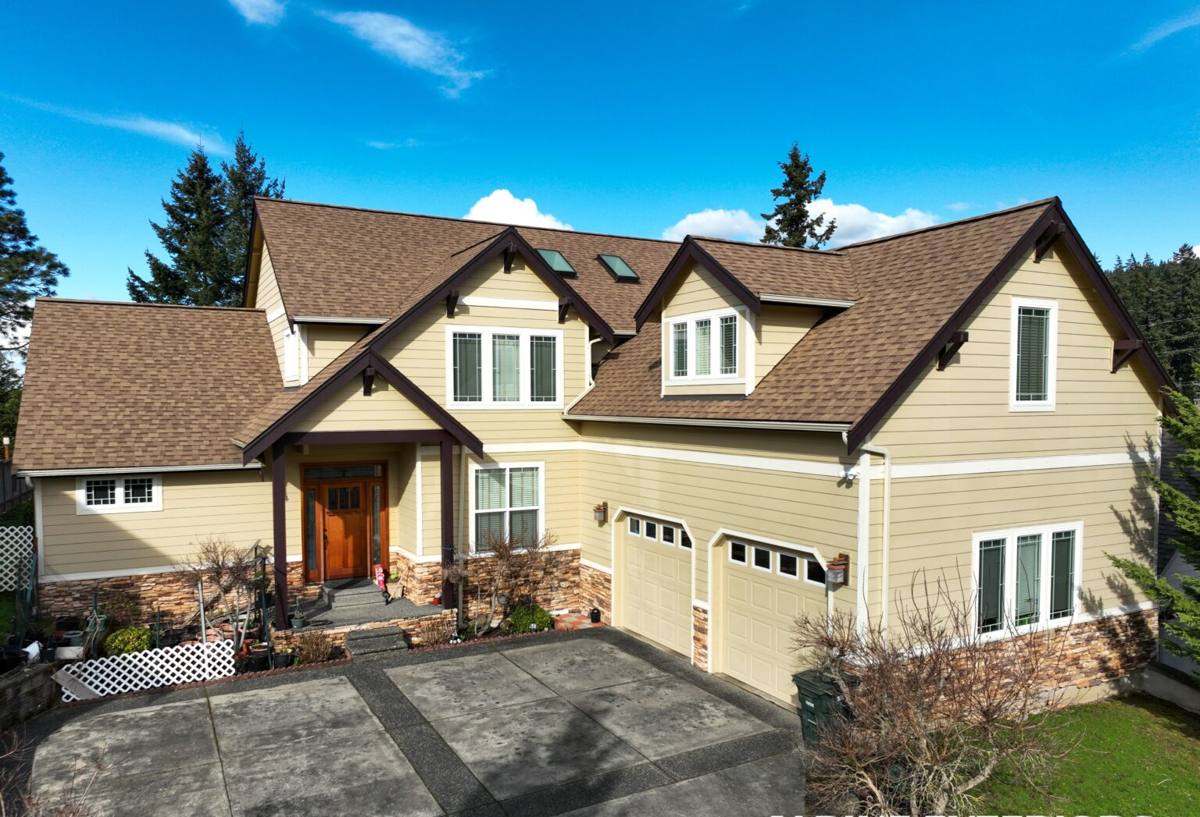
What Bellingham's Climate Actually Does to a Deck
Whatcom County's marine climate is the whole reason deck-building here is a different job than it is in a drier state. Long stretches of driving rain, salt-tinged air off the Bay, and short winter days with limited direct sun add up to one thing: wood and hardware stay damp for months at a time. That's the environment a Cordata deck has to survive, year after year, not just the one dry week in July when most people notice how nice it looks.
The Moss Problem
Bellingham's long moss season isn't just a cosmetic issue. Moss and algae hold moisture directly against decking boards and structural framing, which accelerates rot in wood and can leave composite surfaces slick and stained if they're not detailed correctly. A deck with poor airflow underneath, tight board spacing, or shaded northern exposure — common in tree-lined parts of Cordata — will grow moss faster than an open, south-facing deck. Good design accounts for this before the first board goes down.
Driving Rain and Wind-Driven Moisture
Rain here doesn't just fall straight down. Wind-driven rain gets pushed sideways into ledger connections, under railings, and into any gap where end grain is exposed. Over years, that's where rot starts — not usually in the open field of the deck boards, but at the joints, fastener holes, and the ledger board where the deck meets the house.
Materials: What Actually Holds Up in This Climate
There's no single "best" decking material — there's a best material for a given budget, look, and how much upkeep the owner actually wants to do. Here's how the common options perform specifically under Bellingham's wet, mossy conditions.
| Material | Upfront Cost | Maintenance in This Climate | Moss & Moisture Behavior |
|---|---|---|---|
| Pressure-treated fir/pine | Lowest | Needs re-staining or sealing every 1-2 years | Absorbs moisture readily; needs regular cleaning to resist moss buildup |
| Cedar | Mid-range | Annual cleaning and periodic oiling to hold color and resist checking | Naturally more rot-resistant, but still needs airflow and cleaning to prevent surface moss |
| Composite decking | Higher upfront | Occasional washing; no staining or sealing | Won't rot, but can still get slick with algae film if underside airflow is poor |
| PVC decking | Highest | Lowest ongoing maintenance | Fully moisture-resistant surface; still benefits from periodic cleaning in shaded areas |
Composite and PVC have become popular in Bellingham for good reason — they take the driving rain and long wet season out of the maintenance equation. But wood, especially cedar, still has a place when the homeowner wants a natural look and is comfortable with a yearly maintenance routine. Our job is to lay out the honest trade-offs for your budget and how much upkeep you actually want, not push one product because it's easier for us to install.
Where Deck Failures Actually Start: The Substructure
Most people judge a deck by the surface boards, but the framing underneath is what determines whether it lasts 10 years or 30. In a climate like ours, three things separate a deck that holds up from one that doesn't:
Ledger Attachment
The ledger board — where the deck ties into the house — is the single most common failure point on older decks we get called out to inspect or replace. Proper flashing, correct fastener spacing, and a water-resistant barrier between the ledger and the house band board are non-negotiable. This connection sees more sustained moisture exposure than almost anywhere else on the structure.
Post Bases and Ground Contact
Posts that sit in standing water or direct soil contact rot from the bottom up, often invisibly, until the deck starts to feel spongy or uneven. Elevated post bases, proper drainage grading, and rated hardware matter more here than in drier climates where that mistake might not show up for a decade.
Joist Spacing and Airflow
Tighter joist spacing adds strength, but it can also trap moisture if the underside of the deck doesn't get airflow. We balance structural spec with ventilation so the frame can actually dry out between the region's frequent rain events instead of staying damp for weeks at a stretch.
Fasteners, Railings, and Hardware That Won't Let You Down
Salt-influenced air and near-constant humidity are hard on cheap or mismatched hardware. Galvanized fasteners that aren't rated for contact with certain treated lumber chemicals can corrode and stain the wood around them within a couple of seasons — we match fastener coatings to the lumber treatment being used, every time. Structural screws and hidden fastener systems, stainless steel where it counts, and correctly flashed hardware connections are standard on our builds, not an upgrade option.
Railings get the same attention. Whether you're going with wood, metal, or cable rail, every post base and connection point is a place water can collect if it's not detailed correctly. We treat railing hardware with the same moisture standards as the structural framing, because a railing failure is a safety issue, not just a cosmetic one.
Our Process, Start to Finish
- On-site assessment — we walk the property, check drainage, sun exposure, and existing structure if it's a replacement
- Design and material discussion — honest pros and cons for your budget and how much maintenance you want to take on
- Written estimate — clear scope, materials, and timeline before anything is scheduled
- Permitting — we handle the paperwork required for the scope of work
- Demo (if replacing an existing deck) — including inspection of the ledger and framing underneath, since that's often where the real story is
- Build — framing first, inspected before decking goes down, then surface material, railings, and finishing details
- Final walkthrough — we go over the finished deck and basic care with you before we consider the job done
Permits and Local Requirements
Deck construction in Bellingham and unincorporated Whatcom County generally requires a permit once you're past a certain size or height off grade, and there are setback and guardrail requirements that vary by lot and jurisdiction. Cordata includes a mix of city and county parcels depending on exactly where a property sits, which affects which permitting process applies. We handle this as part of the job rather than leaving it for the homeowner to sort out — it's one less thing to get wrong on a structure that has to meet code for safety, not just for looks.
Keeping a Cordata Deck in Good Shape Year-Round
A well-built deck in this climate still needs some attention from the owner. Here's the realistic minimum:
- Clear leaves and debris from board gaps and drains before the fall rains set in
- Sweep or rinse off moss and algae film in shaded areas at least twice a year
- Check railing posts and stair connections annually for movement or soft wood
- Keep gutters and downspouts near the deck clear so runoff isn't draining onto or under it
- Re-stain or re-oil wood decking on the schedule the product actually calls for — don't stretch it
- Watch for soft spots near the ledger board, which is the first place rot tends to show up
Why It Matters That We Already Work in Cordata
A deck built by a crew that hasn't worked this specific area before is guesswork on the details that actually matter here — how a lot drains after a heavy Whatcom County storm, which yards hold shade long enough to grow moss fast, where the wind off the Bay hits hardest. We've built and repaired decks around Bellingham long enough to know these patterns aren't theoretical. That local familiarity is what turns a good-looking deck into one that's still solid a decade from now.
If you're planning a new custom deck or need to talk through replacing one that's showing its age, we're glad to come take a look. Reach out for a free, no-pressure estimate — we'll walk the site, answer your questions honestly, and give you a clear picture of what the job actually involves before you decide anything.