 Bellingham Roofing
 Why Composite Decking Fits Sudden Valley
Sudden Valley sits in one of the wetter, shadier pockets of Whatcom County — tree canopy over most lots, long stretches of overcast days, and a lake nearby that keeps humidity higher than it is out on more open ground. That combination is hard on a wood deck. Boards stay damp longer after every rain, moss and algae get a head start in the shade, and the freeze-thaw swings we get most winters work on any wood fiber that's holding moisture. Composite decking was built to shrug off exactly that kind of exposure, which is why it's become the practical choice for homeowners here who are tired of re-staining, re-sanding, and chasing rot every few years.
None of that means composite is maintenance-free — no decking material is — but it does mean the maintenance is lighter and the failure points are fewer, if the product and the installation are both right for this climate. That second part matters more than people expect.
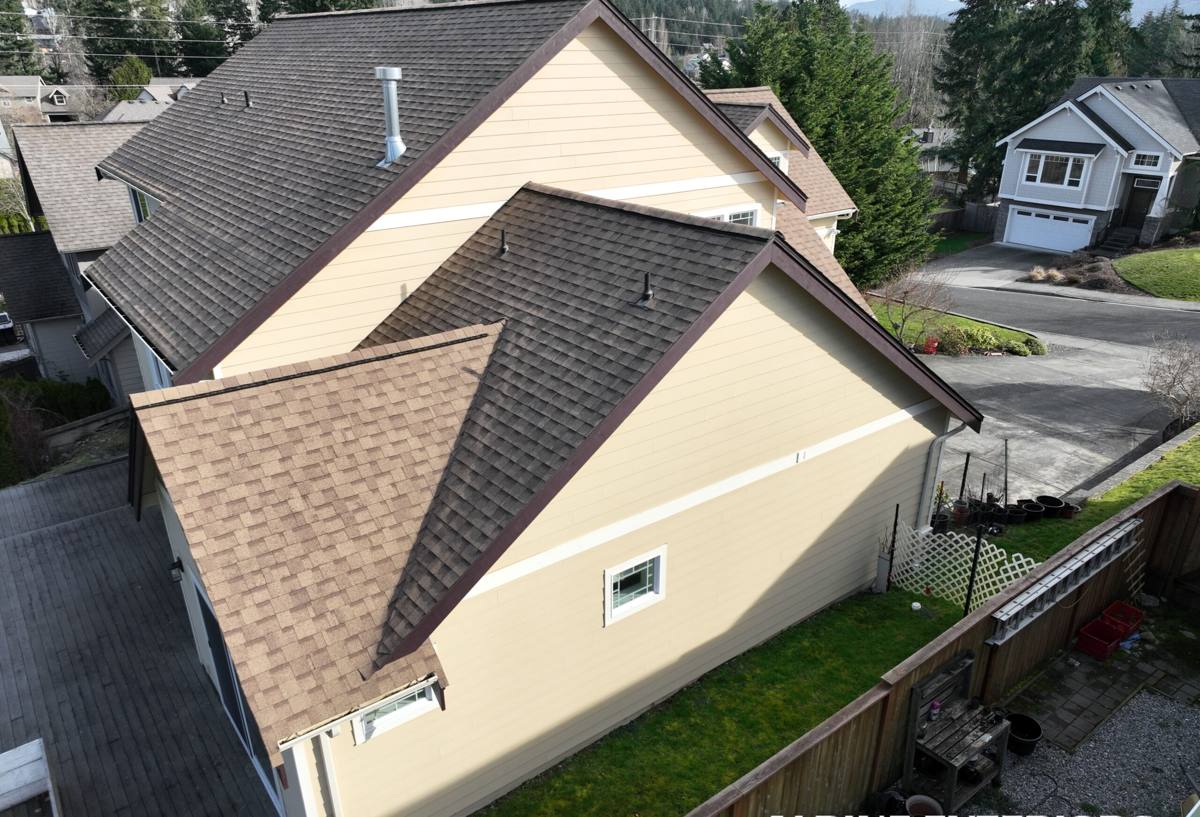
What This Climate Actually Does to a Deck
Whether a home is up in the trees around Sudden Valley or closer to open water, Whatcom County decks deal with the same underlying stresses: driving rain that gets pushed sideways under railings and against ledger boards, long moss seasons that run from fall through spring, and — for homes closer to saltwater exposure — airborne salt that accelerates corrosion on anything metal. On a wood deck, this shows up as gray, splintering boards, black mildew streaking, and soft spots where water has been sitting against end grain. On a poorly built composite deck, the symptoms are different but just as real: trapped moisture under boards that never gets a chance to dry, fasteners that corrode and stain the decking, and joists that rot out underneath a surface that still looks fine from above.
The Part Homeowners Don't See
Composite boards themselves resist moisture well, but the framing underneath them — joists, beams, ledger connections — is usually still wood, and it's still exposed to the same rain and shade. A deck that looks great on top can be failing structurally underneath if the substructure wasn't protected and ventilated correctly. This is the single most common corner cut on composite decking jobs, and it's invisible until the deck starts to feel spongy or a railing post works loose.
Composite Decking Options — What the Differences Actually Mean
"Composite decking" covers a range of products, and the differences aren't cosmetic — they affect how the deck holds up in a wet, shaded environment over 15-25 years.
| Type | How It Handles Moisture & Shade | Trade-Offs |
|---|---|---|
| Uncapped composite | Wood fiber is still exposed at the surface, so it can absorb moisture and support mold/mildew growth, especially in shaded areas | Lower upfront cost; shorter practical lifespan in wet, shaded lots |
| Capped composite | A plastic cap shell wraps the board, blocking moisture absorption and resisting mold and moss staining much better | Higher upfront cost; the better fit for tree-covered, damp lots |
| PVC / fully synthetic decking | No wood content at all, so it's the most moisture-indifferent option and cleans up easily | Different feel underfoot and higher cost; not always necessary if capped composite is installed correctly |
| Pressure-treated wood (for comparison) | Absorbs moisture readily; needs regular sealing to resist the moss and mildew common here | Lowest material cost; highest ongoing maintenance and shortest lifespan in shade |
For most Sudden Valley properties — especially lots with heavy tree cover or limited afternoon sun — capped composite is the sweet spot: it holds up to the moisture and moss pressure of this climate without the added cost of full PVC systems that most homes don't need.
What a Correct Composite Deck Installation Involves
Framing and Ledger Attachment
The ledger board — where the deck attaches to the house — is the single highest-risk point for water intrusion on any deck. It needs proper flashing that directs water away from the house framing, not just caulk, which fails over time. In a climate with as much sustained rain as ours, a poorly flashed ledger is often the reason a deck develops hidden rot at the house connection within a few years.
Joist Spacing and Protection
Composite boards generally require tighter joist spacing than solid wood decking — most manufacturers call for 16 inches on center, sometimes less on diagonal or picture-frame layouts. Joists should also be wrapped or capped with a protective tape that keeps rain from soaking into the top of the joist, which is exactly where water collects and sits longest under a composite surface.
Ventilation Underneath
Low-clearance decks — common on sloped Sudden Valley lots — need enough airflow underneath to let the substructure dry out between rain events. Skipping this is how a deck ends up with a musty smell and soft framing within a handful of years, even though the composite boards on top still look brand new.
Fasteners and Hardware
Every screw, bracket, and joist hanger should be stainless steel or otherwise rated for coastal/high-moisture exposure. Standard galvanized hardware corrodes faster in this environment, especially with any proximity to salt air, and corroding fasteners both weaken the structure and streak the decking surface with rust stains that don't come out.
Our Process for a Sudden Valley Deck
- On-site walkthrough: We look at sun exposure, tree cover, slope, and drainage on the actual lot — not a generic template — because those factors drive spacing, ventilation, and board choice.
- Design and material selection: We talk through composite tiers and colors with the moss and moisture pressure of the specific lot in mind, not just budget.
- Permitting: Whatcom County and local building requirements apply to most deck rebuilds and new builds; we handle that paperwork so it doesn't fall on you.
- Demo and framing: Old structure comes out, new framing goes in with proper flashing, joist protection, and ventilation clearance built in from the start.
- Decking, railing, and fascia installation: Boards are fastened per manufacturer spec, with attention to expansion gaps since composite moves with temperature more than people expect.
- Final walkthrough: We go over care basics for your specific board and finish before we consider the job done.
Maintenance in a Moss-Prone, Rainy Climate
Composite cuts maintenance significantly compared to wood, but "low-maintenance" isn't "no-maintenance" — especially on a shaded lot where moss and algae have every advantage.
- Sweep debris (needles, leaves, seed pods) off the deck regularly — trapped organic matter holds moisture against the board surface and feeds moss growth
- Wash the deck at least once or twice a year with a soft-bristle brush and a cleaner made for composite — pressure washers can be used carefully but too much pressure can damage the cap surface
- Keep gutters and downspouts near the deck clear so runoff isn't dumping directly onto or under the decking
- Check railing posts and stair connections annually for movement, which can signal moisture getting into framing below
- Trim back overhanging branches where practical to cut down on shade and debris load on the most moss-prone sections
- Address any standing water or slow-draining spots on the deck surface promptly — those are early signs of a framing or slope issue, not just a cosmetic puddle
What Affects the Cost of a Composite Deck Here
| Factor | Why It Matters in Sudden Valley |
|---|---|
| Deck size and shape | More cuts, picture-framing, or curves add labor and material waste |
| Board tier (uncapped vs. capped vs. PVC) | Capped and PVC cost more upfront but handle this climate's moisture and moss pressure with far less maintenance |
| Site access and slope | Many Sudden Valley lots have grade changes or limited equipment access, which affects labor time |
| Substructure condition | Rebuilding rotted or undersized framing costs more than decking over sound existing framing, but it's not a step to skip |
| Railing and fascia choices | Composite or aluminum railing systems cost more than basic wood but match the low-maintenance goal of the decking itself |
| Permitting requirements | Height, guardrail, and setback requirements can affect design and add time to the project timeline |
Composite decking projects in this region typically run from the low tens of thousands for a modest, straightforward deck up into higher figures for larger decks, elevated structures, or premium board and railing systems. The only way to get a number that means anything is a walkthrough of your specific lot.
Why a Crew That Already Works Sudden Valley Matters
Sudden Valley isn't a typical flat suburban subdivision — lots slope, tree cover varies block to block, and access for equipment and material delivery isn't always straightforward. A crew that's already worked in the area knows what to expect from the terrain, understands the moisture and shade patterns that drive material decisions here, and isn't guessing at Whatcom County permitting requirements for the first time on your project. That familiarity shows up in fewer surprises mid-build and a deck that's actually built for the conditions it's going to sit in, not a generic spec sheet.
If you're weighing a new composite deck or a rebuild in Sudden Valley, we're happy to walk the site, look at your sun and shade exposure, and put together a straightforward, no-pressure estimate — just fill out the form below to get started.