 Bellingham Roofing
 Decks in Barkley Take a Different Kind of Beating
Barkley sits close enough to the water and the wet weather patterns that roll through Whatcom County that a deck here ages differently than one built inland or in a drier climate. Salt-tinged air off the Sound works into fasteners and metal hardware. Driving rain, the kind that comes in sideways during fall and winter storms, finds its way under boards and into end grain if a deck wasn't built with drainage in mind. And Bellingham's long stretch of gray, damp months keeps surfaces wet for days at a time, which is exactly the environment moss and algae need to take hold. None of this is unique to Barkley, but the combination is a real design constraint, not a footnote, and it should shape how a deck out here gets built from the ground up.
A deck that looks fine the first summer can start showing problems by year two or three if the substructure, fastening, and drainage weren't handled with this climate in mind. That's the gap we build to close.
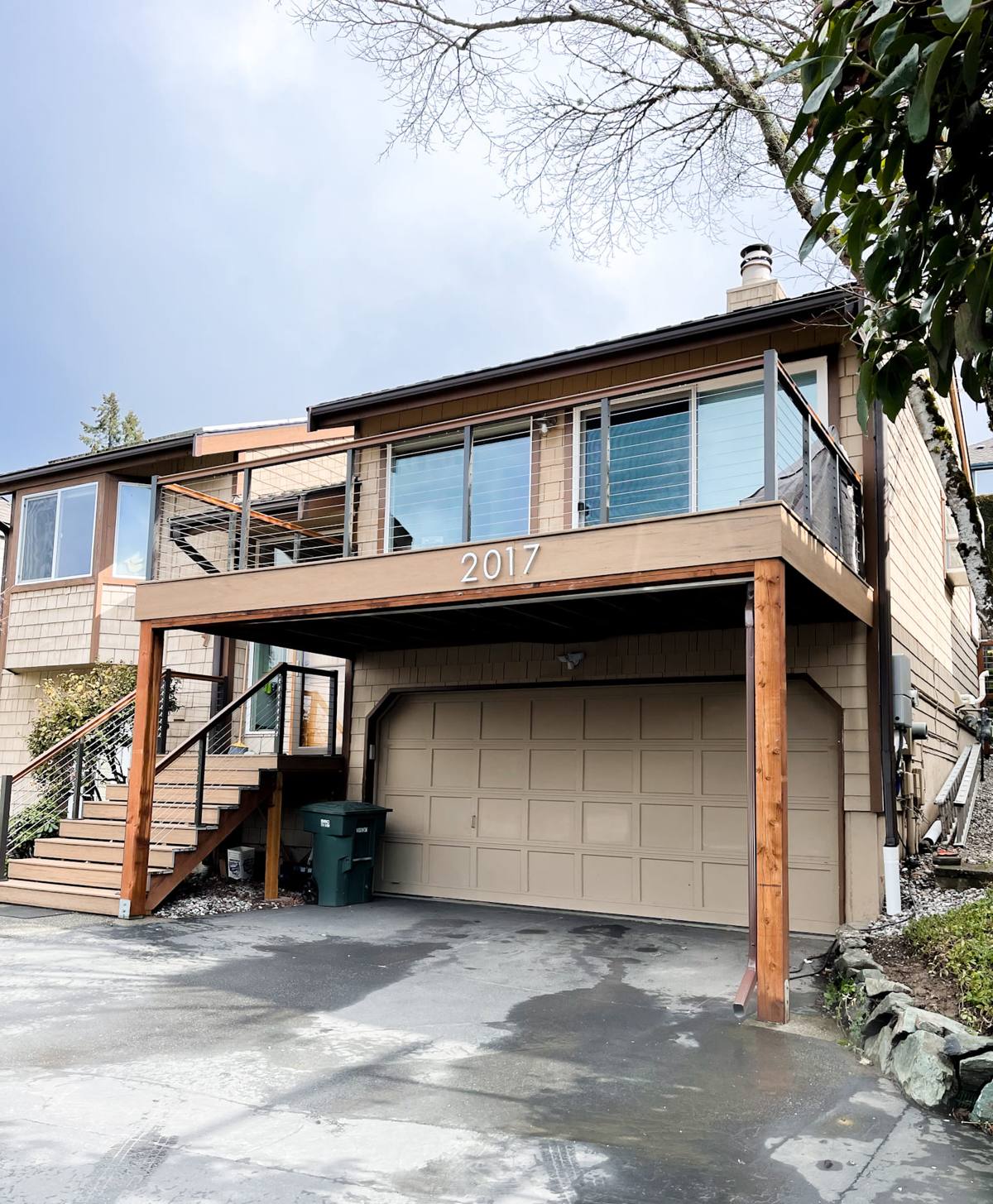
Why Composite Makes Sense for This Climate
Wood decking can absolutely be done right, but it asks for more from the homeowner in a climate like ours — regular cleaning, re-staining or sealing on a schedule, and vigilance about moss and mildew getting a foothold in shaded, damp corners. Composite decking, particularly capped composite boards, gives Barkley homeowners a way to cut that maintenance burden way down without giving up a wood-like look.
The trade-offs are real and worth being honest about:
- Moisture behavior: Capped composite boards don't absorb water the way wood does, so they resist the swelling, cupping, and rot that constant damp weather causes over time.
- Surface care: Composite still needs to be kept clean — moss and algae will grow on any horizontal surface that stays wet, composite included — but it won't need sanding, staining, or sealing.
- Installation sensitivity: Composite is less forgiving of poor substructure work than wood. Gaps, fastening, and ventilation have to be right the first time because the boards won't "breathe" or self-correct the way wood sometimes does.
- Upfront cost vs. lifetime cost: Composite typically costs more per square foot than pressure-treated wood at installation, but it usually costs less over 15-20 years once you account for maintenance labor and materials.
What Composite Doesn't Solve on Its Own
Switching to composite decking doesn't automatically fix drainage, ventilation, or moss problems — it just removes wood rot from the list of things you have to worry about. A composite deck built over a poorly ventilated substructure, or one that traps standing water, will still grow moss and can still develop framing problems underneath, even if the boards themselves hold up. The deck as a system has to be built for this climate, not just the visible surface.
What a Correct Composite Deck Build Looks Like Here
A composite deck is only as good as what's underneath it and how it's attached to the house. In a marine climate like Bellingham's, a handful of details matter more than they would somewhere drier:
Ledger Attachment and Flashing
Where the deck attaches to the house is the single most common failure point on any deck, and it's where water damage does the most expensive kind of harm because it's hidden behind siding until it isn't. Proper flashing at the ledger board, with the right lap order so water sheds outward instead of behind the siding, is non-negotiable in a climate that sees this much sustained rain.
Framing and Fasteners
Salt-influenced air accelerates corrosion on standard fasteners and connectors faster than it does further inland. We use fasteners and structural hardware rated for coastal or wet-use exposure, not just standard exterior-rated hardware, because the cost difference is small compared to what it costs to fix corroded framing connectors years later.
Airflow Underneath
Composite decking needs consistent airflow beneath the boards to shed the moisture that inevitably gets driven underneath during storms. Low-clearance decks, or decks with skirting that blocks ventilation, are more prone to trapped moisture, mold on the underside of boards, and slower drying between rain events — which in Bellingham can mean the underside of a deck rarely fully dries out from October through March.
Board Spacing and Drainage
Gapping between boards has to account for composite's expansion and contraction with temperature, while still being tight enough that debris and standing water aren't collecting in the gaps. Getting this spacing wrong is a common DIY and inexperienced-installer mistake that shows up as pooling water and premature moss growth in the first wet season.
Comparing Decking Options for a Barkley Property
Homeowners usually come to us already leaning toward composite, but it helps to see the honest trade-offs side by side.
| Factor | Pressure-Treated Wood | Capped Composite | Cedar |
|---|---|---|---|
| Upfront cost | Lowest | Mid to higher | Higher |
| Maintenance in this climate | Annual cleaning/sealing recommended | Periodic washing only | Regular sealing to resist moisture |
| Moss/algae resistance | Moderate, depends on sealing | Good, but still needs washing | Moderate |
| Expected lifespan (properly built) | 10-15 years | 25-30+ years | 15-20 years |
| Installation sensitivity | Moderate, more forgiving | High, needs precise substructure work | Moderate |
Cost Factors Homeowners in Barkley Ask About
Every deck is priced around the specifics of the property, but the factors that move the number the most are consistent from job to job:
- Size and shape: Square footage, plus how many angles, cutouts, or multi-level sections the deck has.
- Substructure condition: Whether we're building new framing or the existing framing can be reused after inspection.
- Height and stairs: Elevated decks with stairs and additional railing runs cost more than a low, single-level deck.
- Railing type: Composite, aluminum, cable, or glass railing all carry different price points and different maintenance needs in wet weather.
- Board tier: Composite lines range from base capped boards to premium wood-grain finishes from manufacturers like Trex, TimberTech, and Fiberon, with a real price spread between them.
- Site access: Tight side yards or decks that require material to be carried a distance add labor time.
How We Approach a Barkley Deck Project
- On-site assessment: We look at the existing structure (if any), drainage around the foundation, sun and shade exposure, and how the deck ties into the house.
- Plan and materials walkthrough: We go over board tiers, railing options, and framing needs so you know what you're paying for and why, with no pressure toward the most expensive option.
- Permitting: Most deck work in Whatcom County requires a permit depending on height and attachment to the structure — we handle that process rather than leaving it to the homeowner.
- Build: Framing and flashing first, with attention to ventilation and drainage, then decking, then railing and any finish details.
- Final walkthrough: We check spacing, fastening, and railing security with you before calling the job done.
Living With a Composite Deck Through a Bellingham Winter
Composite decking cuts maintenance significantly, but "low-maintenance" doesn't mean "no maintenance" in a climate that stays wet as much of the year as ours does. A short seasonal routine keeps a composite deck looking and performing the way it should:
- Sweep debris (needles, leaves, seed pods) off the deck regularly in fall — trapped organic matter is what feeds moss and algae growth.
- Wash the deck surface with soap and water, or a composite-safe cleaner, once or twice a year, more often in shaded areas that stay damp longer.
- Check that gaps between boards stay clear of debris so water keeps draining as designed.
- Confirm gutters and downspouts near the deck are directing water away, not onto or under the deck surface.
- Inspect railing posts and stair connections annually for any looseness, since freeze-thaw cycles can work fasteners loose over time.
Why It Matters That We Already Work in Barkley
A crew that already works in and around Barkley knows the kind of lot layouts, home ages, and HOA or planned-development guidelines common to the area, which matters when it comes to permitting and getting deck designs approved without back-and-forth delays. Many properties in Barkley are part of planned developments with their own design standards, and knowing that going in saves time compared to a crew learning it for the first time on your project. Being local also means faster response if something needs a second look after a storm, and a working knowledge of how this specific neighborhood's exposure to weather off the Sound tends to affect exterior work.
Familiarity with the area doesn't replace doing the fundamentals right on every deck, but it does mean fewer surprises during permitting, design, and the build itself.
Ready to Talk About Your Deck?
If you're weighing composite decking for a home in Barkley, we're happy to come take a look, walk the site with you, and put together a straightforward estimate — no pressure, no hard sell. Use the form below to get started.