 Bellingham Roofing
 Window Replacement Built for Columbia's Coastal Conditions
The Columbia neighborhood sits close enough to Bellingham Bay that its homes take a different kind of weather beating than houses further inland in Whatcom County. Salt-tinged air off the water, driving rain that comes in sideways during fall and winter storms, and a moss season that seems to stretch longer every year all work against window assemblies that weren't built or installed to handle it. Add in the mix of home ages common in this part of Bellingham — older single-pane and early-generation double-pane homes sitting next to newer builds — and you get a neighborhood where "just swap the glass" almost never tells the whole story.
Window replacement done right in Columbia isn't just a materials decision. It's a moisture-management decision, a framing decision, and in older homes, sometimes a structural decision. This page covers what that actually looks like.
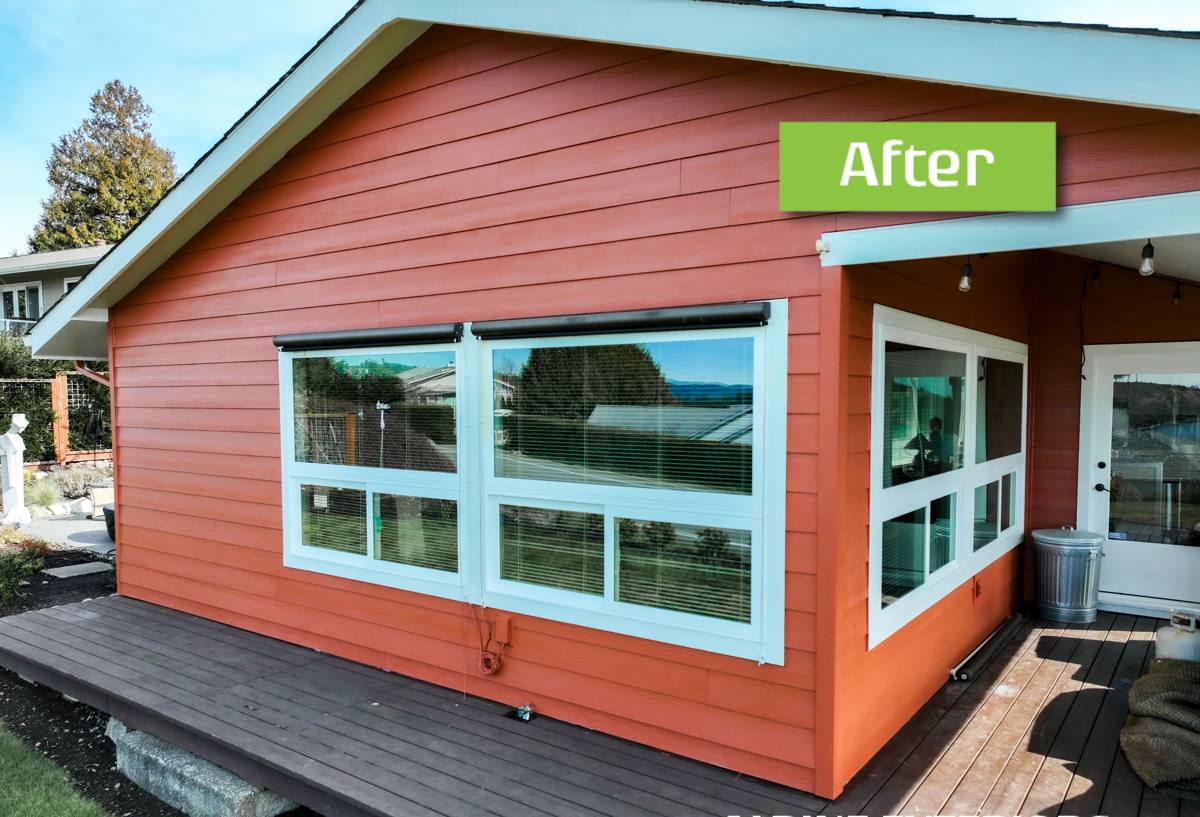
How to Tell Columbia Windows Are Past Their Useful Life
Not every window that looks tired needs to come out. But there are specific signs, especially common in this coastal part of Bellingham, that point to replacement rather than repair:
- Fogging or a permanent haze between panes — the seal has failed and the insulating gas or dead air space is gone
- Soft or spongy wood at the sill or lower corners of the frame, a common sign of long-term moisture intrusion
- Windows that won't stay open, won't latch fully, or have visibly sagged out of square
- Noticeable draft or cold spot near the frame even when the window is shut and locked
- Condensation forming on the inside of the glass regularly through fall and winter
- Visible corrosion or pitting on aluminum-framed windows exposed to salt air over the years
- Paint or finish that keeps failing on the interior trim around the window, even after repainting
Any one of these on its own might be a minor fix. Several of them together, especially moisture-related signs, usually mean the window and possibly the surrounding wall assembly need attention.
What a Correct Window Replacement Job Actually Involves
It Starts Before the Window Ever Comes Out
A rushed crew pulls the old window and drops in the new one. A careful crew inspects the rough opening first — checking the sheathing, the sill, and the flashing that's already there for water damage or rot before committing to a replacement plan. In a climate that sees as much driving rain as Bellingham does, this step catches problems that would otherwise get sealed up behind a brand-new window and cause damage nobody sees for years.
Full-Frame vs. Insert Replacement
There are two basic approaches, and the right one depends on the condition of what's already there, not on which is cheaper to sell:
- Insert (pocket) replacement — the new window fits inside the existing frame. Faster and less invasive, but only appropriate when the existing frame is solid, square, and free of rot or water damage.
- Full-frame replacement — the old window and its frame come out entirely, down to the rough opening. This is slower and costs more, but it's the only correct option when there's any sign of water intrusion, rot, or a frame that's out of square — which is common enough in older Columbia homes near the water.
Any contractor who recommends an insert replacement without actually inspecting the frame condition first is guessing. That guess can trap moisture problems inside a wall for years.
Flashing and Weatherproofing — Where Most Failures Actually Start
Window glass rarely fails on its own. What fails, especially in a wet coastal climate, is the flashing and sealant detail around the window — the parts that direct water away from the wall assembly instead of into it. Correct installation means proper flashing tape or membrane integrated with the home's existing weather-resistive barrier, a sloped sill pan to shed any water that does get behind the window, and sealant used deliberately rather than as a substitute for good flashing. This is the part of the job that's invisible once it's done and the trim is back on — and it's the part that determines whether the window lasts 20 years or leaks in three.
Material and Glass Options: What Actually Matters Here
Marketing brochures make every window sound like the best choice. In practice, the right material and glass package depends on exposure, budget, and how much upkeep you want to take on. Here's an honest comparison for a home in this part of Whatcom County:
| Option | Salt-Air / Moisture Performance | Maintenance | Typical Trade-Off |
|---|---|---|---|
| Vinyl frame | Good — won't corrode or rot | Low — no painting or sealing needed | Limited color options; frames can flex on very large openings |
| Fiberglass frame | Very good — dimensionally stable, resists moisture and corrosion | Low | Higher upfront cost than vinyl |
| Wood frame (clad exterior) | Good on the exterior-clad side; interior wood still needs care | Moderate — interior finish needs occasional attention | Best appearance for traditional homes; higher cost |
| Bare aluminum frame | Poor in salt air — prone to pitting and corrosion over time near the bay | Higher — needs monitoring for corrosion | We generally steer Columbia homeowners away from this near the water |
| Double-pane, Low-E, argon-filled glass | Standard for this climate — cuts heat loss and condensation risk | None | Baseline we recommend for almost every replacement here |
| Triple-pane glass | Best insulating and condensation performance | None | Added cost and weight; worth it on north-facing or high-exposure walls |
We're not going to tell you a $400 builder-grade window will perform the same as a properly built fiberglass or vinyl unit with a real Low-E glass package — it won't, especially with salt air in the mix. But we're also not going to upsell every homeowner into the most expensive option on the table. Most Columbia homes do very well with a solid vinyl or fiberglass frame and a double-pane Low-E, argon-filled glass package. Triple-pane and premium wood-clad options make sense on specific exposures or for homeowners prioritizing top-end performance and appearance.
Our Process for a Columbia Window Replacement
- On-site assessment — we look at the actual condition of your existing frames, sills, and siding around each window, not just the glass, and note any moisture or rot signs.
- Honest scope and estimate — you get a clear breakdown of insert vs. full-frame recommendations, material options, and pricing, in writing, before any work starts.
- Precise measurement and ordering — windows are measured and ordered to fit the actual opening, not a standard size that gets forced in.
- Careful removal — old windows come out without unnecessary damage to surrounding siding, trim, or interior finish.
- Proper flashing and sealing — every opening gets correct flashing detail and sill pan work before the new window goes in, regardless of whether it's visible when we're done.
- Installation and adjustment — windows are set plumb, level, and square, shimmed correctly, and operate smoothly before we consider the job finished.
- Interior and exterior finish work — trim, caulking, and touch-up so the finished window looks intentional, not patched.
- Final walkthrough — we check operation, seals, and finish with you before we call it done, and clean up the work area.
Why Hiring a Crew That Already Works in Columbia Matters
Window replacement isn't identical from neighborhood to neighborhood. A crew that regularly works in Columbia and similar close-to-the-water parts of Bellingham already understands a few things that a contractor coming in cold has to learn on your project: how salt air accelerates corrosion on the wrong materials, how much moss and organic buildup on siding and trim can hide rot around older window openings, and how the age and construction style of homes in this part of town tends to affect what's behind the wall once the old window comes out.
That familiarity matters practically, too. A local crew can usually get to your property faster for the initial assessment and again for the install, isn't guessing at typical permit requirements for the City of Bellingham, and has a reputation in the area that depends on doing the job right the first time — not just on winning the bid.
Energy Efficiency and Moisture: The Two Things That Actually Save You Money
Homeowners often focus on the energy savings from new windows, and that's real — old, leaky single-pane or failed-seal windows lose a lot of heat, especially during a Whatcom County winter with damp, wind-driven cold. But in a climate like Bellingham's, moisture control matters just as much as insulation value. A window that's well-sealed thermally but poorly flashed will still let water into your wall assembly, and that kind of hidden damage costs far more to fix than the window itself. The goal of a correct replacement is both at once: a tighter thermal envelope and a properly shed water path, not one traded for the other.
Questions to Ask Before You Hire Anyone for Window Replacement
Whether you go with us or get a few quotes first, these are worth asking every contractor:
- Will you inspect the existing frame and sill condition before recommending insert vs. full-frame replacement?
- What flashing and sill pan method do you use, specifically?
- Are you licensed and insured to do this work in Washington State, and can you provide proof?
- What's the manufacturer warranty on the windows themselves, and what's your labor warranty separately?
- Do you pull permits when the work requires it, or is that left to me?
- Will the same crew that gives the estimate be doing the install?
- What's the realistic timeline from order to install for the windows you're recommending?
A contractor who answers these clearly and specifically, without dodging into sales talk, is the one worth trusting with your home.
Get a Straight Answer on Your Columbia Windows
If your windows are fogging, drafting, sticking, or just showing their age, it's worth having someone look at them before winter rain and moss season put more strain on frames that are already struggling. We'll give you a straightforward, no-pressure assessment of what's actually going on and what it would take to fix it right. Fill out the form below for a free estimate.