 Bellingham Roofing
 Siding Repair in Columbia: A Different Job Than Most Contractors Assume
Columbia sits close to Bellingham Bay, and that proximity changes how siding ages here compared to homes further inland in Whatcom County. Salt-tinged air off the water, wind-driven rain that hits walls at an angle instead of falling straight down, and tree cover that keeps north and west-facing walls shaded and damp longer than they should be — all of it adds up to siding that fails in specific, predictable ways. A repair crew that treats Columbia like any other Bellingham neighborhood will often miss what's actually going on behind the surface.
This page is about siding repair specifically — not a full re-side. Most homes don't need to be stripped down to the studs. They need someone who can correctly diagnose what's failing, why, and whether a targeted repair will actually hold up through another wet season or whether it's just delaying a bigger problem.
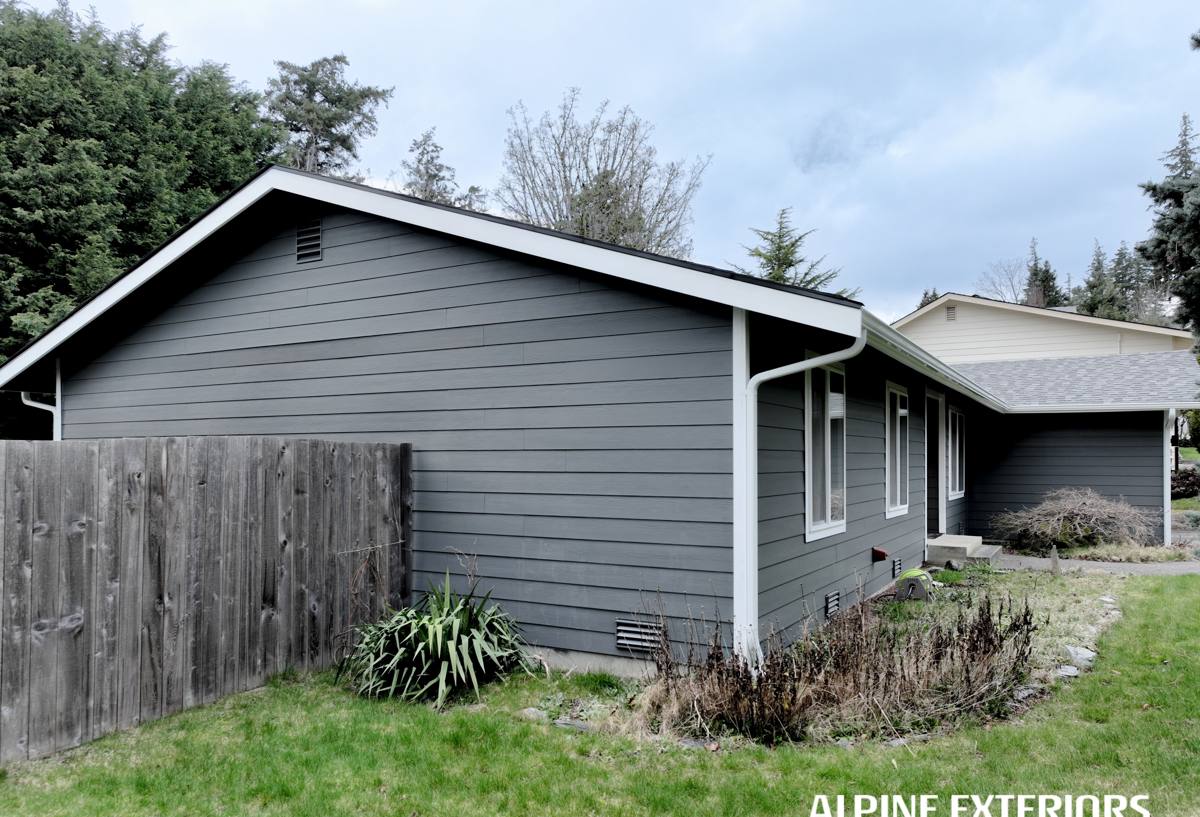
What Bellingham's Climate Does to Siding Over Time
Whatcom County doesn't get extreme weather, but it gets relentless weather, and that's harder on siding than a handful of severe storms would be. Three factors matter most for a neighborhood like Columbia:
- Salt air: Homes closer to the bay see accelerated corrosion on fasteners, trim, and any exposed metal flashing. Salt-laden moisture also breaks down caulking and paint films faster than drier inland air does.
- Driving rain: Wind off the water pushes rain sideways into seams, laps, and penetrations that were designed for water running straight down. Siding installed without enough attention to lap spacing and flashing detail will take on moisture at exactly those points.
- Moss and algae season: Bellingham's long wet, mild stretch from fall through spring is ideal moss-growing weather. Moss holds moisture against the siding surface for extended periods, which is a slow but steady driver of rot on wood-based products and finish breakdown on almost anything.
None of these factors cause damage overnight. They cause damage gradually, in the same spots, year after year — which is why repair work in this neighborhood tends to concentrate around butt joints, corner trim, window and door flashing, and lower wall sections near grade or landscaping.
Signs a Columbia Home Needs Siding Repair
Most homeowners notice siding problems only once they've become visible from the street. By then, the damage underneath is usually further along than it looks. Here's what we tell Columbia homeowners to watch for:
- Soft or spongy spots when you press on the siding, especially near the bottom courses
- Paint that's peeling, bubbling, or won't hold in one specific area while the rest of the wall looks fine
- Visible gaps opening up at seams, corners, or where siding meets trim
- Persistent moss or dark streaking that keeps returning to the same section after cleaning
- Warping, cupping, or boards that no longer sit flat against the wall
- Rust staining below nail heads or metal trim pieces
- Soft trim boards around windows and doors, even if the siding field looks intact
Any one of these can be a minor fix. Several showing up in the same area usually means water has been getting behind the siding for a while, and the repair needs to start with finding out how it's getting in — not just replacing what's visibly damaged.
Repair vs. Replacement: How We Actually Decide
Homeowners are often braced for a "you need full replacement" pitch. Most of the time in Columbia, that's not the honest answer — targeted repair is. But there's a point where patching stops making sense. Here's the general framework we use:
| Situation | Repair Usually Makes Sense | Replacement Usually Makes Sense |
|---|---|---|
| Extent of damage | Isolated to one or two wall sections or a handful of boards | Damage is spread across multiple elevations |
| Cause of failure | A specific, fixable issue: bad flashing, a caulk failure, a damaged board from impact | Systemic issue: original installation lacked proper water management everywhere |
| Underlying structure | Sheathing and framing behind the siding are still sound | Rot has reached the sheathing or framing in multiple spots |
| Material match | Existing siding profile and reveal can be matched closely | Product is discontinued or so weathered that patches will always stand out |
| Age of siding | Siding is otherwise mid-life and performing well | Siding is near or past its expected service life |
We'll tell you directly if a section is beyond repair rather than patching something that's likely to fail again in a season or two. That honesty matters more than the size of the invoice.
What a Correct Repair Actually Involves
A siding repair that actually holds up in this climate isn't just pulling a damaged board and nailing up a new one. It involves a few steps that get skipped by crews who are moving fast:
- Finding the real cause first. If water is getting in through a flashing gap or a failed sealant joint, replacing the board without fixing that entry point just buys a year or two before the same spot fails again.
- Checking what's behind the siding. Once a section is opened up, we look at the house wrap or building paper, the sheathing, and any framing that's exposed. If there's hidden rot, that gets addressed before new siding goes back on — not covered up.
- Matching profile, reveal, and color. A repair that doesn't match the surrounding siding's exposure and lap pattern will be visible from the street forever. This is where fiber cement has an advantage over older wood siding: factory-finished colors are far easier to match consistently than field-mixed paint.
- Correcting the water path, not just the cosmetic damage. Proper flashing at joints, corners, and penetrations, and correct fastening so water sheds outward instead of pooling.
Why We Repair Siding With James Hardie Fiber Cement — and Nothing Else
When a repair calls for new material — a damaged section, a rotted corner board, a full course that needs replacing — we use James Hardie fiber cement, full stop. We don't install LP SmartSide, vinyl, Cemplank, Allura, primed spruce, or cedar, and that standard applies to repair work the same as it does to full installations.
The reasoning is practical, not brand loyalty. Fiber cement doesn't swell, rot, or feed moss the way wood-based siding does, which matters directly in a climate that stays damp for months at a stretch. It's non-combustible. And Hardie's ColorPlus factory finish means a repaired section can be matched to existing color far more reliably than trying to color-match a field-applied paint job on a different material. We won't tell you a competing product is worthless — some of them have real strengths — but for a neighborhood that deals with salt air, driving rain, and a long moss season every single year, fiber cement is what we're willing to warranty our repair work on.
If your home currently has a different siding material and the damaged section can't be matched or reliably repaired in kind, we'll walk you through what a Hardie-based repair or transition would actually look like, including where seams between old and new material would fall.
Our Siding Repair Process in Columbia
1. Inspection
We start by looking at the whole exterior, not just the spot you called about. Water damage rarely stays where it started, and a full walk-around tells us whether we're dealing with an isolated issue or something more widespread.
2. Diagnosis and a Straight Answer
We explain what we found, what's likely causing it, and whether repair or replacement is the right call for that section — with the reasoning behind it, not just a recommendation.
3. The Repair Itself
Damaged material comes out, anything compromised underneath gets addressed, flashing and water management get corrected where needed, and new Hardie material goes in matched to the existing reveal and color.
4. Cleanup and a Final Look
We walk the repaired area with you before we consider the job done, and we'll point out any other spots worth keeping an eye on going forward.
Why a Local Crew That Already Works Columbia Matters
Siding repair is one of those trades where local, repeated experience shows up in the quality of the diagnosis. A crew that regularly works close-in Bellingham neighborhoods near the bay already knows where salt air tends to hit hardest, which wall orientations in this area collect the most driving rain, and how aggressively moss comes back on shaded, close-tree-cover lots that are common here. That's the difference between a repair that's guessing and one that's informed by what actually happens to siding a few blocks away, year after year.
It also means faster response. Repair work is often time-sensitive — an exposed section during a wet stretch can turn a small problem into a bigger one quickly. A crew that's already working in and around Columbia can get eyes on the damage sooner than one dispatching from further out.
Keeping Repaired Siding Ahead of Bellingham's Moss Season
A good repair should outlast the next moss season, not just cosmetically cover it up. A few habits go a long way for Columbia homes specifically:
- Trim back tree branches and shrubs that keep siding shaded and slow to dry after rain
- Rinse moss and algae growth off gently at least once a year before it gets a grip on the surface
- Keep gutters clear so overflow isn't running down the wall face
- Check caulking at trim, corners, and penetrations annually — it's usually the first thing to fail in salt air
- Address soft spots or paint failure as soon as they show up rather than waiting for a full wet season to pass
If you're noticing damage, soft spots, or recurring moss on your Columbia home's siding, we're glad to take a look and give you a straight assessment — repair or replacement, no pressure either way. Request a free estimate using the form below.