 Bellingham Roofing
 Siding Installation for Columbia Homes in Bellingham
The Columbia neighborhood sits close enough to Bellingham Bay that salt-laden air is a daily fact of life for anything mounted on the outside of a house. Add Whatcom County's driving winter rain and the long stretch of damp, low-light months that keep moss thriving on north-facing walls and rooflines, and you have a climate that is genuinely hard on exterior siding. Homes here don't fail because owners neglected them — they fail because the siding material or the installation wasn't built for this specific combination of moisture, salt, and shade.
This page covers what a correct siding installation looks like for a Columbia-area home, what our crew actually does on site, and why we've standardized on one product system instead of offering the full menu of options most contractors sell.
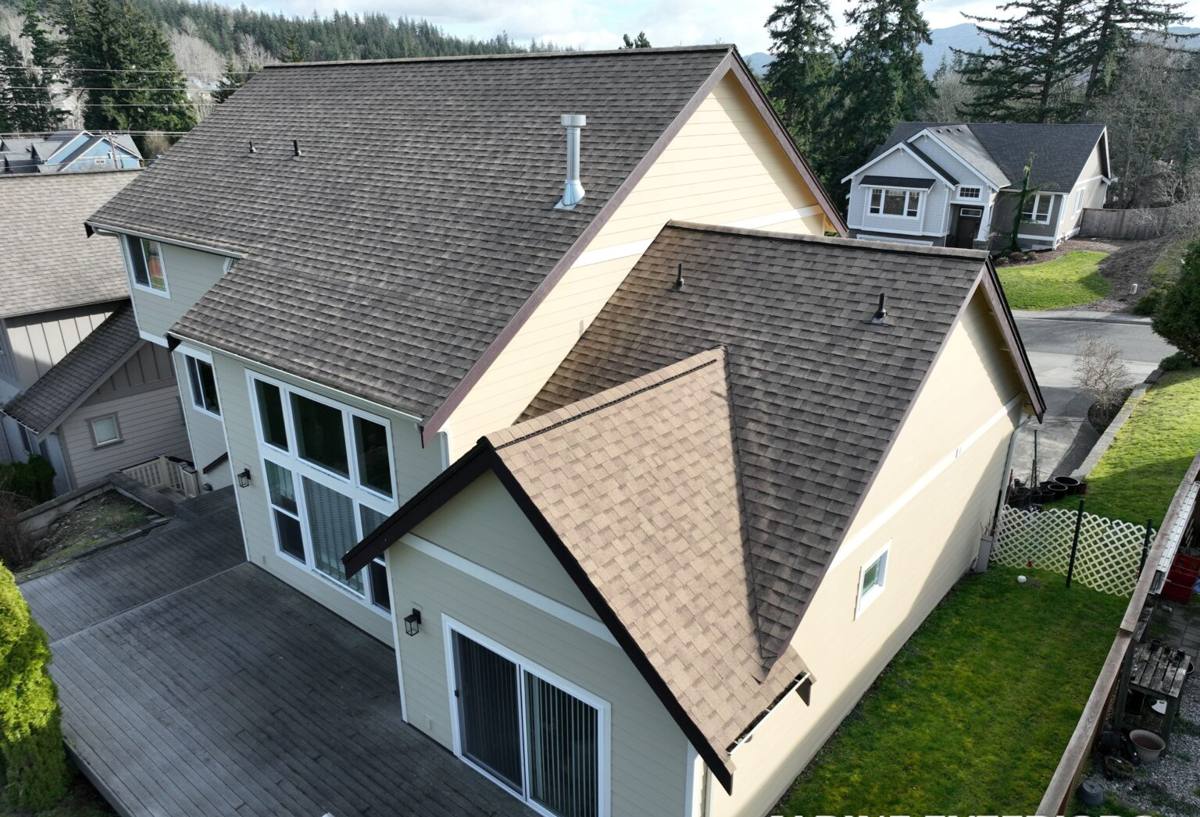
What Columbia's Climate Actually Does to Siding
Salt Air
Airborne salt from the bay settles on exterior surfaces and accelerates corrosion of fasteners, trim, and any metal flashing components. It also breaks down certain coatings faster than inland exposure would, which is why the finish system matters as much as the base material.
Driving Rain
Wind-driven rain doesn't just fall straight down — it gets pushed sideways into laps, seams, and butt joints. Siding that isn't installed with the right clearances and drainage path behind it will eventually let water track back to the sheathing, even if the surface looks fine.
Moss and Prolonged Dampness
Bellingham's moss season isn't a cosmetic issue — moss holds moisture against a wall surface for extended periods, which is exactly the condition that causes rot in wood-based products and coating failure in less durable materials. Shaded lots and tree-lined streets, common throughout Columbia, make this worse on north and west elevations.
Why We Install Only James Hardie Fiber Cement Siding
We get asked why we don't offer vinyl, LP SmartSide, Cemplank, Allura, or primed wood siding alongside Hardie. The honest answer is that we'd rather install one product system correctly, every time, than juggle several products with different failure modes and warranty terms. Each of the alternatives has real strengths — vinyl is inexpensive and low-maintenance in dry climates, LP SmartSide is easy to work with and holds paint well, cedar has genuine curb appeal. But in a marine, high-moisture environment like this one, the trade-offs stack up: vinyl can warp and doesn't stop moisture intrusion behind it, engineered wood products depend heavily on caulking and paint maintenance to keep water out of their wood-strand core, and cedar requires an ongoing maintenance commitment most owners underestimate when they first choose it.
James Hardie fiber cement is non-combustible, doesn't have a wood-fiber core to swell or rot, and holds its factory-applied ColorPlus finish far longer than field-applied paint on wood-based siding. Hardie also engineers specific product lines — the HZ5 climate designation — for regions with exactly this kind of moisture exposure, which the Pacific Northwest falls into. That's a materials-engineering decision, not a marketing one, and it's the reason we standardized on it rather than continuing to offer everything.
What This Means for a Columbia Homeowner
You won't get a menu of five siding brands from us with a sales pitch for the most expensive one. You'll get a straight answer about the one product we believe holds up here, plus honest guidance about the color, plank profile, and trim details that fit your home.
What a Correct Installation Actually Involves
Siding installation quality is decided almost entirely by what happens before the first plank goes up and by details most homeowners never see once the job is finished. A correct install includes:
- A continuous, correctly lapped weather-resistive barrier behind the siding — not just wrapped around openings
- Proper flashing at every window, door, and roof-to-wall intersection, installed to shed water outward and downward
- Correct fastener type, spacing, and penetration depth per Hardie's published installation specifications
- Minimum clearance gaps at the bottom of the wall, at grade, and at any horizontal trim to allow drainage and airflow
- Field-cut edges sealed per manufacturer requirements so moisture can't wick into the cut end of a plank
- Corrosion-resistant trim and fastener hardware suited to a coastal-influenced environment
Skip any one of these and the siding can still look correct for a year or two before problems show up as staining, soft trim, or paint failure at seams — by which point the fix is more invasive than it would have been at install.
Our Process on a Columbia Job
1. On-Site Assessment
We walk the home, check the condition of the existing sheathing and any signs of prior moisture intrusion, and identify elevations that take the worst weather exposure — usually the sides facing prevailing wind and rain, and any heavily shaded walls prone to moss and lichen growth.
2. Tear-Off and Sheathing Check
We remove the old siding down to the sheathing, not over it. This is the only point where hidden rot, prior water damage, or failed flashing can actually be found and fixed — covering over an existing problem just hides it under new material.
3. Weather Barrier and Flashing
We install a continuous drainage-plane weather barrier and flash every penetration and transition before any siding goes up. This step decides whether the house stays dry for the next several decades, regardless of what siding is on top of it.
4. Hardie Installation to Spec
Planks, trim, and any panel products go up per James Hardie's fastening and clearance requirements, with attention to consistent reveal lines and properly sealed joints.
5. Final Walkthrough
We review the finished work with you, point out anything you should watch for seasonally, and cover the warranty coverage on both the material and our labor.
Comparing the Siding Options Homeowners Consider
| Material | Moisture Behavior in This Climate | Maintenance | Why It's Not Our Standard |
|---|---|---|---|
| Vinyl | Sheds surface water but doesn't stop wind-driven rain from getting behind panels | Low, but panels can warp or crack over time | Doesn't address moisture management the way a rigid, sealed system does |
| LP SmartSide / engineered wood | Wood-strand core is vulnerable if caulking or paint fails at seams | Requires ongoing paint and caulk upkeep | Performance depends on maintenance discipline we can't control after handoff |
| Cedar / primed spruce | Natural wood movement and moisture absorption in a wet climate | High — regular refinishing needed | Maintenance burden is significant in a marine environment |
| James Hardie fiber cement | Engineered HZ5 formulation for moisture-heavy climates; non-combustible core | Low — factory ColorPlus finish holds up without repainting on the original cycle | This is what we install |
Signs Your Siding Needs Attention
- Paint that's peeling, bubbling, or chalking heavily on one or two elevations only
- Soft or spongy spots when you press on siding or trim near the bottom of the wall
- Persistent moss or dark streaking that comes back within weeks of cleaning
- Visible gaps, warping, or buckling in panels or lap joints
- Rising heating bills with no other obvious cause, which can point to a compromised wall assembly
- Siding older than 20-25 years that has never been replaced or fully inspected
What Affects the Cost of a Siding Installation
| Factor | Why It Matters |
|---|---|
| Home size and number of stories | More surface area and access complexity (ladders, lifts) affect labor time |
| Condition of existing sheathing | Rot or prior water damage found during tear-off adds repair scope |
| Trim and detail complexity | Multiple gables, dormers, and window trim take more time than flat wall runs |
| Product line and color | Hardie panel and plank profiles and ColorPlus color options carry different material costs |
| Access and site conditions | Tight lots, mature landscaping, or slope can affect staging and equipment needs |
We give every Columbia homeowner a specific, written number after we've actually looked at the house — broad national averages for siding replacement don't account for the tear-off condition or detail work particular to your home.
Why a Crew That Already Works This Area Matters
A contractor who regularly works Bellingham and Whatcom County jobs already understands how local permitting works, what wind and rain exposure to expect on a given elevation, and how moss and shade patterns typically show up on lots in this part of the county. That translates into fewer surprises mid-project and a crew that isn't learning the region's quirks on your house. It also means we're a known, reachable local business if a warranty question comes up years down the road — not a crew that moved on to another region.
If you're weighing a siding replacement for your Columbia home, we're happy to take a look and give you a straightforward, no-pressure estimate — no upsell menu, just an honest read on what your house needs and what it would cost to do right. Use the form below to get started.