 Bellingham Roofing
 Board & Batten Siding for Puget Homes
Board and batten is one of the most requested looks we see on homes in and around Puget — that clean run of vertical panels broken by narrow battens has real staying power, whether it's covering a whole facade or dressing up a gable, dormer, or entry feature against lap siding. It works with the craftsman, farmhouse, and modern builds common in this part of Whatcom County, and it reads as intentional rather than trendy when it's detailed correctly.
What we want homeowners in Puget to understand going in is that board and batten is a style, not a material. You can build it out of cedar, engineered wood, vinyl panel systems, or fiber cement — and the material you choose determines whether that clean vertical look survives one Bellingham winter or twenty. We install it in James Hardie fiber cement exclusively, and this page explains why, along with what a correct installation actually involves in this specific climate.
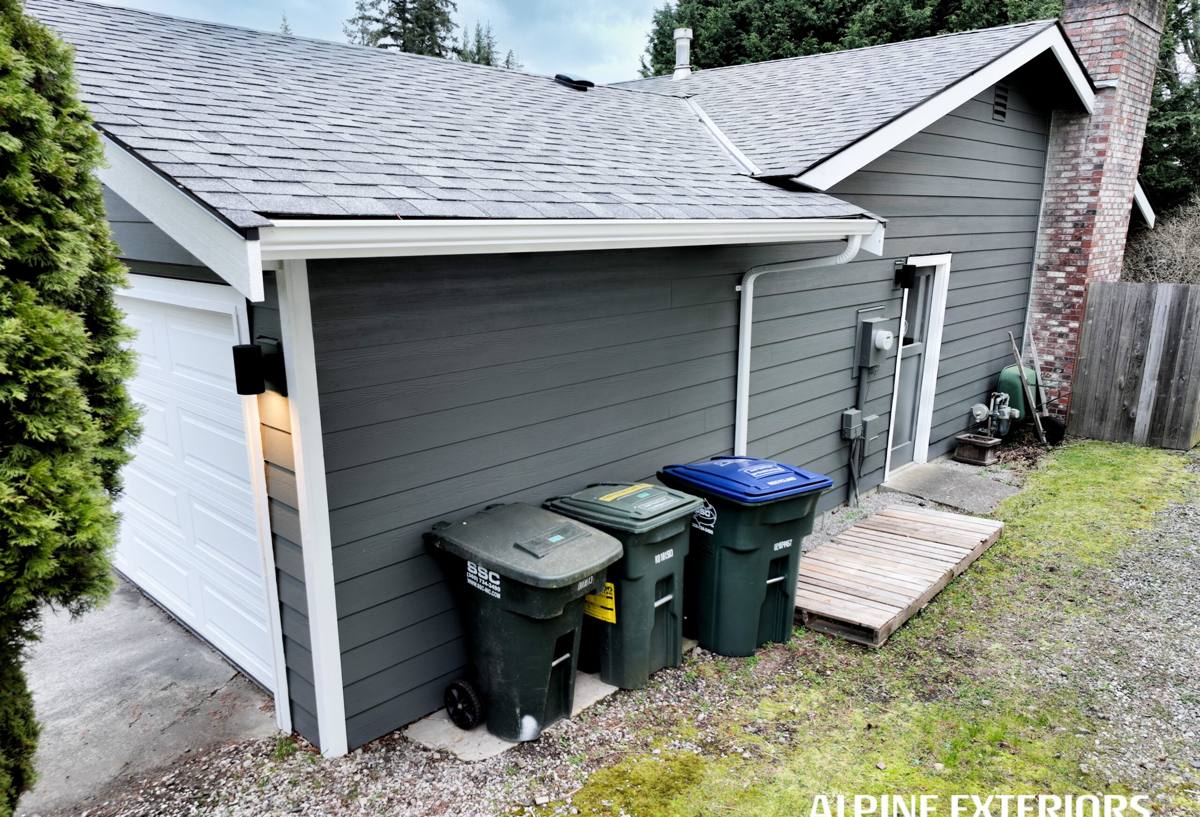
What This Climate Actually Does to Vertical Siding
Puget sits close enough to the water and low enough in the tree canopy that homes here deal with a specific combination of stresses most siding products weren't designed around:
- Salt-influenced air off the Sound accelerates corrosion on fasteners, trim, and any metal flashing that isn't rated for it — and it works on painted wood and vinyl surfaces too, dulling finishes faster than an inland home would see.
- Driving rain during fall and winter storms doesn't just hit siding — it drives sideways into every seam, joint, and batten gap that isn't flashed and gapped correctly.
- Long moss and algae season means anything that stays damp for extended stretches — north-facing walls, shaded battens, low clearance areas — becomes a growth surface if the material and the install don't shed water and dry out between storms.
Board and batten is more exposed to these stresses than plain lap siding because of the vertical joints and the battens themselves — every batten is a place water can pool, wick, or get trapped against the substrate if it's not detailed right. That's the whole ballgame with this style: get the water management right and it lasts decades; get it wrong and you're chasing rot and stained finish within a few years.
What a Correct Board & Batten Job Involves
Rainscreen Gap
Vertical siding in a wet climate should sit on a drainage gap, not directly against the weather barrier. That gap lets any water that gets behind the panels drain and lets the wall assembly dry out between storms — critical in a place where "between storms" during a Bellingham winter can be a short window.
Batten Spacing and Fastening
Battens need consistent, engineered spacing — not eyeballed — and fasteners that are rated for the material and long enough to reach solid framing, not just the panel and gap. In salt-influenced air, fastener corrosion resistance matters more than most homeowners realize; the wrong fastener shows rust streaks bleeding down the battens within a couple of seasons.
Flashing at Every Transition
Windows, doors, roof-to-wall intersections, and the bottom termination of the siding all need proper flashing and clearance — not caulk doing the job flashing should do. This is where driving rain finds its way in if a crew is moving fast and skipping steps.
Ground and Roof Clearance
Board and batten that runs too close to grade, a deck, or a roofline stays damp longer and is exactly where we see moss and premature failure on homes we're asked to look at. Correct clearance is non-negotiable, even when it means a design compromise.
Why We Only Install This in James Hardie Fiber Cement
We get asked why we won't do board and batten in cedar, vinyl panel systems, or engineered wood — reasonable question, since all three are available and all three can look good on day one.
Cedar is a real, honest material with a genuine track record, and we respect it. But it's also organic — it needs a consistent paint or stain schedule to keep water out of the wood, and battens are exactly the detail where cedar tends to trap moisture first. In a climate with this much driving rain and this long a moss season, that maintenance burden is real and ongoing, not a one-time thing.
Vinyl board and batten panels keep cost down, but they're a thin, flexible material relying on lock-together installation rather than a substantial, fastened panel. They can warp with temperature swings, they don't take paint if a homeowner wants to change color later, and impact damage means replacing a section rather than repairing it.
Engineered wood products (like LP SmartSide) improved on plain wood siding, but they're still wood-based — engineered wood strand with a resin binder — which means the failure mode when moisture gets past the finish is still rot at the edges and fastener points, just on a different timeline than solid cedar.
James Hardie fiber cement is cement, sand, and cellulose fiber — it doesn't rot, it isn't a food source for pests, and it holds paint and factory finish far longer than wood-based products because it doesn't expand and contract with moisture the way wood does. For a style like board and batten, where the battens themselves are the vulnerable detail, that difference matters more than it does on plain lap siding.
The Product We Use
We build board and batten looks using James Hardie's vertical siding panels with Hardie trim battens, specified to the HZ5 climate zone engineering James Hardie builds for the Pacific Northwest's wet, moderate-temperature conditions. Panels come with the factory-applied ColorPlus finish, which is baked on under controlled conditions rather than field-applied — a real advantage against the specific problem of UV and moisture cycling wearing down field-painted finishes on the water-facing sides of Puget homes.
| Factor | Cedar Board & Batten | Vinyl Panel System | James Hardie Fiber Cement |
|---|---|---|---|
| Moisture behavior | Absorbs; needs sealed finish maintained | Doesn't absorb, but can warp/buckle | Doesn't rot or absorb like wood |
| Finish durability | Repaint/restain every few years | Fades, can't be repainted easily | Factory ColorPlus finish, long warranty |
| Salt-air resistance | Moderate, finish-dependent | Good, but discolors over time | Strong; non-combustible, stable material |
| Batten joint risk | Highest — organic material at trap points | Lower material risk, install-dependent | Low when flashed and gapped correctly |
| Repair approach | Sand, spot-treat, or replace boards | Full section replacement | Panel replacement, color-matched |
Our Process on a Puget Job
1. Site Assessment
We look at sun exposure, tree cover, grade, roof lines, and existing moisture damage before we talk product or design. A north wall under mature trees needs different clearance and ventilation thinking than a south-facing gable that dries out fast.
2. Water Management Plan
We plan the rainscreen gap, flashing details, and batten layout before installation starts — not as an afterthought once panels are up. This is the step that determines whether the job holds up through a normal Bellingham winter, let alone a decade of them.
3. Installation to Spec
Fastener type and spacing, batten reveal consistency, and clearances all follow James Hardie's published specifications for this region's climate zone — that's what keeps the manufacturer warranty valid and keeps the wall assembly performing the way it's designed to.
4. Finish and Walkthrough
We walk the job with the homeowner, confirm caulking and touch-up points, and explain what routine maintenance actually looks like on this material — which, with Hardie, is genuinely minimal compared to wood or vinyl.
Living With Board & Batten in This Climate
Even with the right material, homeowners in a moss-prone, salt-air area should expect some basic upkeep:
- Rinse pollen, salt residue, and grime off the siding once or twice a year, especially on water-facing walls.
- Keep gutters clear so overflow isn't running down the siding face during heavy rain.
- Trim back vegetation that's shading battens and keeping them damp longer than the rest of the wall.
- Watch caulking at trim and window transitions — it's the one component that ages faster than the siding itself and is easy to refresh before it becomes a leak point.
- Address any impact damage (ladders, equipment, storm debris) promptly rather than leaving an exposed edge through a wet season.
Why a Crew That Already Works Puget Matters
Board and batten done wrong doesn't usually fail in year one — it fails in year three or four, after the battens have absorbed a couple of wet seasons' worth of driving rain and the clearance issues start showing as staining or soft spots. A crew that already works in Puget and similar Bellingham neighborhoods has already seen which walls take the weather hardest, which clearance shortcuts cause problems, and how James Hardie's HZ5 specifications actually perform here versus on paper. That's not something a crew coming from a drier region picks up on the first job.
If you're weighing board and batten for a home in Puget, we're glad to come take a look, walk the specific walls you're considering, and talk through what correct clearance, flashing, and batten layout would look like for your house — no pressure, no pitch beyond what the job actually needs. Use the form below to request a free estimate.