 Bellingham Roofing
 Blaine's Climate Puts Real Demands on Exterior Siding
Blaine sits right on the water at the northern edge of Whatcom County, and that location comes with a specific set of exterior challenges. Homes here take on salt-laden air off the bay, long stretches of driving rain blown in off the Strait, and a wet, shaded moss season that can stretch from fall through spring. None of that is unique to any one street or neighborhood in Blaine — it's the baseline condition for anything built close to Puget Sound's northern reaches. Siding that isn't engineered for this combination tends to show it early: swelling at the seams, chalking or fading finishes, and moss and algae taking hold in shaded, north-facing sections of a wall.
This is the reason we install James Hardie fiber cement siding exclusively, and it's worth explaining what that actually means for a Blaine home rather than just asserting it.
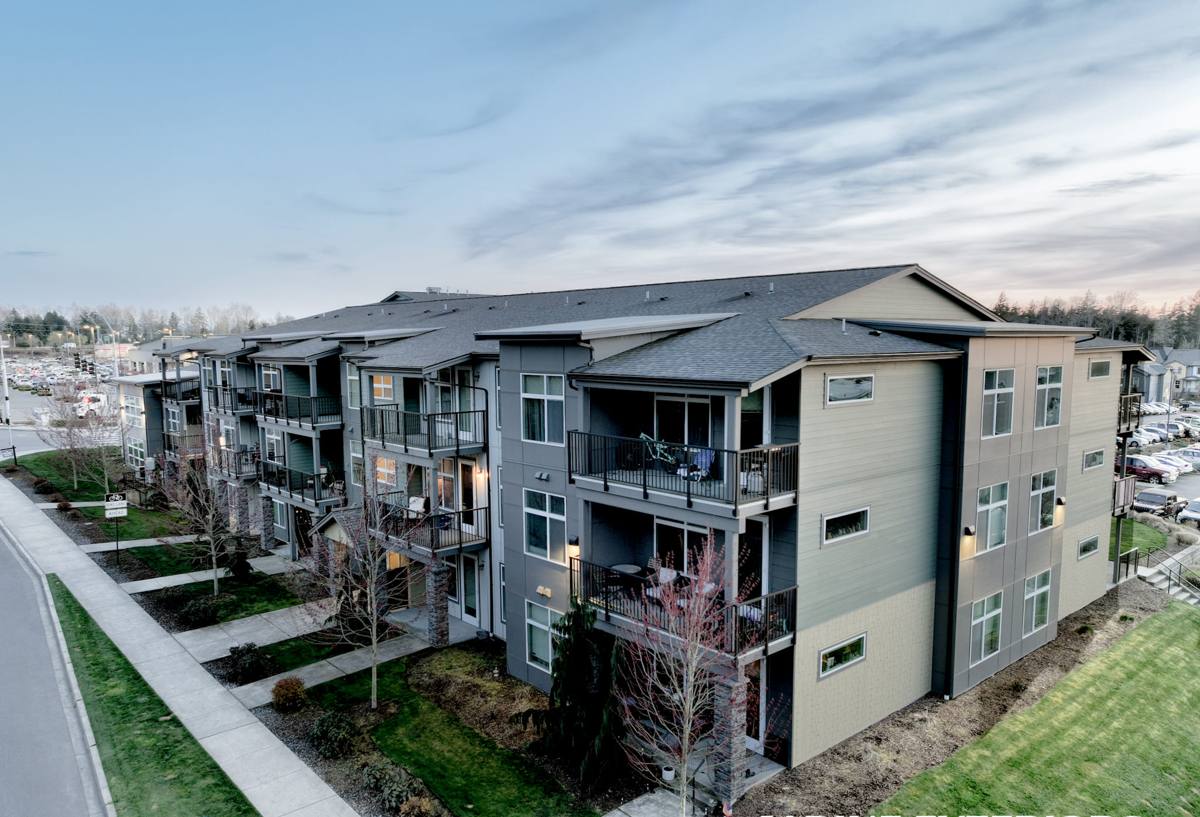
Why Salt Air, Driving Rain, and Moss Are a Tougher Combination Than They Sound
Salt Air
Salt exposure doesn't rot siding directly, but it accelerates the breakdown of paint films and finishes, and it's abrasive on fasteners and trim hardware that aren't rated for coastal use. Over years, a finish that isn't formulated to resist salt exposure will chalk, dull, and need repainting well ahead of schedule.
Driving Rain
Wind-driven rain off open water doesn't just fall on siding — it gets pushed sideways into seams, laps, and butt joints. Any siding product with poor moisture management at those joints, or installed with the wrong lap and clearance, will eventually let water behind the cladding. Once moisture is behind the siding, the problem shifts from the surface to the sheathing and framing, which is a far more expensive repair.
Moss Season
Northwest Washington's wet season keeps shaded exterior surfaces damp for extended periods, and moss and algae need exactly that — moisture and shade — to establish. Siding with a porous surface or a factory finish that breaks down early gives moss more to grip onto. A dense, factory-cured fiber cement surface with a durable finish resists that colonization far better than a raw or lightly primed material.
What a Correct Fiber Cement Installation Involves in This Climate
Fiber cement is only as good as the installation behind it. In a wet, wind-driven climate like Blaine's, the details that get rushed on a lower-quality job are exactly the details that fail first. A correct installation includes:
- A continuous, properly lapped weather-resistive barrier behind the siding — no gaps, no shortcuts around windows and penetrations
- Correctly flashed windows, doors, and any wall penetrations, with flashing that directs water out and away from the sheathing
- Manufacturer-specified fastening — the right fastener type, spacing, and depth, not just "close enough"
- Proper clearances at the foundation, roofline, and any horizontal trim so water can't wick or pool against the bottom edge of the siding
- Correctly caulked and sealed joints using products rated for the exposure, not general-purpose caulk
- Field-cut edges primed or sealed before installation, since factory finishes only protect the parts of the board that come from the factory that way
Skip any one of these and you don't get a dramatic failure right away — you get a slow one, showing up as staining, soft trim, or interior moisture problems two or three winters later. That's part of why we standardized on one product line installed one correct way, rather than juggling multiple siding systems with different tolerances for error.
Why We Install Only James Hardie
We get asked why we don't offer vinyl, LP SmartSide, cedar, or other fiber cement brands like Allura or Cemplank. Each of those products has legitimate uses, and none of them are junk — but each comes with trade-offs that matter more in a climate like Blaine's than they might elsewhere.
| Material | What It Gets Right | Trade-Off in This Climate |
|---|---|---|
| Vinyl | Low upfront cost, low maintenance in mild climates | Can warp or crack in temperature swings and wind exposure; seams are a weak point for wind-driven rain |
| LP SmartSide (engineered wood) | Lighter weight, easier to install, good impact resistance | Wood-based core is more moisture-sensitive; edge sealing and maintenance schedule are less forgiving near water |
| Cedar / primed spruce | Natural appearance, long track record | Requires ongoing refinishing and is more vulnerable to moisture and moss in shaded, damp conditions |
| Other fiber cement brands | Similar base material to Hardie in some cases | Different HardieZone-style climate engineering, factory finish process, and warranty structure — we know Hardie's system in depth and stand behind it |
| James Hardie fiber cement | Non-combustible, climate-engineered HZ product lines, factory-baked ColorPlus finish, strong transferable warranty | Higher material cost than vinyl; requires correct fastening and installation to perform as designed |
Hardie's HZ5 product line is engineered specifically for the wetter, more moderate climate zones that include Western Washington, which is a meaningful distinction from a generic fiber cement board. Combined with the ColorPlus factory finish — baked on rather than field-applied — it holds color and resists the chalking and fading that salt air and UV exposure cause on lower-grade finishes.
Our Process for a Blaine Siding Installation
The process doesn't change dramatically from house to house, but the sequencing and attention to detail matter more here than in a drier inland climate.
- Assessment: We look at existing siding condition, sheathing condition where accessible, and specific exposure factors — which walls take the most wind-driven rain, which stay shaded and damp longest.
- Tear-off and inspection: Old siding comes off and we inspect the sheathing underneath before anything new goes up. Hidden moisture damage gets addressed before it's covered again, not after.
- Weather barrier and flashing: A continuous weather-resistive barrier goes on first, with flashing detailed at every window, door, and penetration.
- Installation: Hardie boards and panels go up to manufacturer fastening specs, with correct clearances at every transition point.
- Finish detailing: Cut edges are sealed, joints are caulked with appropriate sealants, and trim is finished to shed water rather than trap it.
- Final walkthrough: We go over the finished job with the homeowner before calling it done.
Maintenance Expectations in a Salt-Air, High-Moss Climate
Fiber cement is low-maintenance compared to wood, but "low-maintenance" isn't "no-maintenance" anywhere near the water. A realistic maintenance rhythm for a Blaine home looks like:
| Task | Frequency | Why It Matters Here |
|---|---|---|
| Rinse siding with a garden hose | 1-2x per year | Clears salt residue and organic buildup before it can feed moss and algae |
| Inspect caulk joints and trim | Annually | Salt air and UV exposure break down sealants faster than in inland areas |
| Check shaded/north-facing walls for moss | Seasonally through moss season | Early moss growth is easy to remove; established growth can hold moisture against the surface |
| Confirm gutters and downspouts are clear | Fall and spring | Overflowing gutters send extra water directly onto siding and trim |
Why a Crew That Already Works Blaine Matters
Installation quality depends on understanding the specific exposure a home faces, and that's something you learn by working in a place repeatedly, not by reading a spec sheet once. A crew that regularly works Blaine and the surrounding Whatcom County coastline already has a working sense of which orientations take the worst wind-driven rain, how long moss season actually runs at this latitude, and what level of salt exposure to plan for based on proximity to the water. That translates into decisions on the job — where to add extra flashing attention, which sealants hold up, how tight to run clearances — that a crew unfamiliar with the area is more likely to get wrong on the first pass.
Local permitting and code familiarity also matters. Working consistently in Whatcom County means fewer surprises during inspection and a smoother process from start to finish.
Signs Your Current Siding May Already Be Failing
Because siding failure in this climate tends to be gradual, it helps to know what to look for before it becomes a bigger repair:
- Persistent moss or algae growth that returns quickly after cleaning
- Soft, spongy, or discolored trim boards, especially near the bottom of walls or around windows
- Visible warping, buckling, or gapping at siding seams
- Paint or finish that's chalking, peeling, or fading unevenly
- Interior signs like musty smells or staining near exterior walls
- Caulk joints that are cracked, shrunk, or pulling away from the surface
Any one of these on its own isn't necessarily an emergency, but a combination is usually a sign that moisture is getting past the siding rather than being shed by it.
Get a Straight Answer About Your Blaine Home
Every home's exposure is a little different depending on how close it sits to the water and how much shade it gets through the wet months. If you're dealing with aging siding, visible moss, or you're just planning ahead for a Blaine home that needs to hold up to the coastal climate, we're happy to take a look and give you a straightforward, no-pressure estimate — no obligation, just an honest read on what your siding actually needs.