 Bellingham Roofing
 Why Blaine Decks Take More Punishment Than Most
Blaine sits right up against the water at the top of Whatcom County, and that location comes with a specific set of problems for anything built outdoors. Salt-laden air off the Strait of Georgia and Semiahmoo Bay works on metal fasteners and hardware year-round, not just during storms. Add in driving rain that comes in sideways during winter fronts, and a moss season that can run from October through May in shaded or north-facing yards, and you've got a climate that's genuinely harder on decking than most of the country deals with.
Wood decking in this environment needs constant attention — sanding, staining, sealing, and re-sealing every year or two just to keep moisture and salt from getting into the grain. Composite decking was designed for exactly this kind of exposure, but only when it's installed correctly. A composite deck put in without attention to drainage, ventilation, and fastener choice will still fail early in a place like Blaine — it just fails differently than wood does, usually with hidden framing rot under boards that look fine on the surface.
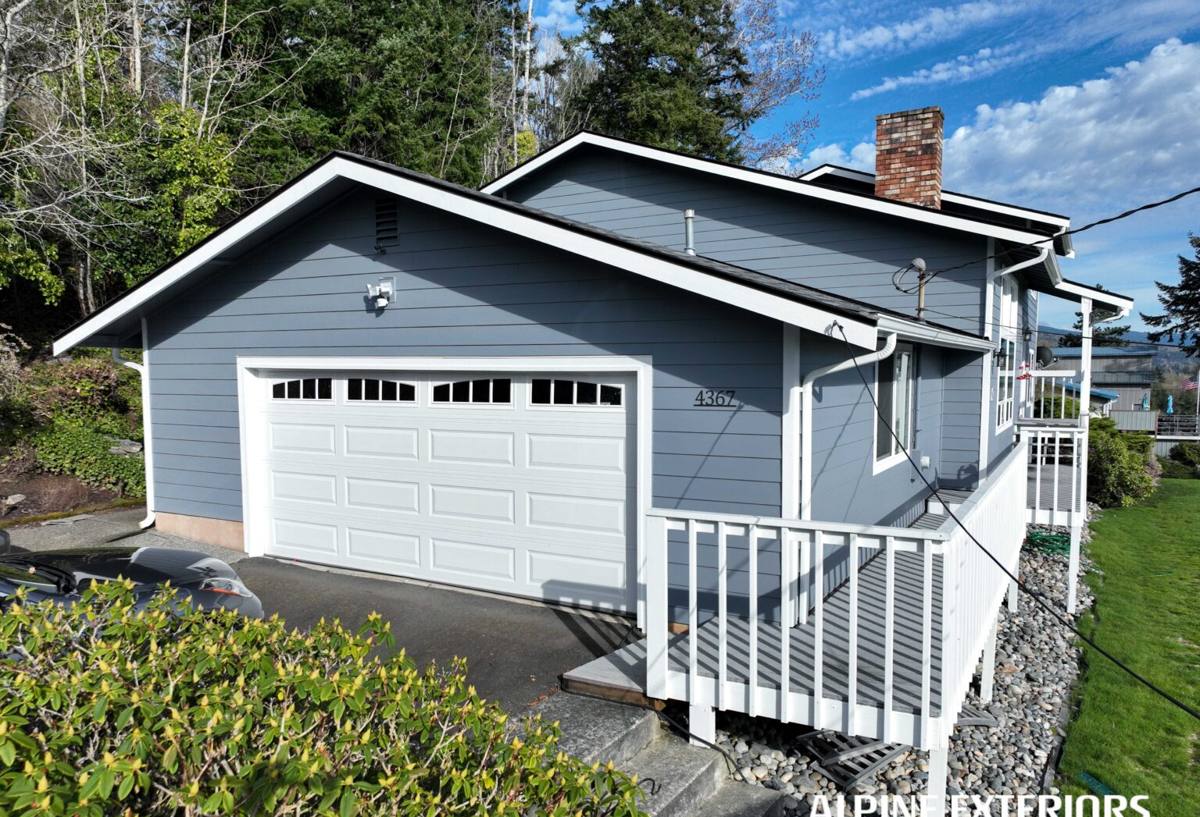
What Salt Air and Moss Actually Do to a Deck
Salt Air and Metal
Salt in the air accelerates corrosion on anything ferrous — screws, joist hangers, brackets, even some lower-grade stainless fasteners over enough years. Once a fastener starts to corrode, it weakens its grip on the board and can streak the decking surface with rust stains. This is why fastener spec matters more in Blaine than it would twenty miles inland.
Driving Rain and Standing Water
Wind-driven rain doesn't just fall on a deck, it gets pushed into board gaps, under rail posts, and against ledger connections at the house. If water has nowhere to go, it sits in the substructure and against the underside of boards. Composite board faces resist moisture well, but the wood or composite framing underneath, and the fasteners holding it together, are only as protected as the drainage plan around them.
Moss and Algae
Blaine's long wet season and plenty of tree-shaded lots mean moss and algae get a real head start on any deck surface that stays damp. Moss holds moisture against the board surface longer, which matters most at butt joints, around post bases, and in low-traffic corners that don't get foot traffic or sun to dry them out.
Why Composite Makes Sense for This Climate
Composite decking — a blend of wood fiber and recycled plastic, often with a protective cap layer — doesn't absorb water the way solid wood does, so it isn't as vulnerable to the swelling, splitting, and rot cycle that wood goes through in a wet climate. It also doesn't need annual staining or sealing, which matters to homeowners who don't want a yearly maintenance chore tied to the weather window.
That doesn't mean composite is maintenance-free or immune to this climate. Uncapped composite boards can still absorb some moisture at cut ends and show mold or mildew growth if they're not cleaned periodically. Capped composite (with a polymer shell around the core) handles moisture and staining better, which is why we lean toward capped products for waterfront and near-waterfront properties like most of what we see in Blaine.
What a Correct Composite Deck Install Involves
Framing and Fasteners
We frame with pressure-treated lumber rated for ground contact where it's called for, and we use stainless steel or heavily coated fasteners and hardware throughout — not just at the visible surface. In a salt-air environment, the connections you can't see (joist hangers, ledger bolts, post base hardware) need the same corrosion resistance as the screws holding down the decking boards.
Ledger Flashing and House Connection
Where the deck attaches to the house, proper flashing is what keeps driving rain from working its way behind the siding and into the wall assembly over time. This is one of the most common places we find problems on older decks we're asked to replace — a ledger board that was lag-bolted straight to the house with no flashing, which let water track behind it for years.
Joist Protection
We wrap or tape the tops of framing lumber before decking goes down. This keeps water from pooling on top of the joists and soaking into the wood every time it rains, which in Blaine is often. It's a small step that adds real years to the life of the substructure underneath a composite deck.
Drainage and Airflow Underneath
Low-clearance decks and decks built close to grade need a real plan for water to get out from underneath — proper slope away from the house, gaps where needed, and enough ventilation that the underside of the deck can dry out between rain events instead of staying damp all winter.
Board Spacing and Fastening
Composite boards expand and contract with temperature more than people expect, and gapping has to account for that plus drainage. Hidden fastener systems keep the surface clean and reduce the number of exposed screw heads that could eventually show rust streaks, but they have to be installed to the manufacturer's spec or the boards can loosen over a few seasons of freeze-thaw and wet-dry cycling.
Comparing Decking Options for a Blaine Property
| Material | Moisture Behavior | Maintenance | Typical Lifespan Here |
|---|---|---|---|
| Pressure-treated wood | Absorbs water, prone to splitting/checking in wet-dry cycles | Annual sealing/staining recommended | 10-15 years before major repair |
| Uncapped composite | Resists rot but can absorb moisture at cut ends and fastener holes | Periodic cleaning, watch for mold at shaded spots | 15-20 years |
| Capped composite (PVC shell) | Best moisture and stain resistance of the group | Occasional washing, no sealing needed | 20-25+ years |
| Solid PVC decking | Doesn't absorb moisture at all | Low; can show more flex in temperature swings | 25+ years |
We don't push one product line over another — the right call depends on budget, how exposed the deck is to weather, and how the homeowner wants it to look. What we do insist on is capped or fully-encapsulated boards for anything near open water or heavy salt exposure, because uncapped product simply doesn't hold up as well in that specific setting.
Our Process for a Blaine Composite Deck
- Site evaluation. We look at sun exposure, drainage slope, proximity to water, and the condition of any existing structure before quoting anything.
- Permit check. Deck permitting requirements vary by jurisdiction and by size/height of the structure — we handle this so it isn't a surprise mid-project.
- Demo and framing. Old decking and any compromised framing comes out; new framing goes in with corrosion-resistant hardware and proper flashing at the house.
- Joist protection and drainage prep. Tape or wrap on framing tops, correct slope, and ventilation gaps before a single deck board goes down.
- Decking install. Boards fastened per manufacturer spec, with attention to gapping for both expansion and water runoff.
- Railing, stairs, and trim. Finished with matching or complementary composite trim and code-compliant railing.
- Final walkthrough. We go over cleaning and care specific to the product installed before we consider the job done.
Living With a Composite Deck in Blaine's Climate
Composite cuts the maintenance load way down compared to wood, but "low maintenance" isn't "no maintenance," especially this close to the water. A few habits keep a composite deck looking and performing the way it should through Whatcom County's wet season.
- Rinse or sweep off standing debris and organic buildup regularly, especially in shaded corners where moss gets a foothold first
- Wash the surface with mild soap and water once or twice a year to prevent algae film from setting in
- Check railing posts and stair connections annually for any looseness — salt air corrosion shows up at hardware before it shows up on the boards
- Keep gutters and downspouts near the deck clear so roof runoff isn't dumping extra water onto or under the deck
- Trim back overhanging branches to cut down on shade and leaf litter that both feed moss growth
- Address any small deck-level drainage issue (a low spot holding water) before it becomes a framing problem
Why It Matters That We Already Work in Blaine
A lot of what separates a composite deck that lasts 20+ years from one that needs framing repair in year eight comes down to decisions made before the decking boards ever go down — flashing details, fastener grade, drainage slope. Those decisions should account for the specific conditions of the site, not a generic install spec written for a drier part of the country.
We work throughout Bellingham and Whatcom County, including Blaine, and we see the same salt-air corrosion patterns, the same moss growth habits, and the same driving-rain exposure on job after job here. That familiarity means we're not guessing at what this climate does to a deck over time — we're building around what we've already seen it do.
Get a Straightforward Estimate
If you're planning a new composite deck or replacing an aging wood deck in Blaine, we're happy to come take a look, walk the site with you, and give you an honest read on what the job needs. There's no pressure and no obligation — just a clear estimate based on your property and the way this coastline actually treats a deck.