 Bellingham Roofing
 Building Decks in Birchwood: What the Climate Demands
Birchwood sits close enough to the water and the hills around Bellingham that its decks take a particular kind of beating. Salt-tinged air moving in off Bellingham Bay, driving rain that comes sideways more often than straight down, and a moss season that can stretch from October well into May — these aren't abstract weather patterns, they're the reason certain decks in this neighborhood last twenty years and others need major repair after eight. A deck built without those specifics in mind is a deck built for a different climate.
Whatcom County's marine climate means moisture isn't an occasional problem to plan around — it's a constant condition the deck has to live in year-round. That changes decisions at every stage, from the footings in the ground to the fasteners holding the top boards down.
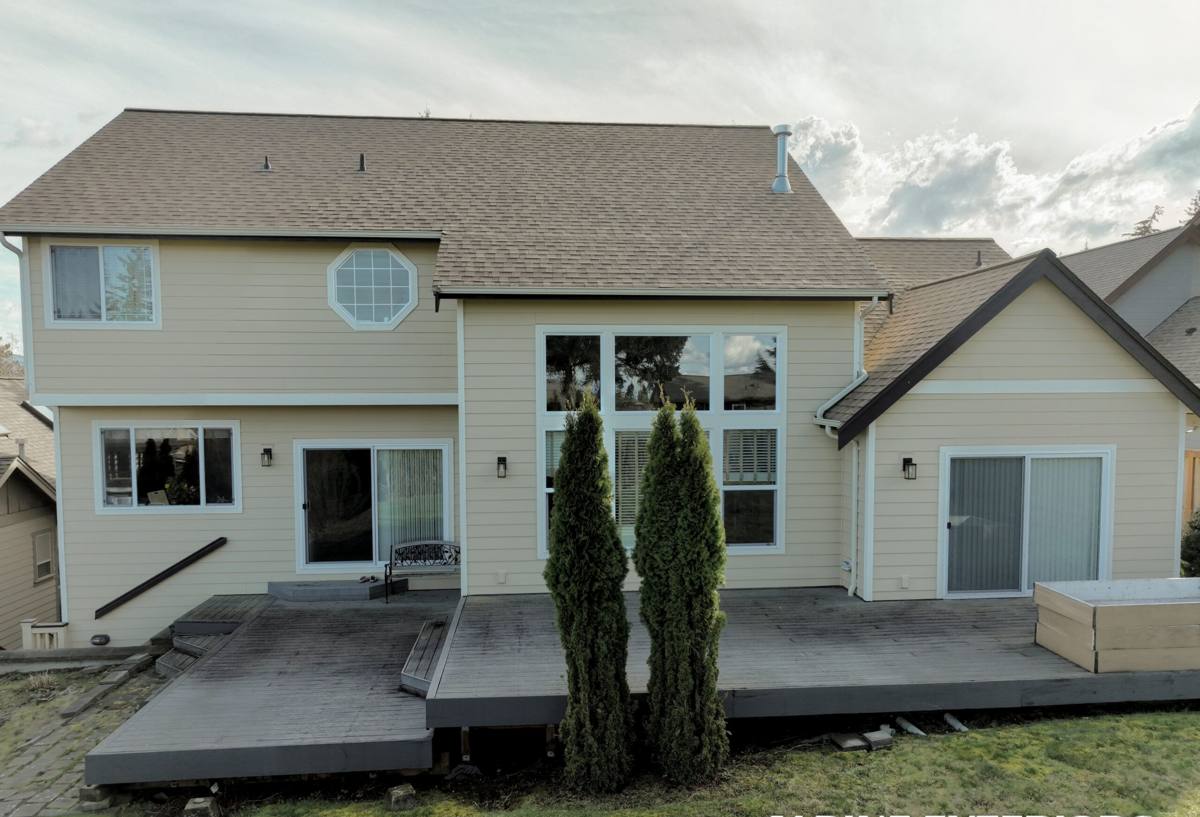
What Birchwood Homes Actually Need From a Deck
Drainage Comes First
Any deck we build or rebuild in this neighborhood gets designed around water movement first, appearance second. That means proper board spacing and slope so rain sheds instead of pooling, joist framing that doesn't trap runoff against end grain, and ledger board flashing that actually keeps water out of the house wall rather than just directing it downward on the surface. A deck that looks fine in July and rots at the ledger by the third winter usually failed at this stage, not at the finish stage.
Moss and Algae Resistance
The long damp season here means anything horizontal — decking boards, stair treads, railing caps — will grow moss and algae if it can't dry out between rains. We plan for airflow underneath the deck, gaps that let boards breathe, and surface materials that don't hold a film of moisture on top. This matters as much for safety as looks; damp, mossy decking gets slick, and stairs are where that shows up first.
Salt Air and Hardware
Being close to the bay means fasteners, brackets, and connectors are exposed to a slightly corrosive environment even when they're not directly coastal. We spec hardware rated for exterior and coastal exposure rather than standard interior-grade fasteners, because a deck is only as strong as its weakest connection, and a corroded joist hanger is invisible until it isn't.
Framing and Structure: The Part No One Sees
The framing underneath is where a deck's real lifespan gets decided. In this climate we pay close attention to:
- Footings sized and set below frost depth and on stable, well-drained soil
- Ledger attachment with proper flashing so the house wall stays sealed, not just the deck surface
- Joist spacing appropriate to the decking material chosen, since composite and wood have different span requirements
- Corrosion-resistant structural hardware throughout — hangers, post bases, and fasteners
- Adequate ventilation and clearance underneath so the structure can dry out between wet spells
None of this is visible once the deck is finished, which is exactly why it's worth asking a contractor directly how they handle it before work starts.
Decking Material Choices for This Climate
There's no single "best" decking material — there's a best fit for a given home, budget, and how much upkeep the owner wants to take on. Here's how the common options actually perform in Bellingham's conditions:
| Material | Moisture & Moss Behavior | Maintenance | Typical Lifespan Here |
|---|---|---|---|
| Pressure-treated wood | Absorbs moisture, needs sealing to resist moss and swelling | Annual cleaning, periodic sealing/staining | 10-15 years with upkeep |
| Cedar | Naturally moisture-resistant, still needs finish maintained to prevent graying and moss | Regular cleaning and refinishing | 15-20 years with upkeep |
| Composite decking | Doesn't absorb water or rot, but can still grow surface algae if airflow is poor | Periodic washing, no sealing or staining | 25-30+ years |
| PVC decking | Fully moisture-resistant, sheds surface growth well with occasional cleaning | Lowest — occasional washing | 25-30+ years |
For homes in Birchwood specifically, we lean toward recommending composite or PVC decking when the budget allows, simply because they remove moisture absorption from the equation entirely. Wood and cedar decks can still be excellent choices — they just require an honest conversation about the maintenance commitment before installation, not after the first mossy spring.
Railings, Stairs, and Surface Safety
Railings and stair treads see more direct weather exposure than the main deck surface in many layouts, and they're also the first thing to become a safety issue if moss builds up. We factor in:
- Railing materials and post connections rated for continuous outdoor exposure
- Stair tread spacing and material that resists holding standing water
- Baluster spacing and height that meets current code, not just what was standard when an older deck was originally built
If you're replacing an existing deck, this is also the point where we flag any code changes since the original build — height requirements and guard spacing have shifted over the years, and a rebuild is the right time to bring things current.
Our Process for Custom Deck Projects in Birchwood
- On-site assessment — we look at drainage on the lot, sun and shade exposure, existing structure if there is one, and how the space will actually be used.
- Design and material selection — sized and laid out for the home, with material recommendations based on budget and maintenance preference, not a one-size pitch.
- Permitting — decks above certain heights or attached to the home typically require permitting through the local jurisdiction; we handle that process rather than leaving it to the homeowner.
- Demolition and site prep (if replacing an existing deck) — including a look at what the old structure tells us about how the new one should be built differently.
- Framing — footings, ledger, joists, and hardware built to hold up to the conditions described above.
- Decking, railing, and stairs — installed to the chosen material's specifications, not generic assumptions.
- Final walkthrough — checking fasteners, railing security, and drainage before we call the job done.
Why a Crew That Already Works Birchwood Matters
A deck built by a crew unfamiliar with this specific stretch of Bellingham's climate tends to make the same predictable mistakes: standard fastener specs instead of corrosion-resistant hardware, decking laid without enough airflow underneath, or ledger flashing detailed for a drier climate. None of those show up on day one. They show up in year three or four, usually as soft spots, loose railings, or a green film that won't come off no matter how often it's power-washed.
Working regularly in this neighborhood means we already know how the local moisture pattern behaves against a north-facing deck versus a south-facing one, which lots tend to hold water longer, and which material choices actually pay off here versus which ones look good on paper. That's not something a contractor coming from a drier region picks up on their first Birchwood job.
Maintenance Once Your Deck Is Built
Even a well-built deck in this climate needs some seasonal attention. A simple, honest checklist:
- Clear leaves and debris from between boards and off railings before the wet season sets in
- Wash the surface at least once a year to remove early moss and algae growth before it establishes
- Check fastener heads and railing connections annually for looseness or corrosion
- Re-seal or re-stain wood and cedar decking on the schedule the finish manufacturer recommends — don't wait until it looks gray
- Keep gutters and downspouts near the deck clear so runoff isn't dumping extra water onto or under the structure
A five-minute walk-around each fall catches most problems while they're still cheap to fix.
Cost Factors Worth Understanding Upfront
Deck pricing varies with size, height off the ground, material, and site access, so a firm number only comes from an on-site look. That said, a few factors consistently move the price more than homeowners expect:
| Factor | Why It Matters |
|---|---|
| Decking material | Composite and PVC cost more upfront than wood, but lower long-term maintenance |
| Height and stairs | Elevated decks need more substantial framing, footings, and guard railing |
| Site access | Sloped or tight-access lots increase labor time for footings and material handling |
| Existing structure removal | Tearing out and disposing of an old deck adds cost before the new build starts |
| Permitting requirements | Attached and elevated decks typically require permits, adding time and a modest fee |
We'd rather walk through these factors on-site and give you a real range than quote a number over the phone that won't hold up once we see the lot.
If you're planning a new deck or replacing one that's past its prime in Birchwood, we're happy to take a look and talk through what makes sense for your home and budget. Reach out for a free, no-pressure estimate using the form below.