 Bellingham Roofing
 Birch Bay sits right up against the Salish Sea in northern Whatcom County, close enough to the water that its roofs take a different beating than homes further inland. A windstorm off the water doesn't just test a roof's fasteners — it drives rain sideways into laps and flashing that would stay dry in a calmer setting, and it does that on top of a climate that already keeps roofs damp and mossy for a good part of the year. Storm damage repair here isn't a one-size job. It's patching or replacing what a specific storm broke, on a roof that was already working against salt air and moisture before the wind ever picked up. This page covers what storm damage actually looks like on a Birch Bay roof, what a correct repair involves, and how our process works from first call to final walk-through.
What Makes Storm Damage Different in Birch Bay
Three conditions specific to this stretch of coastline shape both how storms damage a roof and how that damage needs to be repaired.
Salt Air
Airborne salt off the water speeds up corrosion on anything metal — nail heads, flashing, vent stacks, gutter hardware. A roof that took wind damage in a storm often has fasteners and flashing that were already partway toward failing from years of salt exposure. A repair that just swaps out the obviously bent or missing piece without addressing nearby corroded hardware tends to need a second repair sooner than it should.
Wind-Driven Rain
Storms coming off the water push rain sideways, not straight down. That matters for repair work because wind-driven rain finds its way into gaps and lifted edges that a straight-down rain would never reach. A shingle that's lifted at one corner from a windstorm can let water track sideways under several courses before it ever shows up as a stain inside the house, which is why a repair has to account for the actual path water takes here, not just the spot that looks damaged from the ground.
Long Moss Season
Whatcom County's damp, shaded conditions support moss and algae growth across most of the year, and a storm-damaged roof accelerates that problem. Once shingles are lifted, cracked, or missing, moisture sits against the exposed wood and underlayment instead of shedding off, and moss takes hold faster on a compromised section than on an intact roof. A repair that closes up the physical damage but leaves the area primed for moss growth hasn't really solved the underlying problem.
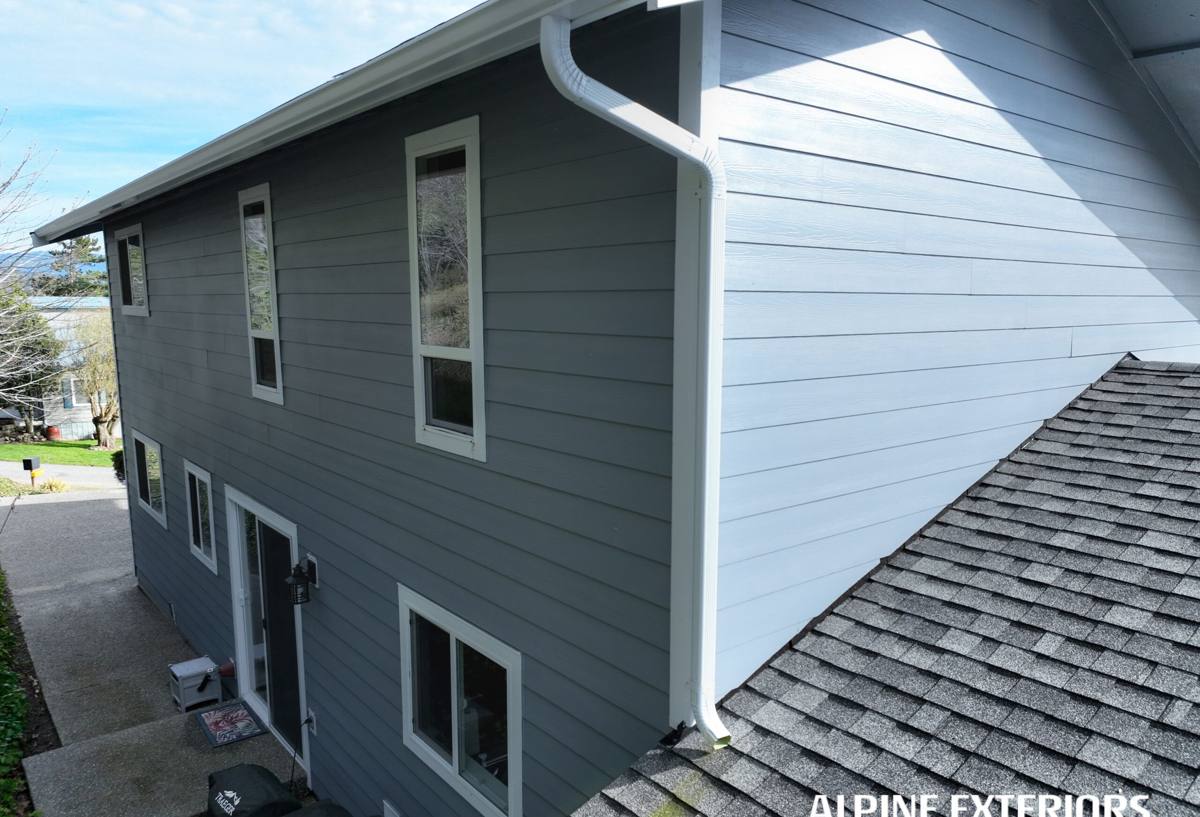
What a Storm Actually Does to a Birch Bay Roof
Not all storm damage looks dramatic. Some of the most common damage we repair after wind events in this area includes:
- Shingles lifted, cracked, or torn loose along ridges and exposed edges where wind uplift is strongest
- Flashing bent, pulled loose, or separated at chimneys, skylights, and roof-to-wall transitions
- Granule loss and surface wear from wind-driven debris and repeated flexing during gusts
- Gutters and downspouts pulled loose or dented, which redirects water back toward the roof edge instead of away from it
- Punctures or soft spots from tree limbs and wind-carried debris
- Underlayment exposure where shingles are missing outright, leaving the deck directly exposed to rain
Most of these start as a small, localized problem. Left through another storm cycle or another moss season, they tend to spread into a larger repair or a full section replacement.
Signs You Need a Storm Damage Inspection
Not every homeowner sees roof damage right after a storm — a lot of it isn't visible from the ground. These are the signs worth checking for, or having us check for, after any significant wind event:
- Shingles or shingle pieces in the yard, gutters, or against the base of the house
- Visible gaps, lifted edges, or discoloration on roof slopes exposed to the prevailing wind
- New or worsening water stains on ceilings or interior walls
- Daylight visible through the roof deck from inside the attic
- Gutters or downspouts noticeably bent, sagging, or detached
- A sudden increase in granules collecting in gutters compared to normal light shedding
- Moss or algae appearing faster than usual in one specific area, which can point to underlying damage holding moisture
If you're not sure whether what you're seeing is storm damage or normal wear, that's a reasonable thing to have looked at rather than guessed about — a roof leak that gets ignored through one more wet season is a lot more expensive than an inspection.
Temporary Repairs vs. a Correct Permanent Fix
After a bad storm, the priority is usually stopping active water intrusion, and sometimes that means a temporary fix comes first. It's worth understanding the difference between the two.
| Approach | What It Does | When It Makes Sense |
|---|---|---|
| Emergency tarp or temporary patch | Stops active leaking quickly using a tarp or temporary sealant over the damaged area | Right after a storm, when materials or scheduling for a full repair aren't immediately available |
| Spot repair | Replaces the specific damaged shingles, flashing, or underlayment section with matching materials properly integrated into the surrounding roof | When damage is localized and the rest of the roof is in reasonably good condition |
| Section or full replacement | Removes and replaces a larger area (or the whole roof) when damage is widespread or the existing roof was already near the end of its service life | When storm damage compounds pre-existing wear, or repeated storms have hit the same roof multiple times |
A temporary patch is a stopgap, not a fix — it buys time, and it should always be followed by a proper repair before the next significant rain event. We'll tell you honestly which category a given roof falls into rather than defaulting to the most expensive option.
What a Correct Storm Damage Repair Involves
The part of a repair a homeowner can see — new shingles or a patched section — is only as good as the work underneath it.
Tear-Off and Inspection of the Damaged Area
We remove the damaged material and any surrounding shingles that were compromised, not just the piece that's obviously missing or torn. This is also when we check the deck underneath for soft spots or water damage that may have developed while the roof was compromised — that needs to be addressed before new material goes back on, or the repair won't hold.
Flashing and Underlayment
Given how often storm damage shows up at flashing points and roof transitions, we pay close attention to flashing condition during every repair, not just the underlayment directly under the visible damage. We use corrosion-resistant flashing suited to salt air exposure, and we integrate new underlayment properly with what's already there rather than relying on sealant alone to bridge the gap.
Matching Materials
Where possible, we match the repair to the existing roofing material so the section blends in and performs consistently with the rest of the roof. When an exact match isn't available — which happens with older roofs — we'll walk through the closest reasonable option and be upfront about any difference in appearance.
Our Storm Damage Repair Process
- Initial contact and triage. We ask what you're seeing and whether there's active leaking, so we know if a temporary measure is needed before a full inspection can happen.
- On-site inspection. We assess the full roof, not just the obviously damaged spot, including flashing, ventilation, and deck condition where accessible.
- Documentation. We photograph and document the damage, which is useful both for our own repair plan and for any insurance claim you may file.
- Repair estimate. We go over what needs to happen, the materials involved, and honest cost expectations before any work starts.
- Repair work. Damaged material is removed, the deck and underlayment are addressed as needed, and new material is installed and integrated with the existing roof.
- Final walk-through. We review the completed repair with you and go over what to watch for going forward.
Working With Your Insurance Claim
Many storm damage repairs are covered in part by homeowners insurance, though coverage details vary by policy and by the cause and extent of the damage. We're glad to provide the documentation and photos our inspection generates so you have what you need to file a claim, and we can talk through what we're seeing in plain terms if your adjuster has questions. We're not able to guarantee what any specific policy will or won't cover — that's between you and your insurer — but we won't leave you to sort out the roofing side of that conversation on your own.
Cost Factors for Storm Damage Repair in Birch Bay
Every repair is different, but these are the main variables that move a storm repair estimate up or down. We don't quote a number without seeing the damage in person, since access and extent can shift a bid significantly.
| Factor | Why It Matters Here |
|---|---|
| Extent of damage | A single lifted shingle repairs very differently than a section torn loose across a full slope |
| Underlying deck condition | Water that got in before the repair can mean hidden rot that adds cost once uncovered |
| Flashing involvement | Damage at chimneys, skylights, or wall transitions takes more time and detail than open-field shingle damage |
| Material matching | Older or discontinued roofing materials can be harder to match, sometimes requiring a broader repair area |
| Roof pitch and access | Steep or hard-to-reach areas add labor and safety setup time |
| Timing after the storm | Repairs handled promptly generally cost less than damage that's been exposed to additional weather and moss growth |
Why Hire a Crew That Already Works Birch Bay
A roofer who mostly works drier, more sheltered inland jobs isn't wrong about roofing in general — they're just working from a different set of defaults. Fastener and flashing specs that hold up fine on a typical inland home are often undersized for what a waterfront storm throws at a Birch Bay roof, and a repair built to those lighter defaults tends to fail again sooner. A crew that already works this stretch of Whatcom County has seen which repairs actually hold up out here through another windstorm and another wet winter, not just which ones look right on the day the work is finished.
There's also the practical matter of response time. Storm damage that sits exposed for days while a contractor works through a backlog somewhere else gives water and moss more time to do additional damage. A crew that already has a presence in this area can generally get eyes on a damaged roof and a temporary fix in place faster, which matters more here than in a climate where a delayed repair doesn't carry the same risk.
If a recent storm left your roof with visible damage — or you're just not sure and want a second set of eyes on it — we're glad to take a look. Reach out for a free, no-pressure estimate using the form below.