 Bellingham Roofing
 Birch Bay's Coastal Climate Is Hard on Siding
Birch Bay sits right on the water, and that location cuts both ways. The same shoreline that makes it a great place to live also means homes here take a beating that inland Bellingham properties don't see nearly as much. Wind off the water carries salt spray onto siding, trim, and window frames. Driving rain — the kind that comes in sideways during a winter storm — finds every gap in a siding system that wasn't installed with real attention to flashing and water management. And Whatcom County's long, damp shoulder seasons mean moss and algae have months at a time to take hold on any surface that stays shaded and wet.
None of that is unusual for the region, but it adds up differently on a house facing open water than it does a few miles inland. Siding that would hold up fine in a sheltered Bellingham neighborhood can fail early in Birch Bay if it wasn't chosen and installed with the coastal exposure in mind.
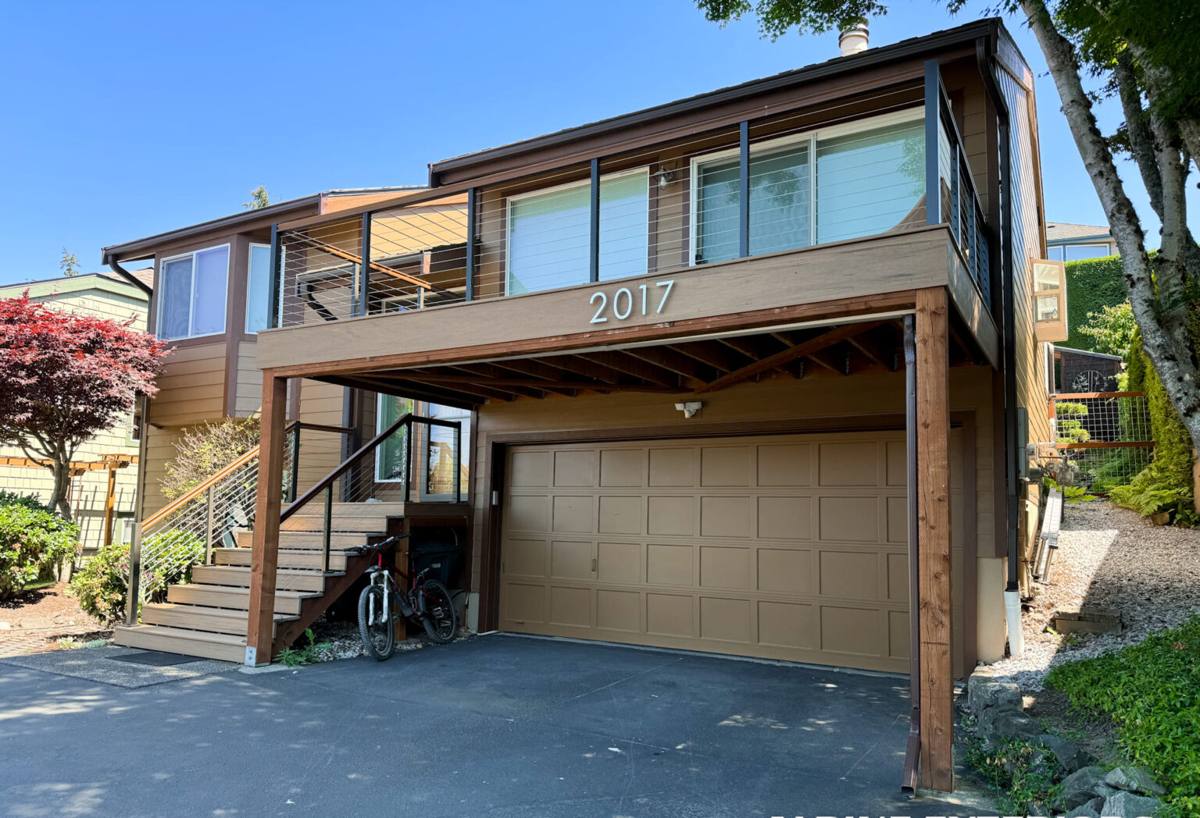
What Siding Actually Needs to Do Here
Handle Moisture Without Trapping It
The bigger risk with coastal PNW weather usually isn't a single storm — it's the cumulative effect of siding staying damp for days at a stretch. Materials and installation details that let water in, or that trap moisture behind the cladding, lead to rot, mold, and soft sheathing long before the siding itself looks obviously bad from the street.
Resist Salt Air Without Constant Upkeep
Salt-laden air accelerates corrosion on fasteners, flashing, and any metal trim, and it can dull or degrade finishes that aren't built to take it. A siding system near Birch Bay's shoreline needs corrosion-resistant fasteners and a factory finish that isn't going to chalk, fade, or peel after a few salty winters.
Stand Up to Wind-Driven Rain and Gusts
Open water means fewer windbreaks. Siding panels, trim, and joints need to be rated and fastened for real wind exposure, not just installed to the minimum spec that would pass in a more sheltered spot.
Why We Standardize on James Hardie Fiber Cement
We install James Hardie fiber cement siding exclusively — not vinyl, not LP SmartSide or other engineered wood products, not primed spruce or cedar, and not other fiber cement brands like Cemplank or Allura. That's a deliberate standard, not a sales preference, and it matters more in a place like Birch Bay than it would somewhere drier.
Vinyl can warp, crack in cold snaps, and its seams give wind-driven rain an easy path inward; it also isn't repainted, so once it fades from UV and salt exposure, the only fix is replacement. Engineered wood products use wood fiber as their base material, which means they depend heavily on an intact factory coating to keep moisture out — any breach in that coating, from a nail gun mishap to a scratch during handling, opens the door to swelling and rot in a climate this wet. Traditional wood and primed spruce siding need regular repainting and are naturally more vulnerable to moisture, insects, and rot, all of which are harder to manage on a shoreline lot.
James Hardie fiber cement is non-combustible, dimensionally stable in swings between soaked and dry, and finished at the factory with ColorPlus technology — a baked-on finish that holds up to UV and salt exposure far longer than field-applied paint. Hardie also builds region-specific product lines engineered for different climate demands, backs the product with a strong transferable warranty, and has a long track record in coastal Pacific Northwest markets specifically. When it's installed to spec, it's the material we're comfortable standing behind on a house that takes the kind of weather Birch Bay gets.
What Correct Installation Involves
Fiber cement siding is only as good as the installation underneath it. The panels themselves are engineered to perform, but a huge share of the siding failures we get called out to inspect trace back to installation shortcuts, not the material. On a Birch Bay project, we pay particular attention to:
- A properly lapped weather-resistive barrier behind the siding, with all penetrations (vents, pipes, hose bibs) flashed before panels go up
- Correct clearance between the bottom of the siding and grade, decks, patios, and roof lines, so water can't wick up into the panel edges
- Stainless steel or hot-dipped galvanized fasteners driven to Hardie's specified depth and pattern — critical near salt air, where the wrong fastener corrodes and stains or loosens over time
- Butt joints and panel seams caulked and treated exactly to Hardie's installation instructions, not just "close enough"
- Corner posts, trim, and window and door flashing detailed to shed water outward at every layer, not just at the surface
- Field-cut panel edges sealed before installation, since a raw cut edge is the fastest way for moisture to get into the substrate
Skip any one of these and the siding can still look fine for a year or two — the problems show up later, as staining, soft spots, or streaking near joints, usually right where water was quietly getting behind the panel the whole time.
Choosing the Right Hardie Product Line
Hardie builds different HZ (HardieZone) formulations for different climate demands. For an exposed, moisture-heavy, salt-air location like Birch Bay, we look closely at which HZ specification and panel profile actually fits the exposure on that specific wall — a south-facing wall catching direct weather off the water isn't the same problem as a sheltered side yard, even on the same house.
Our Process for a Birch Bay Siding Project
- On-site assessment. We walk the exterior, note wind and rain exposure by elevation, check existing siding and trim for water damage, and look at the sheathing condition where we can access it.
- Tear-off and substrate check. Old siding comes off and we inspect the sheathing underneath for rot or soft spots before anything new goes up — this is often where hidden problems from a prior installation surface.
- Weather barrier and flashing. We install or verify the weather-resistive barrier and flash every penetration, window, door, and transition before the first panel goes on.
- Panel installation to Hardie spec. Panels, fasteners, joints, and clearances are installed following James Hardie's published instructions for the product and exposure.
- Trim, caulking, and finish detail. Corner boards, trim, and joints are finished and sealed so water sheds outward at every layer.
- Final walkthrough. We review the finished job with the homeowner and point out anything worth knowing for long-term upkeep.
Fiber Cement Compared to Other Siding Materials Here
| Material | Salt Air / Moisture Behavior | Maintenance | Typical Lifespan in This Climate |
|---|---|---|---|
| James Hardie Fiber Cement | Non-combustible, dimensionally stable, factory finish resists fading and salt exposure | Occasional rinse; no repainting needed for years | Decades, with manufacturer warranty backing |
| Vinyl | Seams allow wind-driven rain intrusion; can warp or crack in cold snaps | Low, but cannot be repainted once faded | Shorter in high-wind, high-UV coastal exposure |
| Engineered Wood (e.g. LP SmartSide) | Wood-fiber base depends on intact factory coating; vulnerable if coating is breached | Coating and edge sealing need monitoring | Variable; sensitive to installation quality |
| Cedar / Primed Wood | Naturally moisture and insect vulnerable; needs an intact paint film | Regular repainting and sealing required | Shorter without disciplined maintenance |
This is a general comparison, not a claim that every product in these categories fails — it's meant to show why the trade-offs tilt toward fiber cement specifically in a location with this much salt air and moisture.
Living With Moss and Salt After Installation
Correct installation solves most of the problem, but Birch Bay's climate means siding still needs a little attention over time. A yearly rinse-down removes salt residue and slows moss and algae growth, especially on shaded, north-facing walls. Keeping gutters and downspouts clear prevents water from sheeting down the siding face during heavy rain. We'd also caution against pressure-washing fiber cement siding aggressively — a gentle rinse is usually enough, and high-pressure spray can drive water behind trim and caulked joints instead of just cleaning the surface. Checking caulked joints and trim periodically for cracking is worth doing, since caught early, a resealed joint is a small job; left alone, it's an entry point for the moisture this climate has plenty of.
Why Local Experience in Birch Bay Matters
A crew that's worked in Birch Bay and along the rest of Whatcom County's shoreline knows which walls on a given lot take the worst of the wind and salt, which product specification actually holds up to it, and which installation details can't be shortcut in this exposure. That's different knowledge than a general contractor brings from inland jobs, and it shows up years later in whether the siding is still doing its job or starting to fail quietly behind the surface.
If you're planning a siding project in Birch Bay, we're glad to walk the property, look at what your home's specific exposure calls for, and put together a straightforward estimate — no pressure, no hard sell. Use the form below to get started.