 Bellingham Roofing
 Why Birch Bay Homes Ask More of Their Windows
Birch Bay sits right on the water, and that changes what "good windows" means. A window that performs fine three miles inland in Bellingham can struggle out here. Salt-laden air corrodes hardware and finishes faster than it does further from the shoreline. Wind off the bay drives rain sideways into wall and window assemblies that were only ever designed to shed water straight down. And the long gray stretch of fall through spring means moss and algae get a running start on any surface that stays damp — including window sills, trim, and frame joints.
None of that means Birch Bay homes need exotic products. It means the window, the flashing, and the installation all have to be matched to a coastal, high-moisture environment instead of a generic "Pacific Northwest" spec sheet. That's the gap we see most often when we're called out to look at failing windows here: the glass itself is usually fine. It's the frame material, the seals, or the flashing detail that gave out first.
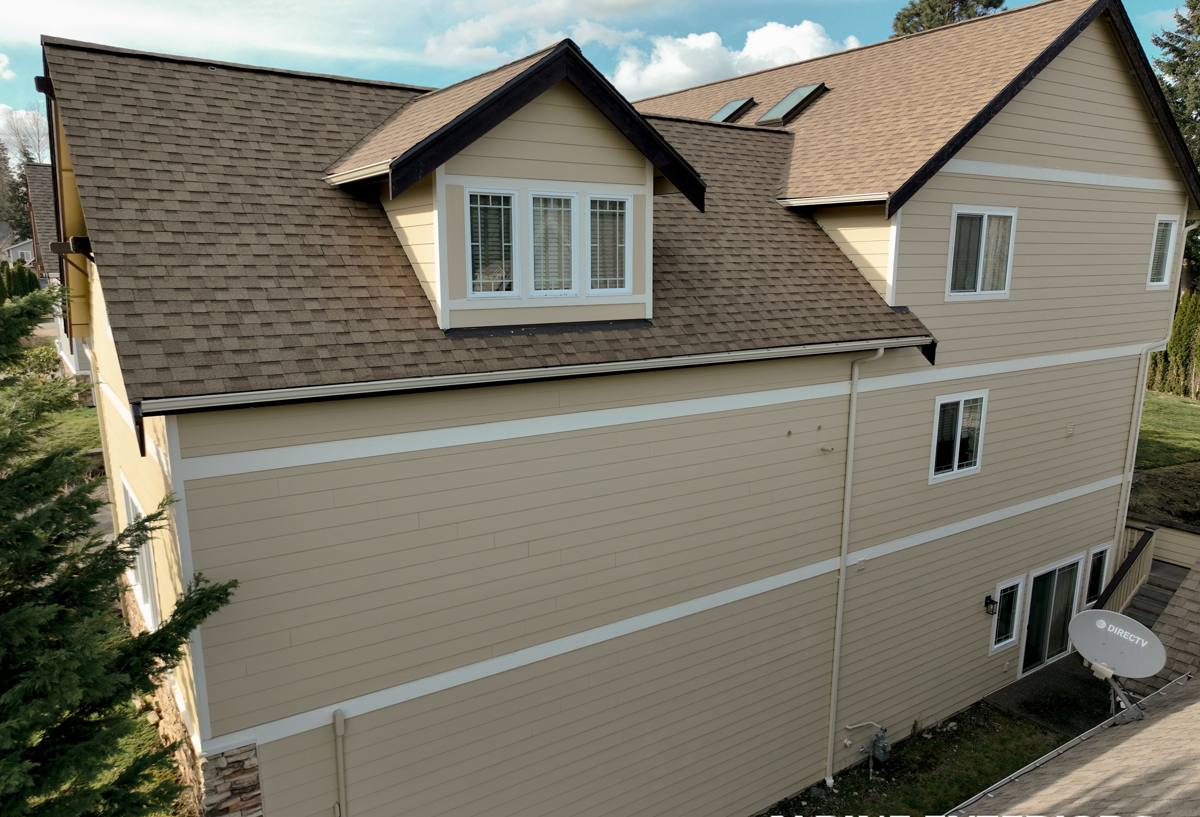
What Salt Air, Wind-Driven Rain, and Moss Actually Do to a Window
Salt Air
Airborne salt settles on metal hardware, screen frames, and exposed fasteners. Over years it accelerates pitting and corrosion on lower-grade hardware, which is why hinge and lock function is often the first thing to go on an older coastal window, even before the glass seal fails.
Wind-Driven Rain
Standard rain runs down a wall. Wind-driven rain gets pushed sideways and even slightly upward into gaps around a window opening. If the flashing and sill pan weren't detailed for that, water finds its way behind the trim and into the wall cavity — which shows up later as soft trim, peeling paint, or a musty smell nowhere near where the leak actually started.
Moss and Algae
Anywhere moisture lingers — a shaded north-facing sill, a window under a low eave, a horizontal muntin bar — moss and algae get a foothold during the wet months. It's mostly a cosmetic and maintenance issue, but on wood-frame windows sustained moss growth against the wood can trap moisture against the finish and shorten its life.
Signs Your Current Windows Are Working Against You
- Visible fogging or a permanent haze between the glass panes (a failed seal on a double- or triple-pane unit)
- Noticeable draft or cold spot near the window frame in winter, even with the window fully closed
- Hardware that's stiff, corroded, or won't latch tightly anymore
- Wood trim or sill that's soft, discolored, or holding paint poorly near the window
- Condensation forming on the inside of the glass regularly, especially on bedroom or bathroom windows
- A heating bill that feels high relative to the size of the house
Any one of these on its own isn't necessarily an emergency. Several of them together, especially on the water-facing side of a house, usually mean it's time for a real assessment rather than another round of caulk and weatherstripping.
What "Energy-Efficient" Means in Practical Terms
The phrase gets used loosely. For a coastal Whatcom County home, three numbers matter more than any brand name on the label:
- U-factor — how well the window resists heat loss. Lower is better; this is the number that most directly affects your winter heating bill.
- SHGC (Solar Heat Gain Coefficient) — how much solar heat passes through the glass. This matters most on windows that get direct afternoon sun.
- Air leakage rating — how much air moves through the assembly when it's shut. On a wind-exposed site like Birch Bay, this one is easy to underrate and expensive to ignore.
A window can carry an efficiency label and still perform poorly here if it's not paired with correct flashing and a frame material suited to salt exposure. Efficiency is a system outcome — glass package, frame, and installation together — not a single sticker on the glass.
Frame Materials: What Holds Up on the Water
| Frame Material | Coastal Performance | Maintenance | Best Fit |
|---|---|---|---|
| Vinyl | Good — won't rot or corrode; consistent performance in salt air | Low — occasional cleaning | Most Birch Bay homes, budget-conscious replacements |
| Fiberglass | Very good — dimensionally stable, resists moisture and salt exposure well | Low | Waterfront or high-wind-exposure homes, larger openings |
| Wood / Wood-Clad | Fair — attractive but the wood core is vulnerable if the clad seal is compromised or moss holds moisture against it | Higher — needs periodic inspection and finish upkeep | Homes prioritizing a traditional look who accept the added maintenance |
| Aluminum | Fair — conducts heat and cold, and standard finishes can pit over time in salt air unless properly coated | Moderate | Specific architectural or commercial-style applications |
We don't push one material on every job. What we do is tell you plainly which materials are a poor match for a directly wind- and salt-exposed elevation versus a sheltered, inland-facing wall on the same house — those can reasonably be different choices on the same project.
How We Handle a Birch Bay Window Job
1. On-Site Assessment
We look at each window's actual exposure — which walls take direct wind and rain off the water, which are sheltered, where moss and moisture are already showing up on sills and trim. That exposure map drives the recommendations, not a one-size-fits-all product list.
2. Removal and Opening Inspection
Once the old window comes out, we check the rough opening for hidden water damage before anything new goes in. Finding a problem at this stage and fixing it properly is far cheaper than finding it in five years.
3. Flashing and Sill Pan Detail
This is the step that matters most for wind-driven rain. A proper sill pan and correctly lapped flashing direct water back out, even when it's being pushed sideways by wind — this is the detail that separates a window that lasts from one that leaks behind the trim within a few years.
4. Installation and Sealing
The window is set plumb and level, shimmed correctly so it isn't racked (which stresses seals and hardware over time), insulated around the frame, and sealed with materials rated for exterior, UV, and moisture exposure.
5. Final Check and Cleanup
We test operation, confirm the seal, and walk the finished work with you before we consider the job done.
Why Local Experience in Birch Bay Specifically Matters
Bellingham and greater Whatcom County have plenty of microclimates, and Birch Bay's is distinct even from nearby inland neighborhoods. A crew that mostly works sheltered, tree-lined lots inland will size up wind exposure and flashing needs differently than a crew that regularly works waterfront and near-waterfront homes. We work both, which means we're not guessing when we look at a Birch Bay elevation and tell you it needs a different detail than the same house would need three miles inland.
That local pattern-recognition also shows up in smaller ways: knowing which sides of a home typically hold moss longest through the wet season, which window styles handle sustained wind pressure better, and where salt exposure tends to shorten hardware life first. None of that is exotic knowledge — it's just what you learn from doing the work here repeatedly instead of occasionally.
Maintaining Energy-Efficient Windows in a Salt Air Climate
- Rinse salt residue off frames and glass periodically, especially on wind-exposed elevations
- Keep weep holes (the small drainage openings at the base of the frame) clear of debris and moss so water can drain out properly
- Wipe down and inspect hardware — hinges, locks, cranks — a couple of times a year and address stiffness early
- Remove moss or algae buildup on sills and trim before it holds moisture against the surface long-term
- Check caulking and exterior sealant annually for cracking or gaps, particularly after a hard winter
- Watch for condensation between panes — it's an early, reliable sign a seal is starting to fail
Cost Factors to Understand Before You Get Quotes
| Factor | Why It Moves the Price |
|---|---|
| Frame material | Vinyl typically costs less upfront than fiberglass or wood-clad; fiberglass often costs more but needs less long-term upkeep |
| Window size and style | Larger openings, custom shapes, and operable styles (casement, awning) generally cost more than standard fixed or single/double-hung units |
| Exposure and flashing complexity | Wind- and water-exposed elevations may need more involved flashing and sill work, which adds labor |
| Existing damage | If the rough opening has hidden rot or water damage, repair work is priced separately from the window itself |
| Glass package | Triple-pane, upgraded Low-E coatings, or specialty glass add cost over a standard double-pane efficient unit |
We give straightforward, itemized pricing so you can see what you're actually paying for — the window unit, the labor, and any opening repair — rather than one bundled number.
Get a Straight Answer on Your Windows
If you're dealing with drafts, fogged glass, sticking hardware, or you just want an honest read on whether your current windows are still doing their job, we're happy to take a look. We offer a free, no-pressure estimate — walk the property with you, point out what we actually see, and give you clear options for your home's specific exposure in Birch Bay. Use the form below to get started.