 Bellingham Roofing
 Storm Damage Roof Repair for Barkley Homes
Barkley sits close enough to Bellingham Bay and the Puget Sound weather patterns that its roofs take a different kind of beating than homes further inland in Whatcom County. It's not usually one dramatic event that causes the damage we get called out for. It's the combination: salt-laden air working on metal fasteners and flashing, driving rain that finds its way in through the smallest gap, and a moss season that runs long enough to hold moisture against shingles for months at a time. A roof that would be fine in a drier climate can develop real problems here if storm damage isn't caught and dealt with correctly.
This page is specifically about storm damage repair for homes in the Barkley area — what causes it, what a proper repair actually involves, and what to expect if you call us after a windstorm or a heavy rain event leaves you with a leak, missing shingles, or damaged flashing.
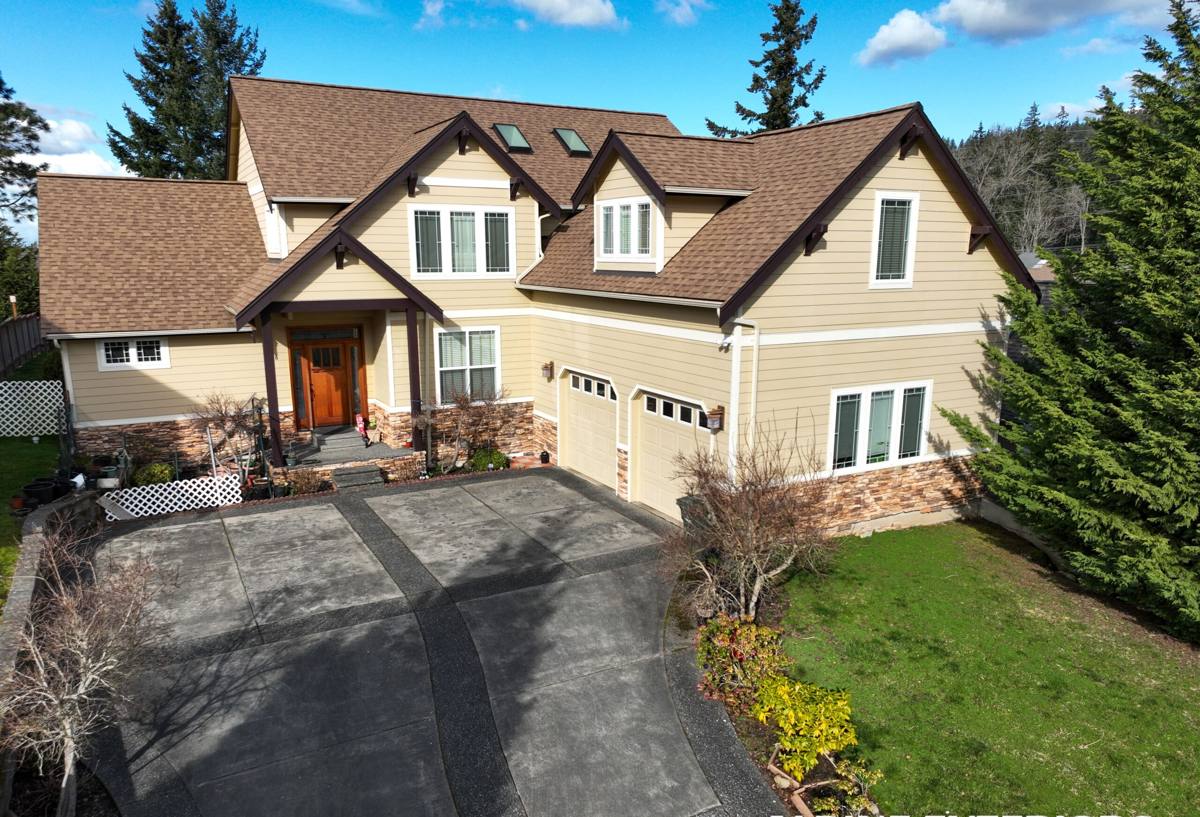
Why Storm Damage Shows Up Differently in Barkley
Wind coming off the water doesn't hit every roof the same way. Roof orientation, tree cover, and how exposed a home is to prevailing weather all affect where damage tends to start. In Barkley, we typically see three things compounding each other:
Salt Air and Corrosion
Proximity to Bellingham Bay means metal roofing components — flashing, fasteners, vent caps, gutter hardware — corrode faster than they would inland. Corroded flashing is one of the most common hidden causes of a "storm leak" that actually started as a slow failure the storm just finished off.
Driving Rain
Whatcom County storms often come with sustained, wind-driven rain rather than just heavy volume. That kind of rain pushes water sideways and upward under shingle edges, around chimney flashing, and into any spot where the roofing system has even a small gap. A roof that sheds a straight-down downpour just fine can still leak badly in a wind-driven storm.
Long Moss Season
Bellingham's mild, wet climate supports moss growth for most of the year. Moss holds moisture against the roof surface, lifts shingle edges as it grows, and works its way under laps and around fasteners. A storm that hits a moss-covered roof does more damage than the same storm would on a clean one, because the moss has already compromised the seal.
Signs Your Roof Took Storm Damage
Some storm damage is obvious. A lot of it isn't — it shows up weeks later as a stain on the ceiling or a soft spot in the decking. After any significant wind or rain event, it's worth checking for:
- Shingles that are cracked, curled, torn, or missing entirely
- Granules collecting in gutters or at the base of downspouts
- Bent, lifted, or missing flashing around chimneys, vents, and skylights
- Gutters pulled loose or sagging away from the fascia
- Dents or damage on vent caps, metal trim, or exposed fasteners
- New or worsening water stains on interior ceilings or walls
- Debris, branches, or moss buildup that's shifted or been dislodged
- Daylight visible through the roof deck from inside the attic
Any one of these on its own might not be urgent. Several together, or anything paired with an active leak, means it's time for an inspection.
What a Correct Storm Damage Repair Involves
Inspection First, Not a Guess
A proper storm repair starts with getting on the roof and finding every point of entry, not just patching the spot where the ceiling stain showed up. Water travels — a leak inside a bedroom can originate several feet away at a flashing failure or a wind-lifted shingle. Chasing the visible symptom without tracing the actual path wastes money and leaves the real problem in place.
Temporary Protection When Needed
If a storm has left a roof actively exposed — missing shingles, a torn section, a hole from a fallen limb — the priority is stopping further water intrusion before the full repair happens. That usually means tarping or temporary sealing, especially if more rain is in the forecast, which in this climate is rarely a long wait.
Repairing to Match, Not Just Patch
Storm repairs should tie into the existing roofing system correctly — matching shingle type and exposure, replacing flashing rather than caulking over it, and re-establishing proper water shedding at every seam. A patch that just covers a hole without integrating into the surrounding roofing tends to fail again at the edges, often within a season or two in a climate this wet.
Checking What the Storm Didn't Break, But Weakened
Wind and rain can loosen fasteners, stress flashing, and strain seals without causing an obvious failure yet. Part of a thorough repair is checking the areas around the damage for early signs of the same thing happening again.
Common Storm Damage Types We See in Barkley
| Damage Type | Typical Cause | Why It Matters |
|---|---|---|
| Lifted or missing shingles | High wind gusts, especially on exposed roof faces | Exposes underlayment and decking directly to rain |
| Flashing failure | Wind stress combined with salt-air corrosion over time | A common hidden source of leaks around chimneys and vents |
| Granule loss | Wind-driven rain and hail-like debris impact | Accelerates shingle aging and reduces water resistance |
| Gutter and downspout damage | Wind load and debris impact | Poor drainage sends water back toward the roof edge and fascia |
| Moss-related lifting | Long wet season allowing sustained moss growth | Compounds storm damage by pre-lifting shingle edges |
| Limb or debris impact | Falling branches during high wind events | Can puncture decking, requiring structural-level repair |
Our Storm Damage Repair Process
1. Assessment and Documentation
We inspect the full roof, not just the reported problem area, and document what we find with photos. This matters whether or not you're filing an insurance claim — it gives you a clear, honest picture of the roof's condition.
2. Honest Repair-or-Replace Guidance
Not every storm-damaged roof needs to be replaced, and not every damaged section can be responsibly patched. We tell you which situation you're in and why, including when a repair is the right call and when it's a short-term fix that will cost more in the long run.
3. Temporary Protection If Needed
If your home is exposed to ongoing weather, we prioritize stopping water intrusion before doing the permanent repair.
4. The Repair Itself
Matching materials, proper flashing replacement, and correct fastening and sealing methods suited to this region's wind and rain conditions — not just the fastest fix.
5. Follow-Up
We check the repaired area and surrounding roof sections to confirm the fix is holding and nothing was missed.
Repair vs. Replacement: What Actually Drives the Decision
| Factor | Favors Repair | Favors Replacement |
|---|---|---|
| Age of roof | Roof is well within its expected service life | Roof is near or past typical lifespan for its material |
| Extent of damage | Damage is localized to one section or slope | Damage is widespread across multiple areas |
| Underlying condition | Decking and underlayment are sound | Moss, rot, or prior water damage has compromised the deck |
| Shingle availability | Matching shingles are still available | Discontinued shingle style makes a seamless match impossible |
| Recurrence risk | Damage was a one-time event | Roof shows a pattern of repeated storm-related failures |
Repair costs for a storm-damaged section are typically far less than replacement, but the right answer depends on these factors — not just on getting the cheapest fix done fastest.
Insurance Claims and Storm Damage
Many storm damage repairs in Whatcom County are covered by homeowners insurance, particularly for wind and impact damage. We're glad to document damage clearly and answer questions about what we found, but we're not your insurance adjuster — we recommend confirming coverage specifics directly with your carrier. What we can do is give you an honest, unpadded assessment of the actual damage and repair scope, which is what a fair claim depends on.
Why a Barkley-Familiar Crew Matters
A crew that regularly works this part of Bellingham already knows what to check for beyond the obvious storm damage — the corrosion patterns from salt air, the moss buildup that's common on shaded or north-facing roof sections here, and how driving rain off the bay typically finds its way into a roofing system. That familiarity means less time spent diagnosing and more time spent actually fixing the problem correctly the first time.
Preventing Repeat Storm Damage
Once your roof is repaired, a few maintenance habits go a long way toward keeping the next storm from causing the same problem again:
- Keep gutters and downspouts clear so water has somewhere to go
- Address moss growth before it spreads across the roof surface
- Trim back tree limbs that overhang the roofline
- Have flashing checked periodically, especially around chimneys and vents
- Get a post-storm inspection after any significant wind event, even if nothing looks obviously wrong
If a recent storm has left you with damage, or you just want a second opinion on your roof's condition before the next one hits, we're happy to take a look. Request a free, no-pressure estimate using the form below — no obligation, just a straight answer about what your roof needs.