 Bellingham Roofing
 Roof Repair for Barkley Homes in Bellingham
Barkley is one of Bellingham's newer, well-established neighborhoods, with a mix of single-family homes, townhomes, and multi-family buildings built over the past few decades. Roofs in this part of Whatcom County take a specific kind of beating. You're close enough to Bellingham Bay to catch salt-laden air, exposed to long stretches of driving rain off the Pacific, and stuck with a moss season that can run most of the year in a climate this mild and damp. A roof that looks fine from the driveway can still be losing the fight underneath, and by the time a stain shows up on a ceiling, the underlying problem has usually been building for a while.
This page covers what roof repair actually means for a Barkley home — what the local climate does to different roofing materials, what a repair job should include if it's going to hold up, and how we approach the work when you call us out.
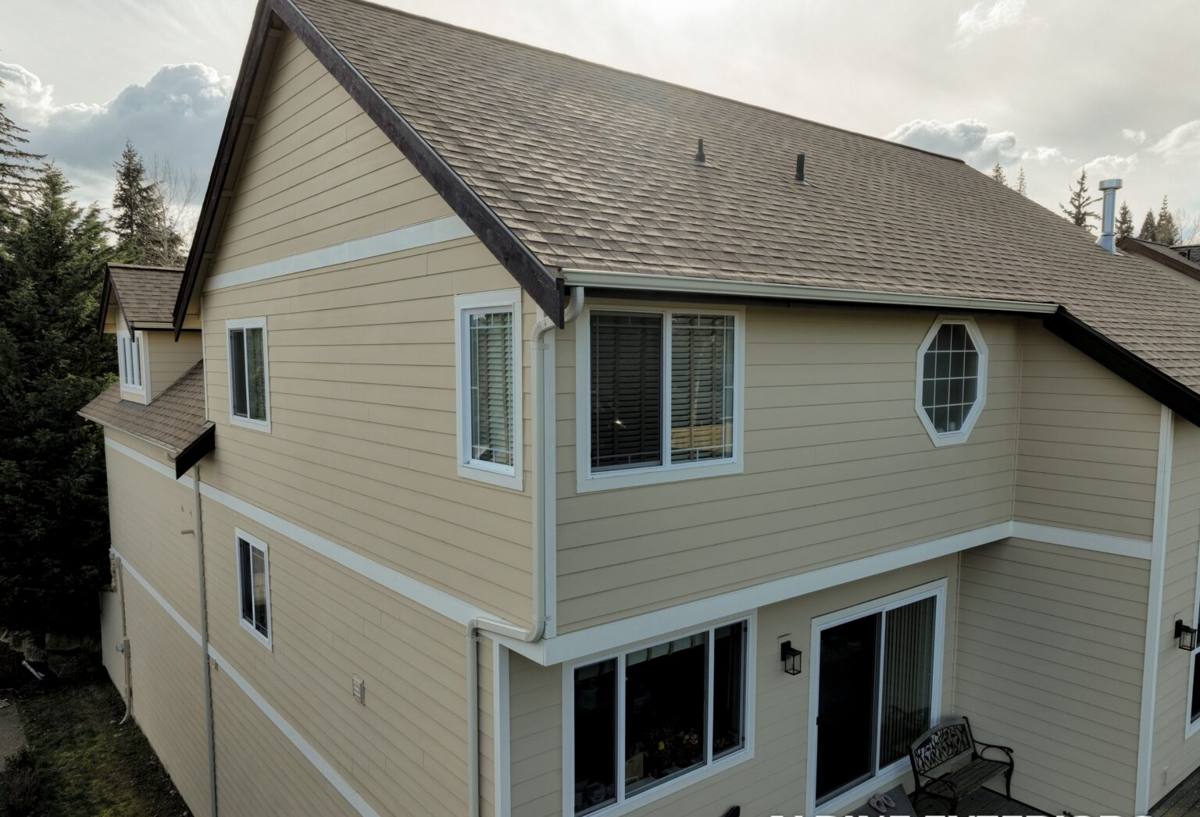
What Bellingham's Climate Does to a Barkley Roof
Salt Air and Metal Fatigue
Even a few miles inland from the bay, airborne salt finds its way onto exposed metal — flashing, nail heads, vent caps, and gutter hardware. Over time it accelerates corrosion, especially on fasteners and thinner-gauge metal that wasn't rated for coastal exposure. A flashing detail that would last decades in a dry inland climate can start failing years earlier here, and once a fastener corrodes and loosens, water has a direct path underneath the roofing material.
Driving Rain and Wind-Driven Water
Bellingham doesn't just get rain — it gets rain pushed sideways by wind coming off the water. That matters because a lot of roofing details are designed to shed water moving straight down, not water being driven up and under laps, seams, and flashing edges. Roof valleys, chimney flashing, skylight curbs, and the transitions where a roof meets a wall are the areas most exposed to wind-driven water, and they're where we find the majority of active leaks in Barkley homes.
Moss and Algae Season
Whatcom County's combination of shade, moisture, and mild temperatures gives moss and algae a long growing window. On composition shingle and wood roofing, moss doesn't just sit on the surface — it roots into the material, holds moisture against it, and lifts shingle edges as it grows. That trapped moisture accelerates granule loss on asphalt shingles and rot on wood shakes. North-facing slopes and roofs shaded by mature trees, both common in established Barkley yards, are usually the first areas to show moss growth and the first to need repair.
Common Repair Calls We See in Barkley
- Flashing failures around chimneys, skylights, and roof-to-wall transitions, usually from corroded fasteners or sealant that's dried out and cracked
- Valley leaks where two roof planes meet and water volume is highest during heavy rain
- Moss-related shingle damage — lifted edges, granule loss, and soft or spongy decking underneath
- Clogged or damaged gutters causing water to back up under the roof edge instead of draining away
- Nail pops and lifted shingles from wind events, which expose the underlayment to direct weather
- Vent boot and pipe collar cracking, a common and often-missed leak source since the rubber components degrade faster than the surrounding roofing
What a Correct Repair Actually Involves
A roof repair that's done right isn't just about patching the spot where water is showing up inside the house — that spot is often several feet from where the water is actually getting in, since water travels along the underlayment and framing before it finds a way through the ceiling. A proper repair starts with tracing the leak back to its actual source.
From there, the work generally includes:
- Removing and inspecting the roofing material around the damaged area, not just the visibly damaged piece
- Checking the decking underneath for soft spots, rot, or delamination before anything new goes back on
- Replacing corroded or failed flashing rather than resealing it over existing corrosion
- Matching shingle or roofing material as closely as possible in type, weight, and color
- Re-securing with fasteners rated for the exposure the roof actually sees
- Confirming the repair ties in correctly with surrounding underlayment so water can't get behind the patch
Sealant alone is not a repair. Caulking over a flashing gap or a cracked vent boot might buy a season, but in this climate the sealant itself breaks down under UV and moisture cycling faster than most homeowners expect, and the leak comes back — usually after the drywall has already taken more damage.
Our Repair Process
- Inspection. We get on the roof, not just in the attic, and look at the whole system — shingles, flashing, vents, gutters, and any areas showing moss or standing water.
- Diagnosis and explanation. We tell you what's actually failing and why, in plain terms, before recommending anything.
- Written estimate. You get a clear scope of work and price before we schedule anything — no surprise add-ons once we're up there.
- The repair. We do the work to the standard above: source traced, material matched, flashing replaced where needed, not just resealed.
- Cleanup and walkthrough. We clear debris and old material from the property and walk you through what was done.
Repair or Replace? How We Help You Decide
Not every roof problem in Barkley needs a full replacement, and we're not going to tell you it does. The table below outlines the general factors that push a decision one way or the other — every roof is different, and this is exactly what we evaluate during an inspection.
| Factor | Favors Repair | Favors Replacement |
|---|---|---|
| Roof age | Well within expected service life | At or past the end of its expected lifespan |
| Extent of damage | Isolated to one area (valley, flashing, a few shingles) | Widespread across multiple slopes |
| Decking condition | Solid, no rot or soft spots found | Soft, delaminated, or water-stained decking in several areas |
| Moss/algae history | Recent growth, caught early | Long-term moss damage with granule loss or shake rot |
| Number of past repairs | First or second repair on this roof | Repeated repairs to the same or nearby areas |
If a repair is the honest answer, that's what we'll recommend and do. If the roof is telling us it's past the point where patching makes financial sense, we'll explain exactly why before you spend money on a repair that won't hold.
Cost Factors for Barkley Roof Repairs
Every repair is priced based on what's actually found once we're on the roof, so we won't quote a number sight unseen. In general, a small, isolated repair — a section of lifted shingles or a single flashing detail — runs on the lower end, from a few hundred dollars. Repairs involving decking replacement, extensive moss damage, or multiple problem areas can run into the low thousands. The table below outlines what moves a repair up or down in scope.
| Cost Factor | Why It Matters |
|---|---|
| Roof pitch and access | Steeper or harder-to-access roofs take longer and need more safety setup |
| Decking condition | Rotted or soft decking has to be replaced before new roofing goes back on, adding material and labor |
| Material match | Older or discontinued shingle styles can be harder to match and may cost more to source |
| Flashing scope | Full flashing replacement costs more than resealing but lasts significantly longer |
| Moss removal | Heavy moss buildup adds cleaning and treatment time before the repair itself can start |
Why a Crew That Already Works in Barkley Matters
Roofing problems here aren't generic. A contractor who mostly works drier inland climates may not think twice about resealing a flashing joint that, in this environment, needs to be replaced outright because of salt exposure and corrosion. A crew that regularly works Bellingham roofs knows which slopes in a neighborhood like Barkley tend to hold moss longest, which flashing details fail first under wind-driven rain, and what material choices actually hold up through a Whatcom County winter rather than just meeting minimum code.
That local experience also means a faster, more accurate diagnosis. We're not guessing at how the regional weather pattern interacts with your roof — we see the same climate stress on roofs throughout Bellingham and Whatcom County every week, and that experience shows up in the accuracy of the estimate and the durability of the repair.
Homeowner Checklist: Signs Your Barkley Roof Needs a Repair Call
- Moss visible on the roof surface, especially on north-facing or shaded slopes
- Granules collecting in gutters or at downspout outlets
- Shingle edges that look lifted, curled, or out of alignment
- Staining on interior ceilings or upper walls, even if it's small or has dried
- Daylight visible through the roof deck from inside the attic
- Rusty streaking below metal flashing or vent caps
- Gutters that overflow during heavy rain instead of draining cleanly
- A musty smell in the attic, which can point to trapped moisture before any visible stain appears
Maintenance That Extends the Life of a Repair
A repair holds up longer when the rest of the roof is kept in reasonable shape around it. Keeping gutters clear so water isn't backing up under the roof edge, trimming back branches that keep a slope shaded and damp, and addressing moss before it spreads are all things that reduce how often you need us back out. None of this replaces a periodic inspection — moss and flashing issues are often visible from the ground only once they're already established — but it does stretch the time between repairs.
If you're noticing any of the signs above, or it's simply been a while since anyone's actually been up on your roof to look, we're happy to come take a look. We offer free, no-pressure estimates for Barkley homeowners — you'll get a straight answer about what's going on and what it would take to fix it, with no obligation to move forward. Use the form below to get started.