 Bellingham Roofing
 Why Decks in Barkley Wear Out Faster Than Homeowners Expect
Barkley sits inside one of the wetter, greyer stretches of Whatcom County, and that climate is hard on outdoor structures in ways that aren't always obvious from the surface. A deck can look fine from the yard — boards still flat, railings still solid to the touch — while the framing underneath is quietly failing. Bellingham's combination of near-constant fall and winter rain, driving wind off the bay, and a moss season that can stretch six months or more means decks here age differently than they would in a drier part of the state.
The problem isn't usually the surface boards. It's what happens underneath and between them: moisture that gets trapped against ledger boards, joists that never fully dry out between storms, and fasteners that corrode faster in our salt-tinged coastal air. By the time a deck looks tired on top, the structure below has often been absorbing damage for years. That's the gap a proper replacement is meant to close — not just fresh boards, but a structure built to actually shed water and resist rot in this specific climate.
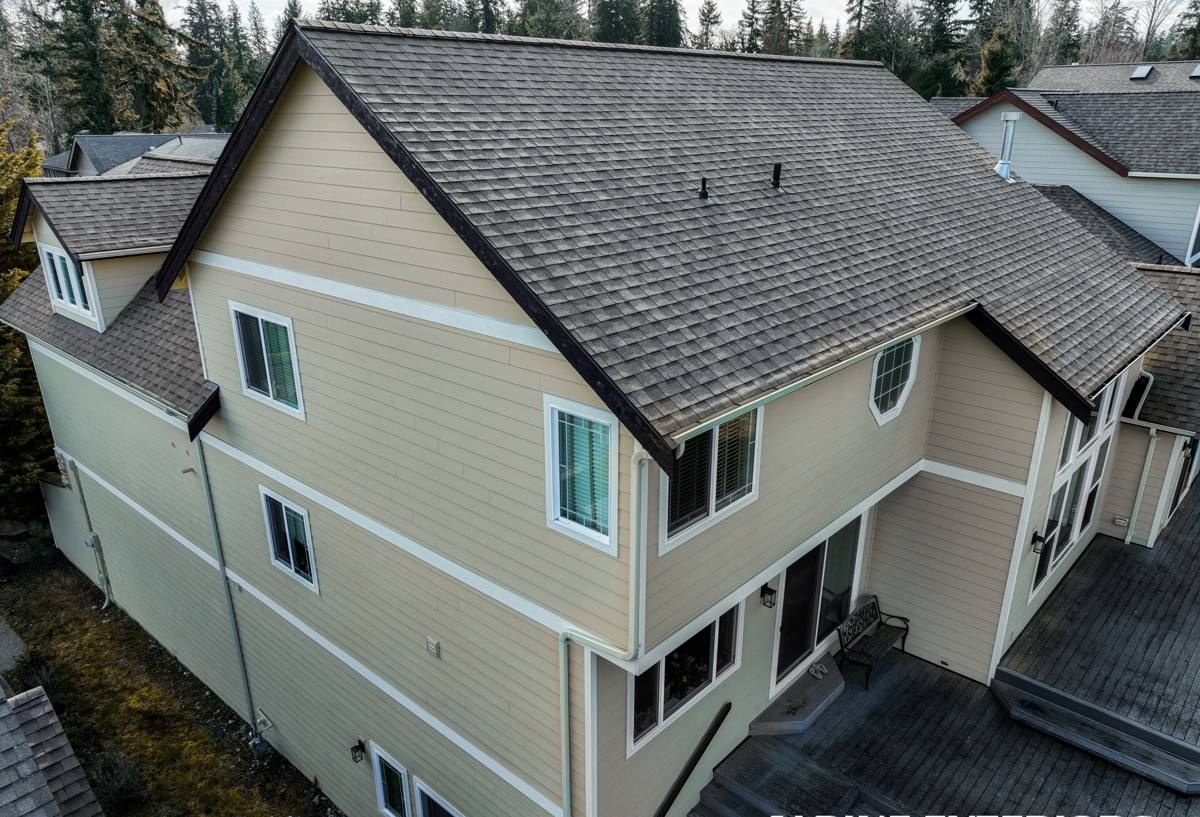
Signs a Barkley Deck Needs Replacement, Not Just Repair
Not every deck problem calls for a full tear-off. But in our climate, certain signs mean repair is a temporary patch on a structural problem that will keep coming back.
Structural red flags
- Soft, spongy, or bouncy spots when you walk across the deck
- Visible rot or dark staining at the ledger board where the deck meets the house
- Posts that have shifted, settled unevenly, or show cracking at the base
- Rusted or failing fasteners, especially where metal connectors meet treated lumber
- Railings that flex or wiggle under normal pressure
- A persistent musty smell coming from underneath the deck
Cosmetic issues that don't require replacement
Surface graying, minor splintering, or moss buildup on the top of boards is often a maintenance issue, not a structural one. The distinction matters because homeowners sometimes spend money re-staining or power-washing a deck that actually needs new framing, or tear out a deck that just needed better drainage and a cleaning. A proper inspection looks underneath, not just at what's visible from the yard.
What a Correct Deck Replacement Actually Involves
A deck replacement done right in this climate is a structural project, not a cosmetic one. Skipping steps here is exactly how a deck ends up needing replacement again in ten years instead of twenty-five or more.
Substructure and framing
Posts, beams, and joists need to be sized and spaced for the actual load the deck will carry, and set on footings that won't heave or settle in our wet, freeze-thaw-prone soil. Any lumber in contact with the ground or concrete should be rated for that exposure — this is one of the most common shortcuts we see in older decks that failed early.
Ledger board and flashing
The ledger board — where the deck attaches to the house — is the single most failure-prone connection on any deck in a rainy climate. Without proper flashing to direct water away from the house framing, moisture gets trapped behind the ledger and rots both the deck attachment and, eventually, the house's own rim joist. Correct flashing detail here isn't optional; it's the difference between a deck that lasts and one that causes hidden damage to the home itself.
Fasteners and hardware
Coastal air accelerates corrosion on standard fasteners. Hot-dip galvanized or stainless hardware costs more up front but avoids the rust streaking and connector failure that shows up within a few years when cheaper fasteners are used near the water.
Decking surface
The visible boards get chosen last, not first — after the structure underneath is sound, the surface material is really a question of appearance, maintenance tolerance, and budget.
Choosing a Decking Material for This Climate
There's no single "best" decking material — the right choice depends on how much upkeep a homeowner wants to do and how the deck will be used. Here's how the common options compare specifically against Whatcom County's rain and moss conditions.
| Material | Upfront Cost | Maintenance | Moisture & Moss Resistance | Typical Lifespan |
|---|---|---|---|---|
| Pressure-treated wood | Lowest | Annual cleaning, periodic sealing | Fair — needs consistent upkeep | 10–15 years |
| Cedar | Moderate | Regular sealing to hold color and resist moisture | Good, naturally rot-resistant but still absorbs water | 15–20 years |
| Composite | Higher | Occasional washing, no sealing or staining | Very good, resists rot and moss staining | 25–30 years |
| PVC / capped polymer | Highest | Minimal — soap and water | Excellent, fully non-organic surface | 25+ years |
Wood remains a reasonable choice for homeowners willing to stay on top of cleaning and sealing every year or two, since skipping that maintenance in our climate is what shortens its life. Composite and PVC cost more initially but hold up better against the moss and green staining that wood surfaces are prone to here, largely because they don't have organic material for moss and algae to take hold in. We're happy to walk through the honest trade-offs of each based on how you actually plan to use the deck.
Our Deck Replacement Process
- Inspection and assessment — we check the ledger, framing, posts, and footings, not just the surface boards, to determine what's actually driving the deck's condition.
- Scope and material discussion — we go over decking material options, railing choices, and any layout changes, with honest pros and cons for each.
- Removal — the old deck is torn out and hauled away, with the house connection point inspected for hidden rot once the ledger is exposed.
- Framing and flashing — new posts, beams, joists, and properly flashed ledger attachment are installed to current structural standards.
- Decking and railings — surface boards, stairs, and railings are installed per the chosen material's specifications.
- Final walkthrough — we go over the finished deck together, including care instructions specific to the material installed.
Permits and Local Considerations
Most deck replacements in and around Bellingham require a building permit, particularly when the structure is elevated, attached to the house, or being rebuilt to a different size or footprint than before. Requirements can vary depending on deck height, guardrail needs, and whether the footprint is changing, so this is worth confirming before work begins rather than assuming a like-for-like replacement is exempt. We handle the permitting process as part of the project so homeowners aren't left navigating it alone.
Whatcom County's frequent freeze-thaw cycles in the shoulder seasons also affect footing depth and concrete curing schedules, which is another reason timing a replacement around the weather window matters here more than it would in a milder climate.
Keeping a New Deck in Good Shape
A well-built deck still needs some seasonal attention in this climate to get its full lifespan. This is especially true through the fall and winter, when Bellingham's rain and moss pressure are at their worst.
- Sweep leaves and debris off the deck regularly in fall to prevent trapped moisture
- Keep gutters and downspouts near the deck clear so runoff doesn't pool against the structure
- Rinse off moss and algae buildup before it has a chance to stain or degrade the surface
- Check under the deck once or twice a year for standing water or drainage issues
- For wood decks, plan on resealing every one to two years depending on sun and rain exposure
- Address any loose boards, railings, or fasteners promptly rather than waiting for a bigger repair
Why a Crew That Already Works in Barkley Matters
Deck construction that works well in a dry climate can fail early here if it's built the same way. A crew that regularly works Barkley and the surrounding Bellingham area already knows how local soil drains, how footings need to be set for our freeze-thaw pattern, and which flashing details actually keep water out of a ledger board through a full Pacific Northwest winter. That familiarity shows up in fewer callbacks and a deck that's still solid well past the point where a poorly detailed one would already be showing rot.
It also means a shorter feedback loop if something needs a follow-up look after the first real winter — we're not driving in from out of the area, and we're not guessing at how our work holds up in this climate because we see the results on other Barkley decks year after year.
If your deck is showing its age or you're just not sure whether it needs repair or full replacement, we're glad to take a look. Reach out for a free, no-pressure estimate using the form below.