 Bellingham Roofing
 Why Barkley Decks Wear Differently Than You'd Expect
Barkley sits close enough to Bellingham Bay that salt-laden air reaches every exposed surface on a home, including the deck. Combine that with Whatcom County's long wet season, and you get a specific pattern of wear: fasteners that corrode faster than the wood around them, moss and algae that colonize shaded boards for months at a time, and moisture that finds its way into joints, screw holes, and ledger connections long before the wood itself looks obviously bad. A deck in a drier inland climate can go years without real attention. A deck in Barkley usually can't.
Most of the homes in this part of Bellingham were built or expanded during periods when composite decking, pressure-treated framing standards, and flashing practices were all evolving. That means we see a real mix of deck ages and construction methods on the same street, and each one fails in its own way. Repairing a deck here isn't a generic job — it's diagnosing what the specific combination of materials, age, and exposure has done to that specific structure.
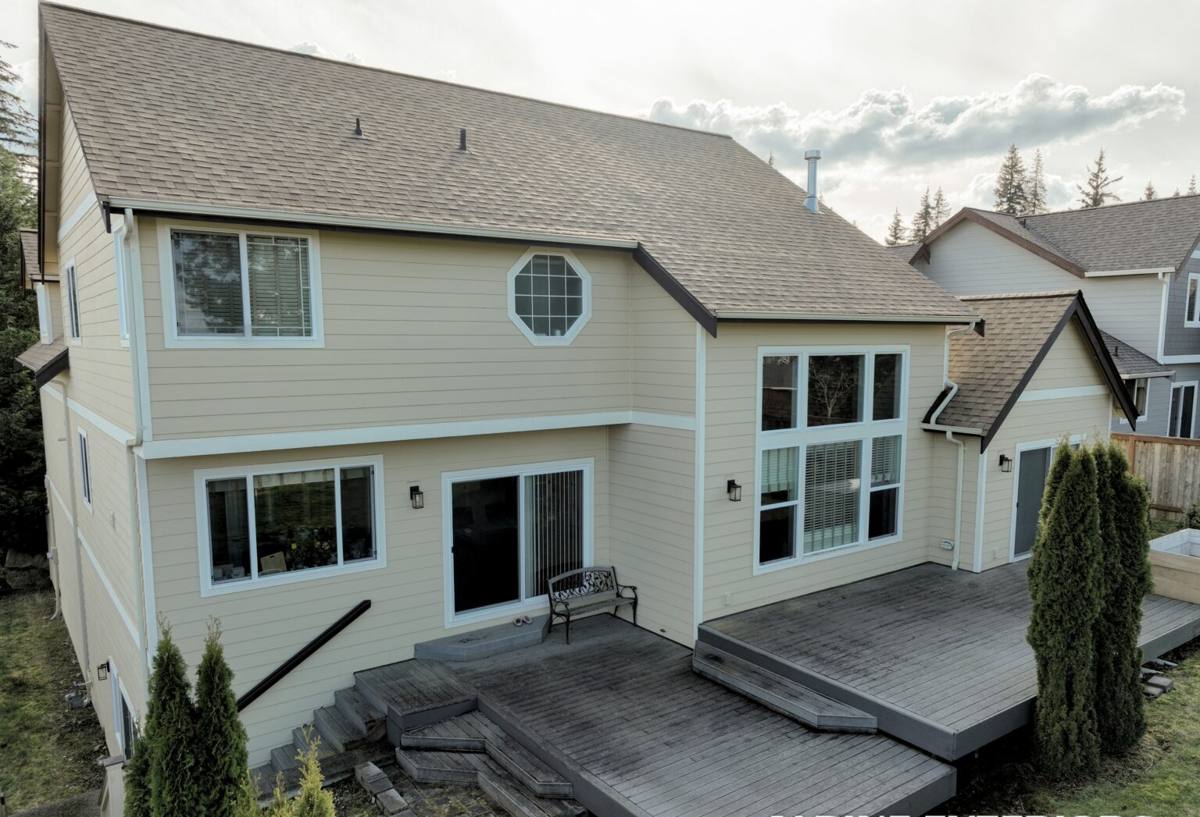
The Deck Problems We Actually Find in Barkley
Ledger Board and Rim Joist Rot
The ledger board — where the deck attaches to the house — is the single most important structural connection on most decks, and it's also the one most exposed to trapped moisture. If flashing was installed poorly (or skipped) when the deck was built, water works its way behind the ledger and sits against the rim joist. By the time you notice soft or discolored siding near the deck attachment, there's often already damage behind it.
Fastener Corrosion
Salt air accelerates corrosion in any fastener that isn't rated for it. We regularly find decks where the boards look fine but the nails or screws holding them down have rusted, weakened, or backed out. This shows up as squeaking, slight movement underfoot, or streaking around fastener heads — all signs the hardware is failing before the wood does.
Moss, Algae, and Surface Breakdown
Whatcom County's moss season isn't a minor cosmetic issue. Moss and algae hold moisture directly against the decking surface for weeks at a stretch, which accelerates wood decay and, on painted or stained surfaces, breaks down the finish so water penetrates even faster. On composite decking, prolonged moss growth can stain the material in ways that don't fully clean off. Left alone, this cycle is what turns a deck that needs a repair into a deck that needs replacement.
Joist and Post Deterioration
Framing members that stay damp — usually because of poor drainage, dense landscaping crowding the deck, or a low deck with limited airflow underneath — soften from the inside out. This kind of rot is often invisible from above and only shows up when a board is pulled or a post is probed.
Signs It's Time to Call for a Repair
Most deck failures give warning signs well before anything becomes dangerous. Here's what we tell Barkley homeowners to watch for between our visits:
- Boards that feel spongy, bounce slightly, or flex more than they used to
- Visible gaps, cupping, or splitting in individual boards
- Rust streaks bleeding from screw or nail heads
- Persistent moss or dark staining that keeps returning after cleaning
- Any movement, wobble, or gap where the deck meets the house
- Railings or posts that shift when you lean on them
- Water pooling on the surface instead of draining off
- A musty smell coming from underneath the deck
Any one of these on its own might be minor. Two or three together usually mean the deck is telling you something worth a professional look before the next wet season.
What a Correct Deck Repair Actually Involves
A repair that just swaps out the obviously bad boards without checking what's underneath is a repair that fails again in a year or two. We approach it in layers:
1. Structural Inspection First
Before replacing anything on the surface, we check the framing — joists, beams, posts, footings, and the ledger connection — because that's what actually holds the deck up. Cosmetic repairs on a structurally compromised deck are a waste of money and, more importantly, a safety issue.
2. Fix the Water Path, Not Just the Symptom
If moisture is getting behind the ledger, under boards, or into end grain, we address the entry point — proper flashing, correct fastener choice, better drainage or spacing — so the repair doesn't just get undone by the next rainy stretch.
3. Match or Upgrade Materials Correctly
Replacement boards, fasteners, and hardware need to be compatible with what's already there, or upgraded intentionally where the original build was under-specified for this climate. Mixing incompatible metals, for instance, can actually accelerate corrosion rather than prevent it.
4. Rebuild for Airflow and Drainage
Where we can, we improve ventilation under low decks and correct board spacing that's trapping water, since better drainage is often what keeps a repair from needing to be redone.
Repair or Replace? What Actually Drives That Decision
| Factor | Usually Points to Repair | Usually Points to Replacement |
|---|---|---|
| Framing condition | Solid joists and posts, isolated soft spots | Widespread rot in joists, beams, or posts |
| Ledger connection | Sound, properly flashed | Rotted rim joist or chronic water intrusion behind it |
| Decking surface | Scattered bad boards, isolated fastener failure | Cupping, splitting, or rot across most boards |
| Age of structure | Under 15-20 years, built to a reasonable standard | Original construction or materials well past typical service life |
| Code compliance | Meets current attachment and railing standards | Undersized framing or outdated railing/guard spacing |
We'll always tell you honestly which side of that table your deck falls on. A lot of decks we're called out to inspect only need targeted repair work — but we won't talk you into patching a deck whose framing genuinely isn't safe to keep loading.
Our Process for Barkley Deck Repairs
- On-site inspection. We walk the full deck, probe suspect areas, and check the ledger, framing, and fastener condition — not just the visible surface.
- Honest scope and estimate. You get a clear picture of what's actually wrong, what it takes to fix it correctly, and a straightforward cost range — no upsell to a full replacement unless the structure genuinely calls for it.
- Repair the structure before the surface. Any framing, ledger, or flashing issues get corrected first, since surface work on a compromised structure doesn't hold.
- Replace damaged boards and hardware. Using fasteners and materials suited to a marine-influenced, high-moisture climate, not just whatever matches on price.
- Clean and finish. Surfaces are cleaned of moss and buildup, and any staining, sealing, or finish work is completed so the repair blends in and is protected going forward.
- Walkthrough. We show you what was fixed, what to keep an eye on, and what basic upkeep will extend the life of the repair.
Materials That Hold Up Under These Conditions
Not every fastener or board is a good fit for a property this close to the bay. For repair hardware, we favor stainless steel or high-grade coated fasteners over standard galvanized where corrosion exposure is significant — the cost difference is small compared to redoing the work in a few years. For decking material itself, both quality wood and composite options can perform well here, but each comes with real trade-offs worth understanding rather than a one-size-fits-all recommendation:
- Wood decking is repairable board-by-board and can look excellent, but it needs consistent refinishing to keep moisture and moss from taking hold — a real maintenance commitment in this climate.
- Composite decking resists rot and doesn't need staining, but it can develop surface staining from prolonged moss contact, and repairs on some older or discontinued composite lines can be harder to color-match than a wood repair.
- Flashing and ledger connections matter more than the decking material itself — this is where most of the serious, expensive damage originates, regardless of what the surface boards are made of.
We'll walk you through what makes sense for your specific deck rather than defaulting to whatever's easiest to install.
Why a Crew That Already Works in Barkley Makes a Difference
A contractor who's worked on decks throughout Bellingham and Whatcom County has already seen how this specific climate — the salt air off the bay, the driving rain patterns, the length of moss season — actually plays out on real structures over time. That matters when you're deciding whether a soft board is isolated or a sign of something bigger underneath, and when you're choosing fasteners and finishes that need to survive here, not in a drier or milder region. It also means faster, more accurate estimates, because we're not guessing at how local conditions have affected your deck — we've repaired decks with the same exposure a short drive away.
Keeping a Repaired Deck in Good Shape
Once your deck is repaired, a small amount of regular upkeep goes a long way in this climate:
- Clean moss and algae off the surface before it has a chance to spread, especially in shaded areas
- Keep gutters and downspouts clear so runoff isn't draining directly onto or under the deck
- Check fastener heads periodically for early rust or backing-out
- Reapply stain or sealant on wood decking on the schedule the product actually requires, not just when it looks worn
- Trim back vegetation that's crowding the deck and blocking airflow underneath
If you're noticing soft spots, movement, rust staining, or a deck that just doesn't feel as solid as it used to, it's worth having it looked at before another wet season passes. We're happy to come out, give you a straightforward assessment, and put together a free, no-pressure estimate for what it would take to get it right.