 Bellingham Roofing
 Asphalt Shingle Roofing Built for South Hill's Terrain
South Hill sits up above the rest of Bellingham, and that elevation changes what a roof has to deal with. Homes up here catch more direct wind off the bay, more driving rain during winter storms, and — because so many lots have mature tree cover — a lot more shade, needles, and moss pressure than roofs down in the flatter parts of town. An asphalt shingle roof that's installed correctly for South Hill's conditions will outlast one that was put on using generic, anywhere-in-the-country methods. The difference shows up in ten years, not on day one.
We work on South Hill regularly, which means we already know which slopes hold shade the longest, which homes need extra attention at valleys and eaves, and how fast moss can take hold on a north-facing pitch under tree canopy. This page is about what a properly built or repaired asphalt shingle roof looks like for this specific part of Bellingham.
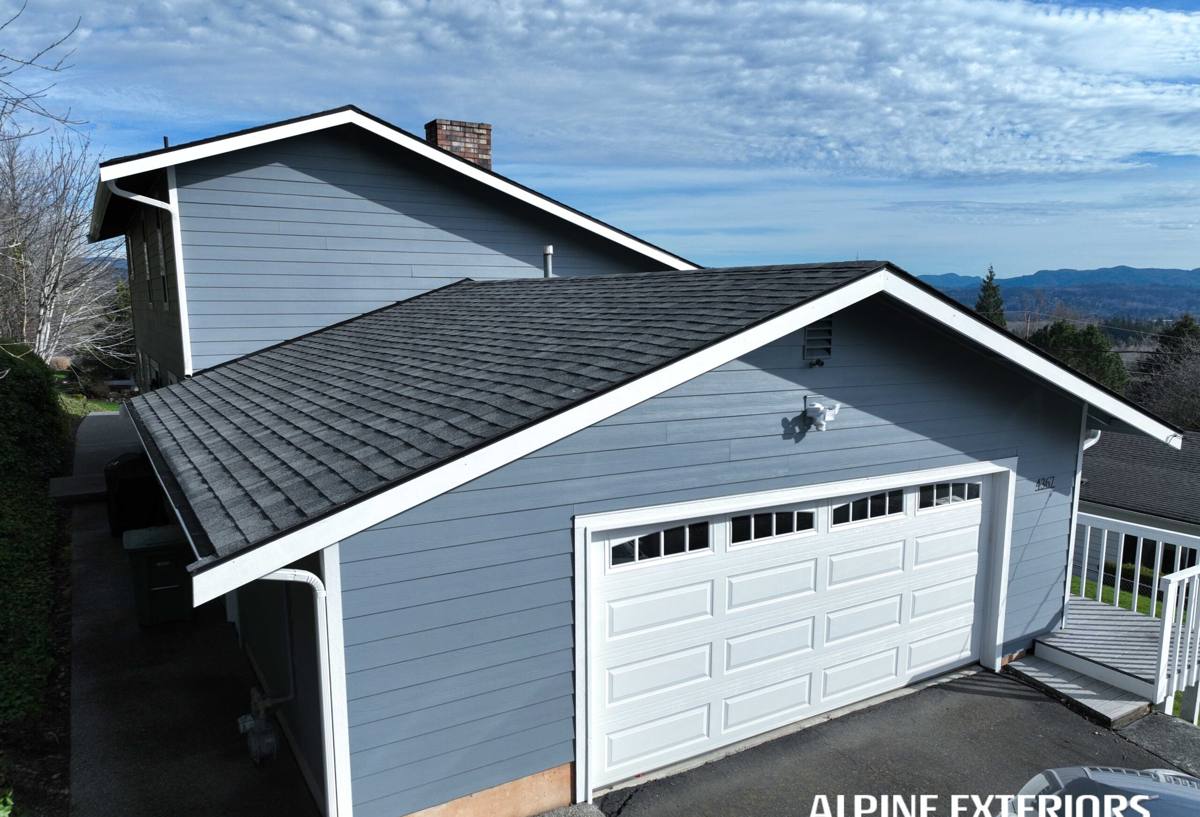
Why Whatcom County Climate Matters for Shingle Roofs
Bellingham's climate is rough on roofing in ways that aren't always obvious from the ground. Salt-laden air off the water accelerates corrosion on exposed metal fasteners and flashing. Long stretches of steady, driving rain push water sideways under wind-driven conditions, testing every seam, valley, and penetration on the roof. And our extended wet season — often eight or nine months of the year with real moisture in the air — gives moss, algae, and lichen plenty of time to establish themselves on any shingle surface that doesn't get consistent sun.
On South Hill specifically, tree cover intensifies that last problem. Shade slows drying time after every rain event, and organic debris (needles, leaves, seed pods) collects in valleys and behind chimneys where it holds moisture against the shingle mat. Left alone, that moisture cycle is what breaks down asphalt shingles years before their rated lifespan — not the rain itself, but the rain that never gets a chance to dry.
What This Means for Material Choice
Not every asphalt shingle product handles this environment the same way. We favor shingles with algae-resistant granules (copper or ceramic-coated) on any South Hill roof with meaningful tree exposure, and we're deliberate about underlayment and ventilation choices that help the roof deck dry out between storms instead of staying damp for weeks at a time.
What a Correct Asphalt Shingle Installation Involves
A shingle roof is a system, not a single layer of material. Every component below has to be right, or the roof underperforms regardless of how good the shingles themselves are.
- Deck inspection and repair — soft, delaminated, or water-stained decking gets replaced before anything new goes down, not covered over.
- Ice-and-water shield — self-adhering membrane at eaves, valleys, and around penetrations, which matters more here than in drier climates because of how long our roofs stay wet.
- Synthetic underlayment — a water-resistant layer across the full deck as backup protection under the shingles.
- Starter strip and drip edge — correctly sized and fastened at eaves and rakes so wind-driven rain can't get up under the first course.
- Shingle fastening pattern — nailed to manufacturer spec (not stapled, not overdriven) so shingles hold through winter wind events.
- Valley treatment — woven, closed-cut, or open metal valleys installed cleanly, since valleys carry the most concentrated water flow on any roof.
- Flashing at every penetration — chimneys, vent pipes, skylights, and wall intersections re-flashed with new material, not reused old flashing tucked under new shingles.
- Ventilation — balanced intake and exhaust so the attic can breathe, which controls both moisture buildup and shingle temperature swings.
Skipping or shortcutting any one of these is usually invisible at first glance and becomes a leak, a shortened lifespan, or a warranty problem down the road.
The Moss and Shade Problem on South Hill Roofs
This is worth its own section because it's the single most common issue we see on South Hill compared to sunnier parts of the Bellingham area. Moss doesn't just sit on top of shingles — its root structure lifts granules and holds water against the mat, and over a few seasons that accelerates wear in exactly the spots that are hardest to inspect from the ground.
A few things reduce this risk on a new or existing roof:
- Zinc or copper strips installed near the ridge, which release trace metal ions with every rain that inhibit moss growth downslope.
- Algae-resistant shingle granules on north-facing and heavily shaded slopes.
- Keeping gutters and valleys clear of needle and leaf debris, especially going into fall and winter.
- Trimming back overhanging branches where practical, to let more light and airflow reach the roof surface.
None of these eliminate moss entirely under heavy tree cover, but together they slow it down significantly and buy years of extra roof life.
Our Process for South Hill Roof Projects
1. On-Site Inspection
We walk the roof (not just look at it from the driveway) and check the attic from inside when accessible, so we can see ventilation, insulation contact, and any existing moisture staining on the underside of the deck.
2. Honest Assessment
We'll tell you plainly whether you're looking at a repair, a partial re-roof, or a full replacement — and explain why, including what's driving the recommendation (age, deck condition, extent of moss or granule loss, storm damage).
3. Written Estimate
A clear, itemized quote before any work starts. No surprise change orders for things that were visible at inspection.
4. Installation
Proper tear-off (or overlay if the existing roof genuinely qualifies), deck repair as needed, and full system installation as described above — with daily cleanup so your property isn't a mess mid-project.
5. Final Walkthrough
We walk the finished roof and the property with you, including a magnetic sweep for stray nails, before calling the job done.
Choosing a Shingle Tier
Asphalt shingles come in a few general tiers, and the right one depends on your roof's exposure, how long you plan to stay in the home, and budget. Here's how they generally compare for a South Hill setting:
| Shingle Type | Typical Lifespan | Best Fit | Trade-offs |
|---|---|---|---|
| 3-Tab | 15–20 years | Budget-focused projects, rentals | Less wind resistance, fewer algae-resistant options |
| Architectural / Dimensional | 25–30 years | Most South Hill homes | Higher upfront cost, much better wind and moisture performance |
| Premium / Designer | 30+ years | Higher-end homes, steep or highly visible roofs | Highest material cost, longer lead times |
For most South Hill homes with tree exposure, we recommend architectural shingles with algae-resistant granules as the practical baseline — the extra cost over 3-tab pays for itself in reduced moss issues and better wind performance on an elevated, exposed lot.
Signs Your South Hill Roof Needs Attention
- Granules collecting in gutters or at downspout outlets
- Visible moss or dark streaking on shaded slopes
- Curling, cupping, or cracked shingles
- Daylight visible through the attic roof deck
- Soft spots when walking the roof (a sign for us to check, not you)
- Water stains on interior ceilings, especially near valleys or chimneys
- Shingles that are bald in patches (granule loss exposing the asphalt mat)
- Roof age approaching or past 20 years without a full replacement
Any one of these is worth a look. Catching a problem at the repair stage instead of the replacement stage saves real money.
Why a Crew That Already Works South Hill Matters
South Hill's mix of elevation, mature landscaping, and a range of home ages (from older established houses to newer builds) means every roof up here has its own set of considerations. A crew that's already worked this neighborhood knows what to expect walking up — which slopes typically hold moisture longest, how steep pitches and tree access affect the work, and how to plan around Bellingham's wet-season scheduling so a project doesn't get stretched out by weather delays.
We're a Bellingham-based crew serving Whatcom County, and South Hill is part of our regular service area — not a one-off trip. That local familiarity translates into more accurate estimates, fewer surprises once we're on the roof, and a finished job built for the conditions this specific part of town actually sees.
Get a Free Estimate for Your South Hill Roof
If you're dealing with moss buildup, an aging roof, storm damage, or you're just planning ahead, we're happy to come take a look. The estimate is free, there's no pressure, and you'll get a straight answer about what your roof actually needs. Reach out using the form below to get started.