 Bellingham Roofing
 Windows Built for South Hill's Particular Climate
South Hill sits up above downtown Bellingham with open exposure toward the bay, which is great for a view and hard on a window. Homes here take a steady mix of salt-laden air, wind-driven rain, and the long gray stretch of moss season that Whatcom County is known for. That combination doesn't just fade curtains and fog up glass — it works on the window itself, from the hardware to the seals to the wood or composite behind the trim.
A window that was fine in a drier inland climate can struggle here. Metal hardware corrodes faster near the water. Wind-driven rain finds gaps that would never leak in a calm climate. And moisture that gets trapped behind a poorly sealed frame doesn't dry out quickly during our wet months — it sits, and that's how rot and mold problems start. When we talk about "energy-efficient windows" for a South Hill home, we're really talking about two things at once: keeping heat in and keeping Bellingham's weather out. Get the second part wrong and the first part doesn't matter.
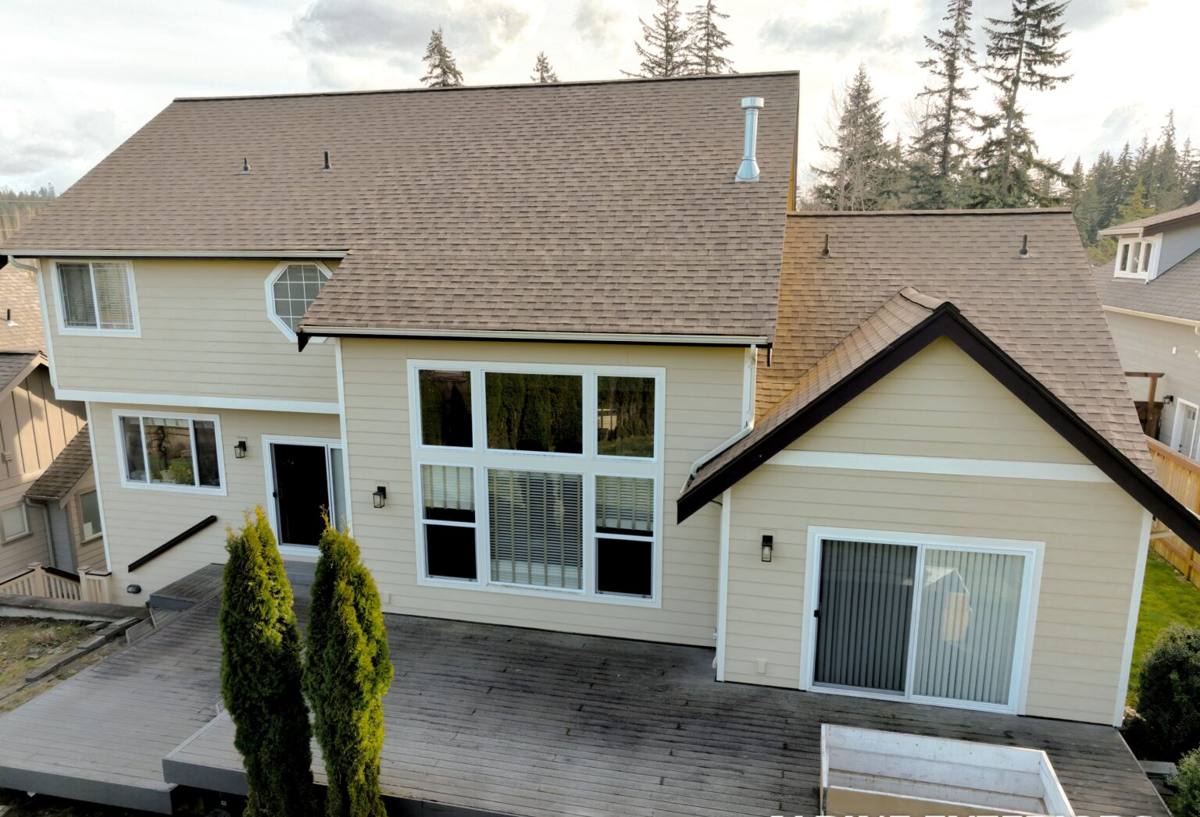
What Older and Newer South Hill Homes Both Run Into
South Hill has a mix of older homes with original wood-frame windows and newer or previously updated homes with vinyl replacements that are now reaching the end of their service life. The problems look different but often come from the same root cause.
Older, Original Windows
Single-pane wood windows were built for a different era of home heating and don't hold up well against modern expectations for comfort or energy bills. Even where the wood itself is in decent shape, the glazing, weatherstripping, and glass are usually long past useful life. On a hillside home exposed to weather off the bay, we also frequently find water damage at the sill and sash where driving rain has worked its way in over the years.
Older Replacement Windows
Vinyl windows installed a couple of decades ago were often a real improvement over what they replaced, but many weren't installed with the flashing and moisture management details we'd use today, and their seals and hardware have had years of salt air and rain exposure to work against them. Fogged double-pane glass (a failed seal letting moisture between the panes) is one of the most common calls we get from this era of window.
Signs It's Time to Look at Your Windows
- Visible fog, haze, or moisture trapped between the glass panes
- Drafts you can feel near the frame, even with the window latched shut
- Windows that are difficult to open, close, or lock properly
- Soft or discolored wood, or peeling paint, on the sill or trim
- Condensation forming on the inside of the glass during cold, wet weeks
- A noticeable difference in room temperature near the window versus the rest of the house
- Rising heating bills without any other clear explanation
- Visible daylight or gaps around the frame from outside
Any one of these on its own might not mean much. Several of them together, especially on the sides of the house that take the most weather, usually mean the windows are due for a real look.
What a Correct Installation Actually Involves
The window unit itself matters, but a large share of window performance and longevity comes down to what happens during installation — details that are invisible once the trim goes back on.
Removal and Inspection
We remove the old window carefully and inspect the rough opening before anything new goes in. This is the point where hidden rot, past water intrusion, or missing insulation gets found. Installing a new window over a damaged opening just seals the problem behind new trim, where it keeps working.
Flashing and Weatherproofing
This is the step that matters most in a climate like ours. Proper flashing tape and sequencing direct water down and out, away from the wall framing, rather than letting it pool or work its way inward. For a hillside home that takes direct, driving rain off the bay, this detail is not optional — it's the difference between a window that performs for decades and one that causes problems in five years.
Insulation and Air Sealing
The gap between the window frame and the rough opening needs to be filled with the right insulating material — not stuffed too tight, not left with voids. Done correctly, this is a big part of where the energy efficiency actually comes from, more than people often expect from the glass alone.
Final Sealing and Finish
Exterior caulking, interior trim, and hardware adjustment finish the job. We test operation and check for square and plumb before we call it done, since a window that's slightly out of square will bind, leak air, and wear out its hardware faster.
Choosing a Window Type for a South Hill Home
There isn't one universally "best" window — the right choice depends on the home's exposure, style, and your maintenance preferences. Here's how the common options compare for a marine climate like ours.
| Frame Material | Weather Performance Here | Maintenance | Good Fit For |
|---|---|---|---|
| Vinyl | Good moisture and salt-air resistance; no painting needed | Low — occasional cleaning | Most homes prioritizing value and low upkeep |
| Fiberglass | Excellent stability in temperature and moisture swings | Low | Homes wanting a more premium, long-term option |
| Wood, unclad | Attractive but most vulnerable to our rain and humidity | High — regular painting/sealing required | Historic-character homes where owners commit to upkeep |
| Wood-clad (exterior clad, wood interior) | Good — cladding shields the exterior from weather | Moderate | Homes wanting a wood interior look with less exterior maintenance |
We install a range of these based on what a given home and budget call for. Where we tend to steer people away from an option, it's usually about long-term moisture behavior or maintenance burden for our climate specifically, not a knock on the product — an unclad wood window can be a great choice if you're prepared to keep up with its finish.
Full-Frame Replacement vs. Insert Replacement
An insert (or "pocket") replacement fits a new window into the existing frame — faster and less invasive, and a reasonable option when the existing frame is sound and square. A full-frame replacement removes everything down to the rough opening, which costs more and takes longer but lets us fully address flashing, insulation, and any hidden damage. On South Hill's more weather-exposed homes, we often find that a full-frame approach is the more honest recommendation once we've seen what's actually going on behind the trim — but plenty of homes genuinely only need an insert.
Our Process, Start to Finish
- On-site assessment — we look at every window being considered, check for hidden moisture or rot, and note the home's specific exposure to wind and rain.
- Straight recommendation — insert or full-frame, and which frame material fits the home and budget, explained in plain terms with the trade-offs laid out.
- Written estimate — clear scope and pricing before any work starts.
- Installation — careful removal, opening inspection, correct flashing sequence, insulation, and finish work.
- Walkthrough — we test every window with you and answer questions before we consider the job done.
Cost Factors Worth Understanding
Every home is different, so we won't quote a number sight unseen — but these are the main things that move the price on a South Hill project:
| Factor | Why It Matters |
|---|---|
| Insert vs. full-frame | Full-frame takes more labor and materials but addresses more of the opening |
| Frame material | Vinyl, fiberglass, and clad-wood carry different material costs |
| Hidden damage | Rot or past water intrusion found during removal adds repair scope |
| Window count and size | Larger openings and picture windows cost more than standard sizes |
| Access and height | Second-story and hillside-facing windows can require more setup |
Why Hire a Crew That Already Works in South Hill
Bellingham's neighborhoods each carry their own quirks — home age, typical construction, and how exposed a given block is to wind off the bay. A crew that regularly works South Hill has already seen how its homes tend to be built and what kind of weather exposure to expect on a hillside lot, which means fewer surprises once a window comes out. We're also familiar with the permitting expectations that come with work in the City of Bellingham, and we approach older, character-driven homes with the care they need — not a one-size-fits-all install.
That local familiarity matters most in the moments an estimate can't fully predict: what's actually behind the trim, how a particular wall has handled moisture over the years, and what installation detail will hold up best against the specific direction our weather usually comes from on that lot.
Keeping New Windows Performing Through Moss Season
New windows are low-maintenance, but "low" isn't "none." A yearly check of exterior caulking, a clear weep hole (the small drainage gaps at the bottom of the frame), and keeping gutters and nearby vegetation from dumping extra water onto the window are all worth a few minutes during the drier months. On a hillside home exposed to driving rain, catching a small caulking gap early is a lot cheaper than dealing with what it can lead to after a full wet season.
If you're weighing whether your South Hill home's windows need attention, we're happy to take a straightforward look and tell you honestly what we see — no pressure, no upsell. Reach out for a free estimate using the form below.