 Bellingham Roofing
 Windows Built for Silver Beach's Weather, Not Just the Showroom
Silver Beach is one of the older, established residential pockets of Bellingham, and a lot of the housing stock here was built well before today's window technology existed. If you live in this neighborhood, you already know the pattern: winters of sideways rain coming off the water, long gray stretches where nothing fully dries out, and a moss and mildew season that seems to start earlier and end later every year. Salt-laden air off Bellingham Bay adds its own slow toll on metal hardware and exposed fasteners. None of that is unique to any one house on your block — it's just what Whatcom County asks of a window over the decades it's expected to last.
A window installed correctly for this climate isn't dramatically different in appearance from one installed anywhere else. The difference is underneath: the flashing sequence, the sealant choice, the frame material, and the attention paid to how water is supposed to move once it inevitably reaches the wall. Get that wrong and you won't see it for a year or two — you'll see it when trim starts to soften, when a corner of drywall stains, or when a window that used to open smoothly starts sticking every winter.
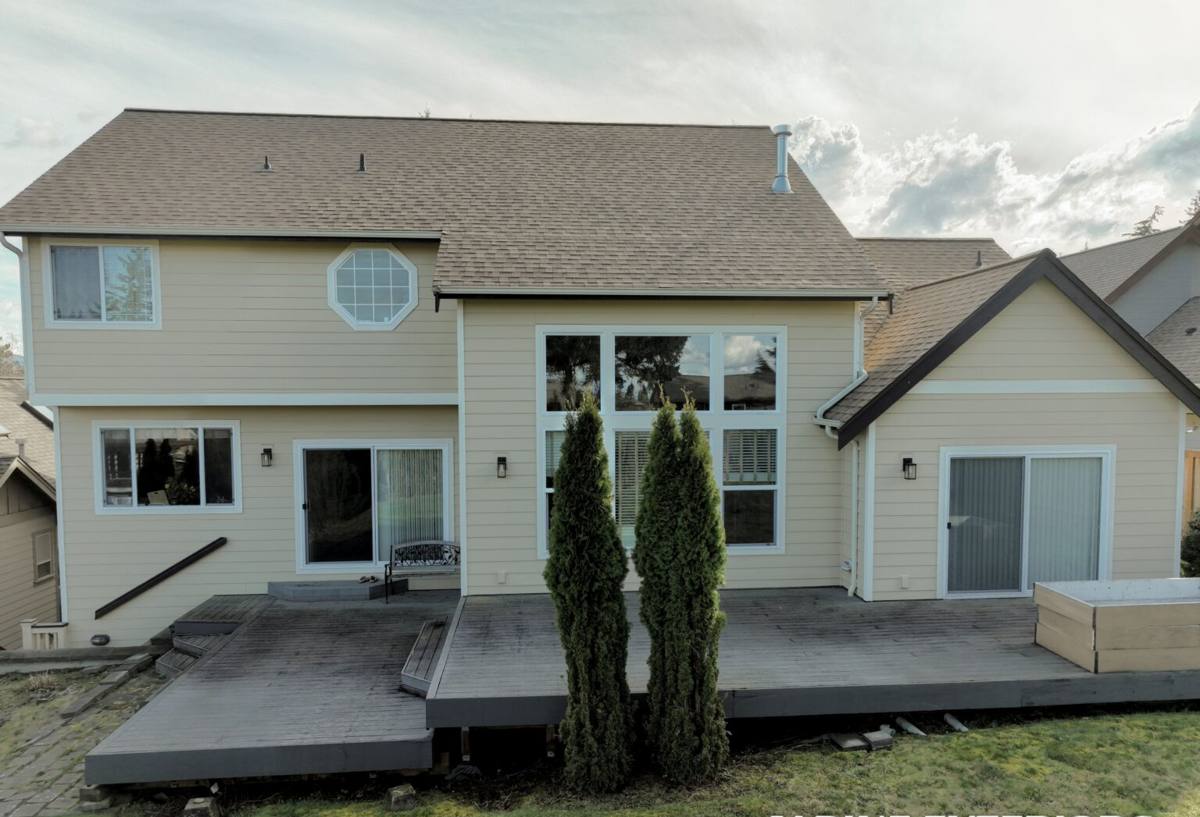
What Silver Beach Homes Actually Need From a Window
Moisture Management First
In a marine climate like ours, the single biggest factor in a window's lifespan is what happens to water that gets past the glass and into the rough opening — because some always does, on any window, from any manufacturer. The frame, flashing, and sealant have to work together to direct that moisture back out rather than trapping it against wood framing. This matters more in Bellingham than it would in a dry inland climate, because we don't get the long dry stretches that let a minor moisture problem evaporate away before it becomes rot.
Material Choice
Vinyl and fiberglass frames handle our combination of rain and salt air well because they don't rust and don't require repainting to stay sealed. Wood-clad windows can still be the right call on older or historic-style Silver Beach homes where appearance matters, but they need a maintenance commitment — caulking and finish checks on a regular schedule — or the cladding seams become the first place moisture gets in. We'll tell you honestly which category fits your house and your tolerance for upkeep, rather than pushing whatever's easiest to install.
Hardware and Fasteners
Salt air is hard on exposed metal. Locks, cranks, and hinges rated for coastal exposure hold up; bargain-grade hardware corrodes and seizes years before the glass unit itself would fail. It's a small line item that makes a real difference by year eight or ten.
The Parts of the Job That Actually Determine How Long It Lasts
Homeowners naturally focus on the window itself — the brand, the glass package, the color. Those matter, but in our climate the installation details matter more, because a great window installed with a poor flashing job will leak, and a modest window installed correctly will not.
- Proper flashing sequence: sill pan, then jambs, then head flashing, layered so each piece sheds water onto the one below it — never in reverse order.
- Sill pan or sloped sill: so any water that does get in has somewhere to drain instead of sitting against the framing.
- Correct sealant placement: sealed where it needs to stop water, left open where the assembly needs to breathe and drain — sealing everything solid is a common mistake that traps moisture inside the wall.
- Weather-resistant barrier integration: the house wrap or building paper has to be lapped correctly with the new flashing, not just taped over.
- Shimming and squaring: a window that isn't plumb and square binds, doesn't seal evenly, and wears out its own hardware faster.
- Insulation at the gap: low-expansion foam or backer rod around the frame, not stuffed fiberglass that leaves voids for air and moisture.
Our Installation Process
1. On-Site Assessment
We start by looking at your existing windows and the wall assembly around them — not just measuring the opening. On older Silver Beach homes especially, we're checking for prior water damage, out-of-square openings, and whatever flashing (or lack of it) is currently in place, since that shapes the right approach.
2. Product Selection
We walk through frame material, glass packages, and hardware options based on your home's exposure, your budget, and how much upkeep you want to take on long-term. We'll say plainly if a product isn't a good fit for a Bellingham exterior, even if it's popular elsewhere.
3. Removal and Opening Prep
Old windows come out carefully to protect interior and exterior finishes. We inspect the rough opening for rot or soft wood at this stage — this is the point where hidden problems get caught and fixed, before a new window gets installed over them.
4. Flashing and Installation
This is where the job is won or lost. Sill pan, proper flashing laps, correct fastening, and shimming to plumb and square, followed by sealant only where it belongs in the assembly.
5. Interior and Exterior Finish
Trim, caulking, and insulation are finished out so the window looks right from both sides and the assembly is fully sealed against the weather it'll be facing.
6. Final Check
We test operation, check the seal, and walk you through anything you should watch for or maintain going forward.
Why Local Installation Experience Matters Here
A crew that installs windows across a lot of different climates learns general best practices. A crew that regularly works Whatcom County exteriors learns which of those best practices actually matter here, and which local shortcuts cause problems down the road — because we're the ones who get the call when a window installed by someone else starts leaking two winters later. We know how driving rain behaves against this housing stock, how early moss establishes on north-facing trim, and how salt air shortens the life of hardware that would last decades somewhere drier. That's knowledge you don't get from a manufacturer's install manual alone; it comes from working this specific area, season after season.
Comparing Frame Materials for a Silver Beach Exterior
| Material | Moisture & Salt Air Resistance | Maintenance | Best Fit |
|---|---|---|---|
| Vinyl | Strong — won't rust or corrode | Low; occasional cleaning | Most Silver Beach homes prioritizing durability and value |
| Fiberglass | Very strong; dimensionally stable in temperature swings | Low | Homes wanting higher-end performance and longevity |
| Wood-clad | Good if maintained; cladding seams need attention | Higher; scheduled caulk and finish checks | Historic-style homes where appearance is a priority |
| Aluminum | Weaker in this climate; prone to condensation and corrosion over time | Moderate to high | Rarely our recommendation for this area |
What Drives Cost
Every Silver Beach home is different, so we won't quote a number without seeing the job, but a few factors consistently move the price:
- Number of windows and whether they're all done in one project or phased
- Frame material and glass package selected
- Condition of the existing rough opening — rot repair adds time and material
- Full-frame replacement versus insert replacement, where the existing frame is sound
- Interior and exterior trim complexity, especially on older or custom-trimmed homes
- Access — second story or tight side-yard clearance can affect labor time
Signs Your Silver Beach Home May Need New Windows Soon
Some of these are obvious; others show up quietly over a season or two before homeowners connect them to the windows themselves.
- Visible fogging or moisture between panes on double- or triple-glazed units
- Windows that stick, won't stay open, or are hard to lock
- Drafts you can feel near the frame even when the window is latched
- Soft or discolored trim and sill wood, inside or outside
- Persistent condensation on the interior glass during colder months
- Visible moss or dark staining building up around exterior trim
Any one of these on its own isn't necessarily urgent. A few together, especially soft wood or interior staining, are worth having looked at before another wet season passes.
A Few Honest Trade-Offs
We'd rather set expectations up front than oversell. Full-frame replacement costs more than an insert replacement but is the right call when the existing frame or sill shows any rot or damage — installing new glass into a compromised frame just delays the real problem. Premium glass packages reduce condensation and improve comfort but add cost that may not be justified on every window in the house; sometimes the better plan is prioritizing the rooms and exposures that need it most. And while we can match almost any style, the trim and finish details that make a window look right on an older Silver Beach home take more time than a stock install — worth knowing when comparing quotes that look identical on paper.
If you're weighing window replacement for your Silver Beach home, we're glad to come take a look and give you a straightforward, no-pressure estimate — what your home actually needs, what it doesn't, and what it'll cost either way. Use the form below to get started.