 Bellingham Roofing
 Windows Built for a Silver Beach Home, Not a Catalog Size
Silver Beach homes span a wide range of ages and styles, and that means very few of them have windows that match anything off a factory shelf. Additions, remodels, older post-and-beam construction, and houses that have settled a bit over the decades all throw off standard rough openings. "Custom" isn't a marketing word here — it's what's actually required to get a window that fits the opening you have instead of forcing your opening to fit a window.
It also matters because this part of Whatcom County doesn't go easy on windows. Marine air moving in off Bellingham Bay and the greater Puget Sound region, long stretches of driving rain, and a moss season that can run most of the year all put real pressure on frames, seals, and glazing. A window that's slightly undersized, poorly flashed, or made from the wrong material for our climate won't fail on day one — it'll fail slowly, over two or three wet seasons, in ways that are expensive to trace back to the source.
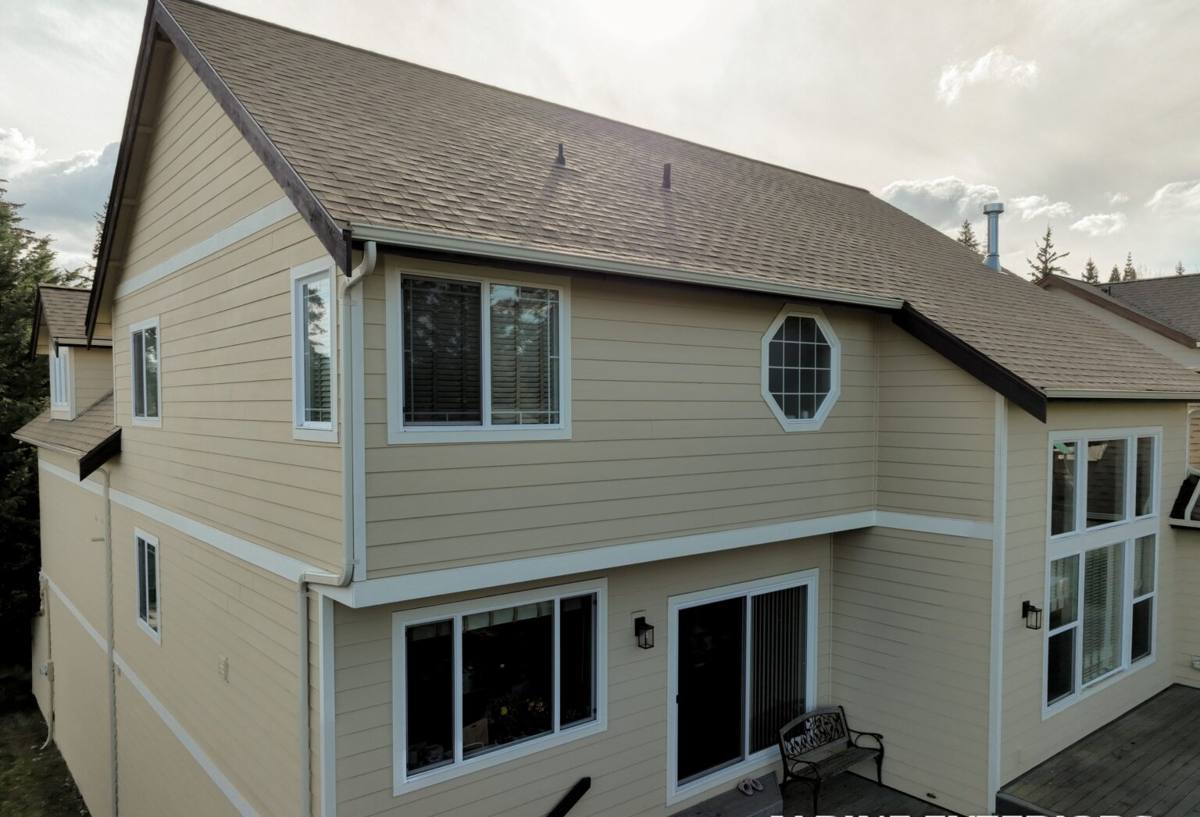
Signs Your Current Windows Are Losing the Fight
Most window problems in this area show up as small annoyances long before they become real damage. Homeowners often live with these for a year or two before calling anyone, which usually means the fix has gotten bigger in the meantime.
- Fogging or a permanent haze between the panes (the seal has failed and the gas fill is gone)
- Visible gaps or daylight around the frame when the window is closed
- Wood trim or sills that feel soft, spongy, or show dark staining
- Green or black film building up on the frame faster than you can wipe it off
- Windows that are noticeably harder to open, close, or lock than they used to be
- Noticeable draft or cold spot near the window even with it fully shut
- Paint that's bubbling or peeling specifically around the window frame, not the rest of the wall
Any one of these on its own might just mean the window needs attention. Two or three together, especially on the same wall, usually points to a moisture problem behind the trim that's worth having looked at before it spreads.
What "Correct" Actually Looks Like on This Job
Frame Materials for a Wet, Salt-Tinged Climate
There isn't one "best" frame material for every house — it depends on the home's style, budget, and how exposed the window is to weather. What we won't do is put a low-grade frame on a wall that takes direct wind-driven rain, because the maintenance burden and moisture risk aren't worth the up-front savings.
| Frame Type | Strengths in This Climate | Trade-Offs to Know |
|---|---|---|
| Vinyl | Won't rot, low maintenance, good value, handles moisture well | Fewer custom color/finish options; can flex on very large openings |
| Fiberglass | Very stable in temperature swings, strong, holds paint well, excellent moisture resistance | Higher upfront cost than vinyl |
| Wood-clad | Classic interior look, good for period-correct remodels | Exterior cladding and sealant joints need regular inspection; more maintenance-sensitive near driving rain |
| Aluminum | Slim sightlines, strong for large spans | Conducts cold and can condensate more without a good thermal break |
For homes that catch the brunt of storms coming off the water, we lean toward vinyl or fiberglass simply because they tolerate repeated wetting and drying without the ongoing sealant and paint upkeep that wood-clad or bare aluminum demand.
Glass Packages That Actually Matter Here
Glass choice affects comfort and your heating bill more than most homeowners expect. In this climate, three things matter most:
- Low-E coatings — reduce heat loss through the glass without changing how much light comes in
- Argon or krypton gas fill — improves insulation between panes at a modest cost
- Double vs. triple pane — triple pane adds real insulation value and noise reduction, but adds weight and cost; for most Silver Beach homes a well-built double-pane, Low-E, argon-filled unit is the practical sweet spot, with triple pane reserved for north-facing walls or rooms with a known cold or draft problem
Why the Installation Matters More Than the Window Itself
A well-built window installed poorly will fail faster than a modest window installed correctly. This is the part of the job that's invisible once the trim goes back on, and it's also the part most likely to get rushed by crews that don't specialize in this kind of weather.
Flashing and Moisture Management
Proper installation means integrating flashing tape and a drainage plane so that any water that does get behind the siding has somewhere to go besides your wall sheathing. This is non-negotiable on any wall that takes direct rain, which is most walls in this region depending on the season and wind direction.
Air Sealing Without Trapping Moisture
The window needs to be sealed tight against air infiltration on the interior side while still allowing any moisture that gets into the wall cavity to escape on the exterior side. Sealing everything airtight in both directions is a common shortcut that traps moisture instead of managing it — and in a climate with this much sustained damp weather, that mistake shows up as rot within a few seasons, not right away.
Level, Plumb, and Square
An opening that's out of square — common in older homes that have settled — needs to be corrected with proper shimming, not by forcing the window frame to twist into place. A window installed out of square will bind, leak air, and wear its hardware out faster.
Our Process, Start to Finish
- On-site assessment — we look at each window individually, not just the house as a whole. Sun exposure, wind exposure, and existing moisture damage all factor into what we recommend.
- Accurate measurement — every opening gets measured on-site; nothing is ordered off assumed "standard" sizes.
- Material and glass selection — we walk through frame and glass options against your budget and the specific exposure of each wall.
- Removal and inspection — old windows come out carefully so we can check the framing and sheathing underneath for hidden rot or damage before anything new goes in.
- Installation with proper flashing and sealing — done to manage water, not just block it.
- Interior and exterior finish work — trim, caulking, and touch-up so the job looks finished, not patched.
- Final walkthrough — every window is opened, closed, and locked with you before we consider the job done.
Why a Crew That Already Works Silver Beach Is Worth Choosing
Window work in this specific pocket of Whatcom County rewards local experience in ways that aren't obvious until something goes wrong. Crews who work here regularly already understand how driving rain moves across different wall orientations, which framing eras tend to have out-of-square openings, and how fast moss and algae take hold on north- and shade-facing surfaces. That's the difference between a crew that installs windows and a crew that installs windows correctly for this specific climate.
Local experience also means faster, more accurate estimates. We're not guessing at how a wall will behave in a coastal storm — we've already seen how similar homes in this area hold up over time, and we build the installation around that.
What Drives the Cost of a Custom Window Job
| Factor | Why It Matters |
|---|---|
| Frame material | Vinyl is typically the most budget-friendly; fiberglass and wood-clad cost more upfront but shift maintenance and lifespan differently |
| Glass package | Low-E coatings, gas fill, and double vs. triple pane all add incremental cost for incremental performance |
| Opening condition | Rot repair or reframing behind old windows adds labor that can't be known until removal |
| Number and size of windows | Larger units and full-house projects have different economies of scale than one or two replacements |
| Access and site conditions | Second-story windows, tight side yards, or landscaping in the way affect labor time |
Because so much depends on what we find once the old window comes out, we don't quote a firm number over the phone — we walk the job in person first.
Living With a Long Moss Season
Moss and algae growth on and around window frames isn't just cosmetic — sustained organic growth holds moisture against the frame and sealant joints longer than the surrounding siding, which accelerates wear right at the seams that matter most. A few habits go a long way between installations:
- Rinse frames and sills periodically during the wetter months, especially on shaded or north-facing walls
- Keep gutters and downspouts clear so runoff isn't sheeting directly across window heads
- Trim back vegetation that keeps a window in constant shade and dampness
- Check caulking and sealant joints once a year for cracking or separation
None of this replaces a good installation, but it does extend the life of one considerably.
If your Silver Beach home has windows that are fogging, drafting, sticking, or just past their working life, we're happy to take a look and give you a straightforward, no-pressure estimate — use the form below to get started.